

Table of Contents
- A Hidden Risk in Your Child’s Pocket
- How Radiation Penetrates the Brain
- Scientific Findings: Children Absorb More
- Potential Health Implications
- Practical Steps for Parents
- Safer Technology and Future Solutions
- The Debate: How Much Risk Is Too Much?
- Awareness and Education
- Final Thoughts: Protecting the Next Generation
A Hidden Risk in Your Child’s Pocket
Every day, children spend hours on smartphones, tablets, and other wireless devices. What many parents don’t realize is that their developing brains and thinner skulls absorb significantly more electromagnetic radiation than adults.
Studies suggest that kids can absorb up to 100% more radiation due to their smaller size, thinner skulls, and developing neural tissue. While devices make life convenient, they may also expose children to long-term risks that are only now being investigated.
If your child spends hours on a smartphone, have you ever wondered exactly what’s happening beneath the surface of their skull?
How Radiation Penetrates the Brain
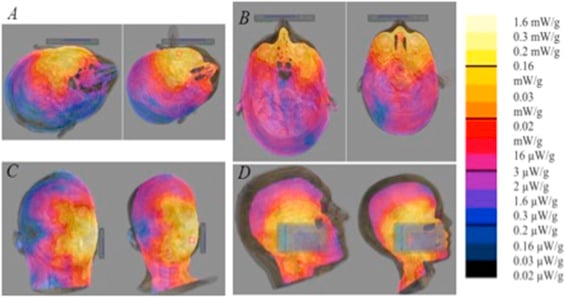
Cell phones emit radiofrequency (RF) radiation. Adults’ thicker skulls and denser tissues provide some protection, but children’s skulls allow more of this energy to penetrate deeper into the brain.
Recent research shows that RF radiation can reach developing tissues more easily, potentially affecting sensitive areas responsible for cognition, memory, and hormonal regulation. The thinner skull acts like a doorway, letting radiation in where adults would be somewhat shielded.
Think about it: the devices we trust for learning and entertainment may also be quietly influencing brain tissue development. What does that mean for long-term health?
Scientific Findings: Children Absorb More
Research published in peer-reviewed journals shows that children can absorb up to double the radiation of adults under the same exposure conditions. Young children are particularly vulnerable because:
- Skull thickness is lower
- Neural tissue is still developing
- Brain-to-body ratio is higher, increasing exposure concentration
This is not hypothetical. Imaging and simulation studies confirm that the RF energy penetrates deeper into smaller heads, raising questions about chronic exposure and potential developmental effects.
Would limiting screen time reduce absorption, or are there more effective protective strategies?
Potential Health Implications

Long-term effects of RF radiation on children are still being studied, but some research suggests possible associations with:
- Altered brain development
- Sleep disturbances
- Behavioral changes
- Increased risk for headaches and fatigue
While no definitive causal link to cancer has been established, public health authorities advise caution. Children’s tissues are more sensitive, and longer cumulative exposure could increase risks over decades.
If your child uses a phone daily, could simple changes today make a major difference decades from now?
Practical Steps for Parents
Parents can take proactive measures to reduce children’s exposure to cell phone radiation:
- Limit screen time: Encourage shorter calls and reduce idle usage.
- Use speakerphone or headsets: Keep the device away from the head.
- Text instead of call: Texting minimizes prolonged proximity.
- Maintain distance: Avoid holding phones directly against the ear or body.
- Avoid phones in bed: Especially at night, to protect sleep cycles.
Small adjustments can significantly reduce absorbed radiation without eliminating digital connectivity.
Safer Technology and Future Solutions
Some tech solutions aim to shield users from RF radiation:
- Radiation-reducing phone cases
- Low-emission devices
- EMF filters in accessories and home environments
While these are not perfect solutions, combining technology with behavioral changes can protect children while still allowing safe use for learning, communication, and entertainment.
Could the next generation of devices be designed specifically to protect children’s developing brains?
The Debate: How Much Risk Is Too Much?
Experts disagree on the level of risk posed by cell phone radiation. Some emphasize that everyday exposure is low, while others caution that children’s unique physiology warrants extra care.
Regulatory bodies like the FCC provide guidelines based on adult tissue models, which may underestimate children’s absorption. This discrepancy has fueled calls for updated safety standards that specifically account for younger users.
How much caution is reasonable without limiting educational and social benefits?
Awareness and Education
Awareness is the first line of defense. Parents, schools, and pediatricians can educate children about:
- Safe device use
- The importance of distance and time limits
- Recognizing early signs of fatigue or headaches linked to screen use
Teaching children to use technology responsibly from a young age may prevent chronic exposure and long-term risks, ensuring that smartphones remain tools, not hazards.
Final Thoughts: Protecting the Next Generation
Children’s thinner skulls and developing brains make them uniquely vulnerable to cell phone radiation. While research continues, common-sense steps—limiting exposure, using headsets, and promoting healthy habits—can reduce risks significantly.
As technology becomes more integral to education, communication, and entertainment, balancing connectivity with safety is crucial. Could a few simple precautions today protect your child’s health for decades to come?