
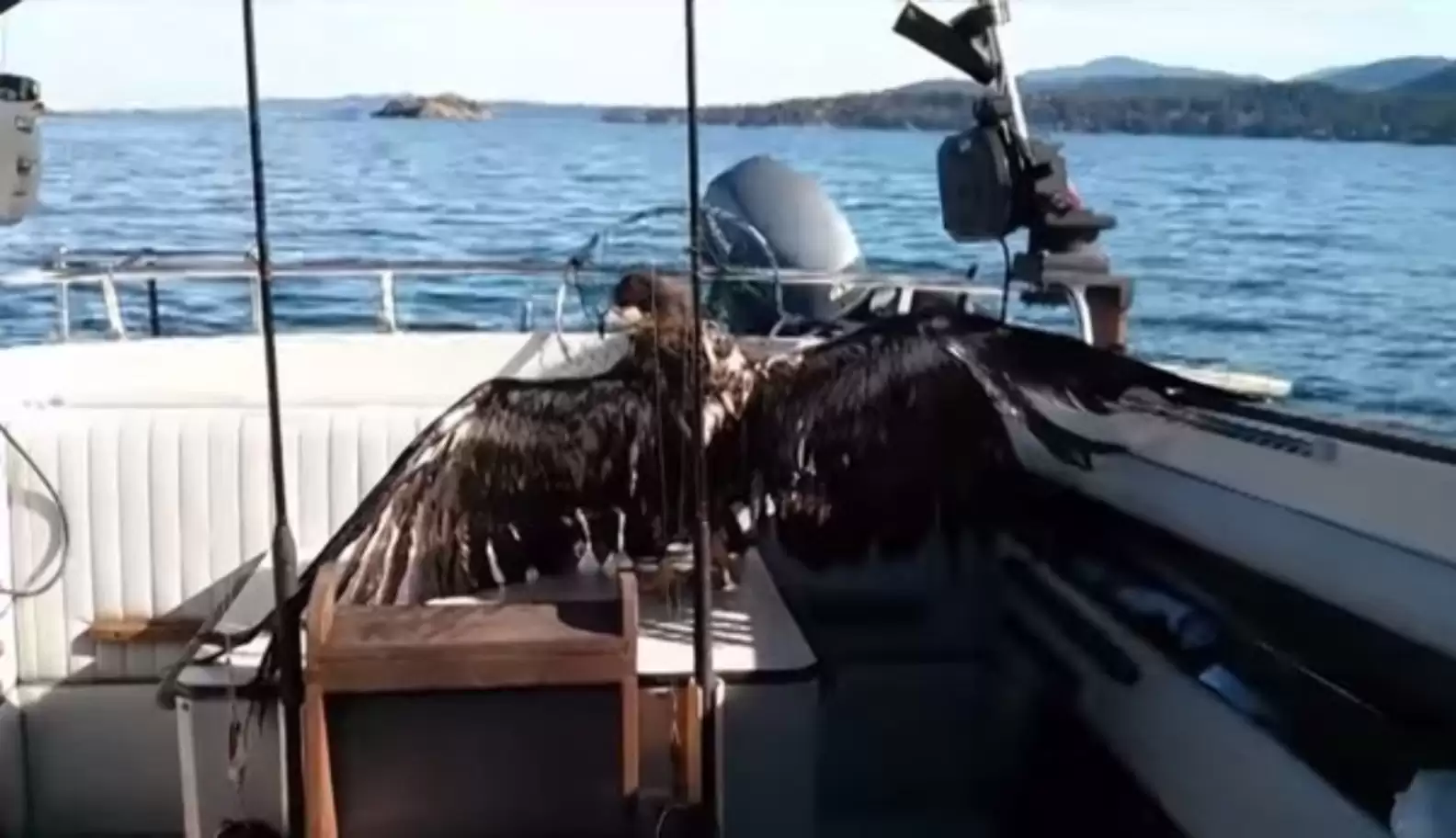
Few mornings begin like this: a calm sea, a quiet fishing boat gliding across misty water — and a desperate, drowning eagle flapping for life.
That was the scene one crisp day in Nanoose Bay, British Columbia, when Canadian fisherman Dan Dunbar spotted a young bald eagle, nearly lifeless and struggling on the surface. What happened next wasn’t in his fishing plan — but it changed the bird’s fate forever.
This is the story of how compassion, quick action, and humanity rescued a majestic creature from the brink — and why that rescue still matters today.
Table of Contents
- The Unusual Catch of the Day — Not Salmon, but Wings
- The Rescue — Twelve Minutes That Meant Everything
- What Went Wrong — Poison, Predation, or Simple Bad Luck?
- Rehab, Recovery — And a Chance to Fly Again
- Why This Rescue Echoes Far Beyond One Boat, One Bird
- The Video That Made People Care — And Why It Matters
- What Happened to the Eagle? A Hopeful Future (…If We Keep Helping)
- If You Were Dan — What Would You Do? And If You Were the Eagle — What Would You Think?
- What This Eagle’s Rescue Teaches Us About Compassion, Conservation & Responsibility
- A Final Thought: When You See a Bird Struggling — Reach Out Before You Scroll On
The Unusual Catch of the Day — Not Salmon, but Wings
Dan was out on a routine fishing trip, hoping maybe to catch salmon. Instead, he saw a bird — a bald eagle — floundering, half‑submerged, wings outstretched, flailing weakly.
Eagles can swim when the need arises, but this one wasn’t just drifting or paddling. It looked exhausted, confused, unable to lift itself or glide. Typical prey‑size misjudgments or water‑logged wings couldn’t explain it. Something was deeply wrong.
Confronted with a living symbol of freedom and power, Dan didn’t hesitate. He powered over, coaxing the eagle with gentle words: “Hey buddy, what d’you figure? Want to come aboard?”
He didn’t have a lifejacket for a raptor — but compassion sometimes doesn’t require perfect tools. It only needs courage.
The Rescue — Twelve Minutes That Meant Everything
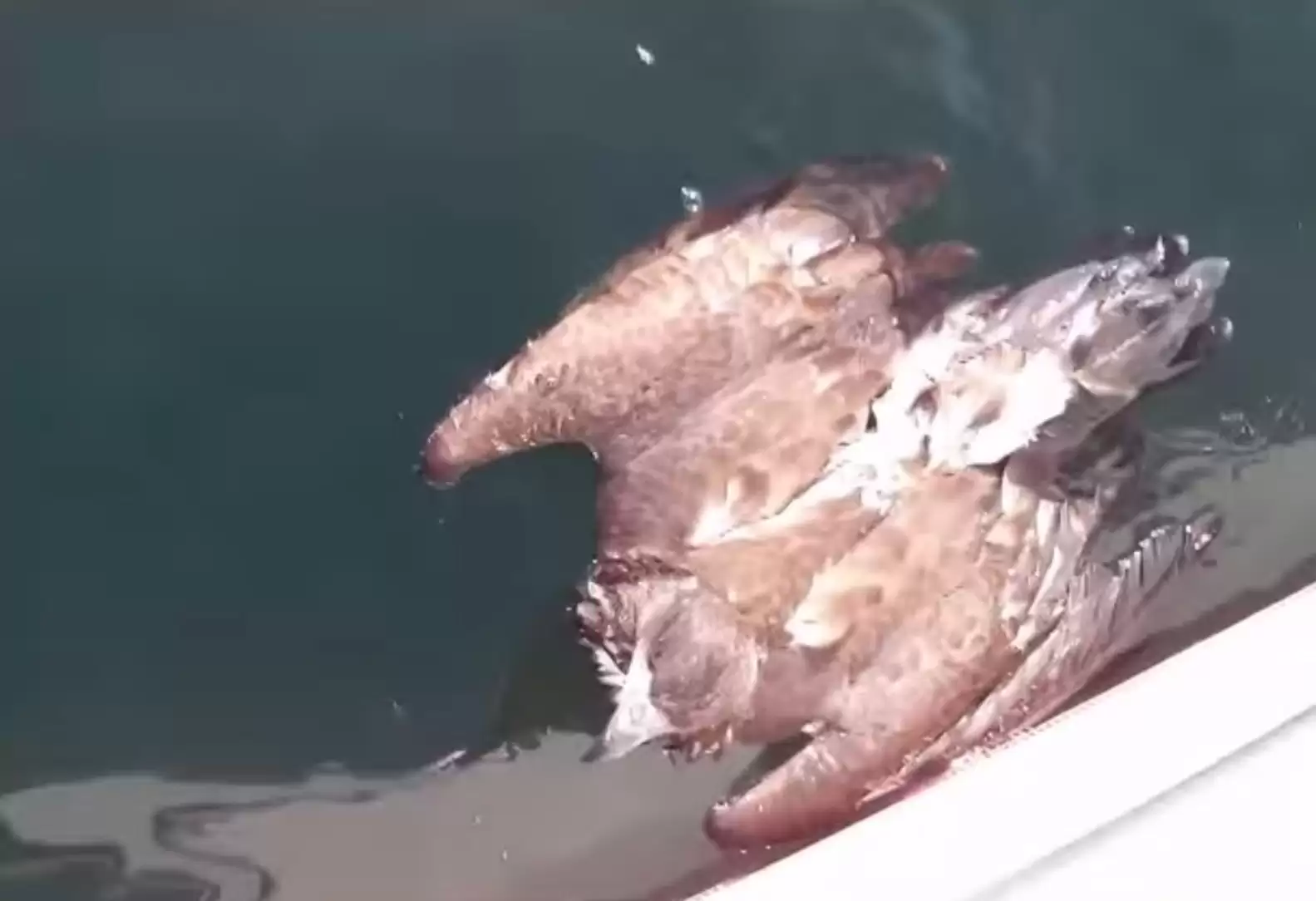
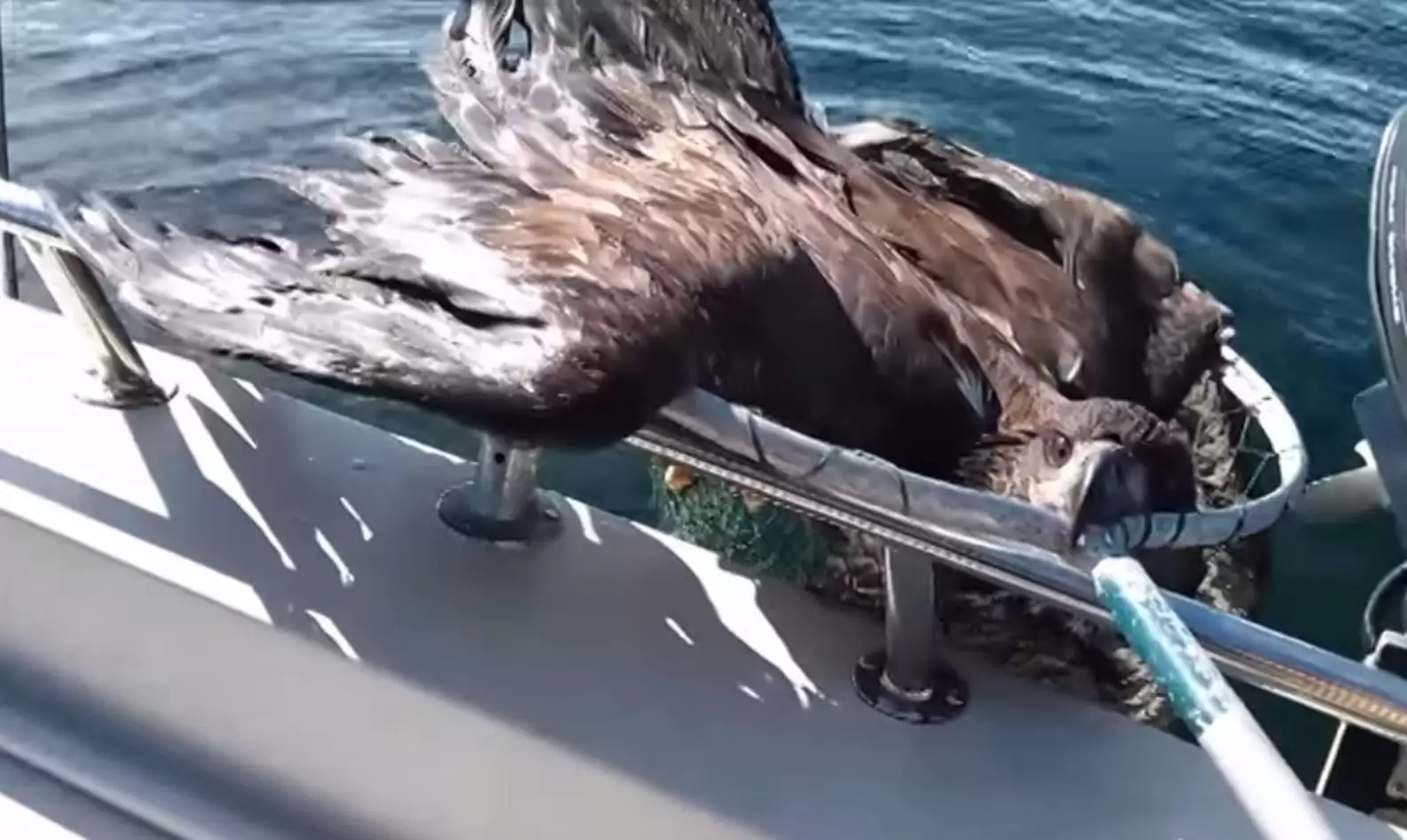
With delicate precision, Dan used his net to lift the eagle from the water. Within minutes, the exhausted bird lay on his deck, shaking, wet, but alive. The fisherman gently wrapped its wings, rubbed it dry, and let it rest.
Captured on video — just under 12 minutes long — the rescue showed not just a man and a bird, but a moment of connection between two very different lives. Dan’s soft voice, the eagle’s ragged breathing, the sunrise dancing on water — it became one of the most shared wildlife‑rescue clips online.
Once on shore, the bird was passed to volunteers from the Orphaned Wildlife Rehabilitation Society (O.W.L.), who examined the eagle — estimated to be about three years old. Shockingly, it had no broken bones, no entanglements. Its wings were intact. Something else must have caused it to crash.
What Went Wrong — Poison, Predation, or Simple Bad Luck?
Veterinarians suspect the eagle had eaten prey tainted with rodenticide — a chemical used for pest control that can poison the entire food chain. Once inside the bird, toxins can disrupt their stamina, coordination, and immune system.
In some cases, young eagles misjudge fish size — the catch becomes too big, dragging them underwater and weakening them. With lawns, farms, and urban encroachment pushing wildlife into danger zones, these hazards grow ever more frequent.
This makes Dan’s rescue more than a feel‑good moment — it highlights how fragile our ecosystems have become, and how human actions ripple across species we seldom consider.
Rehab, Recovery — And a Chance to Fly Again
Once in O.W.L.’s care, the eagle was placed on antibiotics, given warm shelter, and monitored around the clock. His thirst, fatigue, and insect‑rodenticide exposure also required careful treatment and rest.
Wildlife‑rescue groups see dozens of such cases every year: eagles entangled in fishing lines, poisoned by chemicals, or unable to survive after a bad hunt. Statistics show mortality among injured birds of prey often exceeds 60 % in their first year — which makes this young eagle’s rescue nothing short of miraculous.
Volunteers hoped for recovery. If all went well, the eagle would be released back to the wild — wings dry, strength returned, sky ahead.
And for a moment, it seemed like a fair chance at a second life.
Why This Rescue Echoes Far Beyond One Boat, One Bird
This isn’t just a “look‑at‑this cool wildlife rescue” story. It’s a mirror to several bigger issues facing wildlife — and by extension, humanity.
🌿 Environmental Fallout from Rodenticides
When poisons meant to kill rodents seep into the food chain, predators like eagles — who feed on fish, rodents, or other affected animals — become unintended victims. One careless lawn treatment may end up poisoning generations of wildlife.
🏙️ Habitat Encroachment and Human‑Wildlife Conflict
Urban expansion, agriculture, and unregulated development force hawks, eagles, and other predators into shrinking habitats — making dangerous hunts more common and escape routes fewer.
🛠️ Responsibility Lies With Us — Including You
That means every homeowner, every fisherman, every gardener has a role. Whether through safer chemicals, supporting rehab centers, or spreading awareness — small actions now can prevent stories like this from becoming too common.
Trips, vacations, home renovations, even simple travel through nature — they all carry responsibility. If we see a struggling animal, maybe our first reaction should be compassion.
Because sometimes, the difference between life and death is not a law — but a human reaching out net.
The Video That Made People Care — And Why It Matters
The dramatic rescue video went viral. In a digital world full of noise, it stood out for its simplicity: a man, a net, a bird — and hope.
Over and over, people hit “share.” Comments flooded in: “Thank you for saving him.” “I cried.” “We need more people like you.”
And that in itself became part of the rescue. The visibility helped raise awareness — even donations — for wildlife rehabilitation. It showed that sometimes, stories are more than entertainment: they awaken empathy.
What Happened to the Eagle? A Hopeful Future (…If We Keep Helping)
Reports after the rescue said the eagle’s prognosis was cautiously optimistic: its wings intact, internal organs seemingly fine, no entanglements or obvious trauma.
If he made a full recovery, the expectation was to release him back into the cove where he was found — giving him a second shot at life in the wild.
But what about the bigger picture? This incident sparked renewed calls for:
- stricter regulation or alternatives to harmful rodenticides
- more public support for wildlife rehab centers
- environment‑safe pest control
- greater awareness of how simple human actions affect wildlife
Because if we want to keep skies full of wings — we must keep human impact light.
If You Were Dan — What Would You Do? And If You Were the Eagle — What Would You Think?
Stop for a moment and imagine:
You’re out on a boat. Your goal: a quiet day of fishing, maybe bring back dinner.
Instead, you find an eagle — majestic, but trembling and weak. Your instinct? Surprise. Your decision? Compassion.
Would you help? Would you risk wildlife rules, dirty decks, or skeptical eyes — to offer a battered bird a second chance?
Now flip it: if you were the eagle — tired, cold, but still alive — what flash of fear or hope would drive you to reach out toward a human?
This story shows that sometimes saving someone — even a stranger — is a choice far simpler than it seems.
What This Eagle’s Rescue Teaches Us About Compassion, Conservation & Responsibility
This single rescue — at sea, on a fishing boat, in a flicker of time — holds lessons we can all carry home:
- Compassion has no species barrier. An eagle in trouble deserves help — just like any pet or fellow human.
- Our actions ripple outward. A rodenticide, a careless lure, a polluted bay — all can harm creatures we barely see.
- Rescue organizations need support. Groups like O.W.L. play a vital, often underfunded role. Donations, volunteering, awareness — it matters.
- Nature and humanity are intertwined. Whether you’re hiking, fishing, renovating a home near forest land, or traveling — wildlife is always part of your footprint.
- Every one of us can make a difference. Sometimes all it takes is a net — sometimes a kinder view of the world.
A Final Thought: When You See a Bird Struggling — Reach Out Before You Scroll On
If you’re hiking along a river, kayaking through a cove, or even walking near water… keep your eyes open.
See that flutter on the surface? That struggling wing? Maybe it’s a fish gone wrong. Maybe it’s the last breath of beauty.
Who will reach out?
Will you be the fisherman with the net — or just another bystander with a phone?
Because compassion isn’t about grandeur. It’s about willingness.
And sometimes — that’s all it takes to save a life.