
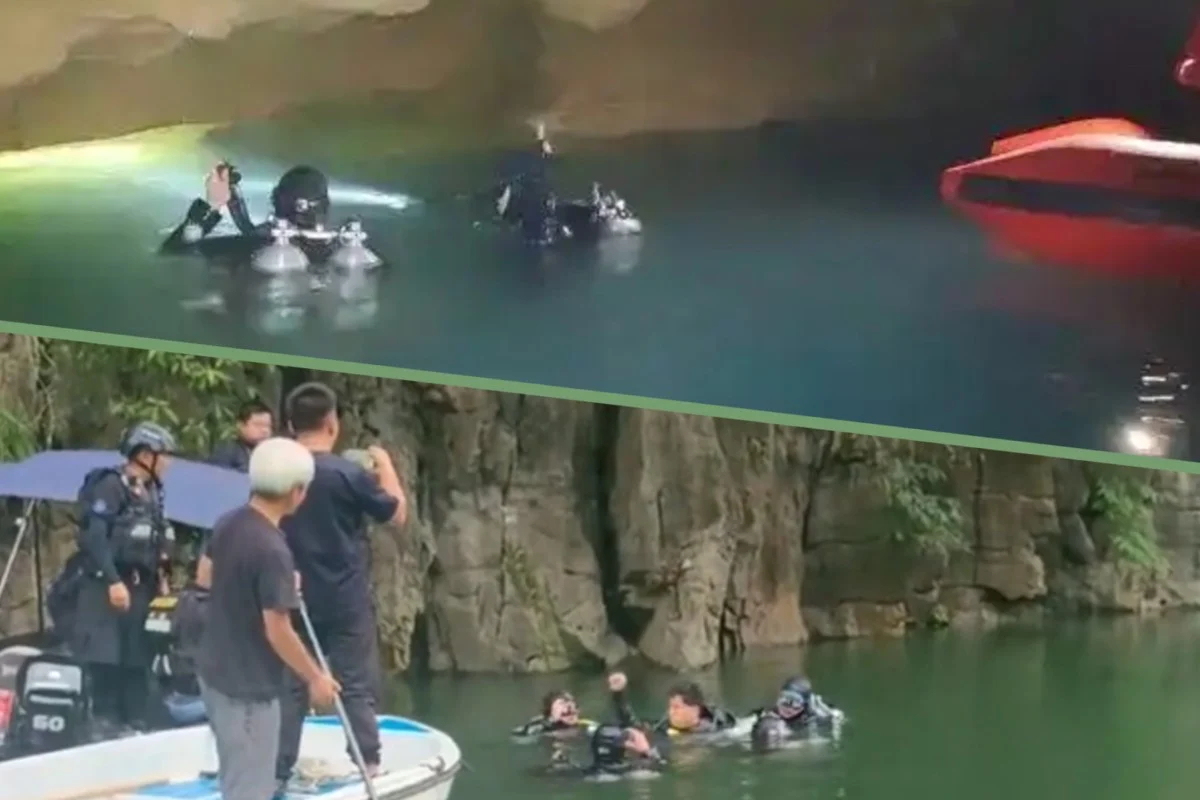
If you were trapped underwater in total darkness for five days, unsure whether you’d ever see sunlight again, what would be the first thing you’d say after you were rescued?
Most people imagine saying “Thank you,” or bursting into tears, or calling a loved one.
But when one Chinese man emerged alive after nearly a week in an underwater cave system, dehydrated, exhausted, and half convinced he was already dead, his first words stunned the world:
“Can I get a cigarette?”
It was the most human request imaginable after surviving something almost no one on Earth has lived to describe.
But how did a diver end up trapped underwater for five days?
And how did he survive when everything—from biology to physics to chance—was working against him?
To understand the full story, you have to imagine the cold, the darkness, the hunger… and the moment he realized the only way out was to cling to life inside a cavern barely big enough to breathe in.
Table of Contents
- The Dive That Should Have Been Ordinary—but Became a Fight for Life
- The Hidden Air Pocket That Became His Only Lifeline
- Five Days in Darkness: How He Survived the Impossible
- The Sound That Brought Hope Back From the Edge
- “Can I get a cigarette?” — The Words No One Expected
- Why His Story Matters More Than We Think
- The Science of Extreme Survival: How the Human Body Endures What Seems Impossible
- Could This Happen Again? The Hidden Dangers of Cave Diving in Asia
- The Aftermath: What Five Days Underwater Does to a Person
- What This Story Teaches Us About Human Nature
- The Story Isn’t Just About Survival — It’s About What We Do When We’re Given a Second Chance
The Dive That Should Have Been Ordinary—but Became a Fight for Life
It began like many recreational dives do: calm water, clear skies, and a plan that should have lasted only a short while.
The man, an experienced diver, slipped beneath the surface expecting peaceful exploration—nothing more.
But nature, as it often does, had different plans.
A sudden underwater current swept him away, pulling him deeper into the maze-like cave system beneath China’s waters.
Before he realized what had happened, he was lost.
Imagine the panic of looking up and seeing no exit—just rock, darkness, and water that stretches endlessly.
He tried to swim back.
Every direction looked the same.
Oxygen was limited.
Visibility dropped to zero.
That’s when the hard truth hit him:
He wasn’t getting out. Not today. Maybe not ever.
But something unexpected happened next—something that would save his life.
The Hidden Air Pocket That Became His Only Lifeline
As he drifted deeper into the cave system, something miraculous appeared:
A small, dome-shaped cavern where the roof arched above the water line, trapping a pocket of breathable air.
It wasn’t luxury.
It wasn’t shelter.
But it was survival.
He pulled himself into the darkness, clinging to the slippery rock, listening to the echo of water dripping from the ceiling.
The cold wrapped around him like a second skin.
That air pocket—just big enough to sit in—became his world.
Imagine having to choose:
Remain in this cramped cavern with no food, no light, and no guarantee of rescue…
or dive back into the labyrinth of darkness that nearly killed you once already.
He chose to wait.
And waiting would become the hardest discipline he had ever known.
Five Days in Darkness: How He Survived the Impossible
Food? None.
Light? None.
Warmth? None.
Time? Impossible to track.
So how does a human survive in such conditions?
1. He conserved energy like his life depended on it—because it did.
He barely moved, slowing his breathing to preserve oxygen.
The cave was cold, threatening hypothermia, but moving too much would burn precious energy.
2. He drank water flowing through the limestone walls.
Only a thin trickle—just enough to stay alive.
Hydration became the thin line between life and death.
3. He caught and ate small cave fish.
Survival instincts kick in when the body is pushed to the brink.
He used his hands to feel movement in the water, catching tiny fish in complete darkness.
You might wonder:
Could you do the same?
Would you have stayed calm, or would panic have taken over?
Survival often depends less on strength and more on the mind’s ability to remain centered in terror.
His mind didn’t give up.
But his body?
It began to fade.
By the fourth day, he reportedly felt suspended between dreaming and dying—his body in the cold, his mind somewhere else entirely.
He began to convince himself he might never leave that cave.
And just when all hope seemed gone… a faint sound changed everything.
The Sound That Brought Hope Back From the Edge
On the fifth day, he heard something he hadn’t heard since the moment he got lost:
Movement.
But not the movement of water.
Voices.
Muffled, distant, echoing through the passageways.
Rescue divers.
Hope rushed through him, but he faced a new challenge:
How do you make rescuers hear you in a system of twisting, echoing chambers?
Every shout bounced around like a ghostly whisper, making it impossible to tell where the sound came from.
He hit the water.
He splashed.
He yelled again.
He risked using precious energy—energy he barely had left.
And finally, through the darkness, a beam of light pierced the cave.
Imagine the moment that light touched his face after five days of total darkness.
Imagine the relief.
Imagine what he must have felt when the rescuer’s hand reached out to him.
And yet, out of everything he could have said, his mind reached for something simple, familiar, grounding—something that reminded him he was still human, still alive.
“Can I get a cigarette?” — The Words No One Expected
The rescuers were stunned.
Here was a man who had beaten nature, starvation, isolation, hypothermia, and the crushing mental weight of being trapped underground…
And the first thing he wanted was not food.
Not medical help.
Not a phone.
Not a blanket.
But a cigarette.
A symbol of normal life.
A symbol of routine.
A symbol of calm.
For five days, he had been suspended between life and death.
A cigarette meant he was back in the world of the living.
Sometimes survival isn’t just about the body—it’s about the mind finding something familiar enough to anchor itself.
His unexpected request went viral across China, and soon across the world.
But beneath the humor and shock, the story revealed something deeper:
A glimpse into what humans turn to when faced with the unimaginable.
Why His Story Matters More Than We Think
At first glance, it’s a wild survival story.
But underneath, it touches on themes that matter to everyone:
1. How fragile life is
One unexpected current, one wrong turn, and everything changed.
2. How strong the human survival instinct can be
Five days without proper food or warmth, yet he endured.
3. How humor can return even in the darkest moments
His cigarette request wasn’t just funny.
It was a psychological release.
4. How rescue operations require incredible teamwork and strategy
China’s emergency response illustrates what preparedness looks like.
5. How travel, adventure, and outdoor recreation carry real risks
For travelers, divers, and adventure-seekers, this story underscores the importance of training, safety gear, insurance, and planning.
This story becomes a window into more than survival—
it becomes a reflection of life’s unpredictability.
But it also opens a bigger question…
Would you have survived five days in that cave?
The Science of Extreme Survival: How the Human Body Endures What Seems Impossible
Surviving underwater isolation for five days is almost unheard of.
But science explains how his body pulled it off.
Cold water slows the metabolism
This reduces energy needs and slows organ function, giving the body a fighting chance.
Darkness reduces sensory overload
The brain naturally shifts into energy-saving survival mode.
Small amounts of water prevent dehydration-related death
He found just enough to keep his organs functioning.
Protein from small fish kept him alive
Even tiny amounts were enough to sustain basic metabolic needs.
Mental discipline protects the brain
Panic burns oxygen.
Calm preserves it.
This is why so many extreme survivors have a similar trait:
the ability to control fear, even when everything seems hopeless.
Would you?
It’s a question only real danger can answer.
Could This Happen Again? The Hidden Dangers of Cave Diving in Asia
Asia’s underwater cave systems are breathtaking—but also deadly.
Thailand, Vietnam, China, and the Philippines are home to networks of submerged caverns that attract divers from around the world.
But risks include:
- unpredictable currents
- poor visibility
- sudden weather changes
- complex cave layouts
- lack of emergency exits
- cold water exposure
- equipment limitations
That’s why travel insurance companies often classify cave diving under “adventure travel” or “high-risk tourism,” requiring special coverage.
It’s also why experienced divers train for years before attempting such terrain.
The man who survived five days didn’t just endure bad luck.
He endured one of the most dangerous environments on Earth.
And somehow, he walked out alive.
But what happened after his rescue?
The Aftermath: What Five Days Underwater Does to a Person
Physically, he was weak, dehydrated, and malnourished.
But mentally?
Experts say prolonged darkness and isolation can cause:
- hallucinations
- disorientation
- time distortion
- memory gaps
- emotional numbness
- micro-trauma
Yet in his case, the mind’s resilience shone through.
Humor returned.
Speech returned.
He reconnected with reality.
One rescuer noted:
“He was exhausted, but he was calm. His spirit was strong.”
But there was something else—something unexpected…
The more people heard his story, the more they wanted to know one thing:
Why did he ask for a cigarette first?
His answer, later shared jokingly, was simple:
“It felt like the most normal thing to do.”
After five days in a nightmare, normalcy was the first thing he craved.
What This Story Teaches Us About Human Nature
Humans are wired to survive.
But we’re also wired to seek comfort, routine, and familiarity.
That’s why:
- soldiers returning from battle crave small rituals
- survivors of accidents seek comforting habits
- people in distress cling to familiar scents, objects, or actions
The mind reaches for what feels safe.
For him, that was a cigarette.
For someone else, it might be:
- a cup of tea
- a warm meal
- calling a loved one
- hugging a friend
The request wasn’t strange.
It was human.
The Story Isn’t Just About Survival — It’s About What We Do When We’re Given a Second Chance
Most people never experience a moment where they truly believe they might die.
He spent five days in that space—facing his mortality with nothing but darkness and dripping cave water to keep him company.
He was given a second chance at life.
And the moment he returned to daylight, to people, to hope, he grounded himself with something simple and familiar:
“Can I get a cigarette?”
But there’s one final question worth asking:
If YOU were rescued after five days underwater… what would be the first thing you’d ask for?
Think about it.
Your answer reveals more about your heart than you might expect.