
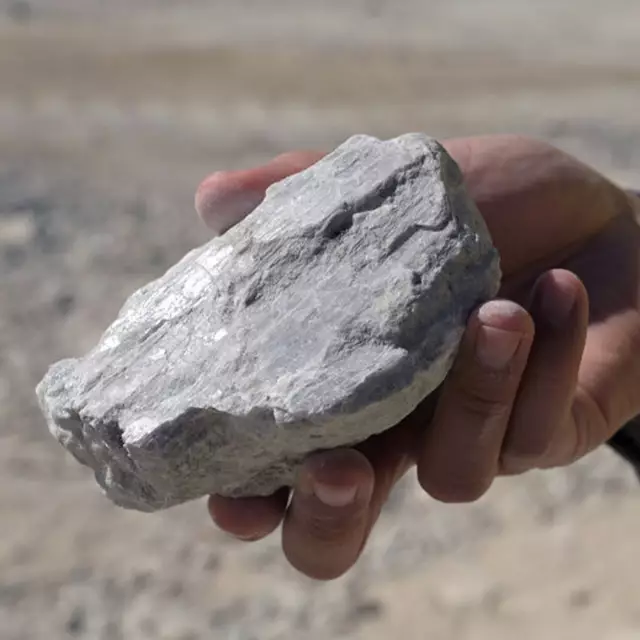
If someone told you the key to the world’s energy future was hiding beneath a sleeping supervolcano in Oregon, you might think they were pitching a Hollywood disaster movie.
But the truth is stranger — and far more valuable — than fiction.
Deep inside the ancient crater of the McDermitt Caldera, scientists have discovered what may be the largest lithium deposit ever found on Earth. A deposit so vast, so untouched, and so strategically important that it could reshape the global economy, rewrite energy politics, and transform the future of electric transportation.
And the wildest part?
This giant treasure sat hidden right beneath our feet — for millions of years.
The story of this discovery is a blend of geology, energy economics, climate urgency, and the quiet power of the American West.
And once you understand what this lithium means for the world, you’ll realize we may be standing at the edge of the next industrial revolution.
Let’s start with the place no one expected to hold such wealth.
Table of Contents
- A Supervolcano That Last Erupted When Mammoths Roamed North America
- Why Lithium Matters — And Why This Deposit Could Change Everything
- A Perfect Geological Recipe: How a Volcano Created a Lithium Goldmine
- A Discovery With Global Consequences: Energy, Economy, Geopolitics
- Local Communities vs. Global Demand — The Growing Tension in Oregon
- The Financial Boom: Why Investors Are Watching Oregon Closely
- What If the Supervolcano Wakes Up?
- A Resource That Could Reshape Daily Life — Including Yours
- Before You Leave — Ask Yourself This Question
A Supervolcano That Last Erupted When Mammoths Roamed North America
The McDermitt Caldera straddles Oregon and Nevada — a massive bowl in the earth formed by a volcanic eruption so ancient, it predates humanity itself.
Picture this:
A volcanic explosion 16 million years ago blasted ash across thousands of miles, reshaping the landscape and leaving behind minerals that would eventually become one of the most sought-after resources of the 21st century.
Today, the caldera looks peaceful —
quiet hills, desert brush, open sky.
But underneath that tranquility lies something the energy world has been desperately searching for:
Lithium. And not just lithium — some of the purest and most accessible ever discovered.
It’s almost poetic:
A volcano that once destroyed the land may now help save the planet.
But before we get ahead of ourselves, let’s answer one crucial question.
Why Lithium Matters — And Why This Deposit Could Change Everything
Lithium is the backbone of the clean-energy revolution.
It powers:
- electric vehicles
- solar storage batteries
- smartphones
- laptops
- grid-scale storage systems
- renewable-energy infrastructure
Without lithium, the world cannot transition away from fossil fuels.
But here’s the challenge:
The world doesn’t have enough lithium to meet future demand.
By 2030, global lithium needs may triple.
By 2040, they may multiply tenfold.
That’s why this discovery in Oregon matters.
Not as a footnote —
but as a turning point.
One geologist said:
“If estimates hold, this single deposit could supply the entire United States — for decades.”
But how did so much lithium accumulate here?
The answer reveals a geologic process that couldn’t be replicated even if we tried.
A Perfect Geological Recipe: How a Volcano Created a Lithium Goldmine
When the supervolcano erupted, it produced a rare blend of heat, pressure, and mineral-rich volcanic ash. Over millions of years, rainwater and hydrothermal activity leached lithium into clay deposits deep in the caldera.
Most lithium on Earth sits in:
- salt flats (like Chile’s Atacama Desert)
- hard rock mines (like Australia’s Greenbushes)
But Oregon’s lithium sits in claystone, which may be easier and cheaper to extract — a potential economic game changer.
This ancient volcanic chemistry created:
- unusually high lithium concentration
- massive tonnage
- geologically stable deposits
- relatively shallow depth
In short:
Nature accidentally built one of the largest batteries on Earth.
And we just found the on/off switch.
But economic opportunity is only half the story.
A Discovery With Global Consequences: Energy, Economy, Geopolitics
Lithium isn’t just a mineral.
It’s power — in every sense of the word.
Right now, China dominates global lithium processing.
South America controls much of the raw supply.
The U.S. relies heavily on imports.
This creates:
- political vulnerability
- supply chain instability
- price volatility
- national security concerns
But if Oregon’s lithium deposit is as large as scientists believe, everything changes.
✔ The U.S. becomes a global energy competitor
This discovery could support American EV production for decades.
✔ Car prices could drop dramatically
Battery cost is the single biggest driver of EV pricing.
✔ Renewable energy storage becomes cheaper
Making solar power more viable for everyday homes.
✔ Investor interest spikes
Mining, tech, real estate, energy — all stand to benefit.
✔ New jobs and infrastructure emerge
From rural Oregon to nationwide manufacturing facilities.
But every opportunity brings conflict — and this one may redefine politics in the American West.
Local Communities vs. Global Demand — The Growing Tension in Oregon
Lithium mining is not simple.
And not everyone wants it.
Local communities worry about:
- water use
- land disruption
- cultural and tribal heritage
- wildlife habitat
- long-term environmental impact
The irony is painful:
Lithium is essential for combating climate change —
but extracting it can damage the environment.
This creates an uncomfortable question:
How do you save the planet without hurting the land beneath your feet?
Solutions exist —
but they require technology, regulation, and cooperation between government, industry, and indigenous leadership.
One thing is certain:
The world will not ignore Oregon’s lithium.
There is too much at stake.
And that means this quiet region may soon be at the center of global attention.
The Financial Boom: Why Investors Are Watching Oregon Closely
If this deposit becomes fully operational, experts predict:
- billions in economic activity
- thousands of jobs
- skyrocketing land value
- new transportation and housing demand
- tech-sector partnerships
- renewable-energy companies moving in
This isn’t just mining.
It’s industry transformation.
And for investors, this is one of the highest-intent opportunities in modern energy finance.
Mining companies are already:
- securing land
- conducting environmental studies
- negotiating permits
- courting government support
- forming partnerships with automakers
Because the company that controls this deposit may control the future of the U.S. EV market.
But only one question remains:
What If the Supervolcano Wakes Up?
Let’s address the fear that every reader eventually has:
If there’s a supervolcano beneath Oregon, is mining it dangerous?
Experts say no.
The McDermitt Caldera is considered geologically inactive —
a relic of a past era.
Think of it less like a volcano…
and more like a giant fossil.
But danger takes many forms.
The real eruption, scientists say, won’t come from magma.
It will come from:
- economic pressure
- political battles
- environmental debates
- global energy demands
- corporate competition
- community resistance
This discovery is a volcano of a different kind —
one made of human decisions.
And the world is watching to see how it explodes.
A Resource That Could Reshape Daily Life — Including Yours
Lithium from Oregon could end up in:
- the EV you drive
- the home battery storing your solar energy
- the smartphone in your hand
- the laptop you’re using now
- the grid powering your city
It could lower electricity bills.
It could push real estate developments toward greener technologies.
It could reshape travel through electrified aviation.
It could change how nations negotiate power — literally and politically.
And it all began with rocks laid down before the first humans existed.
This discovery isn’t just scientific.
It’s personal.
It will change the way we live.
But only if we choose wisely.
Before You Leave — Ask Yourself This Question
Picture the quiet desert of Oregon.
Beneath the soil, enough lithium to change the world.
Beneath the lithium, the bones of an ancient supervolcano.
Above it, the future of global energy waiting to be written.
Now ask yourself:
If the key to our energy future is hidden beneath an ancient eruption… what else is waiting to be discovered beneath our feet?
Because sometimes, the largest revolutions don’t start with explosions.
They start with clay, time, and a quiet place where no one thought to look.