
Table of Contents
The Curious Case of Australia’s Rocket and a Cockatoo
When news broke that Australia’s much-anticipated attempt to launch its first home-grown orbital rocket had once again been called off – this time with a wild cockatoo caught on camera near critical electrical wires at the launch pad – aerospace enthusiasts, engineers, and casual observers alike were left equal parts amused and intrigued. What started as a highly technical space endeavour from a purpose-built orbital facility in north Queensland turned into a story with an unexpected feathered cameo, raising questions about both the fragility and unpredictability of cutting-edge space technology.
But the heart of the matter wasn’t merely feathered mischief – it was a serious technical issue that underscores the difficulty of launching rockets even as private spaceflight surges worldwide. What follows is an in-depth look at the attempt to launch Australia’s Eris rocket, the bizarre circumstances that emerged during its postponement, and what it all means for the nation’s growing aerospace ambitions.
Space Ambitions Down Under
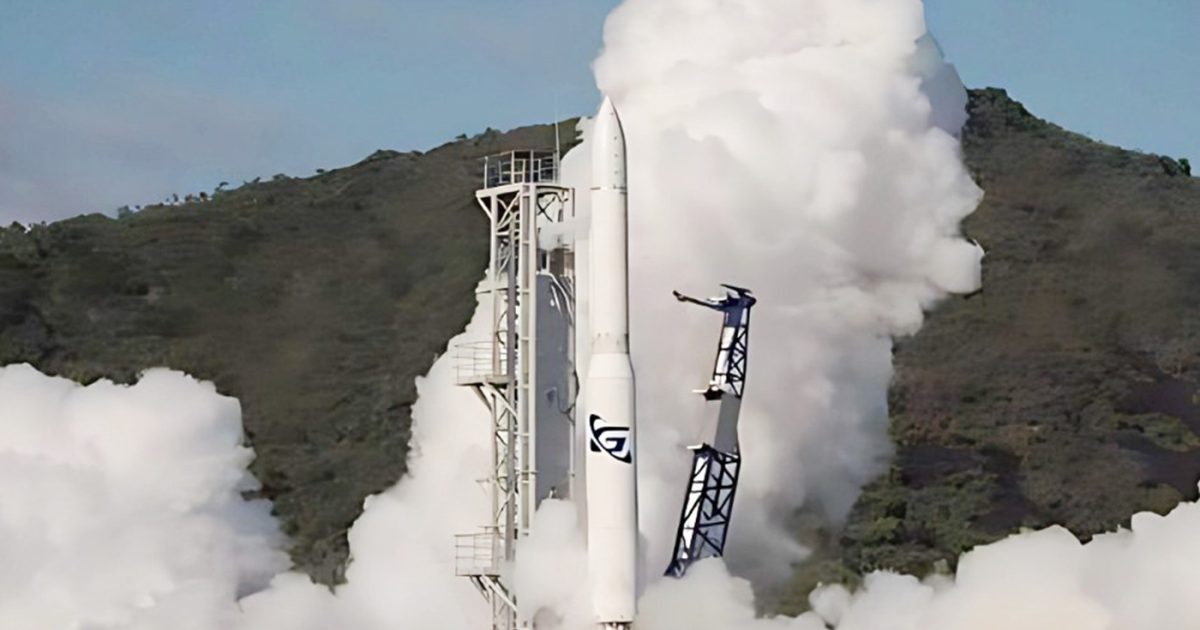
For decades, Australia had been notable for its contributions to radio astronomy and satellite communication, but actual rocket launches from its own soil remained elusive. That began to change with the rise of Gilmour Space Technologies, a private aerospace company founded by the Gilmour brothers on the Australian Gold Coast, which developed the Eris orbital rocket specifically to carry payloads into low Earth orbit – potentially for commercial and government satellites alike.
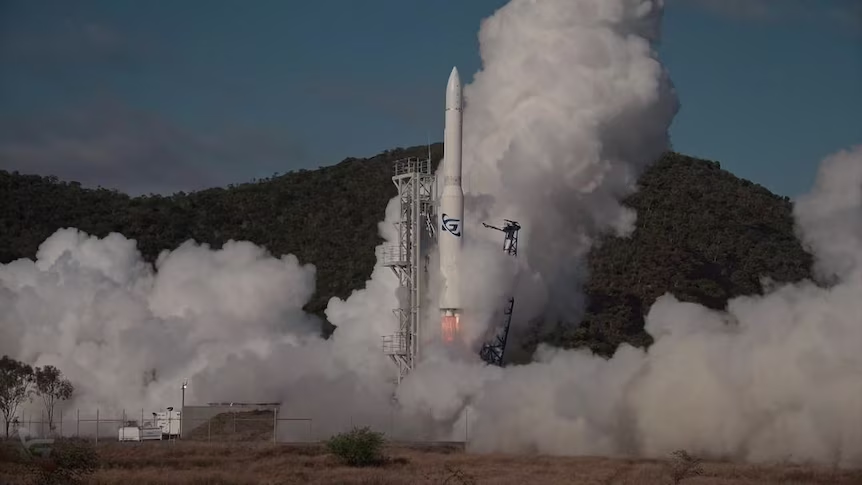
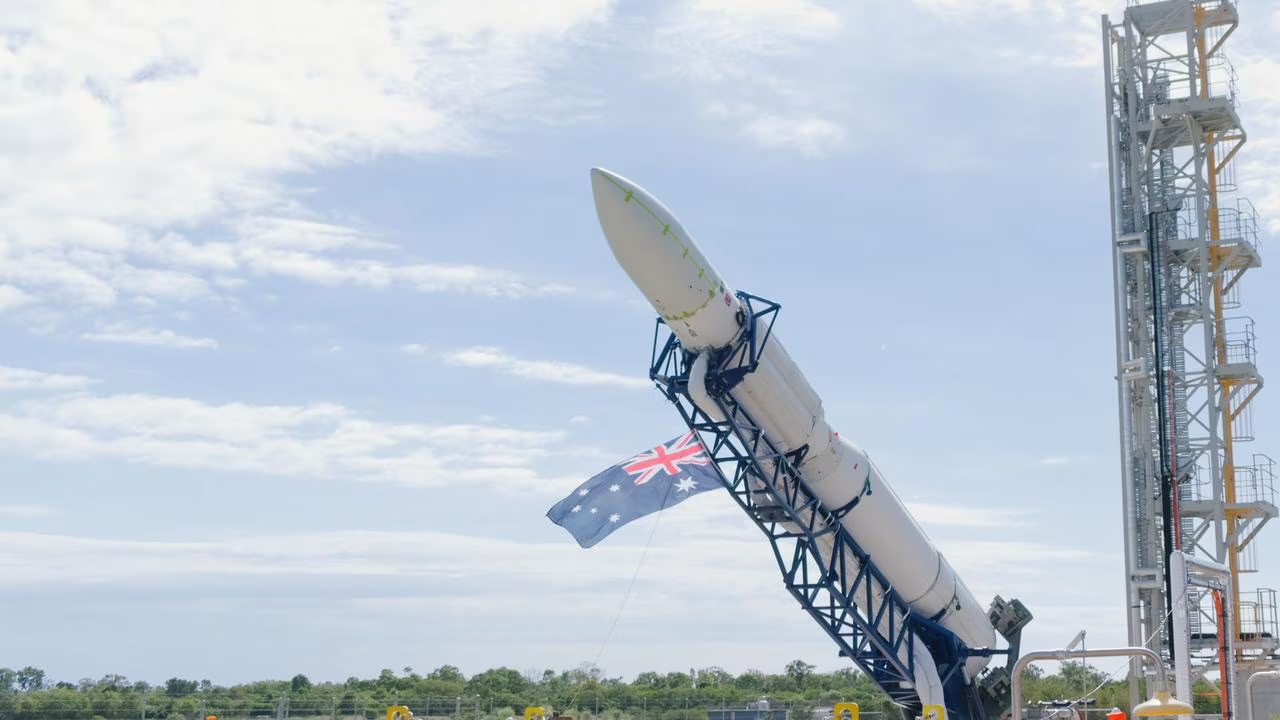
The Eris rocket, standing roughly 23 metres tall, was poised to become the first fully Australian-designed and manufactured orbital launch vehicle to lift off from Bowen Orbital Spaceport in north Queensland – a remote site converted from cow paddocks into a space launch facility. It represented years of engineering work, regulatory approvals from the Australian Space Agency and Civil Aviation Safety Authority, and significant investment in sovereign space capability.
Setting the Stage
In mid-May, Gilmour Space prepared to launch Eris within a two-week window granted by authorities. Engineers and spectators gathered on site – even some making the trek hundreds of kilometres to see history in the making. However, as often happens in aerospace, last-minute technical issues began cropping up.
Days before the main launch, ground support systems experienced an electrical fault that led to the rocket’s payload fairing (nose cone) deploying prematurely during pre-flight checks. That anomaly caused the initial attempt to be scrubbed, triggering a detailed investigation into what had gone wrong.
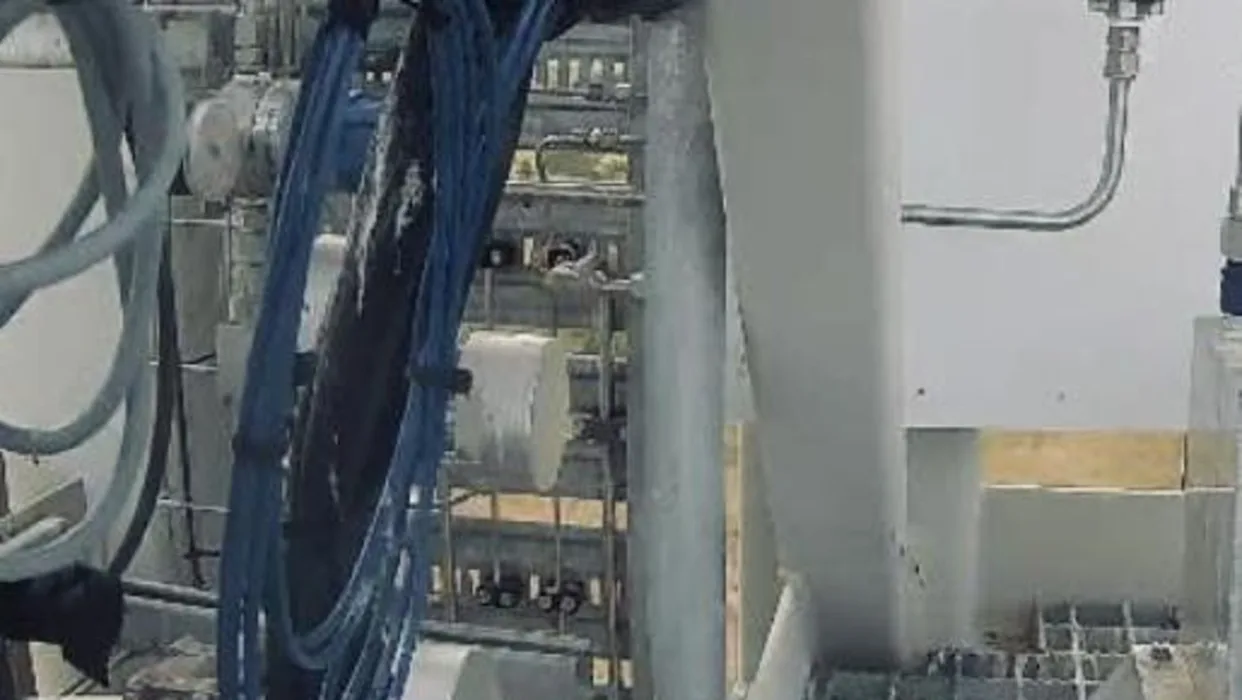
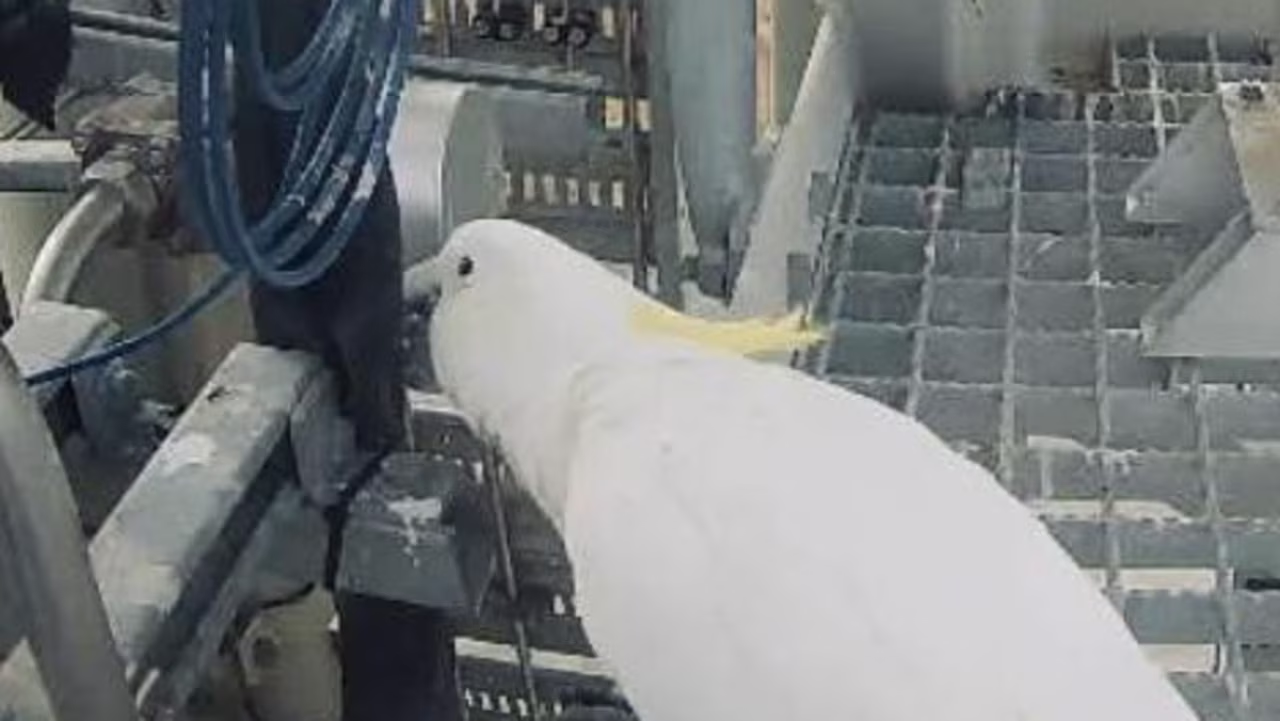
On site, a curious twist emerged: security cameras caught footage of a large cockatoo nibbling around exposed wiring near the launch systems. Photos of the bird were shared by Gilmour Space on social media with humorous captions, acknowledging that while the cockatoo wasn’t officially responsible, its presence had added a quirky element to an already complex problem.
A Bird in the Wires
The image of a cockatoo close to crucial electrical wiring quickly went viral, prompting social media commentary that ranged from laughter to disbelief: “Only in Australia,” one observer quipped, “could a rocket launch be bookended by cows and cockatoos.”
While engineers were careful not to officially blame the bird for the fault, the juxtaposition of cutting-edge technology and a native wildlife visitor shone a spotlight on the practical challenges of conducting rocket operations in a rural, open-air environment. These birds, common across Australia, are known for their intelligence and curiosity, and while they may have only been seen investigating equipment, the incident underscored an important reality: no technology operates in isolation from the natural world around it.
Postponement and Continued Investigation
Officials at Gilmour Space stated that the fault prompting the scrubbed launch was rooted in an electrical anomaly – one likely tied to system wiring rather than any single external cause. Engineers worked methodically to diagnose the problem, examining sensor data, ground systems, and launch infrastructure to determine the precise sequence of events leading to the fault.
The company emphasized that the rocket itself and the launch pad had not suffered damage, and no personnel were harmed during the incident. Nevertheless, the extended investigation meant that launch efforts were delayed indefinitely, pending further testing and remediation of identified issues. Gilmour Space indicated that fixes were underway and that the next launch window would be confirmed once teams were confident the problems had been resolved.
The Unforgettable Cargo
In another nod to Australian culture, the Eris rocket’s payload in the May attempt included a jar of Vegemite – the iconic salty yeast spread beloved across the country. This light-hearted inclusion was intended as a symbolic gesture, presenting a quintessential piece of Australian identity alongside a bold technological endeavour.
It wasn’t just a publicity stunt; rather, it served as a reminder that space exploration – even in its most serious technical form – can carry cultural weight and resonate with broader public imagination. From the fields of Queensland to social media around the world, the image of Vegemite awaiting orbit was a uniquely Australian flourish.
What Happens Next
Following the electrical investigations and the comedic spotlight on cockatoos, Gilmour Space shifted focus to addressing technical challenges that routinely plague early rocket programs. These include refining ground support interfaces, hardening systems against environmental interference, and ensuring that all electrical components meet rigorous aerospace standards.
Company officials indicated that upgrades and fixes were progressing, with future launch dates dependent on systems passing final approval testing and regulatory clearance. As the field of commercial spaceflight continues to grow, Gilmour’s efforts represent a significant milestone in Australia’s sovereign launch capability – even if that journey includes obstacles like curious birds on site.
The Broader Picture
Delays and failures are not uncommon in the history of spaceflight. Early rocket programs in all major spacefaring nations – including the United States, Russia, and Europe – experienced numerous setbacks before achieving reliable launch success. Each failure provided engineers with data that informed design improvements and safer operations.
Australia’s entry into this domain, spearheaded by Gilmour Space and others, reflects that same iterative process where insights aren’t only measured in triumphs but also in what teams learn from setbacks. Whether caused by complex electrical interactions or simply spotlighting the reality of wildlife near sensitive systems, these lessons are valuable.
Even in later months, an attempt by the same company saw the Eris rocket briefly lift off and crash shortly after liftoff due to insufficient thrust, although more recent efforts aim to resolve those issues for future success.
Conclusion
The story of Australia’s delayed rocket launch – complete with electrical faults, a curious cockatoo, and a jar of Vegemite – may be memorable for its eccentricity, but it also highlights a core truth about space exploration: progress often passes through unpredictable detours.
What matters most is not the comedy of a bird in the wires, but the persistence of engineers, scientists, and a nation determined to hold its own in the commercial space era. As Gilmour Space continues to refine and retest its technology, each iteration brings Australia closer to joining the ranks of countries capable of launching payloads into orbit – propelled not just by rocket fuel, but by ingenuity, resilience, and perhaps a bit of Aussie spirit.