
Table of Contents
- The Origins of the U.S. Government’s Cheese Caves
- Why Cheese? The Government’s Strategic Food Storage Plan
- The Role of the Cheese Caves in Food Security
- What Makes the Cheese Caves Special? The Science of Storage
- The Decline of the Government Cheese Program
- The Legacy of Government Cheese
- What Happens to the Cheese Today?
- The Future of Food Storage and Cheese Caves
- Conclusion
The Origins of the U.S. Government’s Cheese Caves
The story of the U.S. government’s cheese caves begins in the 1980s, during a period of agricultural surplus. The dairy industry, facing overproduction and falling prices, needed a way to address the excess supply of cheese. This created a problem for both farmers and the government, as there was simply too much cheese for consumers to buy. The government, in an effort to stabilize the dairy market and protect farmers’ livelihoods, began buying up surplus cheese from producers.
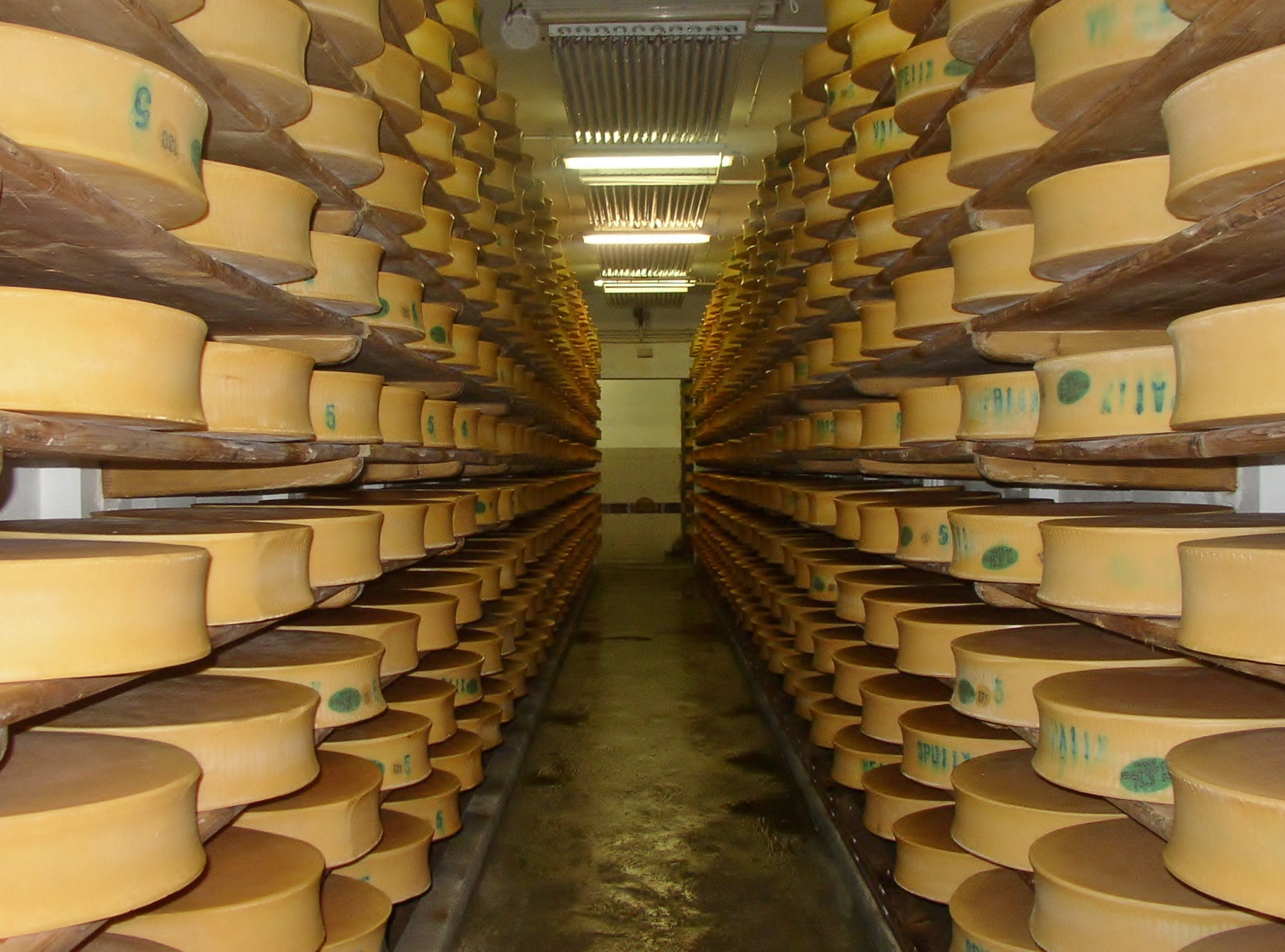
Rather than letting the cheese go to waste, the government decided to store it in specially designed caves. These caves, located in Missouri, Wisconsin, and other states, provided the perfect environment for aging cheese — cool, dark, and temperature-controlled. The government’s decision to store cheese in these caves was not only practical but also part of a larger program designed to protect U.S. agriculture and stabilize the food supply.
Why Cheese? The Government’s Strategic Food Storage Plan
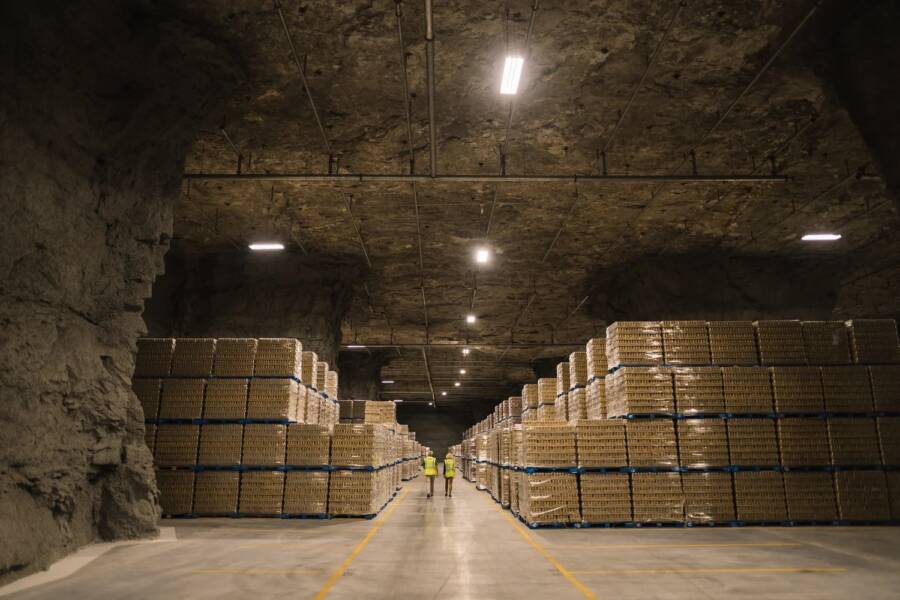
The government cheese caves are part of a broader strategy to maintain food reserves in case of emergency. While cheese may seem like an odd food to stockpile, it has several advantages as a long-term storage product. Cheese, particularly aged varieties like cheddar, can last for years when stored in the right conditions, making it an ideal candidate for government food reserves.
The surplus cheese purchased by the government was part of the Commodity Credit Corporation (CCC) program, which was designed to provide financial assistance to U.S. farmers by purchasing their excess produce. Over the years, this program helped stabilize the dairy market, ensuring that farmers were paid for their milk and cheese even when the market prices dropped. In turn, the government used the cheese to support various relief programs, providing it as a food aid to those in need.
One of the most famous moments in government cheese history occurred in the 1980s when the surplus cheese was distributed to low-income families across the U.S. as part of a federal food assistance program. This “government cheese” became a symbol of the U.S. government’s role in providing support during times of need.
The Role of the Cheese Caves in Food Security
Though the government’s cheese caves began as a solution to an overproduction problem, they also play a critical role in national food security. The caves act as a reserve, ensuring that there is always a supply of food available in case of an emergency or shortage. For example, in times of natural disaster or global conflict, the government can access the cheese stored in these caves to help feed populations affected by disruptions to the food supply chain.
The cheese caves also provide an additional layer of food security by helping to stabilize prices. By holding onto large quantities of cheese, the government is able to influence the market and prevent drastic price fluctuations that could harm consumers and farmers alike. In this sense, the cheese caves serve not only as a warehouse for excess product but also as a strategic tool for managing the nation’s food systems.
What Makes the Cheese Caves Special? The Science of Storage
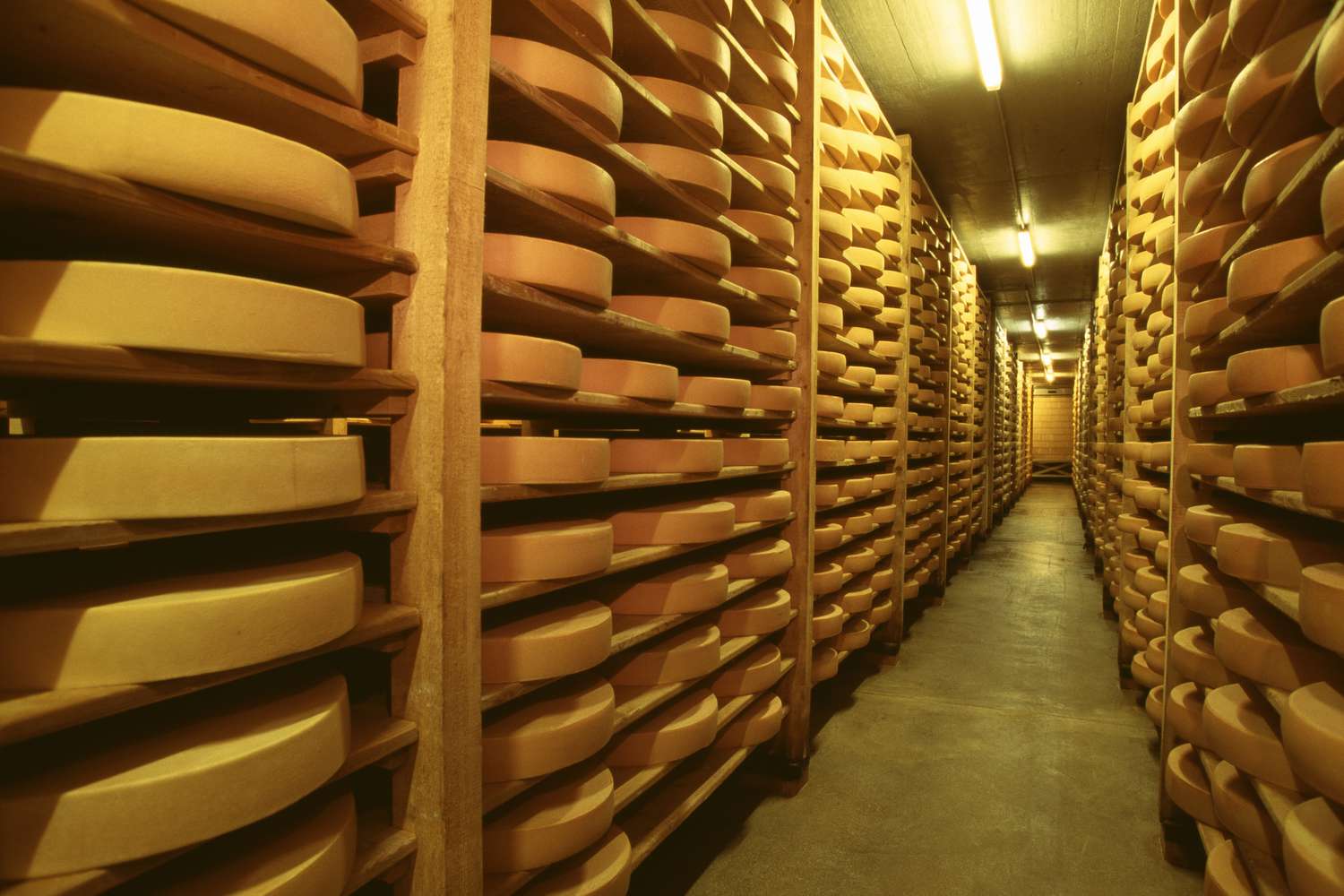
The success of the U.S. government’s cheese caves relies on more than just the quantity of cheese stored. The caves themselves are designed with specific conditions to maintain the quality of the cheese over time. The temperature is carefully controlled, typically ranging between 35 and 40 degrees Fahrenheit (1.6 to 4.4 degrees Celsius), which is ideal for aging cheese without allowing it to spoil.
The caves are also humidity-controlled, which helps prevent the cheese from drying out or developing undesirable molds. Over time, the cheese matures and becomes more flavorful, developing the distinct tangy taste that many cheese enthusiasts appreciate. The aging process, which can take years, is essential for maintaining the quality of the cheese and ensuring it is safe to eat even years after it is produced.
While the cheese caves may not be open to the public, their importance in preserving the nation’s food security cannot be overstated. The care taken in maintaining the right conditions for the cheese is just one example of how the government works behind the scenes to ensure food safety and stability.
The Decline of the Government Cheese Program
While the cheese caves are still in operation today, the scale of the program has decreased significantly since its heyday. With improved market conditions, reduced dairy surpluses, and changes in agricultural policy, the need for government cheese reserves has diminished. As the cheese reserves are used up or sold off, the government has shifted its focus to other methods of managing food security and agricultural support.
The government’s cheese program became a symbol of the economic struggles faced by U.S. farmers during the 1980s. It also highlighted the complexities of food production, market forces, and government intervention. Today, the remaining reserves in the cheese caves are managed with care, and much of the cheese is sold or donated for food assistance programs, although the quantity has significantly decreased.
The Legacy of Government Cheese
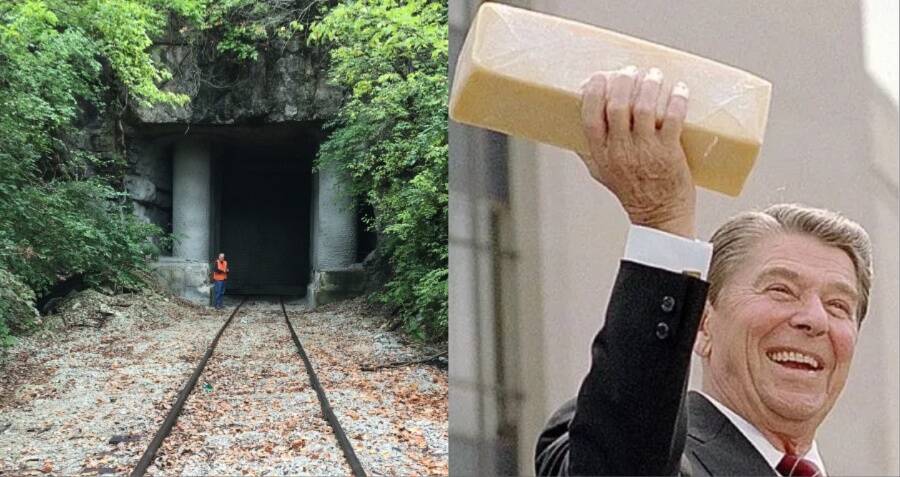
The legacy of the U.S. government’s cheese caves goes beyond just food storage. The term “government cheese” became ingrained in the American cultural lexicon as a symbol of both excess and necessity. For those who received government cheese during the 1980s, it was often a lifeline during difficult economic times.
As time passed, the surplus cheese program faded into history, but its impact remains a reminder of the government’s role in shaping agricultural policies and supporting citizens during times of need. The cheese caves, once a vast underground warehouse of surplus, now hold a much smaller portion of the nation’s cheese reserves, but they continue to serve as a critical part of the U.S. food security infrastructure.
What Happens to the Cheese Today?
Most of the cheese stored in the government’s caves has been sold or distributed over the years. However, the remaining stock continues to be carefully managed and preserved, with some of it being used in federal food assistance programs. The government cheese of yesteryear may not be as prevalent in the public eye, but the infrastructure of the cheese caves still exists as a reminder of the lessons learned from agricultural surpluses and the importance of food security.
In some cases, the surplus cheese is auctioned off to food manufacturers who use it in processed products like cheese spreads, snack foods, and other cheese-based goods. These sales help recoup some of the costs associated with the storage and maintenance of the cheese caves.
The Future of Food Storage and Cheese Caves
Looking ahead, the role of the cheese caves in U.S. food policy may change, but they remain a symbol of how the government manages food production, surplus, and security. As new technologies and systems for food storage are developed, the need for massive cheese reserves may diminish, but the lessons learned from the surplus cheese program will continue to influence how the government addresses food crises and agricultural support.
The cheese caves may not hold the same prominence they once did, but they remain a unique part of American history, demonstrating how food reserves can shape policy and help communities during times of need.
Conclusion
The U.S. government’s cheese caves, though no longer as vast as they once were, offer an interesting and somewhat humorous look at the intersection of agriculture, policy, and food security. From stabilizing dairy prices to providing for those in need, the legacy of government cheese is a reminder of how innovative solutions can come from unexpected places. These cheese caves, while no longer the bustling centers they once were, still hold an important place in the story of U.S. food policy and the complex relationship between the government, farmers, and the food we consume.