
Table of Contents
When the nation tuned in, and what happened
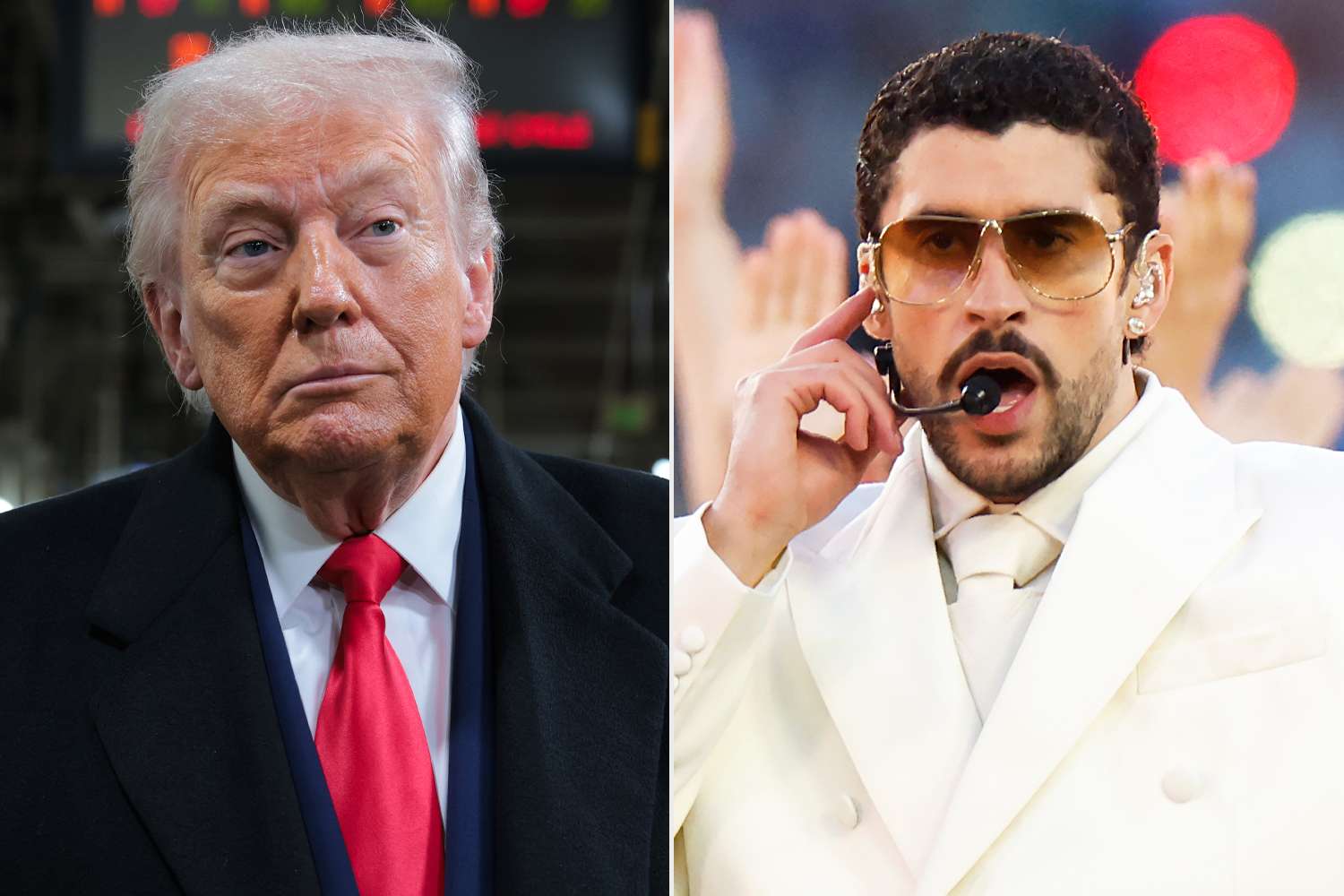
When Bad Bunny, the Grammy‑winning artist from Puerto Rico, took the stage for the 2026 Super Bowl LX halftime show at Levi’s Stadium in Santa Clara, California on February 8, the world saw history — and also a furious reaction from one of the nation’s most polarizing political figures. The performance, widely celebrated by millions of viewers and cultural commentators as a powerful expression of unity and identity, drew unexpectedly sharp criticism from former U.S. President Donald Trump, who took to his social media platform to denounce the moment in words that ignited debate nationwide.
Bad Bunny’s performance was notable for its almost entirely Spanish‑language set, multi‑layered visuals rooted in Puerto Rican and wider Latin American culture, and appearances from icons such as Lady Gaga and Ricky Martin. It was broadcast in the United States across multiple networks and platforms, reaching audiences far beyond the stadium itself.
Trump’s reaction — raw, immediate and scathing — transformed what should have been solely an entertainment moment into a flashpoint for broader cultural and political conversations about language, identity, and who gets to define “American values.”
A performance steeped in culture and story
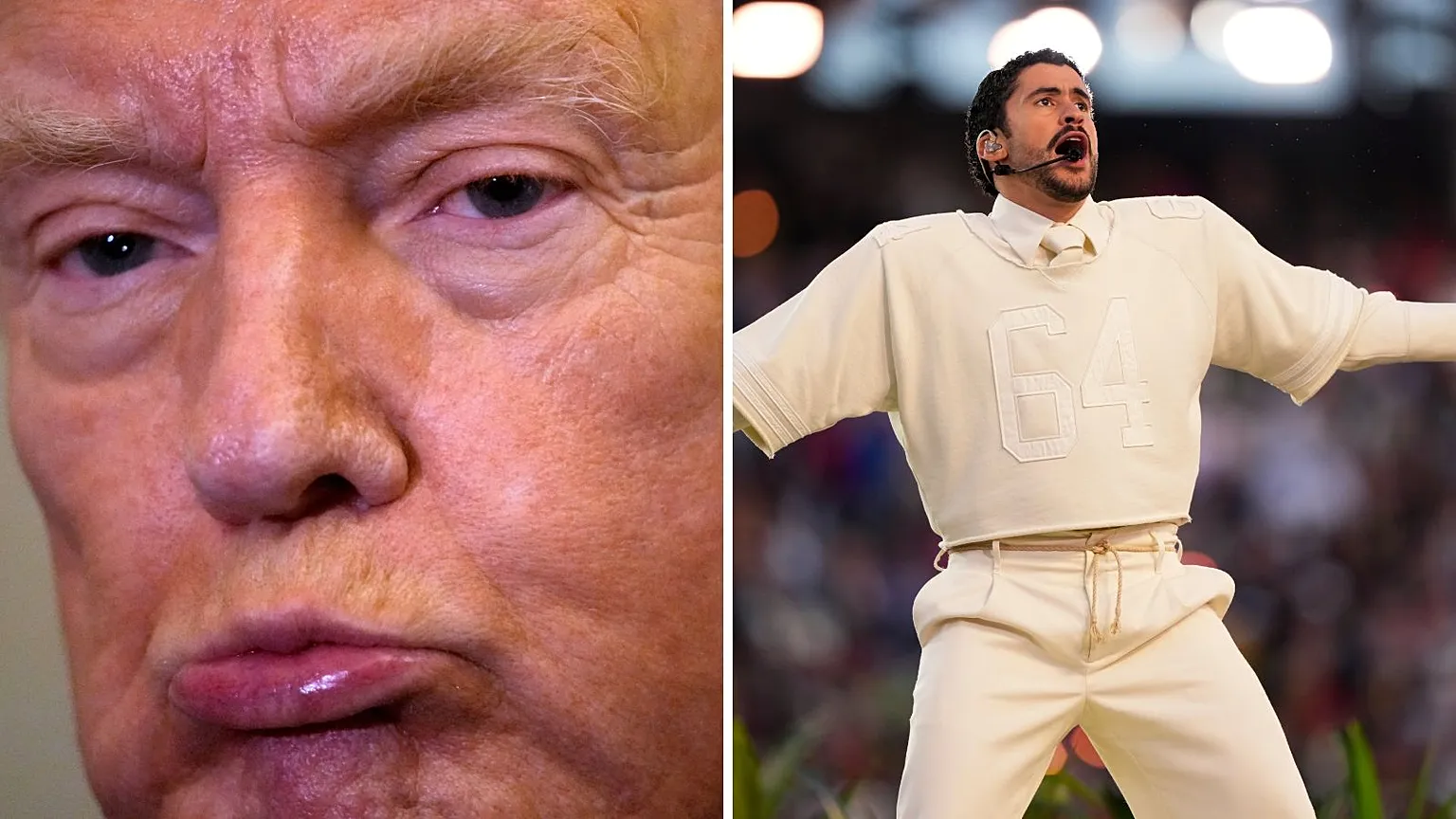
Bad Bunny’s halftime show at Super Bowl LX was designed as more than a set of hit songs; it was a narrative. Throughout the performance, elements of his Puerto Rican upbringing and broader Latin American influences came alive — from scenic designs that resembled sugar cane fields to market stalls labeled “La Marqueta,” evoking both nostalgia and resilience.
The show set itself apart from past halftime performances by leaning into cultural specificity rather than avoiding it. At one point, Bad Bunny gifted a child actor on stage a Grammy statuette, symbolically connecting his personal journey with his art. It also featured a real in‑stadium wedding, an uncommon — and emotionally charged — spectacle that underlined the themes of love and community.
While the narrative was unmistakably rooted in Latino identity, the closer of the performance delivered a message designed to resonate broadly, with the words “Together, We Are America” and visuals of flags from nations across the Americas.
Trump’s sharp rebuke
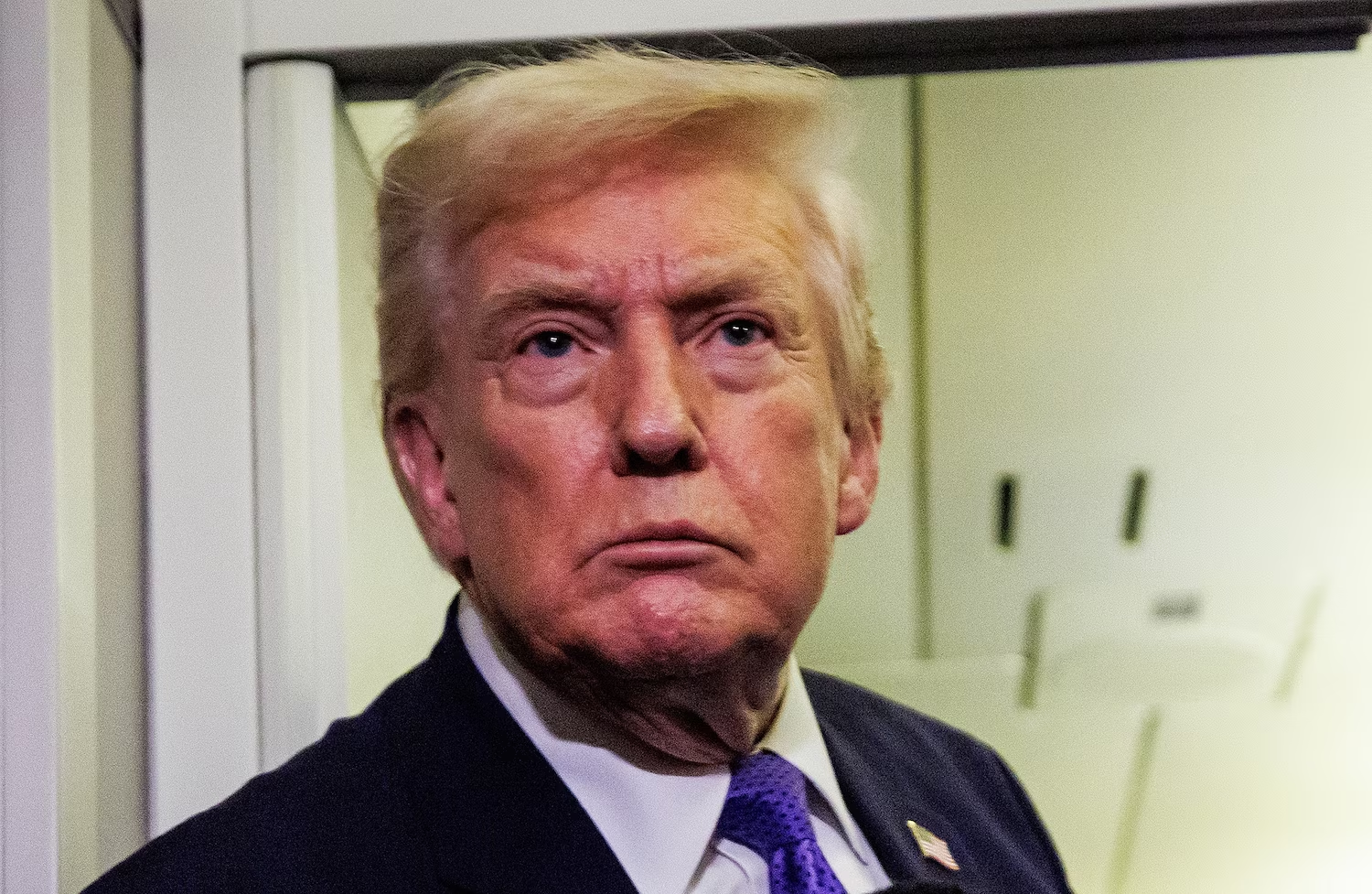
Shortly after the show ended, Trump posted on Truth Social a message that laid out his full‑throated critique: the Super Bowl halftime show was “absolutely terrible” and, in his view, “one of the worst, EVER.” He accused the performance of being “a slap in the face to our country,” adding that “nobody understands a word this guy is saying,” in reference to the Spanish lyrics. Trump also criticized the choreography and expressed concern about what children were seeing on television.
In Trump’s telling, the show represented an “affront to the greatness of America” and failed to reflect “our standards of success, creativity or excellence.” He also lobbed a broader critique at the NFL’s new kickoff rule, mixing his cultural condemnation with a political gripe.
His words did not merely describe dissatisfaction; they echoed a deeper cultural clash — a resistance, from some corners, to what Bad Bunny’s performance symbolized: multicultural expression, language diversity, and inclusion at the pinnacle of American entertainment.
History beneath the controversy
The choice of Bad Bunny for the Super Bowl LX halftime show was itself seen as a groundbreaking decision. According to historical context, this was the first time a solo Latino artist was featured in a set that leaned heavily on Spanish lyrics.
In the months leading up to the broadcast, Bad Bunny’s selection sparked debates over his political stances and cultural identity. In interviews earlier in the year, he had been candid about concerns surrounding U.S. immigration enforcement, notably criticizing ICE raids and choosing to focus his U.S. tour primarily on Puerto Rico. Those stances placed him at odds with some conservative commentators well before the Super Bowl itself.
Even before the performance, pundits on the right questioned whether his music had broad appeal and criticized the NFL for picking an artist who did not primarily sing in English. That backdrop now amplifies the reactions from figures like Trump, who saw in the performance both a cultural and political provocation.
reaction inside and outside politics
Trump’s criticism drew immediate responses from figures across the political spectrum. California Governor Gavin Newsom playfully declared February 8 “Bad Bunny Day,” underscoring how divisive yet impactful the performance was on public discourse.
Meanwhile, a conservative group, Turning Point USA, orchestrated an alternative “All‑American Halftime Show” led by Kid Rock as a form of counterprogramming, attempting to leverage the moment for its own cultural message. Early viewership data suggested this alternative drew millions of viewers online, though it paled in comparison to the audience for the official NFL broadcast.
Critics of Trump’s critique argued that the former president’s words became part of a larger pattern in which artists who celebrate non‑English language or multicultural identities are unfairly targeted. A recent analysis of backlash against musicians spanning several decades shows that criticism from conservative corners has often followed moments of cultural breakthrough or political expression in music.
Broad praise for cultural celebration
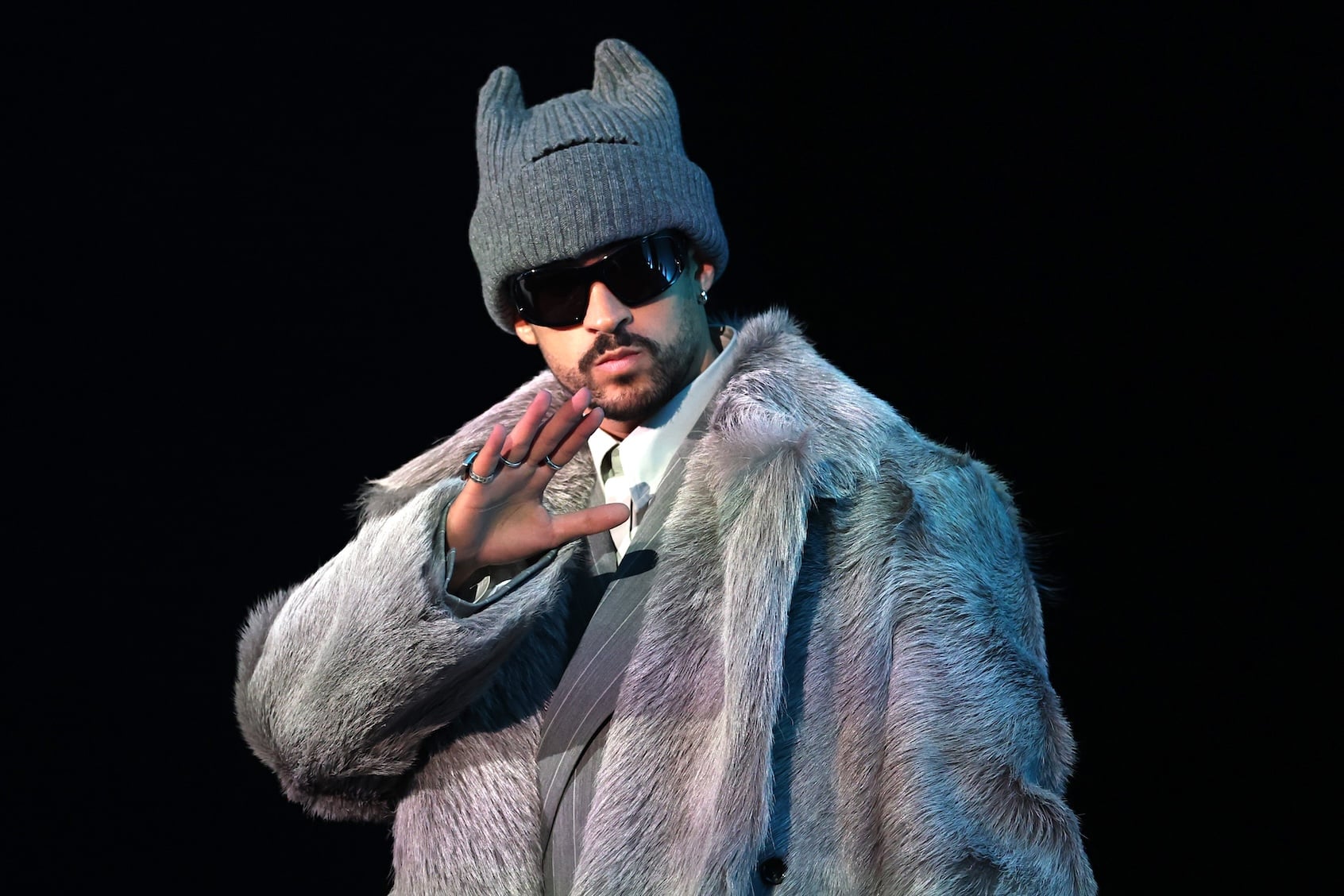
Outside the sphere of political reaction, many fans, music critics and cultural commentators celebrated Bad Bunny’s performance as a watershed moment in halftime show history. Outlets like The Hollywood Reporter, Time, and Billboard praised the show for its creativity, emotional depth and cultural relevance — arguing that it pushed the boundaries of what the Super Bowl stage can represent culturally.
The performance was also seen by many as a symbol of inclusivity, showcasing that major entertainment platforms can uplift diverse voices and languages without diluting their authenticity. For many viewers, the emphasis on unity and love struck a chord.
Additionally, the sheer scale of viewership — potentially rivaling some of the most‑watched halftime sets ever — reinforced that Bad Bunny’s reach transcends political divides and resonates with a global audience.
On language, identity and American entertainment
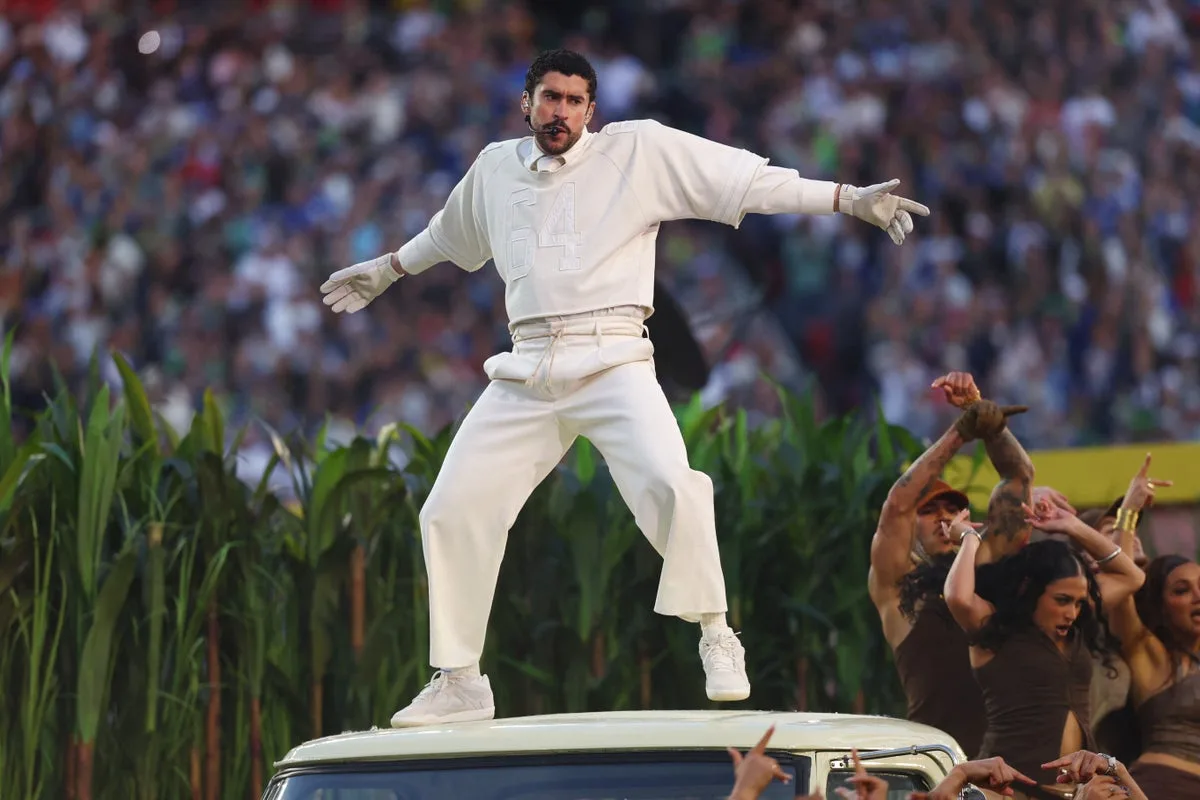
Central to the debate was the fact that most of Bad Bunny’s performance was in Spanish — a first in Super Bowl halftime show history. While Trump and other critics said this language choice alienated some viewers, others saw it as a reflection of America’s multicultural fabric and evolving identity.
The conversation spilled beyond entertainment reporting into broader discussions about language in media, representation in culture, and what it means to be “American” in a country with millions of Spanish speakers. Supporters of Bad Bunny argued that the notion of “understanding a word” misses the point of music’s emotional and unifying power.
What happens next
In the wake of Trump’s comments, social media conversations and opinion pieces have continued to analyze the performance from multiple angles — from cultural significance to partisan reaction. Some commentators have questioned whether political leaders commenting on entertainment events helps or hurts national unity. Others see the dialogue itself as a testament to how influential pop culture moments have become in shaping public discourse.
For Bad Bunny, the immediate aftermath included major changes on his social media platforms, with reports that he deleted his Instagram posts and left only a link to his latest album, fueling fan speculation and curiosity.
Conclusion:
The clash over Bad Bunny’s Super Bowl halftime show reveals more than differing critiques of a musical set — it lays bare the tensions in a country grappling with identity, language and culture on a massive scale. What one figure called “terrible” and incomprehensible, millions others saw as visionary, unifying and emblematic of a diverse America.
Whether history looks back on this moment as cultural conflict or cultural evolution remains to be written, but one thing is clear: a halftime performance, a tweet, and a conversation have together shaped a moment far bigger than the stadium itself.