
Table of Contents
- When the $39 trillion milestone stopped being just another number
- The latest jump came faster than many expected
- Deficits remain the real engine behind the debt surge
- Aging and automatic spending are pushing the budget harder every year
- Interest costs are becoming one of the most dangerous parts of the story
- The first five months of fiscal 2026 already show the pressure building
- Debt as a share of the economy is heading into historic territory
- The debt debate is becoming more political, not less
- The milestone is a warning, not a collapse signal
- What happens next may matter more than the milestone itself
When the $39 trillion milestone stopped being just another number
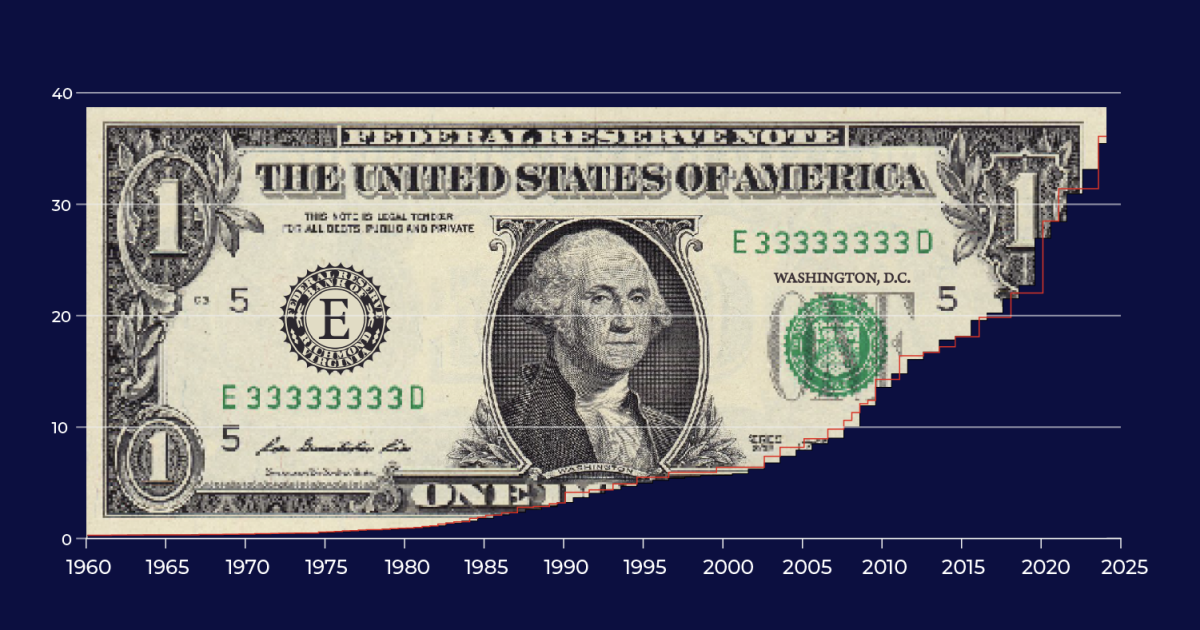
When the United States crossed the $39 trillion mark in national debt, the milestone landed with a jolt not only because of its size, but because of how fast it arrived. Treasury data cited by the Associated Press showed the debt moved past $39 trillion on March 18, 2026, after hitting $38 trillion only about five months earlier and $37 trillion roughly two months before that. The pace itself has become part of the story. This is no longer a slow-moving fiscal trend that policymakers can discuss in abstract terms. It is a rapidly climbing figure that is forcing Washington, investors, and ordinary Americans to confront how much borrowing now defines the federal government’s basic operating model.
That acceleration matters because debt is not merely an accounting total. It reflects choices about taxes, war spending, entitlement programs, health care, interest payments, and the size of government itself. It also shapes what choices remain available in the future. The Associated Press noted that the Government Accountability Office has warned rising federal debt can lead to higher borrowing costs, lower private investment, more expensive goods and services, and downward pressure on wages over time. In other words, the debate over debt is not just a fight between budget hawks and spending advocates. It is increasingly about how much room the country will have to respond to future crises without first running into the cost of promises already made.
The latest jump came faster than many expected

The most startling part of the new debt milestone is its speed. For years, debt increases of a trillion dollars sounded like major events spread across longer periods. Now they are arriving in months. AP reported that the debt moved from $38 trillion to $39 trillion in about five months, following a move from $37 trillion to $38 trillion in only about two months. Michael Peterson of the Peter G. Peterson Foundation warned that if this pace continues, the country could hit $40 trillion before the fall elections. That kind of projection transforms debt from a long-range warning into an immediate political issue.
There are several reasons that speed has increased. The federal government continues to run large annual deficits. Spending remains enormous even in years without pandemic emergency programs. The war in Iran has added fresh strain, with AP reporting White House economic adviser Kevin Hassett estimated the conflict had already cost more than $12 billion by mid-March. At the same time, Washington is trying to balance other expensive priorities, including tax policy, defense, immigration enforcement, and long-term entitlement commitments. Debt rises when those obligations exceed what revenue can support. Right now, that gap remains very large.
Deficits remain the real engine behind the debt surge
The debt keeps growing because the government still spends far more than it takes in. AP reported that in fiscal year 2025, federal spending totaled $7.01 trillion while revenue came in at $5.23 trillion, leaving a deficit of $1.78 trillion. That deficit was slightly lower than the prior year by about $41 billion, but the bigger reality is that a gap of that scale still adds heavily to the debt pile. A small improvement in one year does not meaningfully slow debt growth when the deficit remains measured in trillions.
The Congressional Budget Office expects these deficits to remain historically large. In its February 2026 outlook, CBO projected a $1.9 trillion deficit in fiscal year 2026, rising to $3.1 trillion by 2036. Those are not recession numbers. They are baseline projections under current law and policy assumptions. That is what makes the outlook so serious. The country is not drifting toward a future debt problem. Under current projections, it is already on a path where annual borrowing becomes even larger over the next decade.
This means the national debt is not rising because of one single crisis or one unexpected shock. It is rising because the structure of the budget itself is no longer sustainable under existing commitments and revenue patterns. That is a much harder problem to fix.
Aging and automatic spending are pushing the budget harder every year
One major force behind the debt trajectory is demographic change. As the population ages, spending on Social Security and Medicare continues to rise. These programs are politically popular and deeply embedded in American life, which makes them difficult to reform. But their growth is one reason deficits remain so persistent. Analysts across the fiscal debate have emphasized that the budget is increasingly dominated by spending that grows automatically unless Congress changes the law.
This matters because it narrows the space for easy solutions. Cutting a few discretionary programs cannot solve a structural imbalance driven by retirement and health costs, especially when interest on the debt is also ballooning. At the same time, raising taxes enough to fully close the gap would be politically explosive. The result is a system where lawmakers often postpone the hardest choices while the debt continues rising in the background.
In that sense, the $39 trillion milestone is less a surprise than the cumulative result of years of delay. Washington has known for a long time that aging-related spending would intensify. What has changed is that the bill is arriving faster, and the cost of waiting is becoming harder to ignore.
Interest costs are becoming one of the most dangerous parts of the story
If the debt itself is alarming, the cost of servicing it may be even more so. CBO’s February 2026 projections, as summarized in multiple sources, indicate that net interest will exceed $1 trillion in 2026 and continue above that level every year, eventually surpassing $2 trillion by 2036. The Baker Institute summary of the CBO outlook described net interest as the fastest-growing component of federal spending, rising from about $1.0 trillion in 2026 to roughly $2.1 trillion in 2036.
This is where the debt problem becomes especially punishing. Interest does not build roads, strengthen schools, or expand scientific research. It is the cost of carrying past borrowing. As rates stay higher than they were during the ultra-low-rate era, each new round of borrowing becomes more expensive to service. That creates a vicious cycle: bigger debt leads to higher interest payments, which worsen deficits, which then add more debt.
Over time, this means more of the federal budget is consumed simply by financing earlier obligations. That crowds out other priorities and reduces flexibility. A government can survive high debt for a long time, but when interest becomes one of its fastest-growing expenses, fiscal resilience begins to weaken in ways that are difficult to reverse quickly.
The first five months of fiscal 2026 already show the pressure building
The short-term numbers reinforce the long-term warnings. CBO’s March 2026 monthly budget review estimated that the federal deficit totaled $1.0 trillion in the first five months of fiscal year 2026. According to the same review and related summaries, February alone added $308 billion to the deficit. Federal spending for the first five months was just over $3.1 trillion, while revenues were nearly $2.1 trillion.
There was one notable offset. Customs duties rose sharply, partly because of tariffs, with Fox Business summarizing CBO data showing customs revenue reached $144 billion in the first five months of fiscal 2026, up $109 billion from the same period a year earlier. But even that influx did not stop the deficit from crossing the $1 trillion mark so early in the fiscal year. And some of that tariff revenue may prove temporary or refundable, depending on litigation and policy outcomes.
That is the deeper lesson of these monthly figures. Even when the government gets a burst of revenue from an unusual source, the fiscal gap remains enormous. The structure of the budget is so imbalanced that one revenue spike cannot meaningfully change the direction of the debt.
Raw dollar figures are dramatic, but economists often focus more on debt relative to the size of the economy. On that measure, the outlook is also worsening. CBO projected that debt held by the public will rise from 101 percent of GDP in 2026 to 108 percent by 2030 and then to 120 percent by 2036. That would exceed the previous record of 106 percent set in 1946 as the country was demobilizing after World War II.
This comparison matters because it places today’s debt path in historical perspective. The United States has carried very high debt before, but that earlier surge followed a singular global war and was followed by decades of strong growth, inflation moderation, and fiscal adjustment. Today’s debt buildup is happening under very different conditions. It is not the aftermath of a one-time existential mobilization. It is the result of persistent peacetime deficits layered on top of rising interest costs and an aging population.
That makes the current path more troubling. When debt ratios keep rising during relatively normal times, the country enters the next emergency from a weaker fiscal starting point. Whether the next shock is recession, war, financial crisis, or climate disaster, Washington will have less room to respond without pushing borrowing even higher.
The debt debate is becoming more political, not less
Milestones like $39 trillion do not automatically produce action. They do, however, intensify the political stakes. Fiscal conservatives use these moments to argue that Washington’s spending habits are out of control. Progressives often respond that the real issue is not spending alone, but insufficient revenue and political reluctance to tax wealthier households or reform tax preferences. Defense hawks, entitlement defenders, anti-tax activists, and social spending advocates all enter the conversation with different priorities and different lines they refuse to cross.
That is one reason debt problems persist. Everyone agrees the numbers are large. Almost no one agrees on whose programs, whose tax breaks, or whose political promises should be on the chopping block first. Michael Peterson argued that many solutions are available and should be on the table during the campaign season, but that is easier said than done in a polarized environment where budget compromise can be politically costly.
The Iran war adds a further complication. AP reported that the conflict is already costing billions, while other reporting shows defense and readiness spending could climb much further if the war continues. That makes the debt conversation harder still, because wartime politics often punish restraint while worsening fiscal exposure.
The milestone is a warning, not a collapse signal
Crossing $39 trillion does not mean the United States is suddenly unable to function or on the verge of default. The Treasury market remains central to global finance, and the United States still enjoys extraordinary borrowing capacity because of the dollar’s reserve-currency role and the depth of its financial system. That is why debt has been able to rise so far without triggering an immediate crisis.
But the absence of immediate collapse can be misleading. Fiscal deterioration often works gradually until it becomes much harder to reverse. Rising debt can push up interest costs, reduce long-term growth, weaken policy flexibility, and make the country more vulnerable to future shocks. Those effects are slower than a market crash, but they are not less real.
That is what the $39 trillion milestone should be understood as: not proof that disaster has arrived, but proof that the warning lights have been flashing for a long time and are now harder to ignore.
What happens next may matter more than the milestone itself

The United States reaching $39 trillion in debt is historically significant, but the more important question is what comes after it. If CBO’s projections hold, today’s alarm will look modest compared with the fiscal debate the country faces a decade from now. Annual deficits rising from $1.9 trillion to $3.1 trillion, debt held by the public reaching 120 percent of GDP, and interest payments moving past $2 trillion would transform debt from a chronic concern into a defining constraint on national policy.
That future is not inevitable in every detail. Policy choices can change it. But the broad direction is already clear. The debt is growing quickly because the government’s commitments, borrowing habits, and interest burdens are all reinforcing one another. The milestone just passed is important because it puts a humanly graspable number on that trend. It tells voters, lawmakers, and markets that the old habit of treating debt as tomorrow’s issue is becoming much harder to maintain.
The real test now is whether Washington treats $39 trillion as another headline to survive for a day or as evidence that the budget has entered a new and more dangerous era. On the current path, the next trillion is already coming into view.