

Table of Contents
When Idaho Redrew the Death Penalty Debate
When news broke that Idaho had made the firing squad its primary execution method, the reaction was immediate and intense. For supporters, the move was framed as a practical answer to years of failed lethal injection attempts, legal delays, and drug shortages that have complicated executions across the United States. For critics, it sounded like a jarring step backward, a modern state openly choosing one of the most visually brutal methods of capital punishment and elevating it above all others. Either way, the decision did not land quietly. It put Idaho at the center of a national argument about what the death penalty looks like in an era when states are struggling to carry it out.
The law, House Bill 37, was signed by Governor Brad Little on March 12, 2025, and is set to take effect on July 1, 2026. Once it does, Idaho will become the only state in the country where the firing squad is the default execution method. Other states still allow firing squads, but none place it first in line. That distinction matters. It transforms firing squad execution from a rare fallback into the state’s preferred instrument of capital punishment, a change with legal, political, and moral consequences far beyond Idaho’s borders.
Idaho’s New Law Changes What Comes First

Before this law, Idaho already allowed the firing squad, but only as a backup option when lethal injection was unavailable. That earlier shift came in 2023, as lawmakers and corrections officials confronted an increasingly familiar problem: states that support capital punishment often cannot reliably obtain the drugs needed to carry it out. With House Bill 37, Idaho reversed the order. Now the firing squad comes first, while lethal injection moves into the backup role.
That reversal is what makes the law so striking. It is not merely an expansion of available options. It is a formal statement about which method the state considers most workable. The legislation passed comfortably through both chambers of the Idaho Legislature, clearing the House on a 58 to 11 vote and the Senate on a 28 to 7 vote. Those margins reflected strong Republican support, with only a small number of GOP lawmakers joining Democrats in opposition. In political terms, the bill did not emerge from a divided legislature. It came from a government that largely agreed on its direction.
Why Lawmakers Say Lethal Injection Failed
The modern death penalty in America has long centered on lethal injection, largely because it was presented as a more clinical and humane alternative to older methods. But over time, that promise has unraveled. Drug shortages, secrecy laws, botched procedures, and litigation have turned lethal injection into a source of constant controversy. Idaho’s lawmakers leaned heavily on that record when arguing for the new law. They described firing squad execution as more certain, faster, and less vulnerable to the technical failures that have repeatedly disrupted executions.
One event in particular appears to have shaped the debate. In 2024, Idaho halted the scheduled execution of Thomas Creech after officials were unable to establish an IV line for lethal injection. The episode became a public example of the very problem supporters of House Bill 37 wanted to solve. For them, the failure did more than delay a single execution. It exposed the fragility of a system that depends on access to drugs, medical style procedures, and staff capable of carrying them out under intense scrutiny. In that context, the firing squad was sold not as symbolism, but as an answer to dysfunction.
Supporters Call It Quick, Certain, and Humane
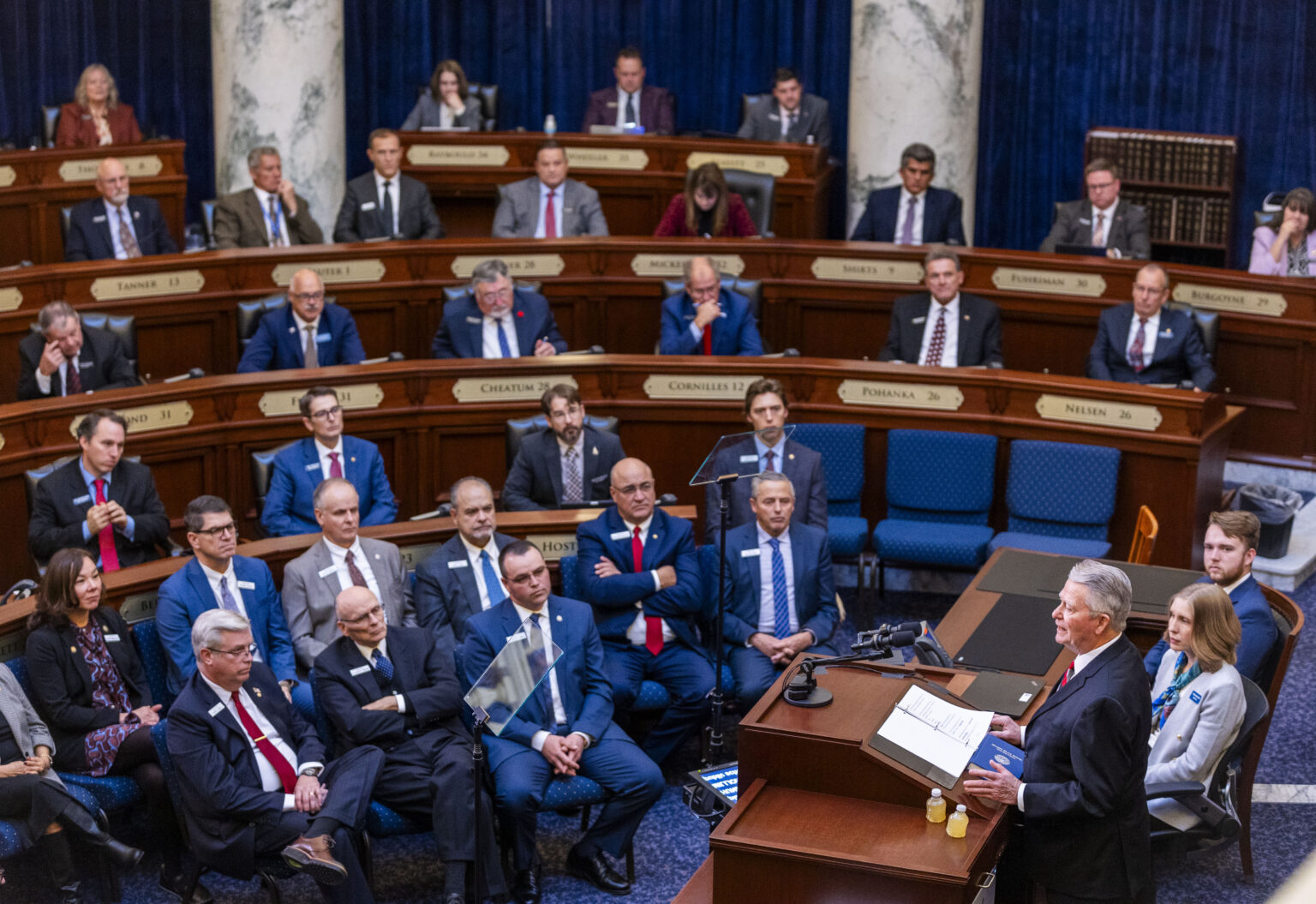
Supporters of the new law insist that the firing squad is not the barbaric relic it sounds like to many people. Representative Bruce Skaug, one of the bill’s leading backers, argued that once people look beyond the imagery, they see a method that is certain and quick. That language has become central to the law’s defense. Proponents say the firing squad minimizes prolonged suffering, avoids the drawn out failures that can accompany lethal injection, and delivers what they regard as a more dependable form of justice for victims’ families.
Some lawmakers also pointed to judicial commentary to strengthen that argument. They cited a 2017 dissent by U.S. Supreme Court Justice Sonia Sotomayor that discussed the possibility that death by shooting may be comparatively quick and relatively painless. That citation has become one of the more surprising details in the debate, because it allows supporters to say their position is not rooted only in conservative politics. Instead, they argue, even some legal critics of capital punishment have acknowledged that the firing squad may inflict less suffering than other methods.
Still, the claim of certainty is exactly where much of the criticism begins. Opponents argue that describing any execution method as humane risks flattening the reality of what it is. They question whether “quick” automatically means acceptable, and whether the state should be moving toward a method that evokes military punishment, frontier justice, and the harshest imagery of state violence. The law’s defenders see clarity and efficiency. Its critics see normalization of a spectacle the legal system once tried to leave behind.
The State Is Planning a Mechanized System
One of the most unusual features of Idaho’s shift is that lawmakers and corrections officials have discussed a mechanized firing squad. Skaug said the execution method would be mechanized, and Idaho Department of Correction officials have said the agency has considered using a remote operated weapons system alongside traditional firing squad methods. As of the public statements released after the law’s passage, the department said the final policies and procedures were still being developed and would be made public once finalized.
That detail adds a distinctly modern layer to a method often associated with history books. A mechanized firing squad would not erase the violence of the act, but it could change how responsibility is distributed and how the procedure is presented. For some state officials, that may be part of the goal. Remote operation can make the process feel more controlled, more standardized, and perhaps more insulated from the emotional burden placed on human participants. But critics are likely to argue that technological distance does not transform the underlying reality. Whether it is done by hand or by remote trigger, the state is still choosing bullets as its primary means of execution.
Idaho Now Stands Alone Among the States

Only five states currently authorize firing squads: Idaho, Utah, South Carolina, Oklahoma, and Mississippi. But Idaho is the only one that has made firing squad execution the primary method. That singular status is what has propelled the state into national headlines. It is one thing to preserve a rarely used alternative. It is another to make it the default.
Historically, executions by firing squad have been rare in the United States. A 2016 law review article cited 144 executions by firing squad in the nation’s history. Since the death penalty returned in the 1970s, Utah had long been the only state to actually carry out executions by that method, executing three prisoners by firing squad between 1977 and 2010. Then, in March 2025, South Carolina executed Brad Sigmon by firing squad, marking the first U.S. firing squad execution since 2010. That event made the national conversation around firing squads less theoretical. Idaho’s law then took that conversation a step further by making the practice central rather than exceptional.
The Cost Question Has Not Gone Away
Changing execution methods also means changing infrastructure. Idaho lawmakers have acknowledged that renovating the state’s execution chamber to support firing squad executions will likely cost more than the $750,000 previously appropriated. Supporters have said additional funds would come from within the Department of Correction’s existing budget, but the exact final cost remains uncertain while policies and physical modifications are still in development.
This is another place where the law’s symbolism collides with administrative reality. Even supporters who describe firing squad execution as efficient must still build the machinery, rooms, procedures, and training needed to make it operational. South Carolina’s execution chamber renovations for firing squad capability reportedly cost $53,500 in 2022, though Idaho’s proposed system may differ because of its mechanized component. That means the final expense could become another flashpoint, especially if critics argue the state is investing public money in refining an execution process rather than solving broader correctional or public safety problems.
The Moral Divide Inside Idaho Was Clear

Although the law passed easily, the debate inside Idaho still revealed sharp moral tension. One notable Republican opponent in the Senate, Dan Foreman, argued against the bill from the perspective of someone with professional experience around gun violence. He challenged the idea that death by shooting is always instantaneous, warning lawmakers that the reality can be different from the language used to defend it. His objection stood out because it showed that resistance was not coming only from death penalty abolitionists or partisan opponents. It also came from within the conservative coalition itself.
That tension reflects the broader discomfort the firing squad creates. Even in a state that strongly supports capital punishment, there is a difference between endorsing the death penalty in general and endorsing a specific method that feels so starkly physical. Lethal injection, for all its problems, was often defended partly because it looked medical and controlled. The firing squad strips away that presentation. It makes the violence visible, even if the state tries to sanitize it through procedure and technology. For some lawmakers, that honesty is a point in its favor. For others, it is exactly why the method should not be chosen.
What This Means for the Future of Capital Punishment
Idaho’s law may end up influencing more than Idaho. If the firing squad proves legally durable and operationally workable, other states frustrated by lethal injection failures may take notice. The same pressures exist elsewhere: shrinking access to execution drugs, growing litigation, and repeated disputes over how to carry out death sentences without prolonged suffering or procedural collapse. In that environment, Idaho could become a test case for whether states are willing to move openly toward older, more violent methods in the name of certainty.
At the same time, the move may also intensify national criticism of the death penalty itself. The more states struggle to find methods that appear humane, the more the underlying contradiction becomes visible. Idaho’s firing squad law does not resolve that contradiction. It sharpens it. Supporters say the state is finally adopting a method that is honest, quick, and effective. Opponents say the law reveals what capital punishment has always been underneath its clinical language: an act of deliberate state killing that no amount of procedural refinement can truly humanize.
That is why this story matters beyond one state legislature and one governor’s signature. Idaho has not simply changed a line in its execution code. It has reopened one of the oldest and most unsettling questions in American law: when the state decides to kill, what does it want that act to look like? Starting July 1, 2026, Idaho’s answer will be clearer than anywhere else in the country. And that clarity may be exactly what keeps the national debate burning.