
Table of Contents
- The Poll Results: What the Data Reveals
- A Decline in Confidence Among MAGA Republicans
- Rising Costs: The Catalyst for Discontent
- Trump’s Economic Record: A Mixed Legacy
- Young Republicans Lead the Charge in Disapproval
- Inflation and Rising Gas Prices Drive Voter Frustration
- Trump’s Response to Rising Costs: Dismissive or Optimistic?
- Economic Strain Feeds Into Broader GOP Challenges
- Can Trump Regain Support?
- Implications for the Midterm Elections
The Poll Results: What the Data Reveals
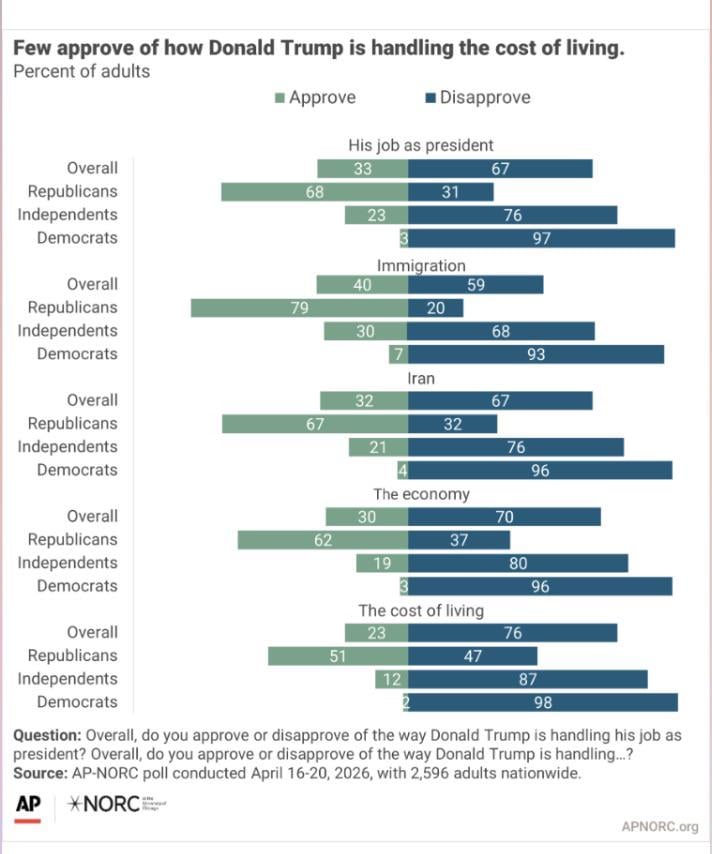
In an April poll by AP-NORC, 47 percent of Republicans disapproved of how President Trump was handling the cost of living, while 51 percent approved. This stark disapproval from nearly half of his own party marks a significant shift in how Trump is being perceived by his most loyal supporters. What’s more concerning for Trump is that this disapproval isn’t just coming from moderate Republicans but also from younger voters within the GOP.
The survey further revealed that the president’s approval rating on economic issues has sharply declined. Just 23 percent of all voters approved of Trump’s performance on affordability, with a staggering 76 percent expressing discontent. This downturn in public approval could have serious ramifications for the Republican Party as they head into crucial elections later this year.
A Decline in Confidence Among MAGA Republicans
Traditionally, President Trump has had unwavering support from the “Make America Great Again” (MAGA) base. However, the latest poll shows a troubling decline in approval, particularly in the context of cost-of-living concerns. While about 9 in 10 MAGA Republicans continue to back Trump’s overall presidency, only 7 in 10 expressed approval of his handling of affordability issues.
This significant drop signals that even Trump’s most ardent supporters are feeling the pinch of rising costs and the economic turmoil stemming from global events like the Iran conflict. The dissatisfaction among his core base could have a ripple effect on Republican enthusiasm in the upcoming elections, potentially dampening voter turnout and influencing key races.
Rising Costs: The Catalyst for Discontent
The disapproval of Trump’s handling of the cost of living comes at a time of increasing financial strain on American families. Gas prices have skyrocketed since the start of the war in Iran, which has directly impacted consumer costs. With gas prices surpassing $4 per gallon, many Americans are feeling the effects of inflation in their daily lives.
The April poll reflects a broader sentiment among U.S. adults, with 73 percent rating the economy as “very” or “somewhat” poor, up from 66 percent in February. This sharp rise in negative economic perceptions is largely driven by higher consumer prices, including a 3.3 percent increase in inflation from March of the previous year. These factors have contributed to a sense of economic insecurity that is now being reflected in public opinion.
Trump’s Economic Record: A Mixed Legacy
Despite the challenges facing his administration, Trump has worked to highlight his economic record, particularly in areas such as job growth and stock market performance. However, these claims are beginning to lose their effectiveness as economic pressures intensify.
While Trump has touted record-high stock market valuations and steady GDP growth as indicators of his economic success, these figures seem increasingly irrelevant to voters struggling with rising costs. For many, the stock market’s gains are a distant reality compared to the immediate challenges posed by inflation and high gas prices. This dissonance is widening the gap between Trump’s economic narrative and the lived experiences of American voters.
Young Republicans Lead the Charge in Disapproval
Among Republican voters, it’s the younger generation that is expressing the most dissatisfaction with Trump’s handling of affordability. About 60 percent of Republicans under 45 years old disapprove of Trump’s response to the cost of living, compared to just 40 percent of older Republicans. This generational divide could prove crucial for the GOP as they try to maintain their base of support while facing the growing influence of younger, more progressive voters.
This demographic shift highlights the difficulties Trump faces in retaining the loyalty of younger voters, many of whom are increasingly concerned about economic inequality and environmental issues. As the cost of living continues to rise, it’s clear that younger Republicans may start to drift away from the president’s economic vision, potentially influencing their support for GOP candidates in the midterm elections.
Inflation and Rising Gas Prices Drive Voter Frustration
A key factor in the growing dissatisfaction with Trump’s handling of affordability is the surge in inflation and gas prices. According to the Department of Labor, consumer prices rose by 3.3 percent in March compared to the previous year, with a particularly sharp increase in gas prices. The national average price for a gallon of regular gasoline is now at $4.02, more than a dollar higher than it was before the war with Iran began in February.
For many Americans, the rising cost of gas is a daily reminder of the economic instability they are facing. The situation is exacerbated by the growing concerns over the U.S. economy’s long-term health, with many voters worried about what the future holds if inflation continues to spiral out of control.
Trump’s Response to Rising Costs: Dismissive or Optimistic?
While Trump has downplayed the impact of rising costs, particularly in relation to the ongoing conflict in Iran, his statements seem increasingly detached from the reality on the ground. Trump referred to the situation as a “little journey” and expressed surprise that oil prices were not as high as he had initially anticipated. He even suggested that the rise in oil prices was a positive, given his initial expectations that prices could have reached $200 per barrel.
Such comments have done little to reassure voters who are struggling with the reality of higher living costs. Trump’s refusal to acknowledge the full extent of the crisis is fueling frustration among those who feel his administration is out of touch with their daily struggles.
Economic Strain Feeds Into Broader GOP Challenges
The fallout from rising costs extends beyond Trump’s approval ratings. As the GOP braces for the upcoming midterm elections, it faces significant challenges in defending its slim majorities in the House and Senate. Rising costs and economic discontent could play a pivotal role in shifting voter sentiment toward Democratic candidates, who have increasingly focused on affordability as a key campaign issue.
Democrats have capitalized on the growing frustration with the economy, using it as a central theme in their midterm messaging. With concerns over affordability driving much of the electorate’s focus, the GOP risks losing ground if it cannot effectively address the concerns of voters who are feeling the effects of rising inflation and gas prices.
Can Trump Regain Support?
As the election season heats up, Trump will need to find a way to reconnect with voters who are dissatisfied with his handling of the economy. The growing disapproval among his own party, especially among younger Republicans, could make it difficult for him to maintain his dominance within the GOP.
In order to shore up his political base, Trump may need to recalibrate his economic message to better address the realities of rising costs. If he fails to do so, he risks alienating key segments of the electorate at a time when his party can least afford it.
Implications for the Midterm Elections
The findings of the AP-NORC poll suggest that Trump’s handling of the economy could be a major factor in determining the outcome of the midterm elections. With nearly half of Republicans disapproving of his performance on affordability, the GOP may face an uphill battle in defending its majorities. As rising gas prices and inflation continue to squeeze American families, the pressure is on Trump and the Republican Party to offer real solutions that resonate with voters. Whether they can regain trust in time for November’s elections remains to be seen.
This situation underscores the deepening divide within the Republican Party on economic issues, and it’s clear that affordability will be a central issue in the upcoming elections. What happens next will shape not only Trump’s future but the political landscape for years to come.