
Table of Contents
- The Tipping Point: A Quarter Degree from Disaster
- Ocean Heat: The Unseen Threat to Ice Stability
- The Devastating Impact: Four Meters of Sea Level Rise
- 800,000 Years of Climate History: A Troubling Pattern
- Ocean Heat and Ice Sheet Dynamics: A Delicate Balance
- Irreversibility of Collapse: A Millennium-Long Process
- Two Critical Regions at Risk: Amundsen and Weddell Seas
- The Current State of Ocean Warming: A Reality Check
- The Global Consequences: Beyond Sea Level Rise
- A Window of Opportunity: Can We Act in Time?
- The Urgency of Immediate Action
The Tipping Point: A Quarter Degree from Disaster
New research from international scientists has highlighted a shocking vulnerability in Antarctica’s ice sheet. According to a study published in Communications Earth & Environment, a temperature increase of just 0.25°C in the ocean could push Antarctica past a point of no return, initiating the collapse of the West Antarctic Ice Sheet. This discovery is a stark reminder of how small changes in global temperature can have far-reaching consequences.
David Chandler, a lead researcher from the Norwegian Research Centre (NORCE), stated, “As little as 0.25°C of deep ocean warming above present-day levels can trigger the start of a collapse.” With ocean temperatures rising steadily in recent decades, the risk of crossing this critical threshold could occur much sooner than anticipated. The findings suggest that we may only have decades to prevent the collapse, unless urgent climate action is taken to curb warming.
Ocean Heat: The Unseen Threat to Ice Stability
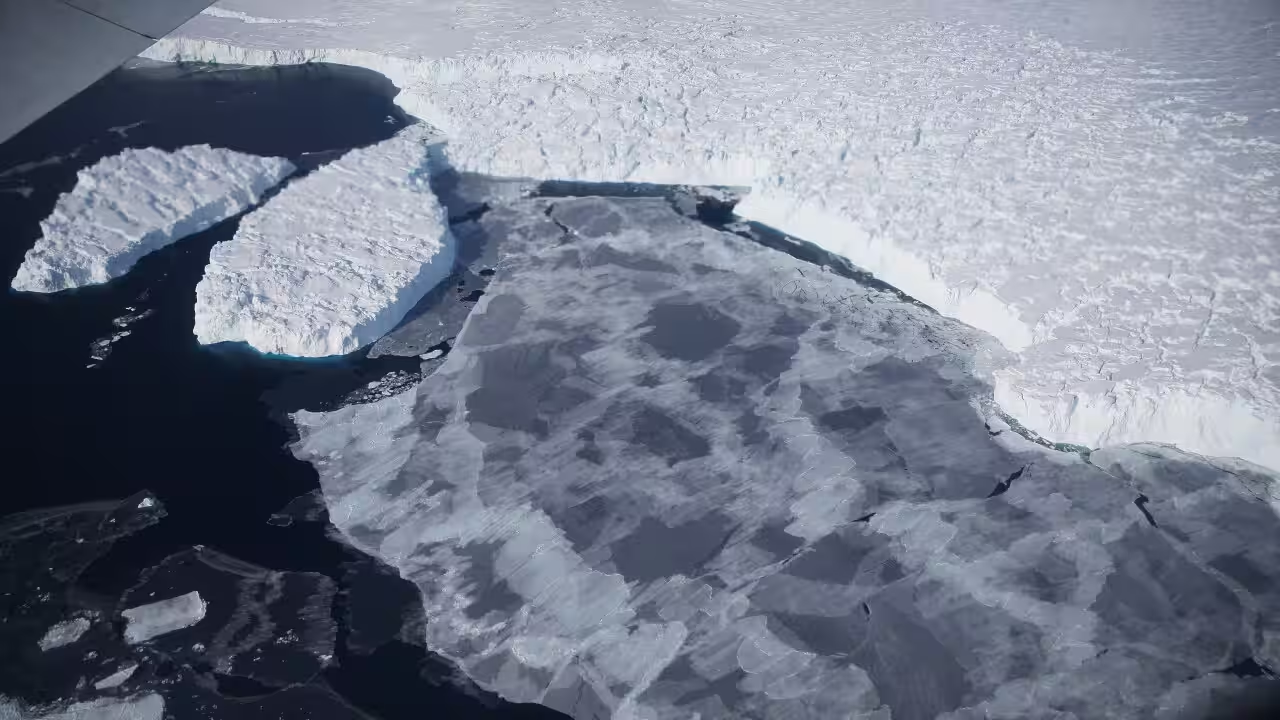
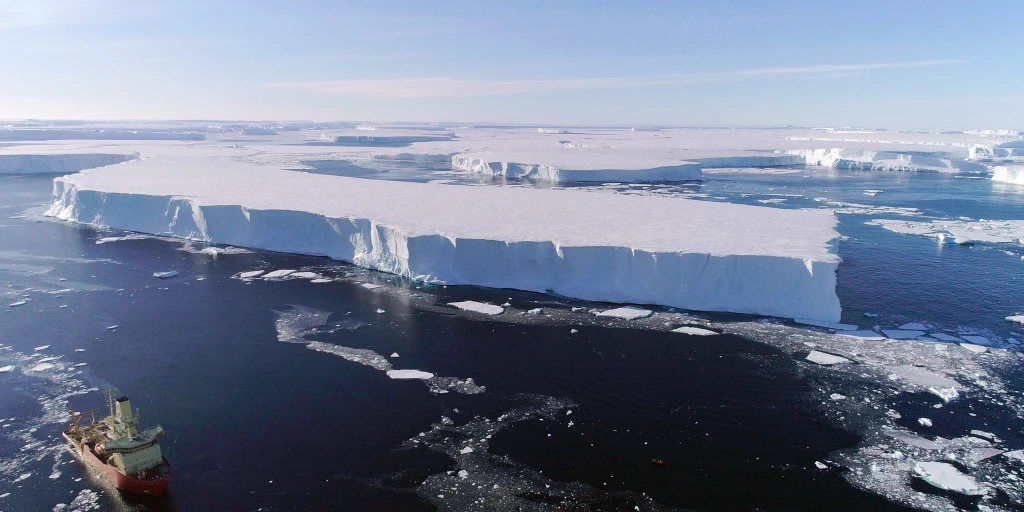
While air temperature has long been a focus of climate change discussions, new research shows that ocean heat plays a far more significant role in the stability of Antarctica’s ice shelves. The floating ice shelves act as natural barriers, holding back the massive land-based ice from flowing into the ocean. When warm ocean water seeps beneath these ice shelves, it begins to melt them from below, weakening their structure and eventually leading to their failure.
Once the ice shelves fail, the land-based ice, previously held in place, begins to flow rapidly into the ocean. This process, known as marine ice sheet instability, creates a self-reinforcing feedback loop that is nearly impossible to reverse. Even if the rise in ocean temperature slows, the collapse of the ice sheet could continue for centuries, contributing to irreversible sea level rise.
The Devastating Impact: Four Meters of Sea Level Rise
A full collapse of the West Antarctic Ice Sheet would contribute more than four meters (13 feet) to global sea levels. Such a rise would permanently flood coastal cities, including Miami, New York, and Mumbai, and displace hundreds of millions of people around the world. Small island nations like the Maldives and Tuvalu could face complete submersion, while major global ports and shipping routes would be destroyed.
The economic consequences of such a disaster would be equally devastating. The loss of coastal infrastructure and real estate would result in trillions of dollars in damages. Global supply chains would be severely disrupted, and entire industries reliant on coastal regions would need to adapt to a new, post-flood reality.
800,000 Years of Climate History: A Troubling Pattern
Scientists have spent years analyzing climate data spanning nearly 800,000 years to understand how the Antarctic ice sheet has responded to past warming periods. The findings reveal a troubling pattern: when temperatures exceed certain thresholds, the ice sheet has collapsed repeatedly, transitioning between stable and collapsed states. This suggests that once the tipping point is reached, the collapse becomes inevitable.
By studying past interglacial periods, researchers were able to model the conditions that led to the ice sheet’s collapse. These patterns provide a stark warning: the current rate of ocean warming is dangerously close to crossing the thresholds that have triggered past collapses. If the trend continues, the world could be facing irreversible damage in the coming decades.
Ocean Heat and Ice Sheet Dynamics: A Delicate Balance
The stability of the Antarctic ice sheet is heavily influenced by ocean temperatures. As ocean heat levels rise, they melt the floating ice shelves, creating an increasingly unstable environment for the land-based ice. Unlike Greenland’s ice sheet, which is primarily above sea level, West Antarctica sits largely below sea level, making it particularly vulnerable to the intrusion of warm water.
Once the ice shelves begin to collapse, the land-based ice flows rapidly into the ocean, contributing to sea level rise. This process is not easily reversed, as the feedback loops created by the collapse of the ice shelves make it almost impossible to halt once it has begun.
Irreversibility of Collapse: A Millennium-Long Process
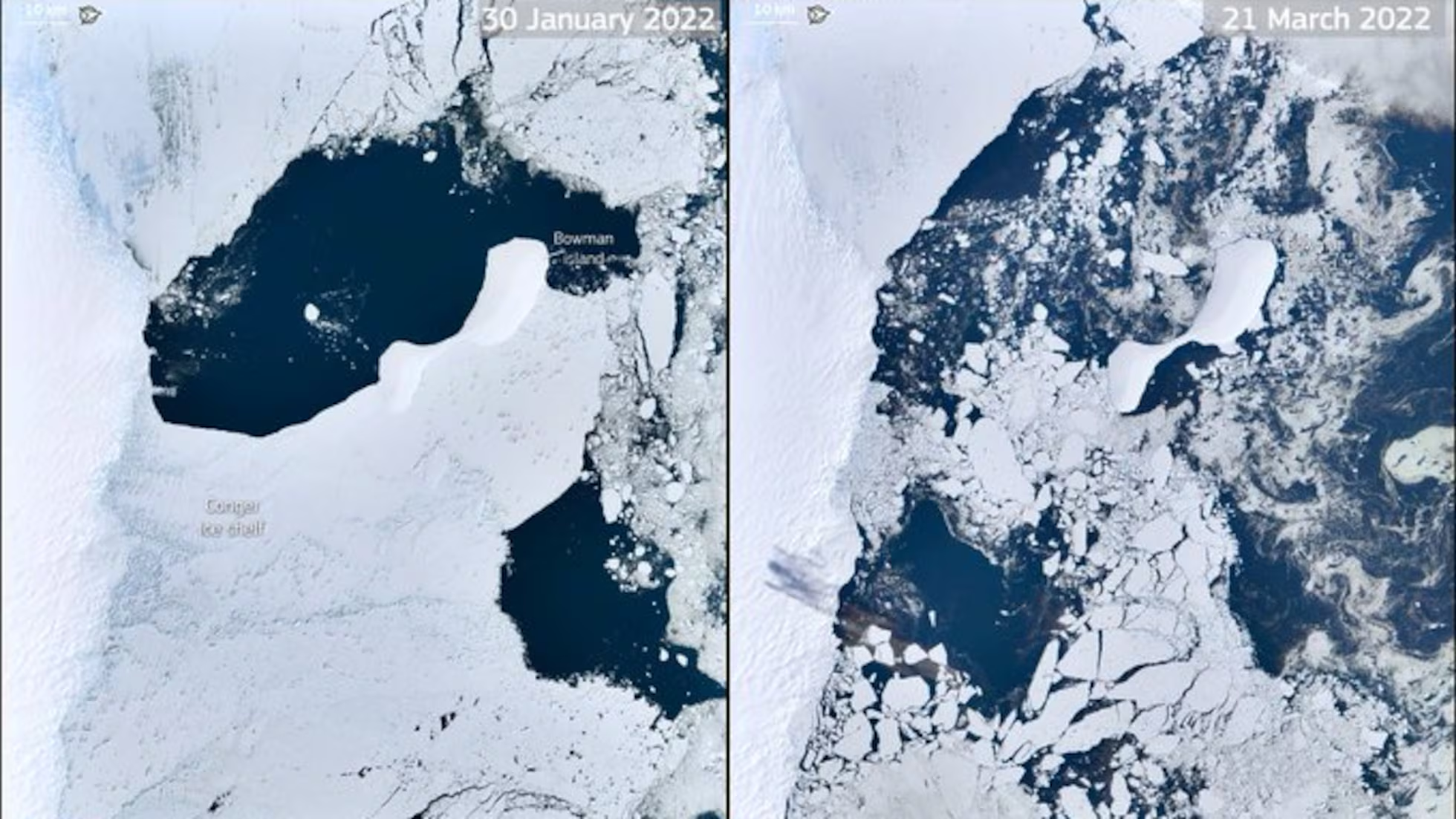
One of the most concerning aspects of this discovery is the irreversibility of the process. Once the tipping point is crossed, the collapse of the West Antarctic Ice Sheet is essentially unstoppable. Scientists estimate that it could take up to 1,000 years for the ice to completely melt, but this timeline could be shortened drastically if additional warming accelerates the process.
The long recovery time required to rebuild the ice sheet is another sobering reality. Rebuilding the lost ice would take tens of thousands of years under consistently cold conditions. Even if global temperatures were to drop significantly, the recovery of the ice sheet would not be possible within the timescales of human civilization.
Two Critical Regions at Risk: Amundsen and Weddell Seas
The Amundsen Sea and Weddell Sea regions are the most vulnerable areas of Antarctica, where early signs of ice sheet instability are already evident. These regions contain marine-based ice, which is particularly susceptible to warm ocean currents. Computer models predict that the collapse of the ice sheet will begin in these areas before spreading to other regions of Antarctica.
These findings highlight the importance of monitoring these sectors closely. Scientists are now focusing on these areas as early-warning indicators of broader ice sheet instability. Any changes observed in the Amundsen and Weddell Seas could provide valuable information about the timing and scope of the ice sheet’s collapse.
The Current State of Ocean Warming: A Reality Check
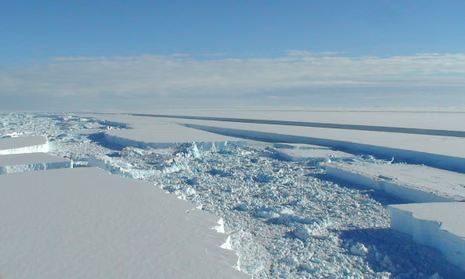
Ocean temperatures around Antarctica have been steadily rising for decades, bringing the planet dangerously close to the tipping point identified in the study. Recent satellite data shows that key regions of the West Antarctic Ice Sheet, particularly the Pine Island and Thwaites glaciers, have been thinning rapidly over the past few decades. These glaciers are located in the vulnerable Amundsen Sea sector, and their retreat has accelerated significantly in recent years.
Ocean temperature measurements confirm that warming trends are continuing, aligning with the projections made by the computer models. If current trends continue, scientists predict that we may reach the critical tipping point within decades, rather than centuries, unless significant climate action is taken immediately.
The Global Consequences: Beyond Sea Level Rise
The collapse of the Antarctic ice sheet would have far-reaching consequences beyond just rising sea levels. The loss of ice cover would reduce the Earth’s albedo, or reflectivity, causing more solar energy to be absorbed by the planet’s surface, further accelerating global warming. This positive feedback loop would exacerbate climate change, leading to more extreme weather events, droughts, and disruptions to global agricultural systems.
In addition, the massive influx of freshwater from melting ice could disrupt ocean circulation patterns, which regulate climate in distant regions. This could lead to changes in weather patterns across Europe, North America, and beyond, affecting agriculture, water resources, and livelihoods.
A Window of Opportunity: Can We Act in Time?
While the situation appears dire, scientists emphasize that immediate action could still slow the process and reduce the worst impacts of the ice sheet collapse. Rapid emissions reductions and a global commitment to climate action could buy critical time to mitigate the worst effects of global warming. However, the window for action is rapidly closing, and the longer the world waits, the more difficult it will be to prevent catastrophic outcomes.
International cooperation is essential if we are to avoid the worst-case scenarios. Policy decisions made today will determine whether we face a future of rapidly rising seas and widespread climate disruption, or whether we can avert some of the most devastating effects of climate change.
The Urgency of Immediate Action
The collapse of the Antarctic ice sheet is not a distant threat; it is a reality we are rapidly approaching. Scientists warn that if we do not act now, we could face a future of rising sea levels, disrupted ecosystems, and irreversible damage to global infrastructure. The window to act is narrow, but it is not too late. With immediate action and global cooperation, we can still prevent the worst outcomes and ensure a livable future for generations to come.