
Table of Contents
- The Late-Night Posting Spree
- The Lincoln Memorial Pool: What’s the Deal?
- The Mount Rushmore Vision: A Familiar Ambition
- Political Attacks and Personal Insults
- The UNO Wild Cards Post: A Final Oddity
- AI Images: Reality or Fantasy?
- Trump as Jesus: A Controversial AI Image
- The Public’s Reaction: “The Man Is Not Well”
- Social Media and the President: A Dangerous Combination?
- The Future of Trump’s Social Media Influence
- Conclusion
The Late-Night Posting Spree
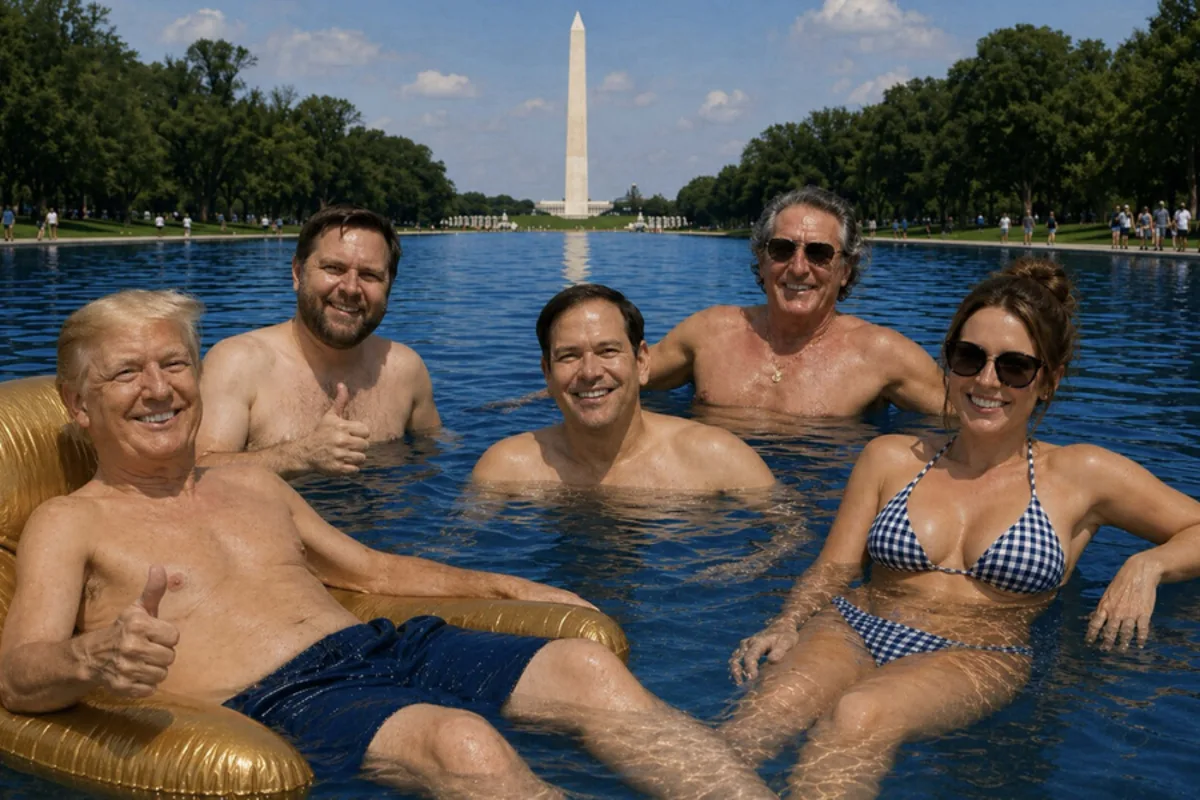
It all began at 11:03 PM local time when President Trump shared the first of many strange posts. The image in question was an AI-generated rendering of himself and Vice President JD Vance, both shirtless and wading through the Lincoln Memorial Reflecting Pool. The bizarre nature of the post left many confused and wondering whether the president was fully aware of the content he was sharing. This late-night outburst didn’t stop there, though. In the following hour, Trump posted several other unusual images, including one with his face superimposed onto Mount Rushmore and another showing Melania Trump in a smile, with no context or explanation.
The Lincoln Memorial Pool: What’s the Deal?
The first post to catch attention was about the Lincoln Memorial Reflecting Pool, a national landmark in Washington, D.C. Trump posted an AI-generated image showing him and Vance shirtless in the pool, a controversial move given the sanctity of the location. The image was followed by several more posts, including one comparing how the pool looked during Barack Obama’s presidency and another depicting the future, blue version of the pool after it undergoes a controversial conversion. The decision to dye the pool “American flag blue” has drawn attention for its absurdity and lack of cultural respect for the historical site.
The Mount Rushmore Vision: A Familiar Ambition
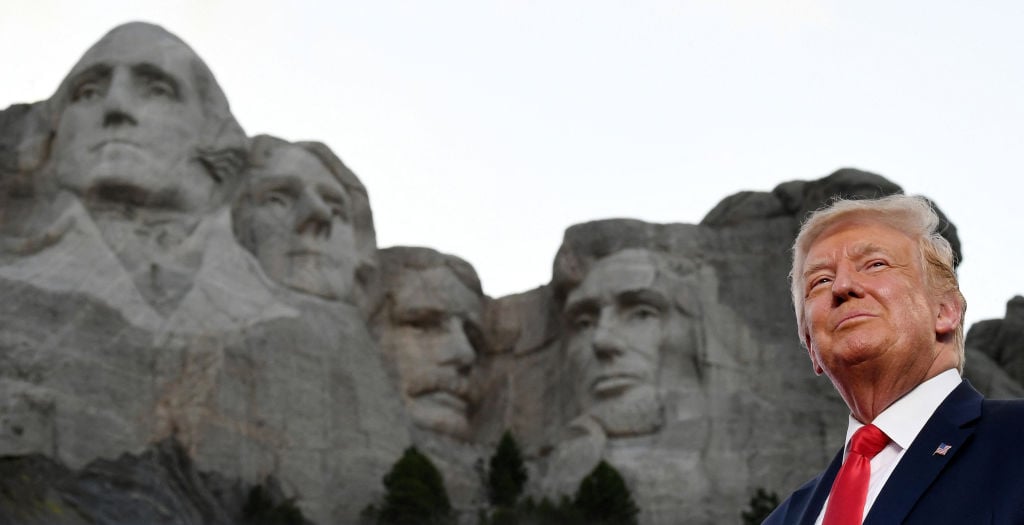
Next, Trump shared an image of his face superimposed onto the famous Mount Rushmore, joining past presidents like George Washington, Thomas Jefferson, Theodore Roosevelt, and Abraham Lincoln. The idea of adding Trump to Mount Rushmore is not new; he has expressed this desire publicly before. While he jokingly entertained the idea during his 2016 campaign, the fact that he continued to share images of himself in the same context raised questions about his intentions and mental state. Could Trump truly envision himself immortalized alongside the nation’s greatest leaders? His actions on social media suggest that he may believe it’s a possibility.
Political Attacks and Personal Insults
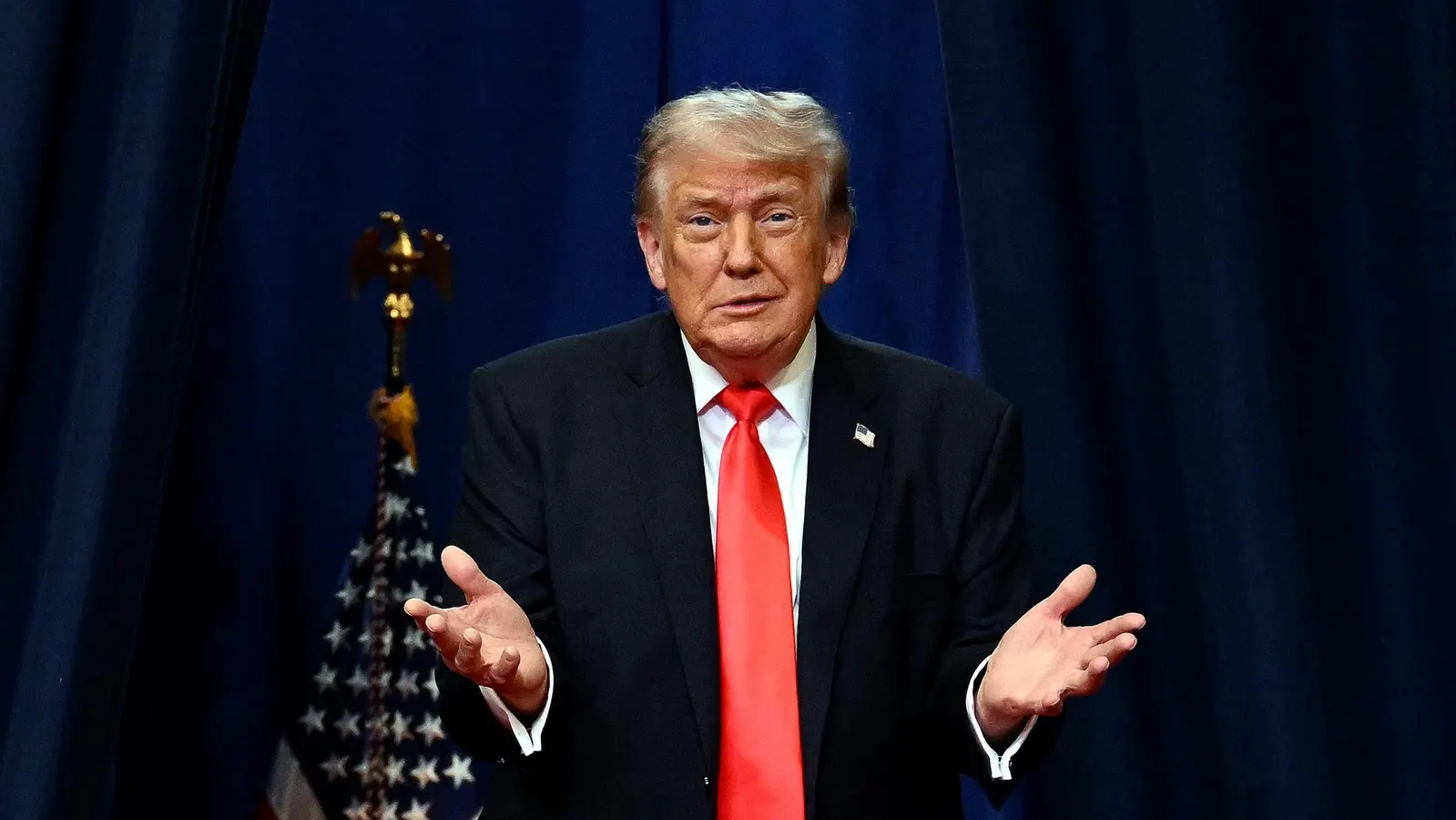
Alongside these strange posts, Trump also took aim at his political opponents, including House Minority Leader Hakeem Jeffries. In a post, he referred to Jeffries as a “Low IQ” individual and a “thug,” further alienating himself from political allies and stirring up controversy. These personal attacks, while not surprising to his followers, have sparked widespread backlash, especially from Democratic lawmakers. Critics argue that these actions show a lack of decorum and a disregard for the integrity of political discourse. For many, this was a reminder of Trump’s controversial leadership style and the way he often uses social media to attack his perceived enemies.
The UNO Wild Cards Post: A Final Oddity
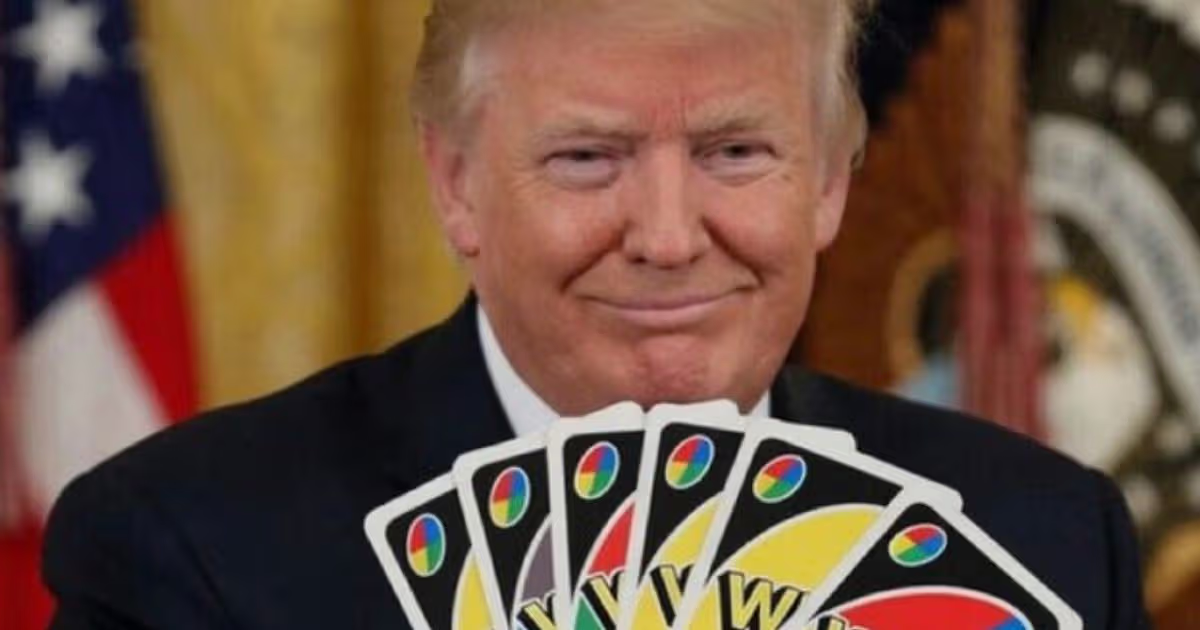
To cap off the flurry of bizarre posts, Trump shared an image of himself holding a fistful of UNO wild cards, with the caption, “I have all the cards.” The context of this post is unclear, but it appears to be a metaphor for Trump’s sense of control and dominance in the political game. As with his previous posts, the image was out of place and left many questioning his motives. The reference to playing a card game was seen as a bizarre attempt to assert power, especially in the context of his previous political attacks.
AI Images: Reality or Fantasy?
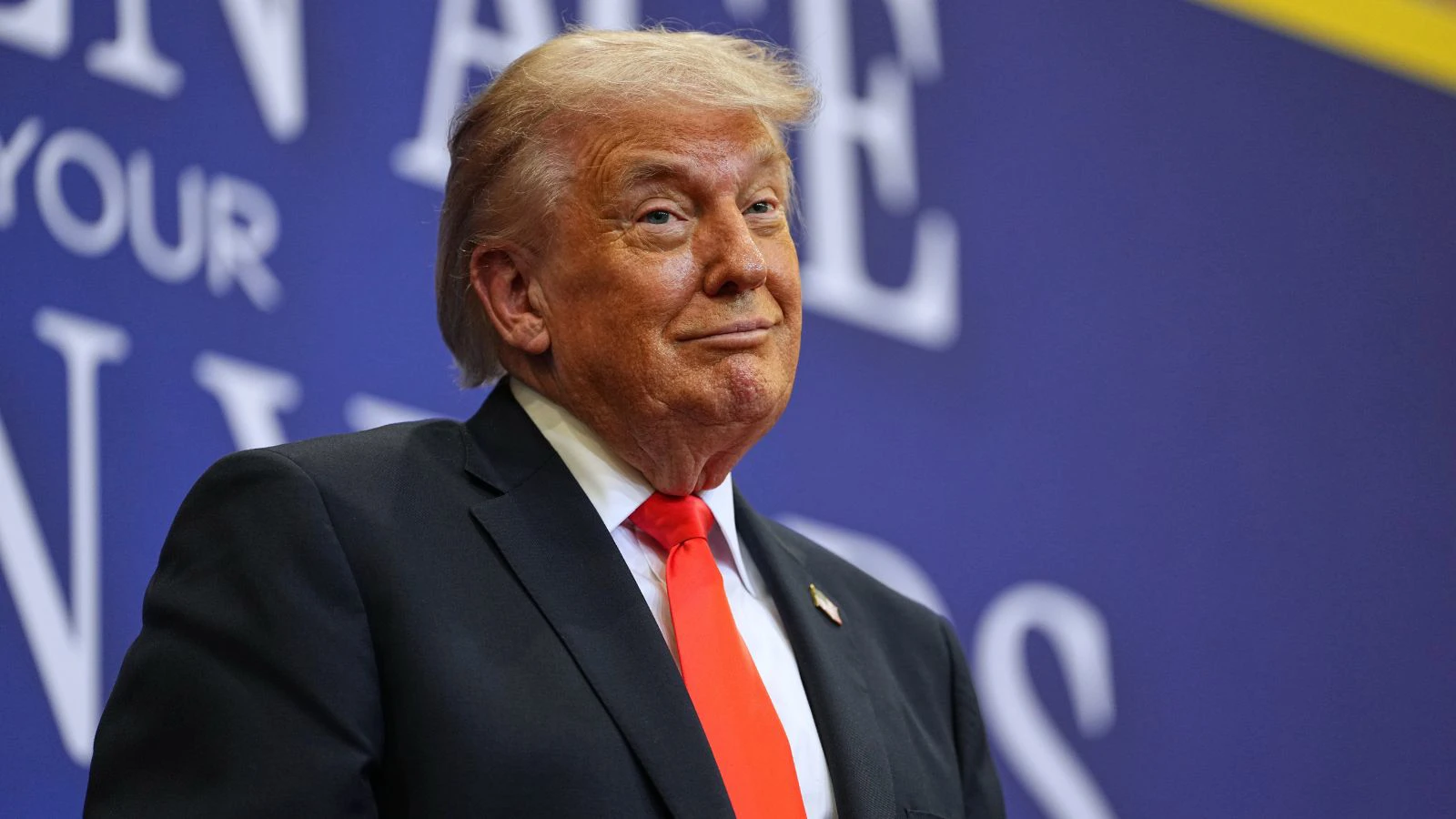
One of the most controversial elements of this late-night posting spree was the use of AI-generated images. Trump’s social media posts often blur the line between reality and fantasy, and the AI-generated images only added to the confusion. While some might see this as a fun exercise in creativity, others question whether these distorted images are part of a larger effort to manipulate public perception. The use of AI to create images of Trump in surreal scenarios raises concerns about the authenticity of the president’s public persona and whether these posts are intended to serve as a form of self-aggrandizement.
Trump as Jesus: A Controversial AI Image
In the days prior to his late-night posting spree, Trump had shared an AI-generated image of himself as Jesus Christ performing a miracle. The image was highly controversial, with many critics pointing out the potential for religious insensitivity. When reporters pressed Trump on the issue, he claimed that the image was meant to show him as a doctor, making people better, and not as a religious figure. His explanation was met with skepticism, and many saw it as an attempt to deflect from the more troubling implications of the image.
The Public’s Reaction: “The Man Is Not Well”
The social media posts did not go unnoticed. Political commentators, such as Harry Sisson, voiced their concerns, calling the posts “bizarre” and questioning Trump’s mental state. “This was all done in under an hour. The man is not well,” Sisson tweeted, summing up the general sentiment shared by many. For some, Trump’s late-night social media spree felt like an out-of-control spectacle, a far cry from the sober leadership expected of the President of the United States. The outburst raised questions about Trump’s ability to govern with rationality and whether his behavior was deteriorating.
Social Media and the President: A Dangerous Combination?
Trump’s late-night social media posts underscore the challenges of having a president who is so closely tied to social media. While Twitter was once his platform of choice, he now uses Truth Social, where he can share his unfiltered thoughts and images directly with his followers. The problem, however, is that these posts often lack context and are sometimes completely out of touch with reality. Critics argue that Trump’s unchecked use of social media is not only dangerous for his own image but also for the political discourse in the country. With his habit of posting bizarre and often controversial content, many worry that Trump is fueling divisions and contributing to a toxic online environment.
The Future of Trump’s Social Media Influence
As Trump’s social media posts continue to garner attention, the question remains: what is the future of his online influence? Will these late-night posting sprees alienate his supporters, or will they cement his place as a populist figure who defies traditional political norms? One thing is clear: Trump’s presence on social media remains a significant force in American politics. Whether it’s AI-generated images, personal attacks, or strange metaphors, Trump’s posts continue to dominate headlines, leaving us all wondering what he will share next.
Conclusion
Trump’s bizarre late-night social media spree has left many questioning his mental state and leadership capabilities. From AI-generated images to personal attacks on political opponents, the posts reflect a president who is unafraid to embrace controversy. As his social media influence grows, so too does the uncertainty surrounding his role in American politics. One thing is certain: the future of Trump’s digital presence will continue to captivate the nation, for better or worse.