
Table of Contents
- A Routine Dive Became A Historic Discovery
- The Message Carried A Simple Request
- Social Media Turned The Search Into A Viral Moment
- George Morrow Was Around 18 When He Wrote It
- The Note Became A Link To A Father’s Memory
- Why Messages In Bottles Still Fascinate Us
- The Cheboygan River Became Part Of The Story
- The Family Chose To Share The Note
- A Small Discovery With A Big Emotional Impact
- Why This Story Continues To Matter
A Routine Dive Became A Historic Discovery
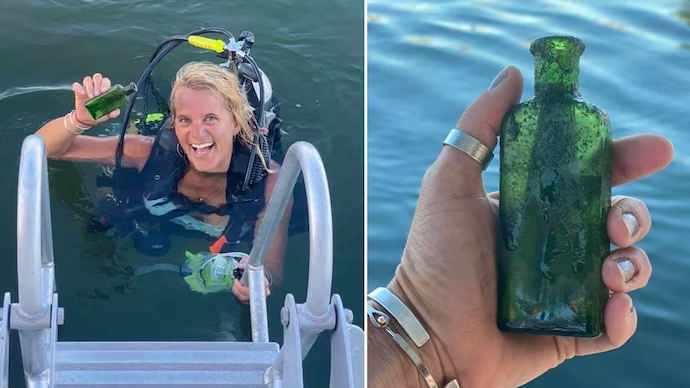
Jennifer Dowker was scuba diving in Michigan when she noticed the green glass bottle sitting underwater near her glass-bottom boat. Dowker, who runs a local tour business offering cruises and shipwreck tours, was familiar with finding unusual things beneath the surface. But this one immediately felt different.
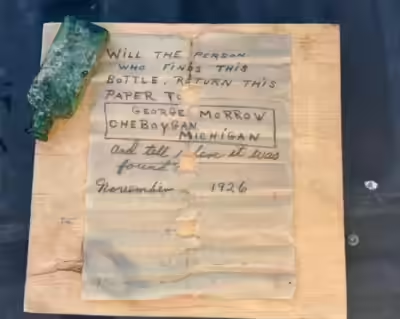
The bottle contained a rolled piece of paper, a detail that transformed the object from ordinary debris into a possible time capsule.
When Dowker and her employee carefully opened the bottle, they discovered that the cork had broken and water had entered. Yet the message inside remained surprisingly legible. For something that had likely been underwater for decades, the survival of the paper felt remarkable.
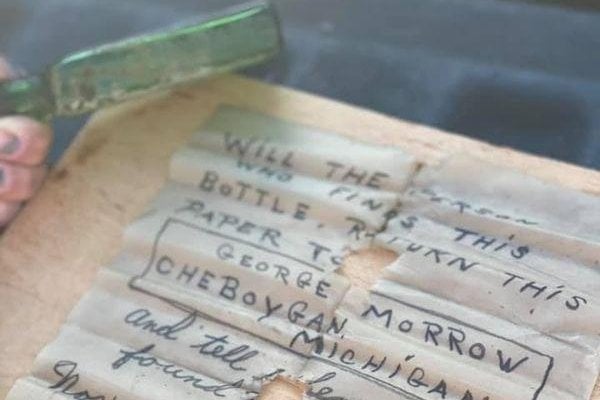
The note was simple, direct, and hauntingly personal. It asked the finder to return the message to George Morrow in Cheboygan and tell where it was found.
The date on the paper was November 1926.
In one moment, Dowker had crossed an invisible bridge between the present and the past. A young man’s playful act from the 1920s had suddenly resurfaced in the modern world.
The Message Carried A Simple Request
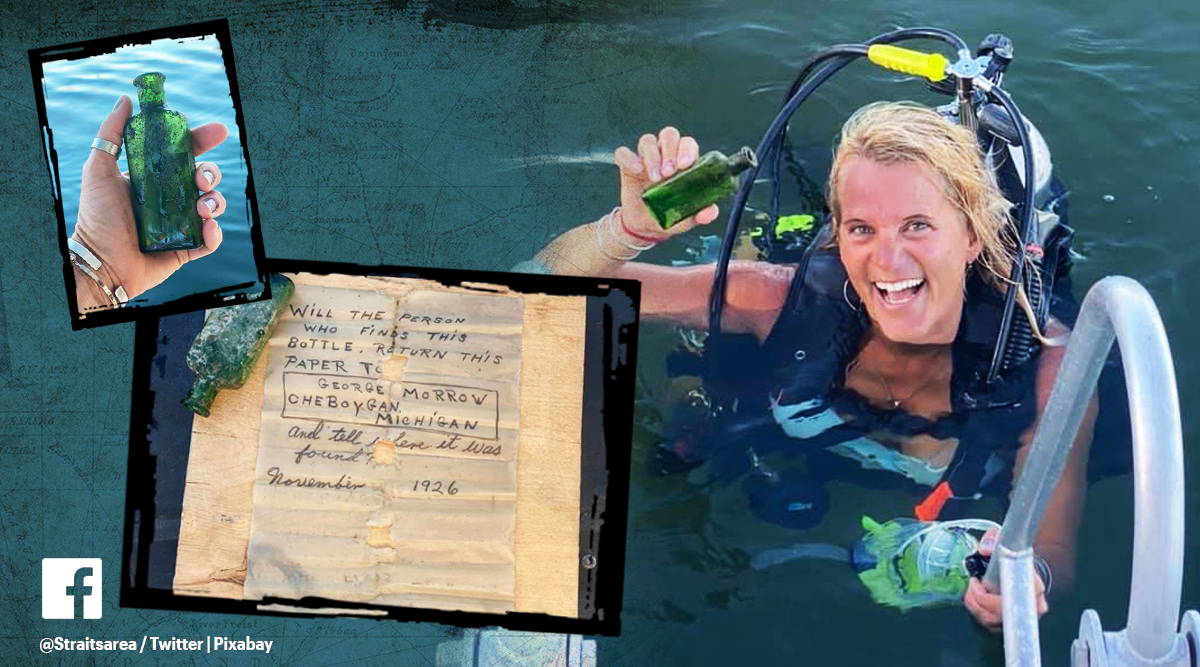
The note did not contain a dramatic confession, treasure map, or secret code. That simplicity is part of what made it so moving.
It was written by someone who appeared curious about whether the bottle would ever be found. He wanted to know where it traveled and who discovered it. The message was less about mystery and more about connection.
This is why messages in bottles continue to fascinate people. They are small acts of hope. Someone writes a note, seals it away, and sends it into the unknown without knowing who might eventually read it.
In George Morrow’s case, the unknown stretched across nearly a century.
The note’s request was never answered during his lifetime. George died in 1995, long before the bottle was discovered. But when the message finally surfaced, it still found its way back to his family.
Social Media Turned The Search Into A Viral Moment
After finding the bottle, Dowker posted about the discovery on her company’s Facebook page. She asked if anyone knew a George Morrow from Cheboygan who might have written the note around 1926.
The post quickly went viral.
Thousands of people shared it, commented on it, and joined the search. What might once have taken weeks of local newspaper notices or genealogy research unfolded rapidly online.
The internet, often criticized for being chaotic and divisive, became a tool for connection. Strangers worked together to trace a man from the past and reunite his message with surviving family.
One helpful social media user found a possible family connection through an obituary and reached George Morrow’s daughter, Michele Primeau. The phone call was unusual, but it led to the emotional confirmation everyone had hoped for.
The note had likely been written by her father.
George Morrow Was Around 18 When He Wrote It
When Michele Primeau learned about the message, she connected it to her father’s youth almost immediately. George Morrow was born in November, and the note was dated November 1926. That timing suggested he may have thrown the bottle into the water around his 18th birthday.
That detail made the discovery even more emotional.
It was suddenly easy to imagine a young George standing near the river, placing a handwritten note into a bottle, and tossing it into the water with no idea where it might go. He could not have known that nearly 100 years later, strangers would be sharing his words online and trying to find his family.
Primeau described her father as sentimental, which made the discovery feel entirely believable. She remembered that he had done something similar during family camping trips at Lake Huron, placing notes into bottles and sending them into the water.
The 1926 bottle was not just a random object. It reflected something about George’s personality: curious, nostalgic, and quietly hopeful.
The Note Became A Link To A Father’s Memory
For George Morrow’s daughter, the discovery was not merely an interesting historical coincidence. It became a new connection to her late father.
George had served as a World War II veteran and lived a full life before passing away in 1995 from causes related to dementia. Decades after his death, the bottle offered his daughter something unexpected: a glimpse of who he had been as a young man before war, age, illness, and time changed everything.
Family memories often come from photographs, letters, stories, and objects passed down through generations. But this note was different. It had disappeared before George’s adult life truly began and returned long after he was gone.
That made it feel almost like a message from the past arriving at exactly the wrong time and exactly the right time.
The discovery reminded people that history is not always found in museums or official archives. Sometimes it waits quietly underwater, sealed inside a bottle, carrying the handwriting of someone who once wondered who might find it.
Why Messages In Bottles Still Fascinate Us
Part of the story’s viral power comes from the timeless fascination with messages in bottles.
For centuries, people have placed notes in bottles and sent them into oceans, lakes, and rivers. Some were scientific tools used to study currents. Others were romantic gestures, childhood experiments, desperate pleas, jokes, or personal reflections.
The idea captures the imagination because it combines randomness with destiny. A bottle can drift for days, years, or decades. It may never be found. It may break, sink, or wash ashore in another country. But when one is discovered, it feels as if time itself has opened a door.
The Morrow bottle was especially captivating because it survived so long and returned to a family connected to its writer.
In a world dominated by instant messaging and digital communication, a handwritten note in a glass bottle feels almost magical. It reminds people of slower, more mysterious forms of connection.
The Cheboygan River Became Part Of The Story
The discovery also highlighted the importance of place. The Cheboygan River was not merely the location where the bottle was found. It was part of George Morrow’s life, his community, and his personal history.
Small towns often hold memories in ways larger cities cannot. Rivers, lakes, roads, and local landmarks become deeply connected to family stories and community identity.
For residents of Cheboygan, the discovery felt like a local treasure returning to the surface. It connected modern residents to a young man who had once lived in the same area nearly a century earlier.
Dowker’s work as a tour operator also gave the story another layer. She spends her days helping people experience local waterways and underwater history. Finding the bottle was almost perfectly aligned with that mission.
The river had quietly preserved a story, and Dowker happened to be the person who brought it back into public view.

Although Dowker wanted to return the note to George Morrow’s family, Primeau made a touching decision. She said the note should remain with Dowker, where visitors could see it and learn the story.
That choice transformed the bottle from a private family keepsake into a shared community artifact.
Primeau believed that allowing the note to remain on display would help her father’s memory live on. Instead of being stored away, the message could continue doing what it had done from the beginning: reaching strangers.
That decision gave the story a beautiful full-circle ending. George’s note was never meant to stay hidden. It was meant to be found, read, and shared.
Nearly a century later, that is exactly what happened.
A Small Discovery With A Big Emotional Impact
The discovery resonated so strongly because it touched something universal. Everyone understands the desire to be remembered. Everyone knows the feeling of wanting some part of themselves to outlast time.
George Morrow likely never imagined his note would become a viral story. He may have simply been a teenager experimenting with a message in a bottle. Yet that small action created a connection that lasted far longer than he could have expected.
The story also arrived during an era when many people feel overwhelmed by fast news, conflict, and constant digital noise. Against that backdrop, the bottle offered something gentle and human. It was a reminder that wonder still exists in ordinary places.
A diver looked beneath the water. A bottle appeared. A note survived. A family was found. A father’s memory returned.
Why This Story Continues To Matter
The 1926 bottle message is more than a charming local discovery. It is a reminder that history is not always distant, grand, or formal. Sometimes history is personal, handwritten, and fragile.
It can sit unnoticed beneath a river for decades, waiting for someone to look closely enough.
Jennifer Dowker’s discovery brought together a diver, a daughter, a forgotten note, and thousands of strangers online. It showed how modern technology can help restore old human connections rather than replace them.
In the end, the story matters because it proves that even the smallest messages can travel farther than we imagine.
George Morrow asked the finder to say where the bottle was discovered. Nearly 100 years later, that question was answered. But the real discovery was something deeper: a young man’s voice had survived the water, the years, and the silence, finally reaching people he never knew would be listening.