
Table of Contents
- A Promising Launch Quickly Takes an Unexpected Turn
- What Exactly Happened?
- The Bus at the Center of the Incident
- Why Gothenburg Became a Testing Ground
- Why Mixed Traffic Creates Unique Challenges
- Public Confidence Is Just as Important as Technology
- Similar Concerns Have Emerged Worldwide
- What Happens Next for the Gothenburg Trial?
- The Future of Autonomous Public Transport
- A Small Crash With Big Implications
A Promising Launch Quickly Takes an Unexpected Turn
The self driving bus entered passenger service on May 25 as part of a highly anticipated transportation trial in Gothenburg, Sweden.
For months, officials had prepared for the launch. The vehicle had already undergone testing without passengers since March. Engineers, transportation planners, and technology specialists had spent considerable time evaluating its performance under various traffic conditions.
The first day carrying paying passengers was supposed to mark an important milestone.
Instead, the celebration lasted less than an hour.
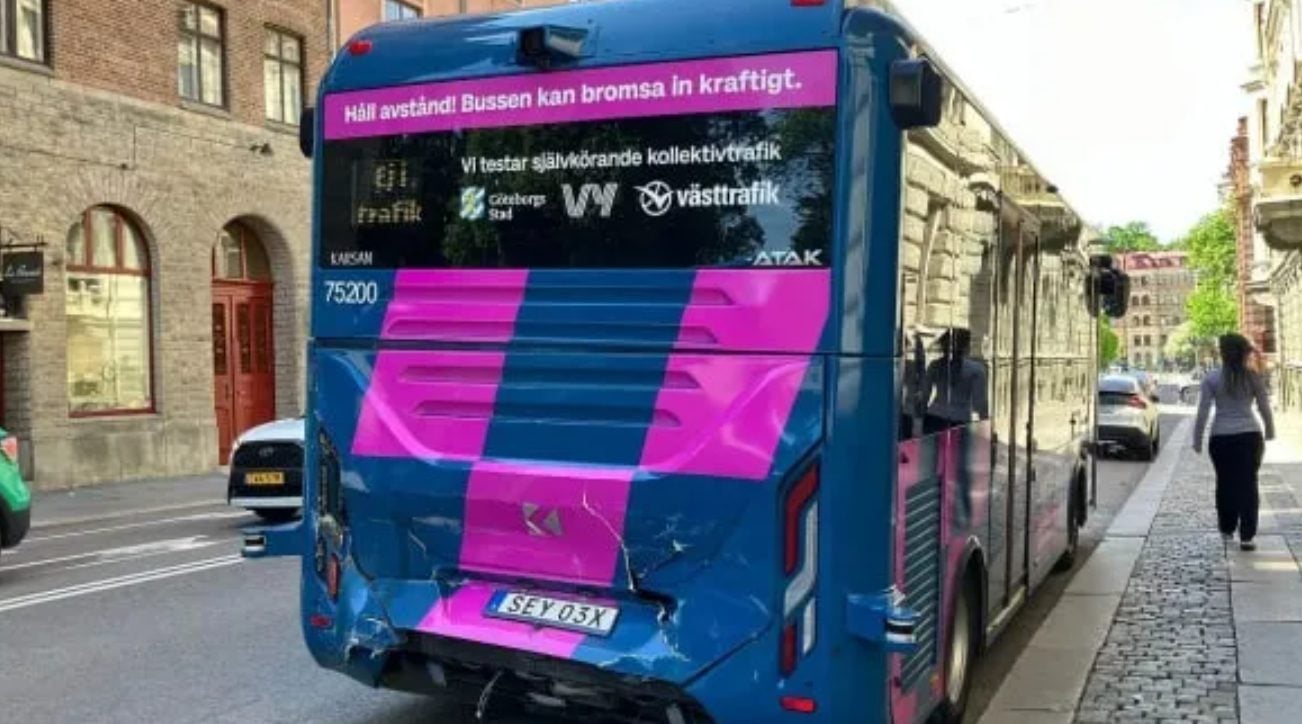
According to preliminary reports, the autonomous electric bus suddenly applied its brakes while traveling on a roadway shared with city trams. A tram following behind was unable to stop quickly enough and collided with the rear of the bus.
The crash caused minor damage to both vehicles.
Thankfully, no passengers, operators, or pedestrians were injured.
While the absence of injuries was encouraging, the incident immediately raised concerns because it occurred during the very first day of public service.
For many observers, the timing seemed impossible to ignore.
What Exactly Happened?
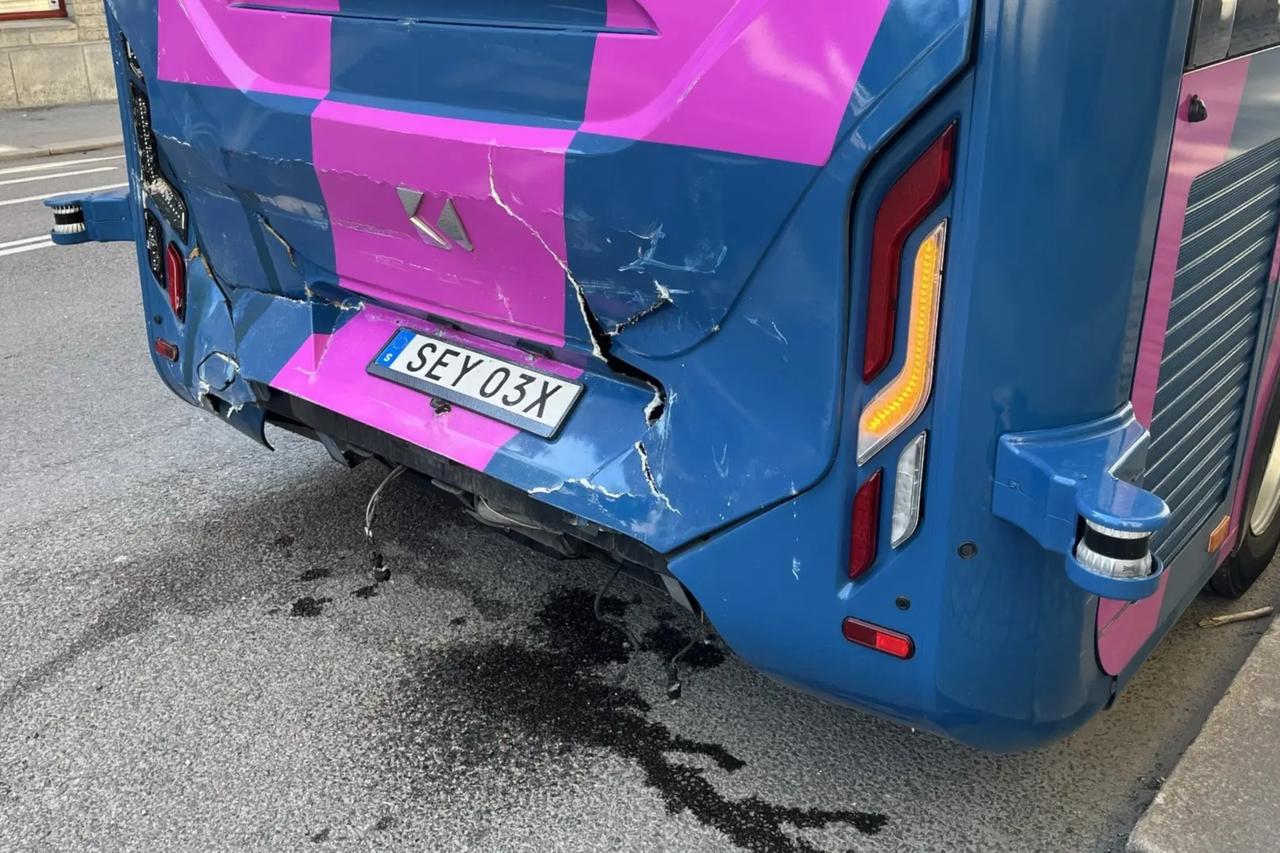
Investigators are still working to determine the precise sequence of events that led to the collision.
Initial reports indicate that the self driving bus unexpectedly braked while operating in mixed traffic conditions.
The tram traveling behind the vehicle reportedly did not have sufficient time to avoid impact.
At this stage, transportation authorities have not released a final conclusion regarding the cause of the sudden braking event.
Officials are analyzing vehicle data, software logs, environmental conditions, and other factors that may have contributed to the incident.
One important detail is that a trained safety driver was present on board during the operation.
This precaution is standard practice in most autonomous vehicle trials around the world. Human supervisors remain available to intervene if necessary, even when vehicles are operating in automated mode.
The presence of a safety driver reflects the reality that autonomous transportation technology remains under active development.
While systems have become increasingly sophisticated, most regulators still require human oversight during public testing phases.
The Bus at the Center of the Incident
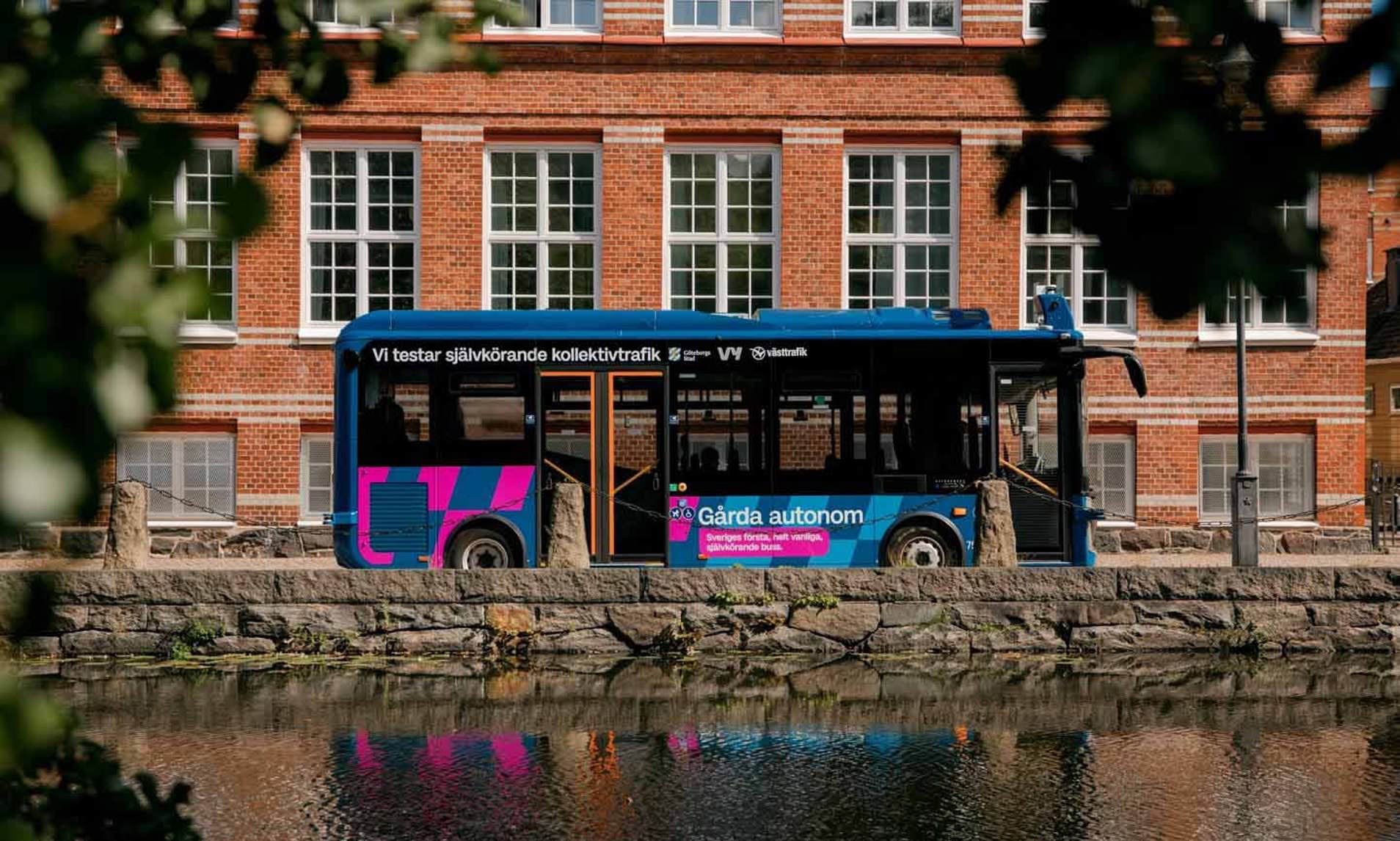
The vehicle involved in the collision is a Karsan e-ATAK, an electric autonomous bus developed by Turkish manufacturer Karsan.
The eight meter vehicle is designed specifically for public transportation applications and can carry up to 52 passengers.
The autonomous driving technology is powered by software developed by ADASTEC, a company specializing in automated transit solutions.
Unlike autonomous passenger cars that operate individually, self driving buses face unique challenges.
Public transportation vehicles must follow fixed routes, interact with large numbers of passengers, comply with strict safety regulations, and operate predictably within complex urban environments.
The Gothenburg pilot program was designed to evaluate how autonomous buses perform under these conditions.
Officials hoped the project would provide valuable insights into the future of urban mobility.
The crash has not ended the trial permanently, but it has temporarily paused operations while investigators conduct a thorough review.
Why Gothenburg Became a Testing Ground
Gothenburg has emerged as one of Europe’s most active cities for transportation innovation.
Sweden has invested heavily in sustainable mobility, electric vehicles, and smart transportation systems.
Autonomous public transportation represents a natural extension of those efforts.
The route selected for the pilot program travels through central Gothenburg and exposes the vehicle to realistic traffic conditions.
Rather than operating in isolated environments, the bus shares roads with cars, bicycles, pedestrians, and trams.
This mixed traffic environment provides valuable testing opportunities but also introduces additional complexity.
Urban transportation networks are filled with unpredictable variables.
Pedestrians cross unexpectedly. Cyclists change direction. Vehicles merge suddenly. Traffic signals fluctuate. Construction zones appear without warning.
Teaching autonomous systems to navigate these constantly changing conditions remains one of the greatest challenges facing the industry.
The accident highlights how difficult that task can be.
Why Mixed Traffic Creates Unique Challenges
One of the key questions emerging from the incident involves how autonomous vehicles interact with other forms of transportation.
Unlike isolated testing tracks, real city streets require vehicles to coexist with many different transportation systems.
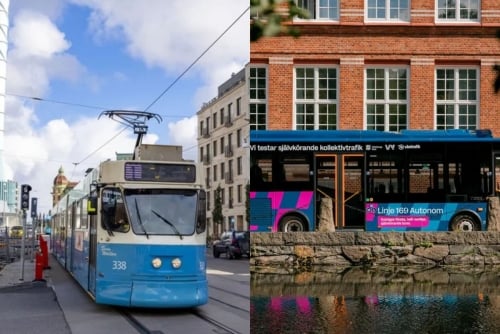
In Gothenburg, trams represent a particularly important part of daily mobility.
Trams operate differently from buses and automobiles. Their ability to maneuver is limited by fixed tracks, and braking distances can vary depending on conditions.
When autonomous vehicles share road space with trams, coordination becomes especially important.
A sudden stop that may be appropriate for one vehicle could create complications for another.
Transportation engineers are therefore paying close attention to how automated systems interpret traffic situations involving multiple transportation modes.
The Gothenburg collision provides a real world case study that may influence future system design.
Public Confidence Is Just as Important as Technology
Perhaps the most significant consequence of the accident involves public perception.
Autonomous transportation relies heavily on trust.
Even if self driving vehicles eventually prove safer than human drivers statistically, individual incidents can have an outsized impact on public opinion.
People tend to remember dramatic failures more vividly than long periods of successful operation.
The fact that this crash occurred within an hour of launching passenger service has amplified public attention.
For supporters of autonomous transportation, incidents like this create communication challenges.
Technology companies often emphasize long term safety improvements, reduced human error, and operational efficiency.
However, each visible accident becomes a reminder that the technology is still evolving.
Winning public confidence requires not only technical performance but also transparency, accountability, and effective responses when problems occur.
Similar Concerns Have Emerged Worldwide
The Gothenburg incident is not occurring in isolation.
Over the past several years, autonomous vehicle projects around the world have faced scrutiny following various accidents, software issues, and operational challenges.
Robotaxi programs in several countries have experienced incidents involving unexpected stops, traffic disruptions, and collisions.
Most of these events have resulted in extensive investigations aimed at improving system performance.
The broader autonomous vehicle industry often describes such incidents as part of the learning process.
Each event generates data that engineers can use to improve algorithms, refine decision making systems, and identify weaknesses.
Critics argue that learning through real world incidents may expose the public to unnecessary risk.
Supporters counter that every transportation technology has undergone periods of adjustment and refinement before reaching maturity.
The debate continues as autonomous systems become increasingly common.
What Happens Next for the Gothenburg Trial?
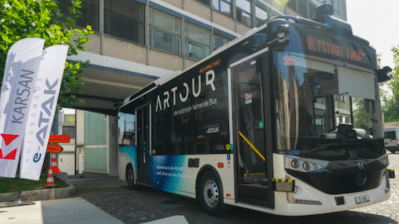
Transportation authorities have confirmed that the bus involved in the collision has been removed from service pending a comprehensive inspection.
Investigators are reviewing vehicle systems, software performance, operational procedures, and environmental conditions.
Officials from Västtrafik, the public transport authority overseeing the project, have stated that lessons learned from the incident will help guide future decisions regarding the program.
The trial itself remains approved through July 2027.
Whether operations resume immediately or after additional modifications will depend largely on the findings of the investigation.
Manufacturers have also expressed confidence that the autonomous system itself was not necessarily responsible for the collision.
However, determining responsibility requires a detailed understanding of exactly why the bus applied its brakes and whether that action was appropriate under the circumstances.
The answers could have implications far beyond Sweden.
The Future of Autonomous Public Transport
Despite the accident, many transportation experts believe autonomous buses will eventually become a significant part of urban mobility.
Several factors continue driving investment in the technology.
Cities face driver shortages, increasing transportation demands, sustainability goals, and pressure to improve service efficiency.
Autonomous systems offer potential solutions to many of these challenges.
Electric self driving buses could reduce emissions, lower operating costs, and provide more flexible transportation options.
Yet achieving those benefits requires overcoming substantial technical and social obstacles.
The technology must prove reliable not only under ideal conditions but also in the messy reality of everyday city life.
Incidents like the Gothenburg collision demonstrate how difficult that journey remains.
Every unexpected event provides valuable information, but it also serves as a reminder that the path toward fully autonomous transportation may be longer and more complicated than many originally anticipated.
A Small Crash With Big Implications
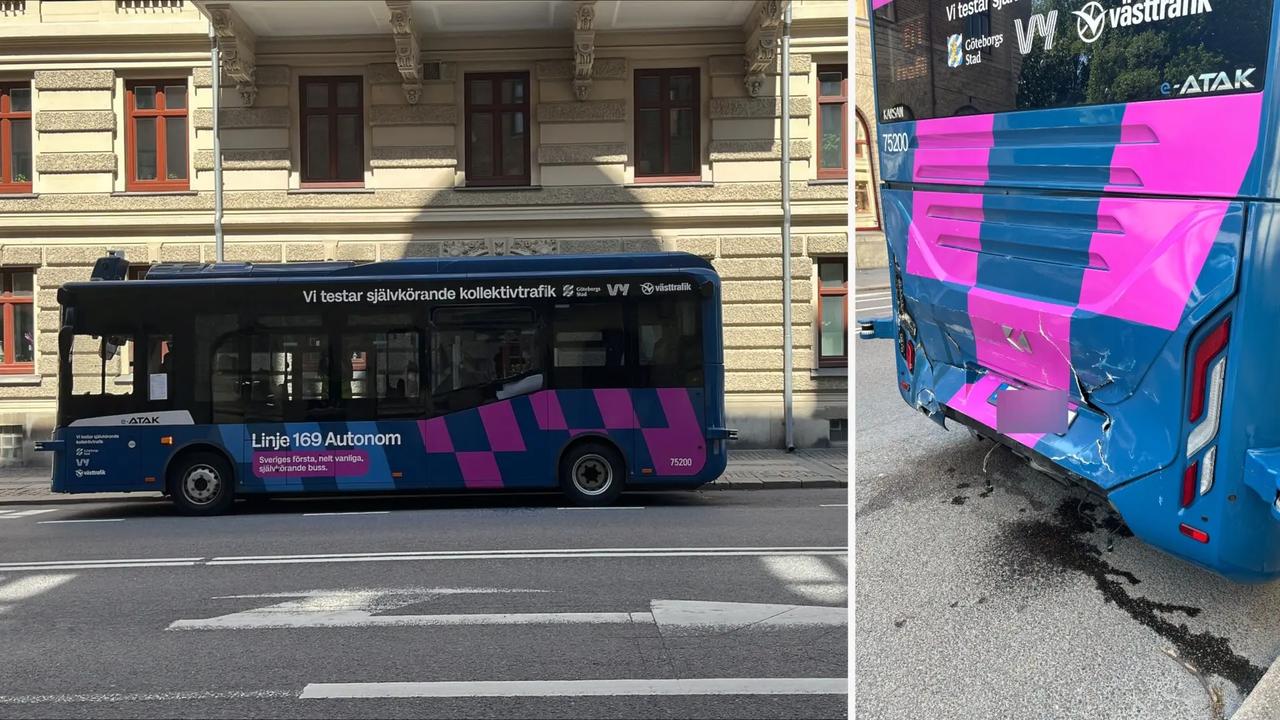
The collision between a self driving bus and a tram in Gothenburg caused only minor damage and no injuries. In practical terms, it was a relatively small transportation incident.
Its significance, however, extends far beyond the physical impact itself.
The accident occurred at a symbolic moment, just as autonomous public transportation was taking a visible step into everyday life.
For supporters, it represents a temporary setback within a larger technological evolution. For skeptics, it reinforces concerns about deploying automated systems in complex urban environments.
The reality may lie somewhere in between.
Autonomous transportation continues offering enormous potential benefits, but events like this demonstrate that important challenges remain unresolved.
As investigators work to understand exactly what happened in Gothenburg, cities around the world will be watching closely.
The future of self driving public transportation may depend not on whether problems occur, but on how effectively the industry learns from them.
For now, the crash serves as both a warning and a lesson. Innovation can move quickly, but public trust is earned much more slowly.