
Table of Contents
- Britain Confronts a Wave of Violence
- The Incident That Sparked the Unrest
- The Role of Social Media
- Spread of Rioting Across Britain
- Government and Law Enforcement Response
- Historical and Social Context
- Impact of the Southport Tragedy
- Far-Right Influence
- The Human Cost
- Lessons and Prevention
- Social Media, Misinformation, and Public Safety
Britain Confronts a Wave of Violence
When news broke that riots fueled by anti-immigrant sentiment were spreading across Britain, authorities were forced to respond to one of the most severe outbreaks of public unrest in years. The violence erupted in the aftermath of a tragic knife attack in Southport, where three children between the ages of six and nine were fatally stabbed during a Taylor Swift-themed dance event. False rumors circulated online claiming the perpetrator was a Muslim immigrant, inflaming far-right groups and sparking violent clashes with police. What follows is an in-depth exploration of the events, underlying causes, and the broader implications for Britain’s social and political landscape.
The Incident That Sparked the Unrest
On July 29, 2024, a 17-year-old male attacked a holiday dance class in Southport, resulting in the deaths of three young girls and injuries to eight other children and two adults. Authorities quickly detained the suspect, Axel Muganwa Rudakubana, who had moved to Southport from Wales in 2013 and whose parents were originally from Rwanda.
Despite the swift detention, misinformation quickly spread on social media, falsely identifying the suspect as an asylum-seeker or Muslim immigrant. These claims were amplified by far-right accounts and platforms, fueling outrage that quickly spilled into public violence.
The Role of Social Media
Less than two hours after the stabbing, posts circulating on X, Facebook, and Telegram wrongly labeled the attacker as a Muslim immigrant. An article published by Channel 3Now, reportedly linked to Russian disinformation campaigns, further propagated the false narrative. Russian state-affiliated media outlets cited the misinformation, contributing to a nationwide surge of anti-immigrant sentiment.
Experts highlight how social media can act as a multiplier in such situations. “There is always a tipping point where people feel emboldened and enabled to act on those feelings, and it’s typically when they see others doing the same thing,” said Stephanie Alice Baker, a sociologist at City University of London. The rapid dissemination of false information effectively provided justification for coordinated attacks on perceived targets.
Spread of Rioting Across Britain
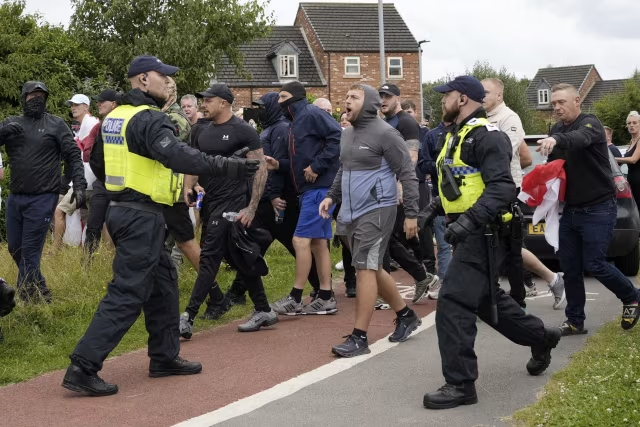
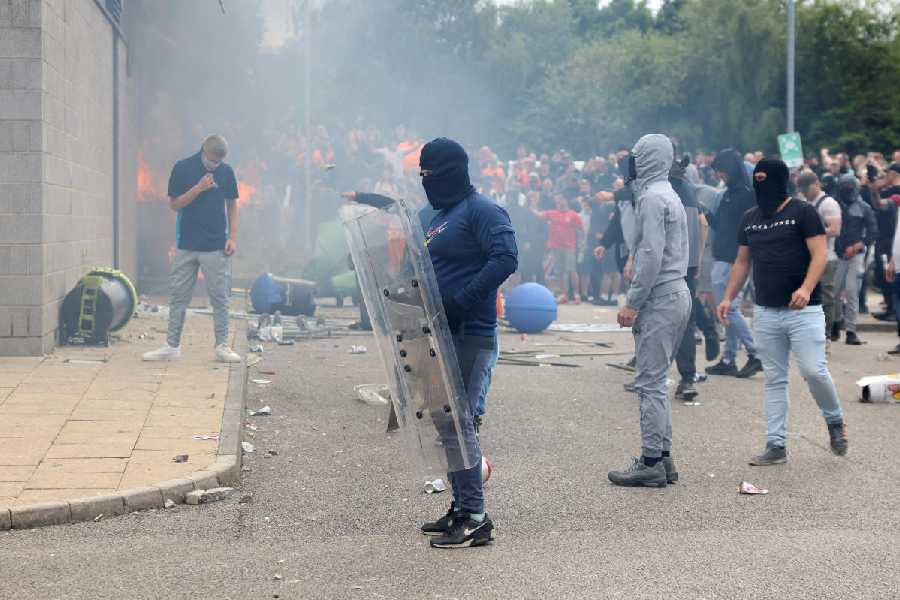
Riots soon spread beyond Southport to cities and towns including London, Hartlepool, Manchester, Middlesbrough, Hull, Liverpool, Bristol, Belfast, Nottingham, and Leeds. Crowds engaged in brick-throwing, looting, and attacks on hotels housing asylum-seekers.
In Rotherham, outside Birmingham, hundreds of rioters stormed a Holiday Inn Express used to accommodate migrants. Officers in riot gear faced projectiles including bricks and chairs as attackers forced their way inside. Hours later, similar attacks occurred at a hotel in Tamworth, 70 miles south, demonstrating the speed and geographical breadth of the unrest.
Government and Law Enforcement Response
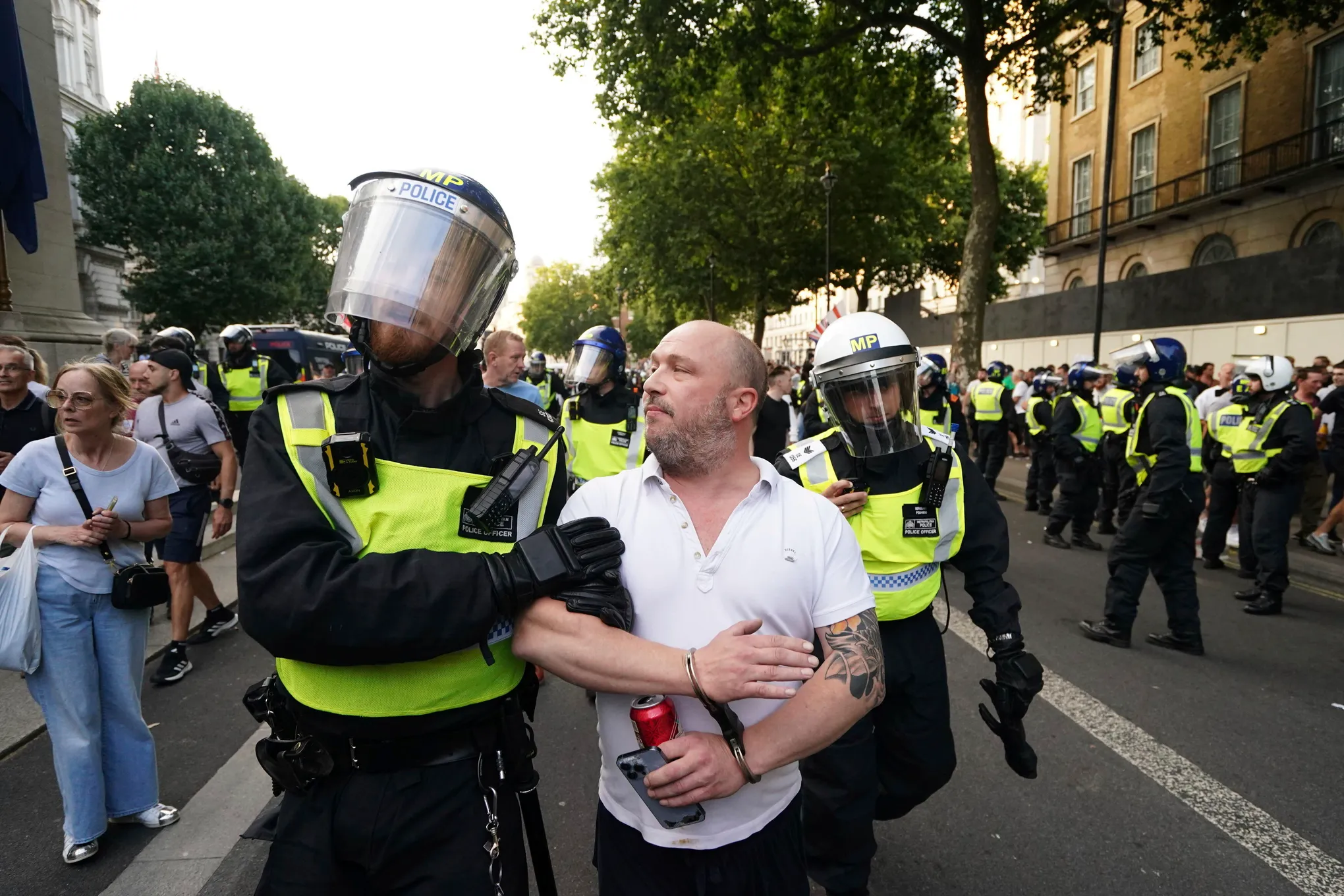
The British government quickly condemned the violence, vowing that perpetrators would face “the full force of the law.” Hundreds of arrests were made, and police promised additional measures to protect vulnerable communities, including asylum-seekers housed in temporary accommodations.
Authorities also deployed specialist policing units to manage ongoing disturbances. While officers restored order in certain areas, they faced challenges due to insufficient intelligence and budget cuts that had weakened community policing structures. Peter Williams, a former police inspector, noted, “One of the key pluses for neighborhood policing is a consistent intelligence flow. Well, that’s missing, particularly in minority areas.”
Historical and Social Context
The unrest cannot be understood in isolation. Britain has long experienced tension over immigration, amplified by the rise of nationalist politics and economic concerns. In recent years, increased arrivals of migrants crossing the English Channel in inflatable boats added to public anxiety.
Former Prime Minister Rishi Sunak had promised to halt these crossings by deporting illegal immigrants to Rwanda. His plan was canceled after Keir Starmer’s election, though Starmer pledged to reduce immigration through cooperation with European partners and expedited removal of failed asylum seekers.
Past government policies, including housing asylum-seekers in hotels at a cost of £2.5 billion during budget crises, further fueled public frustration. Residents, struggling with high costs of living and strained public services, expressed feelings of disempowerment and resentment, creating fertile ground for exploitation by agitators.
Impact of the Southport Tragedy
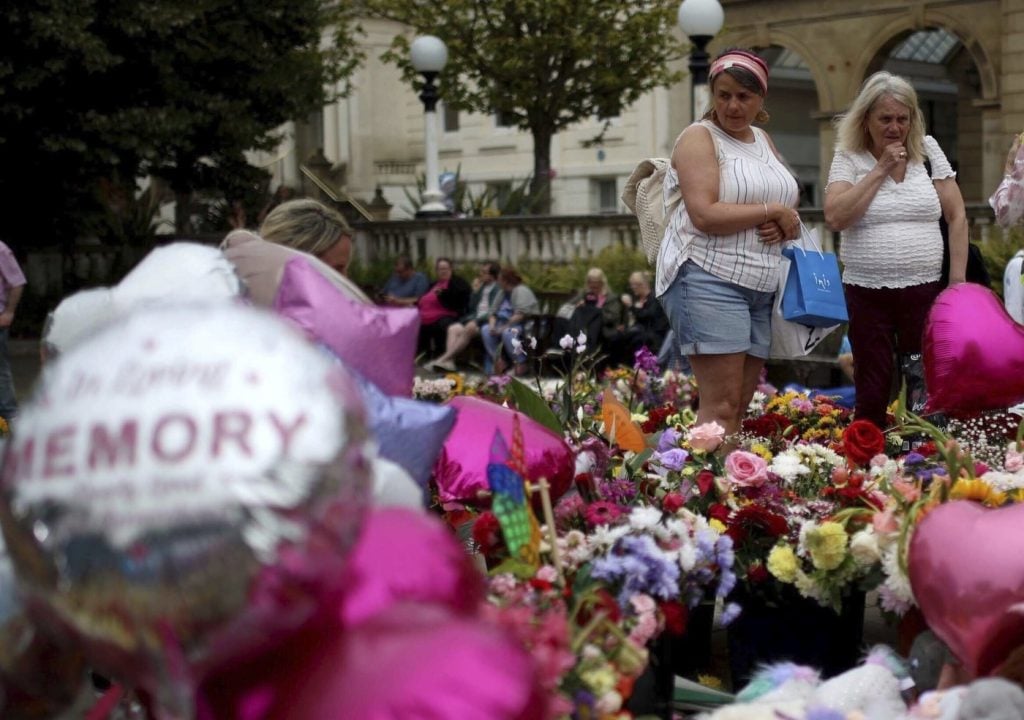
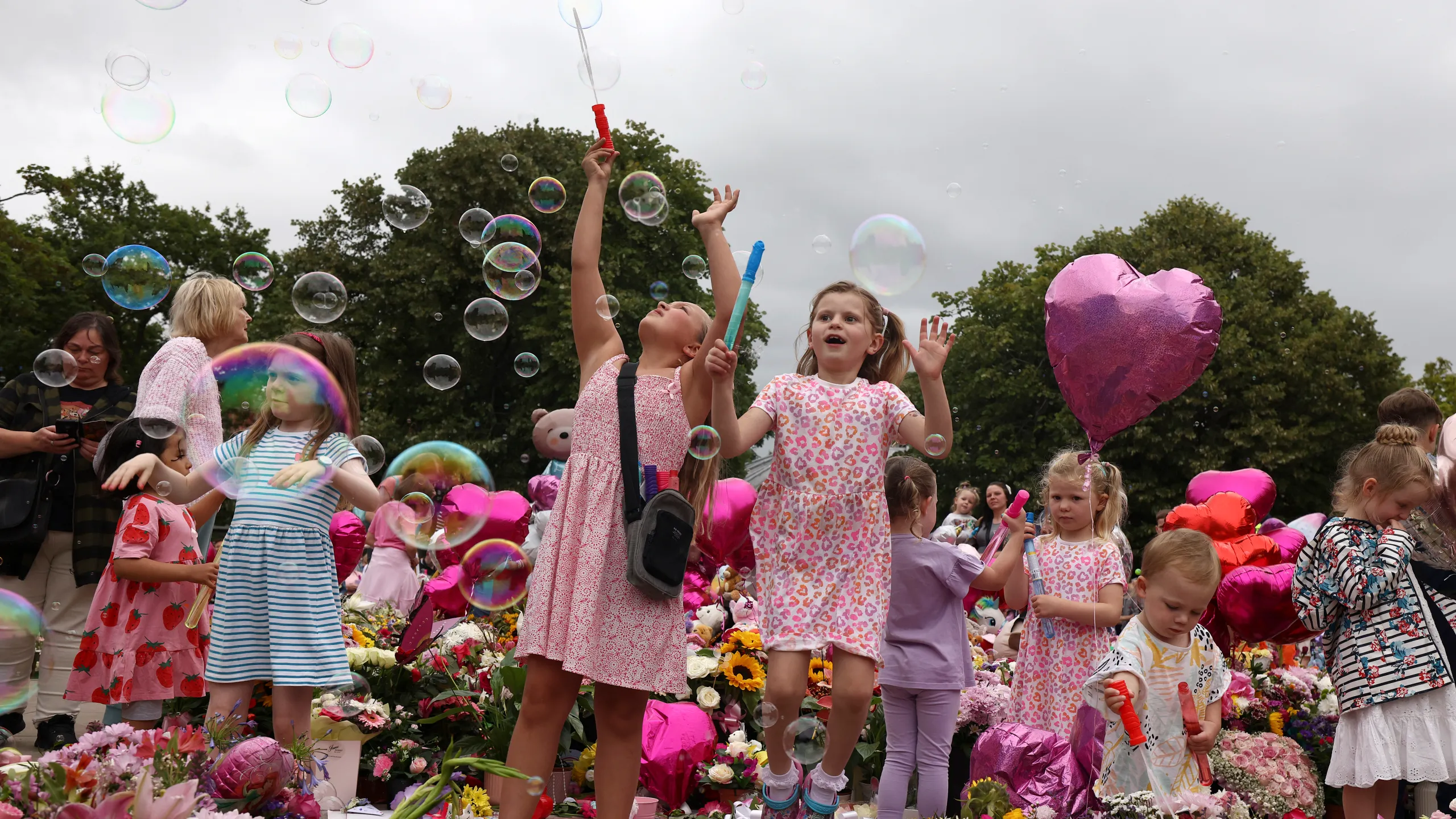
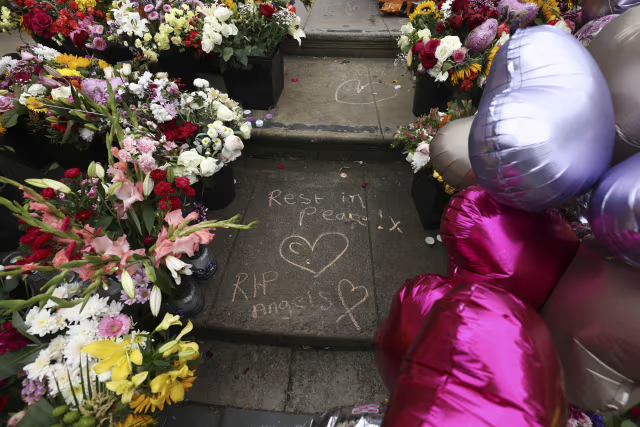
The Southport stabbing not only caused unimaginable grief for families but also served as a catalyst for latent social tensions. Children’s deaths provoked immediate emotional responses across communities. Vigils were held to honor the victims, with residents leaving tributes and forming protective bubbles outside the Town Hall.
However, these mourning gatherings were quickly overshadowed by violent demonstrations. The attacks on a mosque, hotels, and public spaces illustrate how quickly tragedy can be politicized and exploited to advance divisive agendas.
Far-Right Influence
Evidence suggests that the unrest was orchestrated, in part, by far-right groups such as the English Defence League. These organizations have a history of mobilizing public demonstrations against Muslims and immigrants, often escalating peaceful protests into violent confrontations.
By using social media as a coordination and propaganda tool, far-right actors amplified fear, spread misinformation, and encouraged collective action. Such dynamics highlight the modern intersection of digital communication and public violence, where false narratives can directly contribute to real-world harm.
The Human Cost
The riots led to hundreds of arrests, injuries to law enforcement personnel, and property damage across multiple cities. Communities have been left traumatized, grappling with the shock of mass violence and the realization of how quickly misinformation can spur physical attacks.
Victims of these riots include not only migrants and asylum-seekers but also local residents and shop owners caught in the crossfire. The human cost extends beyond physical injuries to long-term psychological effects, particularly for children and adolescents exposed to such extreme unrest.
Lessons and Prevention
Experts stress the need for both preventative and reactive measures. Strengthening community policing, improving public awareness campaigns about misinformation, and fostering dialogue around immigration and social integration are critical.
Policymakers must also address economic and social grievances that provide fertile ground for exploitation. Investments in local infrastructure, public services, and community support networks can help reduce the risk of unrest triggered by misinformation.
Social Media, Misinformation, and Public Safety
The anti-immigrant violence across Britain in August 2024 serves as a stark reminder of the power of misinformation to inflame social tensions. A tragic event—the fatal stabbing in Southport—was amplified by online rumors to trigger widespread unrest, illustrating the urgent need for robust law enforcement, public education, and social cohesion strategies.
Authorities continue to investigate the riots and bring perpetrators to justice, while communities work to rebuild trust and security. This incident highlights the complex interplay between digital misinformation, social discontent, and public safety, offering critical lessons for Britain and other nations facing similar challenges.
As Britain grapples with the aftermath, the events underscore the necessity of combating false narratives, fostering inclusive discourse, and ensuring that tragedies do not become catalysts for further violence.