
Table of Contents
- Trump Suggests UFC Octagon Could Become Permanent
- The Vision Behind “The Claw”
- Event Lineup and Expected Attendance
- Controversies Surrounding the Event
- Security and Logistical Challenges
- Public and Political Reactions
- Historical Comparisons and Symbolism
- Broader Implications for Public Space and Governance
- A Permanent Fixture or Temporary Spectacle?
Trump Suggests UFC Octagon Could Become Permanent
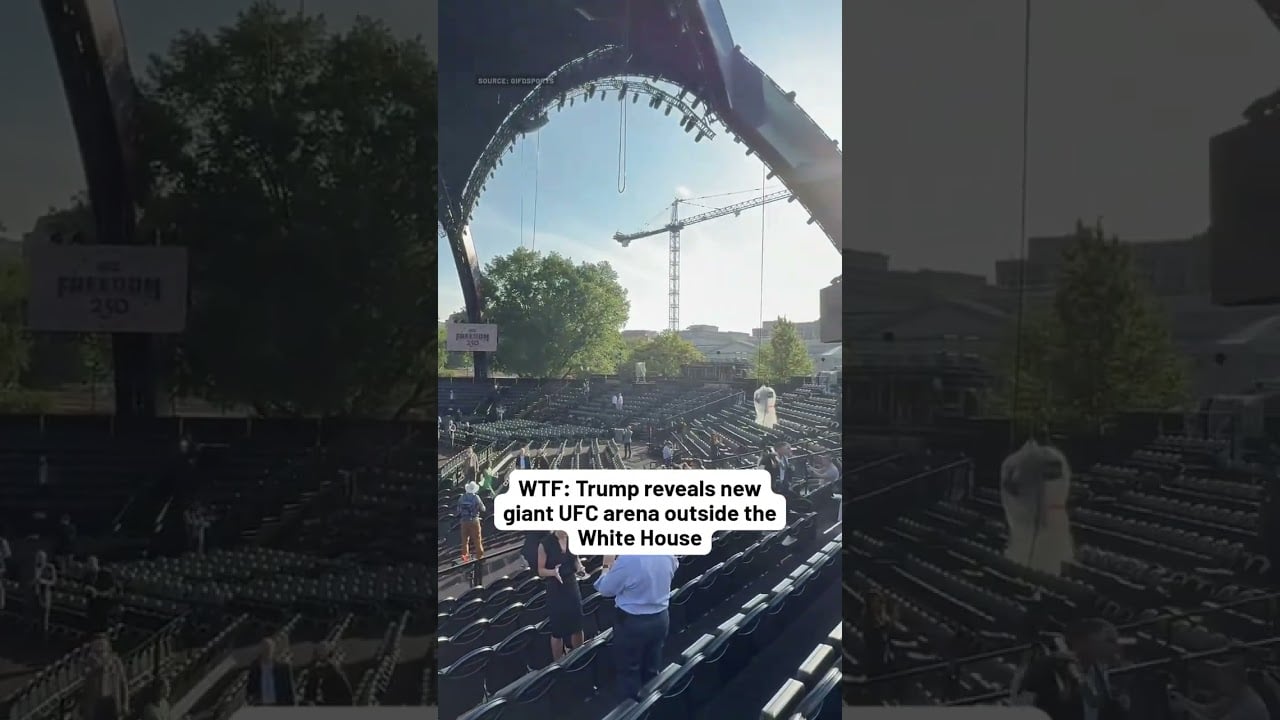
When news broke that the Trump administration was erecting a massive UFC arena on the White House lawn, it immediately drew global attention for its audacity, symbolism, and sheer spectacle. President Donald Trump suggested that the structure, a full-scale octagon with an overhead arch dubbed “The Claw,” could remain indefinitely, drawing an unusual parallel to the Eiffel Tower in Paris. Initially designed as a temporary installation for the 1889 World’s Fair, the Eiffel Tower remained standing due to public admiration—a comparison Trump used to justify the potential permanence of the arena outside his official residence.
Set to host a mixed martial arts (MMA) event on June 14, the arena is part of the Trump administration’s “Freedom 250” celebrations commemorating the 250th anniversary of the United States’ founding. The date is also significant personally for the president, marking his 80th birthday. Trump claimed the octagon would be a centerpiece of the celebration, promising a unique blend of sport, politics, and public spectacle.
The Vision Behind “The Claw”
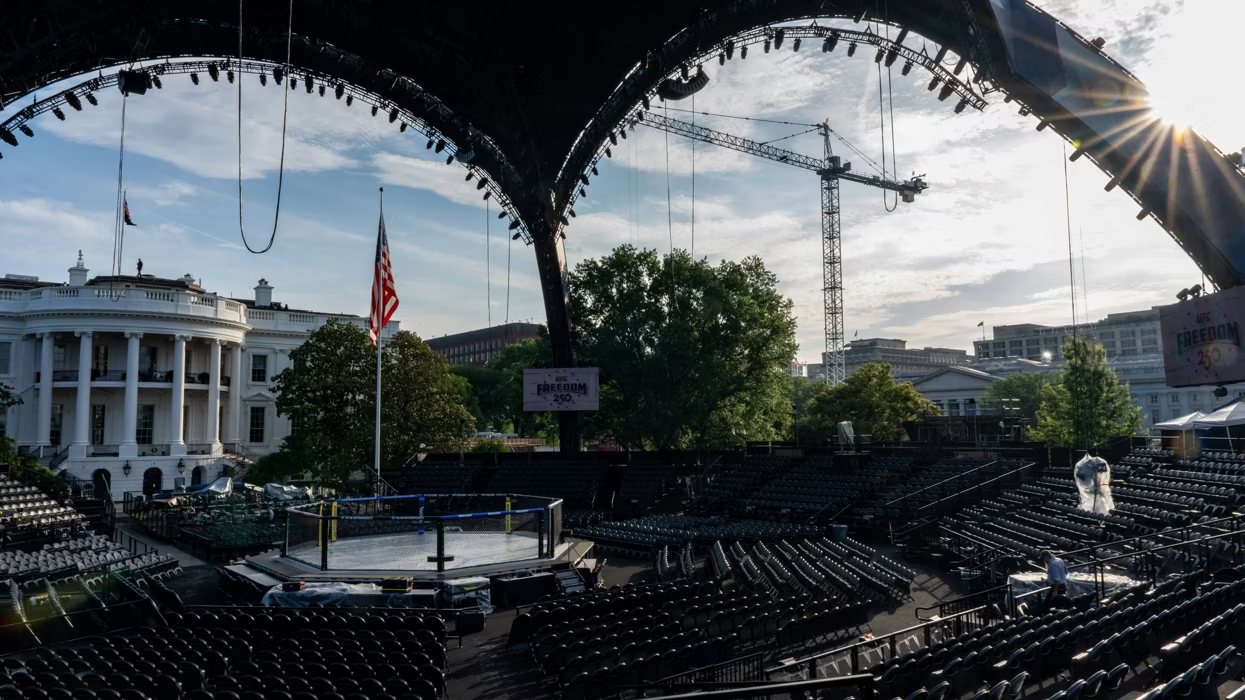
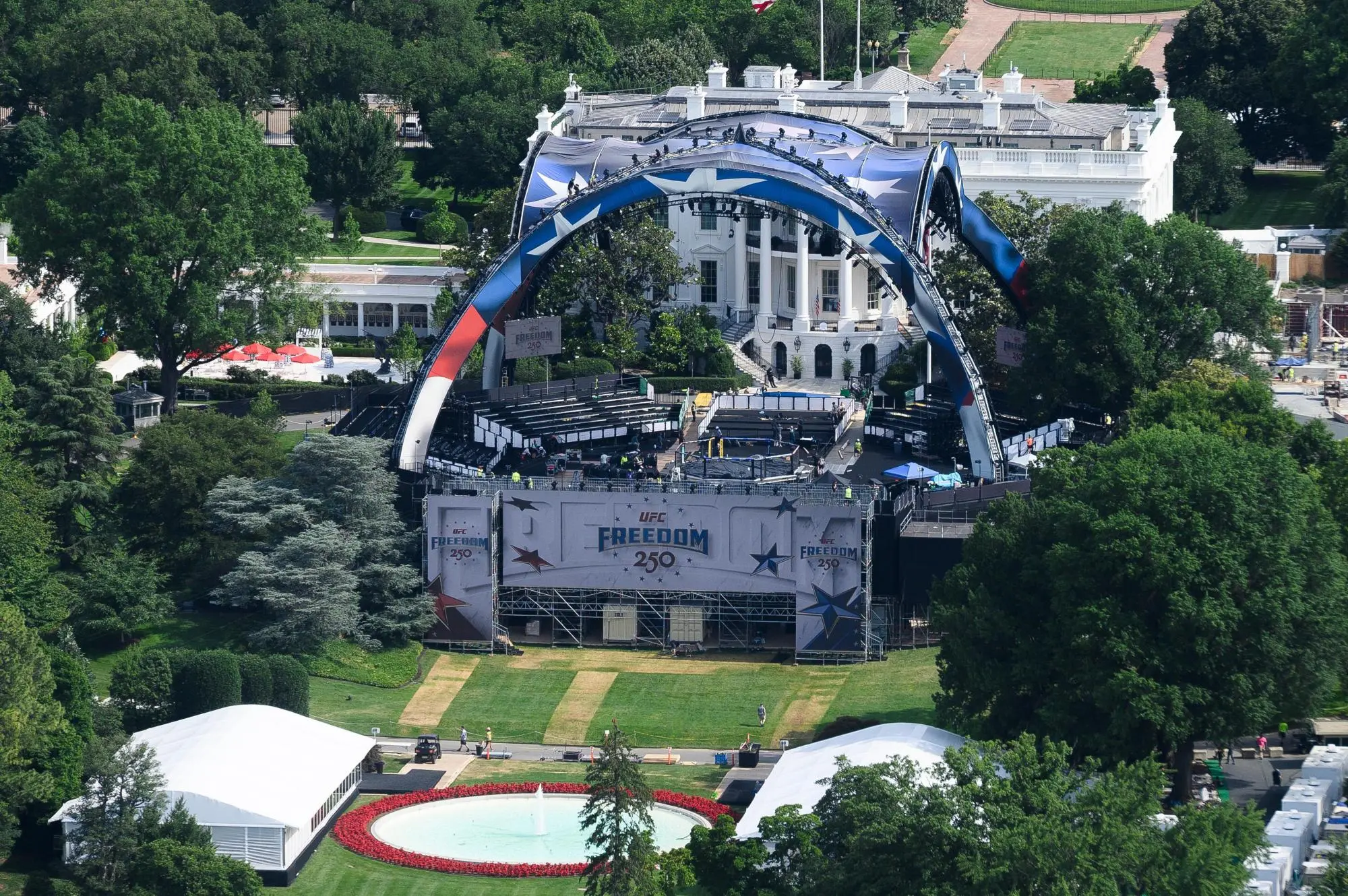
The UFC setup on the White House lawn is not just a fighting cage but a fully designed arena with seating for approximately 5,000 spectators, including VIP guests, military personnel, and political dignitaries. Screens and video installations are being constructed nearby at Washington’s Ellipse Park to allow thousands more to view the event in real-time. Dana White, UFC president and long-time ally of Trump, is overseeing the event despite concerns over outdoor logistics, safety, and security for such a high-profile match.
Trump likened the structure to iconic monuments, explaining on social media platform TikTok that “many don’t know that in Paris, France, the Eiffel Tower, 1889, was built…It was supposed to be taken down immediately after the World’s Fair, but people liked it, so they left it standing.” Drawing on this analogy, Trump suggested, “We’re building something in front of the White House that’s quite attractive to a lot of people…maybe we’ll never, ever take it down.” The statement sparked debate among political commentators, architects, and the public over precedent, aesthetics, and the role of presidential authority in such displays.
Event Lineup and Expected Attendance
The event will feature at least seven MMA bouts, showcasing fighters such as Ilia Topuria, Justin Gaethje, and Alex Pereira. The matches are expected to draw significant media coverage, both domestically and internationally. Organizers have emphasized the ceremonial and celebratory aspects of the event, framing it as a patriotic spectacle to coincide with America’s 250th anniversary.
Officials confirmed that seating arrangements will accommodate a diverse audience, including family sections, media zones, and military seating. Additional measures, including medical personnel, law enforcement, and rapid response teams, have been deployed to ensure safety during the high-profile outdoor event. White House spokesman Davis Ingle hailed the spectacle as “one of the greatest and most historic sports events in history” and a testament to the administration’s commitment to celebrating national milestones in novel ways.
Controversies Surrounding the Event
Despite the spectacle, the UFC arena comes at a politically sensitive time. The United States remains in protracted negotiations over international conflicts, including stalled peace talks with Iran, while domestic concerns such as inflation, the cost of living, and public service pressures persist. Critics argue that a multi-million-dollar display, coinciding with a private birthday celebration for the president, risks appearing tone-deaf to everyday struggles faced by Americans.
Additionally, the Freedom 250 project has faced numerous setbacks. Several prominent artists, including Morris Day and The Time, Young MC, Martina McBride, and Bret Michaels, have withdrawn from scheduled performances. They cited concerns over the political nature of the event and alleged misrepresentations regarding participation and messaging. Trump publicly disparaged the withdrawn performers as “third rate,” “boring,” and overpaid, asserting that he himself would headline and attract audiences surpassing historic entertainment figures such as Elvis Presley.
Security and Logistical Challenges
Constructing a UFC octagon on the White House lawn involves extensive security, engineering, and logistical planning. The venue requires reinforced structures, crowd control measures, and contingencies for weather, emergency response, and crowd behavior. Secret Service officials have collaborated with UFC organizers to ensure compliance with federal security protocols, while city authorities have coordinated with transportation and law enforcement agencies to manage traffic, surveillance, and emergency access routes.
The Claw’s overhead arch and lighting systems are being installed to maximize visibility and spectacle for live audiences and broadcast coverage. Event planners emphasize both aesthetic presentation and safety, incorporating protective barriers, evacuation routes, and crowd management plans that align with federal and local regulations.
Public and Political Reactions
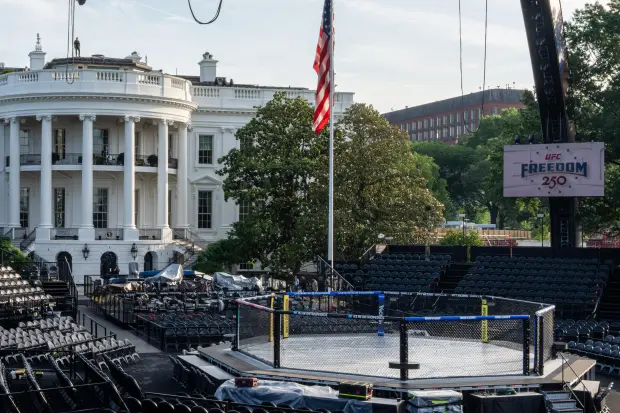
The announcement that Trump might leave the UFC arena permanently has generated polarized responses. Supporters celebrate the move as a bold, patriotic statement and an innovative method to combine entertainment with national commemoration. Critics, however, express concern over precedent, suggesting that installing permanent sports infrastructure on federal property may blur boundaries between private and public domains. Legal experts have debated the implications for zoning, federal property use, and historical preservation standards, though the administration maintains that the event and potential permanent installation fall within executive authority.
Social media commentary has reflected intense engagement, with videos, memes, and online discussions scrutinizing the spectacle, celebrity involvement, and political messaging. The event has also sparked broader debates about the commercialization of federal spaces, public perception, and presidential priorities during periods of political and economic tension.
Historical Comparisons and Symbolism
Trump’s comparison to the Eiffel Tower underscores an intentional narrative: temporary constructs can become cultural icons when embraced by the public. The president has framed the octagon as both a literal and symbolic centerpiece, blending American sporting culture with historical celebration. Analysts suggest the event may serve dual purposes: celebrating national history while consolidating personal branding and media attention.
Experts note that historical analogies, such as Trump’s invocation of the Eiffel Tower, are common in political spectacle. They argue that such comparisons aim to create emotional resonance, drawing on familiar narratives of cultural endurance and popularity to legitimize otherwise unconventional decisions.
Broader Implications for Public Space and Governance
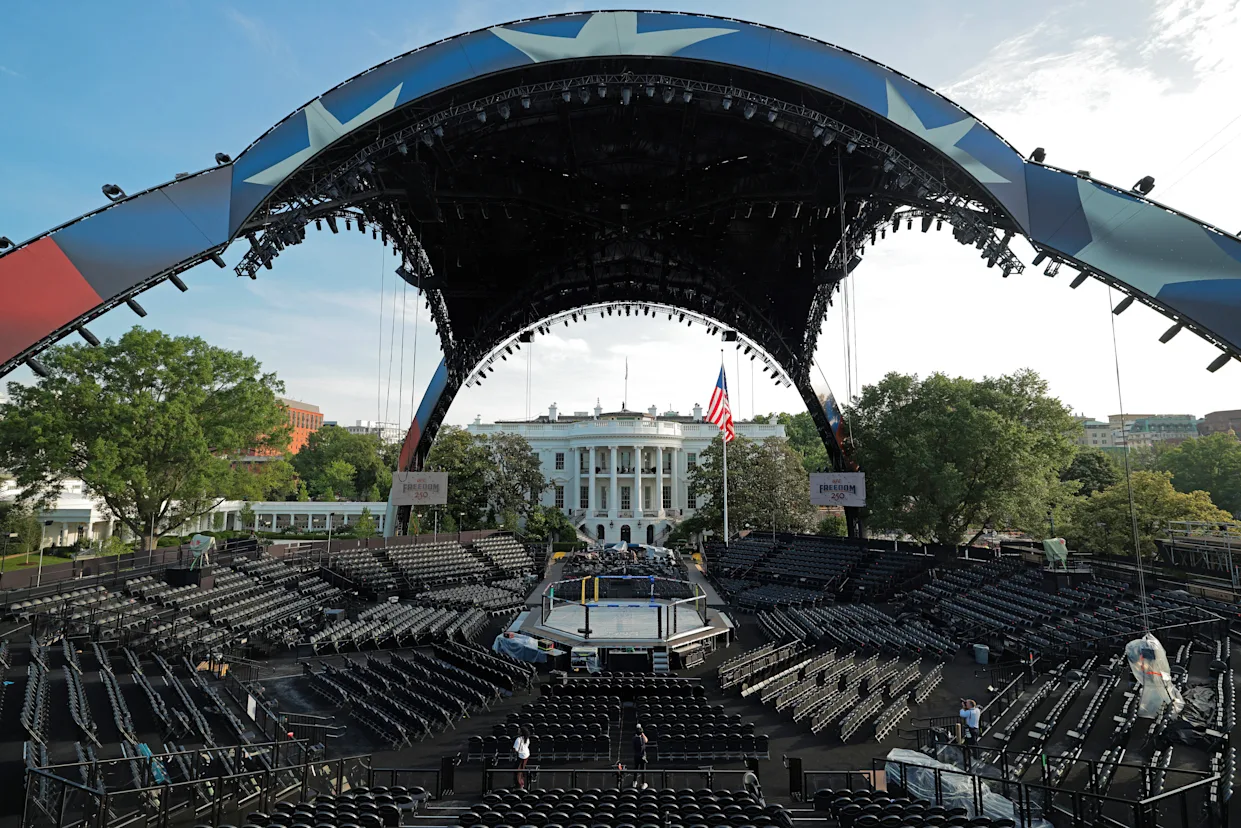
The UFC installation raises broader questions regarding the use of executive authority over federal property, public versus private interest, and the integration of high-profile entertainment into civic celebrations. Legal scholars emphasize that while the executive branch controls the White House grounds, ongoing scrutiny by Congress, historical preservation bodies, and public advocacy groups will likely influence long-term outcomes.
The arena also presents an opportunity to analyze the intersection of spectacle, media, and governance. Scholars of political communication note that high-visibility events can shape public perception, boost political capital, and distract from concurrent policy debates. The White House UFC event exemplifies a blending of cultural entertainment with executive messaging, creating a case study in modern political spectacle.
A Permanent Fixture or Temporary Spectacle?
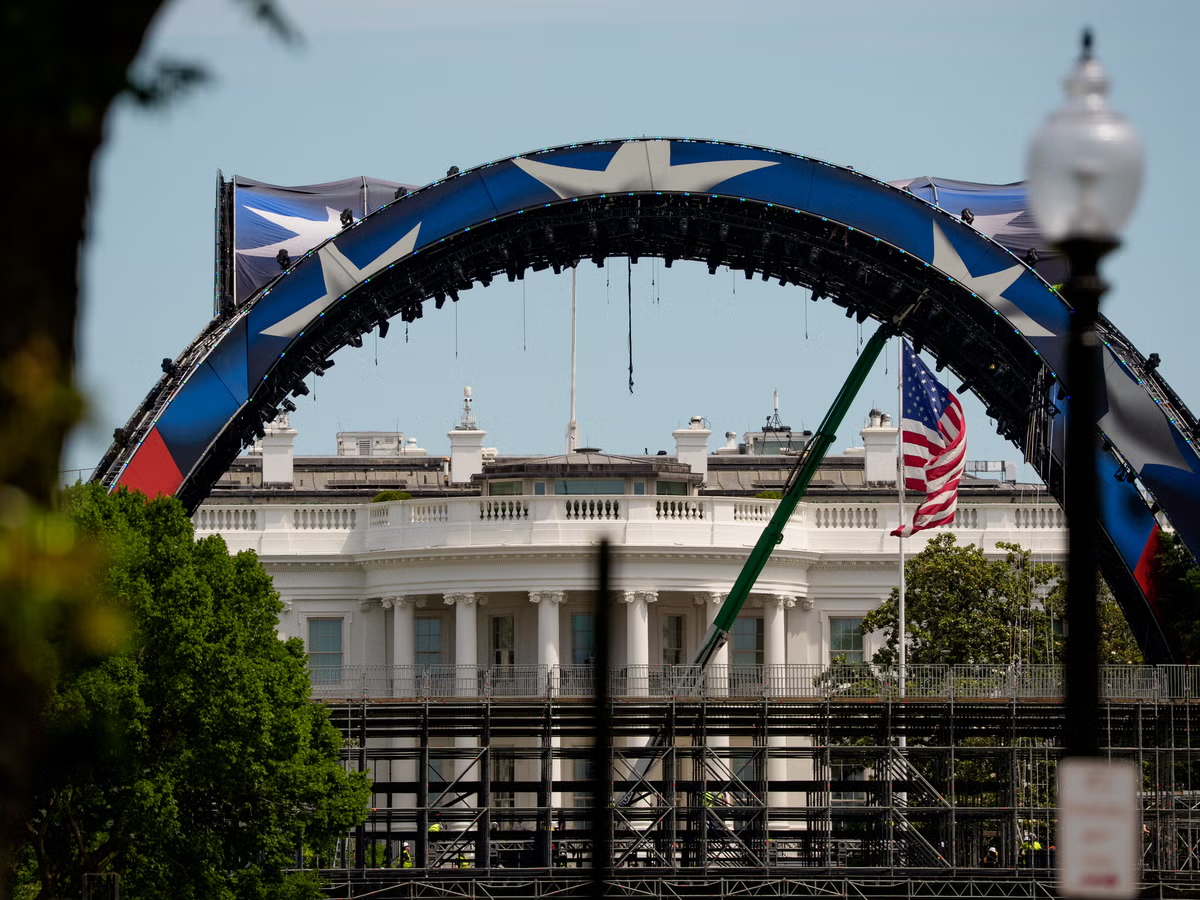
The Claw, with its looming octagon and celebratory purpose, stands as a testament to the blending of sport, politics, and media spectacle. Whether it remains permanently on the White House lawn or is dismantled after the June 14 event, the arena symbolizes both an unprecedented approach to presidential celebrations and the power of narrative framing in public perception.
The implications of the UFC arena extend beyond the event itself, touching on issues of federal property use, public engagement, and historical precedent. As the Freedom 250 celebrations unfold, the world watches not just the MMA bouts but the broader conversation about the role of spectacle, executive authority, and the cultural politics of the United States’ 250th anniversary.
Trump’s ambition to leave a lasting mark, much like the Eiffel Tower, ensures that the UFC octagon will remain a focal point for discussion, analysis, and controversy long after the final match concludes.