

Table of Contents
- A Luxury Dream Meets Public Outrage
- The Coastline At The Center Of The Fight
- Why Protesters Are Angry
- Environmental Concerns Intensify
- The Transparency Problem
- Prosecutors And Land Questions
- Rama Defends The Investment
- The EU Dimension
- A Protest Movement Beyond One Project
- Why The Story Went Viral
- What Happens Next
- A Coastline Becomes A National Test
A Luxury Dream Meets Public Outrage
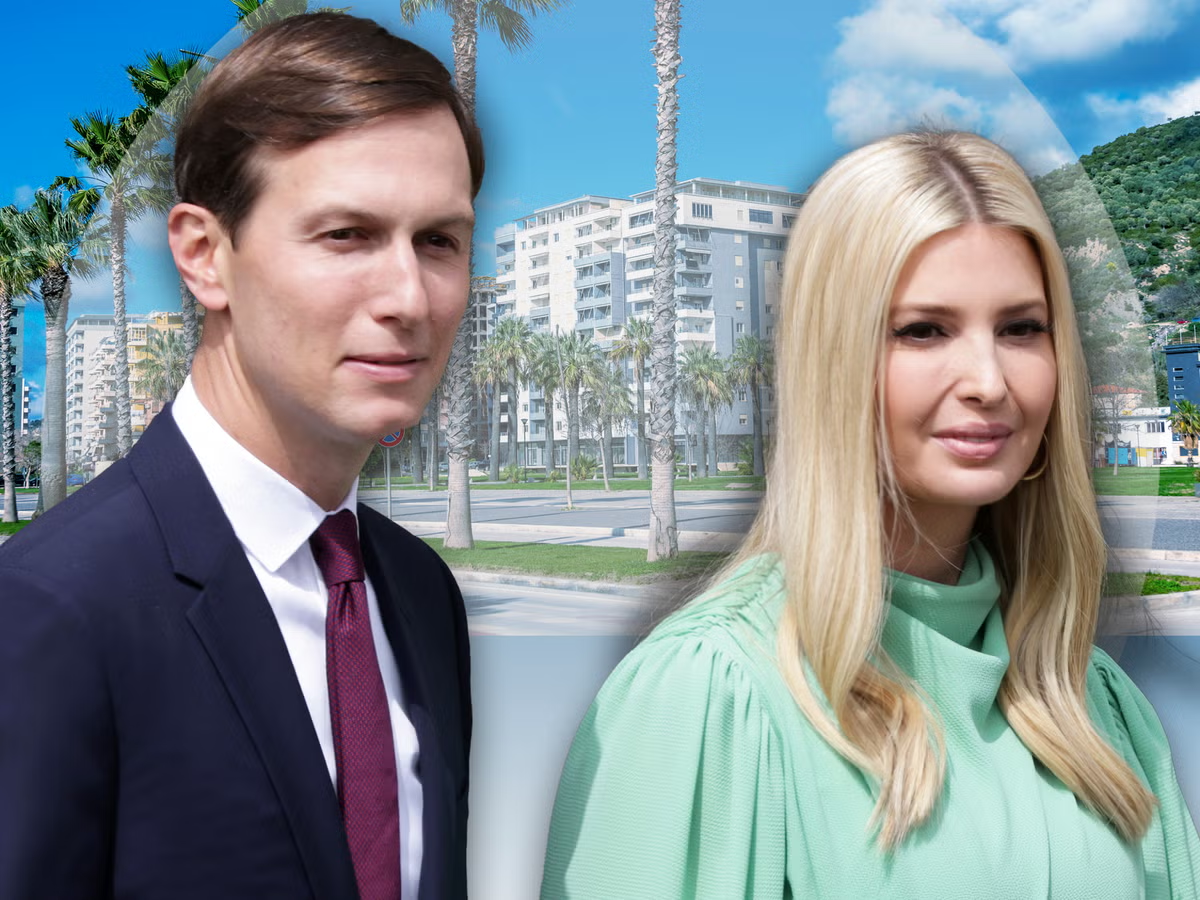
When plans for a luxury resort linked to Jared Kushner and Ivanka Trump surfaced along Albania’s stunning Adriatic coast, the project was presented as a chance to transform one of Europe’s most overlooked shorelines into a world-class destination. But in Albania, the proposal has become much more than a real estate story. It has sparked anger over public land, wildlife protection, government transparency, and the growing belief among many citizens that their country is being shaped for the wealthy while ordinary people are pushed aside.
The development is tied to Sazan Island and a stretch of coastline near Zvërnec, an area known for beaches, cliffs, lagoons, bird habitats, and deep emotional meaning for many Albanians. For supporters, the resort could bring jobs, tourism, investment, and international attention. For opponents, it is a symbol of everything they believe is broken in the country: political favoritism, weak public consultation, environmental risk, and opaque deals involving powerful foreign investors.
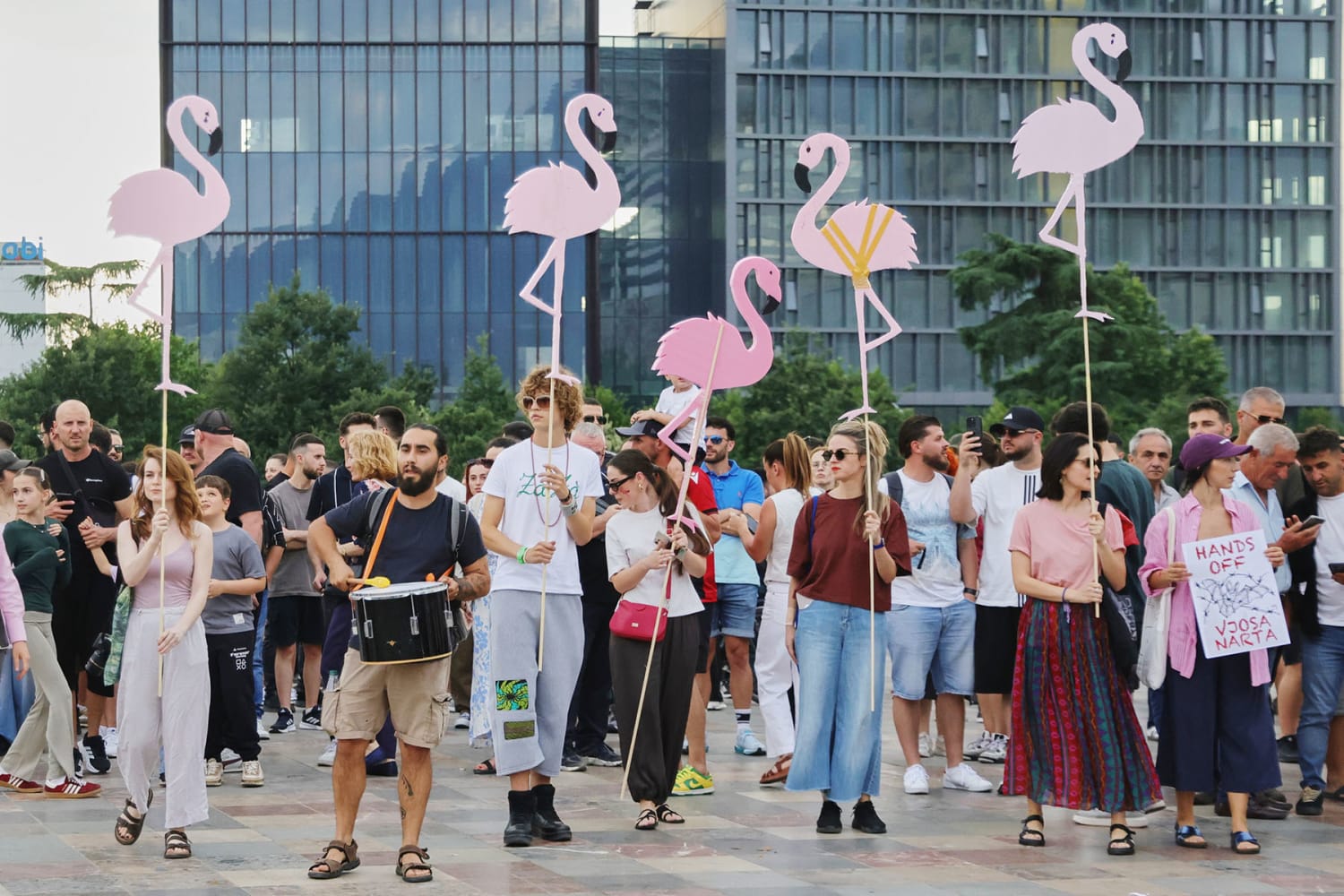
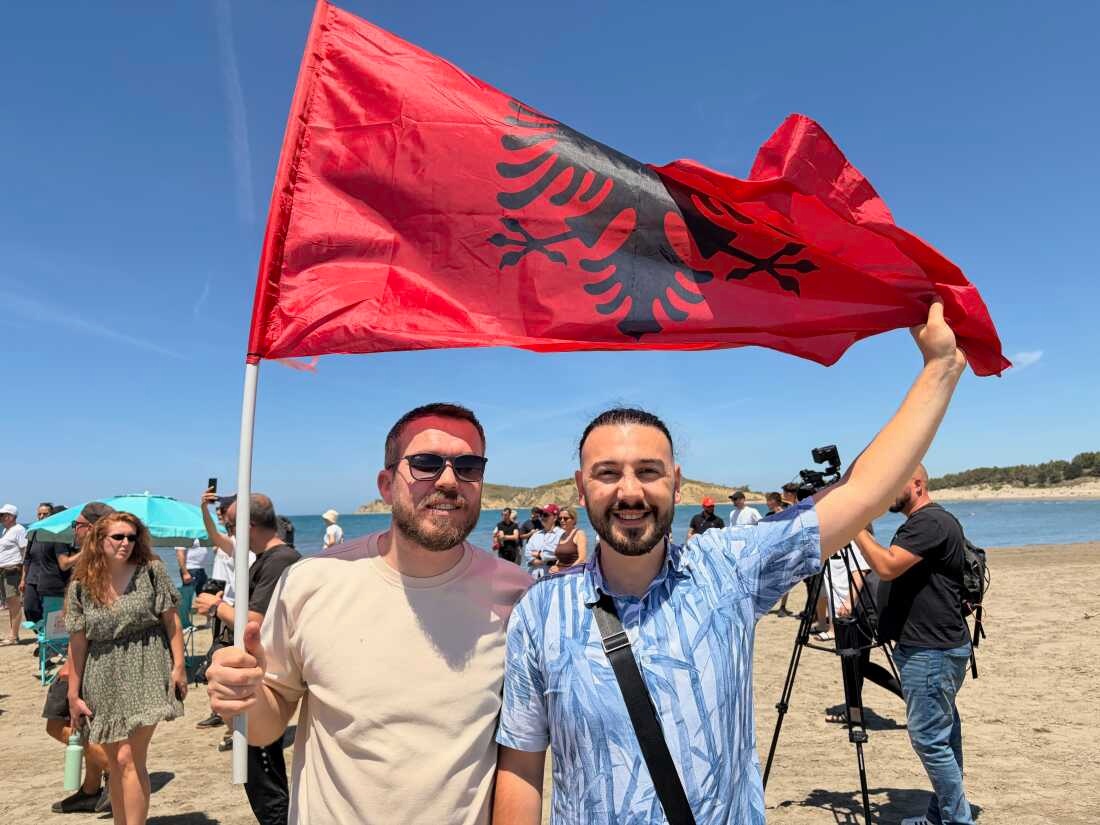
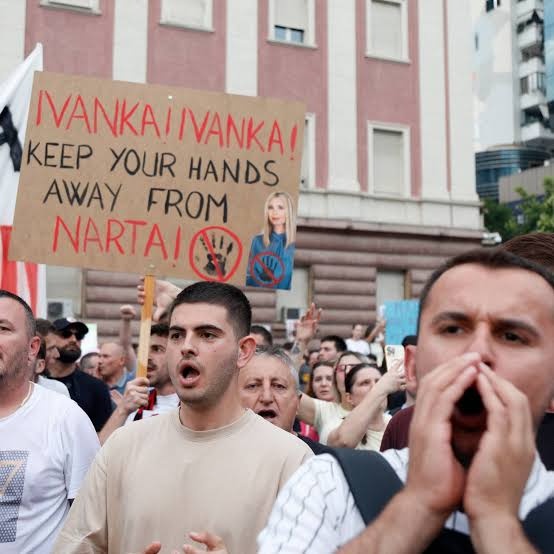
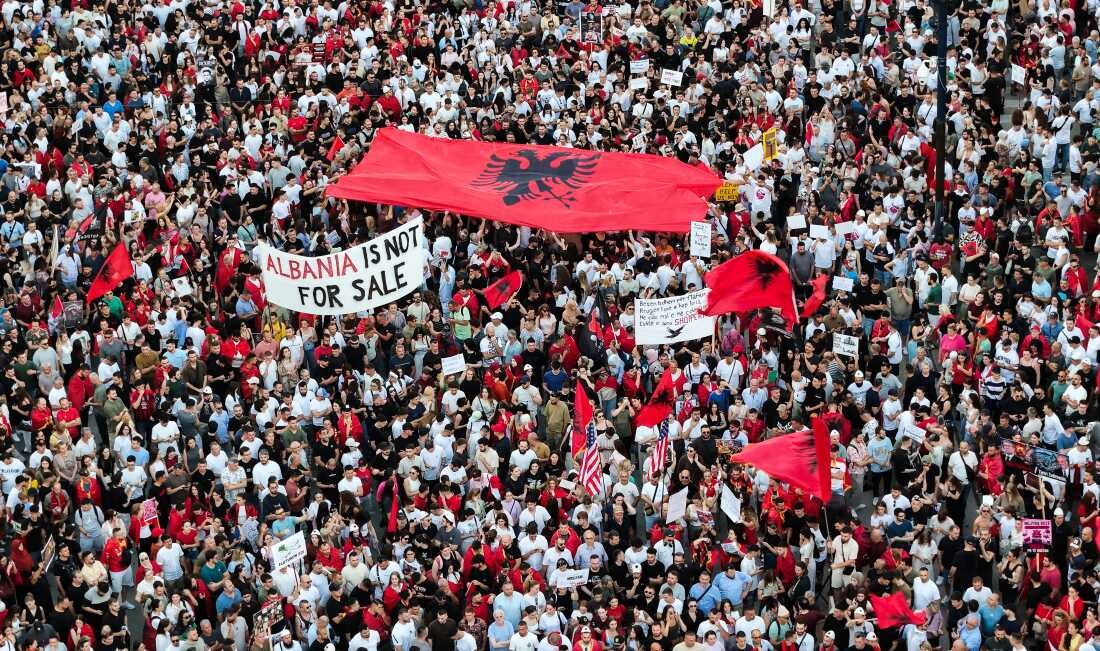
The backlash has grown into one of Albania’s most visible protest movements in years. Demonstrators have carried Albanian flags, gathered near government buildings, and used the flamingo as a symbol of the wildlife they say is at risk. What began as anger over a resort has now become a bigger question about who gets to decide the future of Albania’s coast.
The Coastline At The Center Of The Fight
The project focuses on one of Albania’s most visually striking coastal areas. Sazan Island sits off the Adriatic coast and has a long history, including its past use as a military site. Nearby, the Zvërnec peninsula stretches between the sea and a lagoon, creating a dramatic landscape of water, sand, forest, and open sky.
For many Albanians, this is not an empty piece of land waiting for luxury branding. It is a place connected to childhood memories, family visits, fishing, swimming, birdwatching, and national identity. That emotional connection is part of why the backlash has been so intense.
Ivanka Trump has publicly described the area as captivating, saying she and Kushner encountered it during a sailing trip and were struck by its natural beauty. Her description of the island and beachfront as a rare Mediterranean opportunity helped draw global attention. But it also angered critics who felt that the language of discovery ignored the people, ecosystems, and public history already tied to the land.
That gap between investor vision and local attachment is now at the heart of the conflict.
Why Protesters Are Angry
The most direct complaint from protesters is that they believe public land is being handed over to powerful private interests. Some demonstrators say the coastline belongs to all Albanians, not just to investors, politicians, or wealthy tourists.
Their concern is not only about who builds the resort, but about what happens afterward. If the project moves forward, protesters fear parts of the coast could become less accessible to ordinary people. A place once viewed as open, shared, and national could become controlled, priced, and designed for outsiders.
The anger also reflects Albania’s broader political frustrations. Many young Albanians have grown up hearing promises of reform, prosperity, and European integration while still watching friends and family leave the country for better opportunities abroad. In that context, a luxury resort backed by globally connected investors can feel like a sharp contrast to everyday life.
For critics, the development is not just a hotel plan. It is a mirror reflecting inequality.
Environmental Concerns Intensify
Environmental groups have warned that the proposed development could harm sensitive habitats around the Vjosa-Narta area. The lagoon and surrounding wetlands are known for bird species, including flamingos, and conservationists argue that construction could disturb breeding areas, migration routes, dunes, and coastal ecosystems.
This is why the flamingo has become such a visible symbol of the protests. It is not only a bird. It has become a way for protesters to say the land has value beyond luxury tourism.
Environmentalists have also raised concern about roads, bulldozers, tree clearing, and possible damage to turtle nesting areas. Even early-stage construction activity can matter in fragile zones because roads and fencing can alter animal movement, disrupt habitats, and change how people use the land.
Supporters of the project say the development can be handled responsibly and may include environmental stewardship, green space, and long-term value for local communities. Critics remain skeptical. They argue that once construction begins in a protected area, damage can happen long before any official promise of restoration is tested.
The Transparency Problem
Another major issue is transparency. Protesters and investigative journalists have questioned who exactly stands behind the investment structure and how the land arrangements were made.
Reports have described layers of companies connected to the project, including entities in Albania and the Netherlands. Critics argue that the ownership structure is difficult for the public to understand. That lack of clarity has fed suspicion, especially in a country where corruption allegations have long shaped public trust in government decisions.
The project’s representatives have said the focus is responsible development, environmental improvement, jobs, and long-term value. They have also said Kushner’s Affinity Partners has no role in the project and that some partners are involved personally as investors.
Still, the difficulty of tracing all investors has become a major point of public frustration. For many protesters, the question is simple: if the project is good for Albania, why is it so hard to see who is behind it?
Prosecutors And Land Questions
The controversy deepened when Albanian prosecutors reportedly froze bank accounts linked to a firm that purchased land connected to the project. The action was part of an investigation into alleged fraudulent property titles.
That development added legal weight to what had already been a political and environmental dispute. It did not prove wrongdoing by Kushner, Ivanka Trump, or every party connected to the resort. But it increased public concern that the land process around the project may be more complicated than officials first suggested.
For protesters, the investigation reinforced their belief that the issue is not only about protecting nature. It is also about protecting public trust.
Land disputes can be especially sensitive in Albania because property ownership has often been complicated by the country’s political history, post-communist transition, incomplete records, and competing claims. When a huge resort project enters that environment, questions over titles and ownership can become explosive.
Rama Defends The Investment
Albanian Prime Minister Edi Rama has defended the project, framing it as a major opportunity for tourism and economic growth. He has argued that Albania needs investment, jobs, and high-end development if it wants to become a stronger Mediterranean destination.
Rama’s position is that the country should not appear hostile to investors. In his view, rejecting major projects could send the wrong message at a time when Albania is trying to grow its economy and attract international attention.
Supporters of the resort agree. They believe Albania has extraordinary natural beauty but has not fully benefited from it. They argue that luxury tourism could bring jobs, infrastructure, global visibility, and confidence to a country that has often been overlooked by wealthier European neighbors.
But that argument has not calmed critics. Many protesters say development is not the problem. They say the problem is development without trust, public consultation, and strong protection for shared resources.
The EU Dimension
The controversy also matters because Albania is seeking closer integration with the European Union. Environmental standards, public procurement, rule of law, and anti-corruption reforms are all central to that process.
Critics argue that allowing major construction in protected areas could hurt Albania’s EU ambitions. Environmental lawyers and activists have warned that the project could conflict with conservation expectations tied to European standards.
The European Parliament has also weighed in by expressing concern about development in protected zones and urging caution. That adds international pressure to a debate that began locally.
For Albania, the question is larger than one resort. It is about what kind of development model the country wants to present to Europe. Will it protect its most sensitive landscapes, or will it prioritize fast tourism growth even when local communities object?
That question has become a major reason the protests continue.
A Protest Movement Beyond One Project
The demonstrations have been called the “Flamingo Revolution,” but the movement is no longer only about birds or beaches. It has become a broader expression of anger toward Albania’s political establishment.
Many protesters say they are tired of a system where ordinary citizens feel ignored while elites negotiate the country’s future behind closed doors. Some have called for Prime Minister Rama to resign. Others have criticized opposition figures as well, arguing that the frustration is not limited to one party.
That gives the movement a different energy. It is not simply anti-investor or anti-American. Many protesters insist they are not against foreign investment. They say they are against deals that feel secretive, unfair, or environmentally destructive.
This is why the resort has become such a powerful symbol. It gives people a concrete image for a much larger frustration: a beautiful coastline, a wealthy investor, a government eager for development, and citizens asking whether their voices matter.
Why The Story Went Viral
This story has all the elements of a viral global controversy. It involves Donald Trump’s family, a luxury Mediterranean project, public land, rare wildlife, allegations of corruption, bulldozers, protests, and a country wrestling with its future.
But the reason it resonates is deeper than celebrity. People everywhere understand the tension between development and preservation. They understand what happens when a place loved by locals becomes attractive to wealthy outsiders. They understand the fear that once public spaces are privatized, they may never return.
Albania’s coastline is not just a backdrop. It is the emotional center of the story. The beaches, lagoons, birds, and islands are what made the project attractive in the first place. They are also what protesters believe must be protected.
That contradiction is what gives the controversy its force. The land is valuable because it is beautiful, but developing it may change the very thing that makes it valuable.
What Happens Next
The project still faces public resistance, legal questions, and environmental scrutiny. Protesters have shown no sign that they are ready to disappear quietly. Government officials, meanwhile, continue to argue that Albania needs major investment and that the development can be managed responsibly.
The final outcome may depend on permits, court challenges, environmental assessments, investor decisions, political pressure, and how much momentum the protest movement can maintain.
For Kushner, Ivanka Trump, and the project’s other backers, the challenge is no longer only financial or architectural. It is reputational. A luxury resort built amid public anger can become a symbol of exclusion before it ever opens its doors.
For Albania’s government, the challenge is even bigger. It must convince citizens that the process is legal, transparent, environmentally sound, and genuinely beneficial to the public. Without that trust, even promises of jobs and development may not be enough.
A Coastline Becomes A National Test
The controversy over the Kushner-linked Albania resort has become a test of power, trust, and national direction. At one level, it is a dispute over a luxury development. At another, it is a fight over whether Albania’s future will be shaped through public consent or elite negotiation.
Supporters see opportunity. Critics see a warning. Environmentalists see fragile habitats at risk. Protesters see a government too willing to trade public land for private prestige.
What happens next will matter far beyond Sazan Island and Zvërnec. If the project moves forward, it could redefine Albania’s tourism ambitions and bring global attention to its coast. If it is blocked or reshaped, it could prove that public pressure still has power in a country where many citizens feel unheard.
For now, one thing is clear: a luxury dream on the Adriatic has awakened a national argument. And for many Albanians standing on beaches, waving flags, and carrying flamingo symbols, the message is simple. Their country is not just a destination. It is home.