

Table of Contents
- A Frightened Dog With Nowhere Left to Run
- The First Touch: A Moment That Could Go Either Way
- The Road to the Shelter: Silence, Fear, and the First Signs of Trust
- Healing Isn’t Linear: Setbacks, Breakthroughs, and Daily Miracles
- The First Walk: A Dog Rediscovers the World
- A Face Seen by the Right Family at the Right Time
- A New Life Begins: The Transformation of a Once-Frightened Soul
- Why Rescue Workers Matter More Than We Realize
- A Reminder for All of Us
A Frightened Dog With Nowhere Left to Run
He stood frozen behind a stack of old pallets, barely visible except for the trembling of his thin fur.
Most people would have walked past without noticing—but rescue workers have trained eyes. They know the difference between movement caused by wind and movement caused by fear.
The dog, later named Reggie, had been wandering the outskirts of town for weeks. Some neighbors left food out. Others tried to coax him closer. But he was too scared, too wounded by life, too unsure of human intentions.
Then came the morning that changed everything.
It was early—before sunrise—when volunteers from a local rescue group spotted Reggie huddled near an abandoned construction site. Rain was slowly flooding the ground around him. He didn’t try to run this time. Instead, he simply lowered his head and waited, as if expecting the worst.
The workers looked at each other. This wasn’t a dog running from something anymore. This was a dog hoping—desperately—that something might finally save him.
The First Touch: A Moment That Could Go Either Way

Fear changes a dog.
Dogs who once trusted humans freely begin to shrink at the sound of footsteps. Their instincts shout: run, hide, survive. And yet on that morning, Reggie didn’t run.
One rescue worker named Maria slowly approached him, holding a slip lead in one hand and a piece of chicken in the other. She spoke softly, knowing that her tone mattered more than her words.
Reggie flinched at first. His ribs were visible, his paws cracked, and the scars on his face hinted at a long history of neglect.
But when Maria crouched down, something shifted. His ears lowered, his breathing slowed. He didn’t move toward her—but he didn’t back away.
That tiny moment of hesitation can mean everything in rescue work. It can mean hope.
Open loop:
But what happens when a terrified dog leaves survival mode and is suddenly forced to trust strangers? Sometimes the hardest part isn’t the rescue—it’s what comes next.
The Road to the Shelter: Silence, Fear, and the First Signs of Trust
Rescue workers gently lifted Reggie into the van. He didn’t fight, didn’t bark, didn’t growl. Trauma often looks like silence—not aggression.
Inside the van, the workers kept glancing at him through the rearview mirror. Reggie sat motionless, staring at the corner as if making himself small enough to disappear.
But halfway through the drive, something surprising happened.
Reggie slowly turned his head toward the front of the van. His eyes softened—not trusting, not yet hopeful—but no longer empty.
He was watching the people who had taken him in.
It was the first step toward connection.
At the shelter, workers moved quickly:
- A warm bath
- A medical check
- A soft blanket
- A quiet kennel far from barking dogs
When they placed him in his new space, he curled into the blanket and exhaled—a long, tired breath that seemed to release years of fear.
Healing Isn’t Linear: Setbacks, Breakthroughs, and Daily Miracles
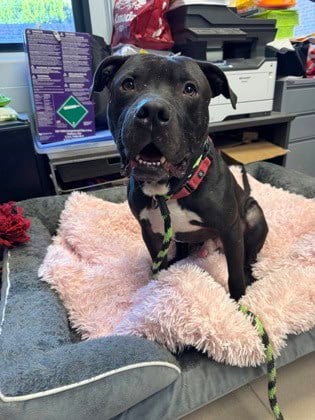
Dogs like Reggie rarely transform overnight. Healing comes in small, delicate moments—some so subtle that only trained eyes notice.
The first week, Reggie wouldn’t eat unless the room was empty.
The second week, he began eating while a worker sat quietly nearby.
The third week, he wagged his tail once—just once—but it was enough to bring tears to a volunteer’s eyes.
Trauma leaves invisible marks:
- Loud noises made him shake
- Quick movements made him drop to the floor
- New people made him hide in the corner
But slowly, through patience and consistency, Reggie discovered something he hadn’t known before: safety.
Every day, workers sat with him in silence. They didn’t force touch. They didn’t rush progress. They simply created an environment where trust could grow.
And it did.
The First Walk: A Dog Rediscovers the World

One sunny afternoon, nearly a month after his rescue, Reggie surprised everyone.
When a volunteer approached with a leash, he didn’t hide. Instead, he took one tiny step forward—the universal dog language for I’m ready.
His first walk was tentative. The grass felt unfamiliar beneath his paws. The sounds of cars made him twitch. But the more he moved, the more his posture changed. His tail rose slightly, his ears perked up, his eyes widened with curiosity.
For the first time in who knows how long, Reggie wasn’t just surviving the world—he was experiencing it.
If this happened to you—if you spent years alone and afraid—how long would it take before you trusted the world again?
Dogs feel these same emotional mountains. And like us, they climb them slowly, one step at a time.
A Face Seen by the Right Family at the Right Time
The shelter shared Reggie’s story online. People were moved by his journey—from terrified stray to a dog learning how to trust again. Comments flooded in:
“He deserves the world.”
“I hope he finds a gentle home.”
“I’d adopt him if I lived closer!”
But one message stood out.
A couple named Evan and Claire had recently lost an elderly dog who meant everything to them. When they saw Reggie’s photo—nervous eyes, cautious posture—they felt something stir.
“He needs us,” Claire whispered.
They drove to the shelter that weekend.
When Reggie met them, something incredible happened. He didn’t hide. He didn’t shake. Instead, he walked toward them slowly, sniffed Claire’s hand, and leaned in—the same way dogs lean into people they sense are safe.
Shelter staff exchanged knowing smiles.
Reggie had chosen his family.
A New Life Begins: The Transformation of a Once-Frightened Soul
Reggie’s first day in his forever home was quiet. He explored cautiously, room by room. He found a soft bed placed beside a window and curled into it as if claiming it.
Over the next weeks, his transformation stunned everyone:
- His tail began wagging freely
- His appetite returned
- His playfulness emerged
- He learned how to cuddle
- He began sleeping soundly through the night
The dog who once flinched at the sound of footsteps now ran to the door when Evan came home. The dog who hid behind pallets now jumped onto the couch, ready for affection. The dog who once knew fear now knew what it meant to be loved.
Sometimes the biggest miracles are quiet, slow, and deeply human. They unfold not in dramatic rescues but in the everyday moments shared between a dog and the people who believe in him.
Why Rescue Workers Matter More Than We Realize
Behind every transformed dog is a team of people who refuse to give up.
They provide:
- Medical care
- Behavioral training
- Socialization
- Safety
- Stability
- Love
Shelters often operate with limited budgets, limited space, and overwhelming demand. Yet they continue helping animal after animal—not because it’s easy, but because it matters.
Rescue work is emotional. It’s exhausting. It’s heart-wrenching. And yet, for dogs like Reggie, it’s the only reason they get a second chance.
A Reminder for All of Us
Reggie’s story is more than a rescue tale. It’s a reminder that healing is possible, even when the past feels too heavy to escape.
It’s a reminder that compassion has real power—the power to rewrite a life, change a destiny, and turn fear into joy.
And it’s a reminder that every frightened, broken, abandoned dog out there is simply waiting for someone to see them, choose them, and believe they’re worth loving.
One frightened dog. One team of rescue workers. One family who opened their home.
Together, they created a story of hope that will outlive every rainy morning he once spent alone.