
Table of Contents
- When a Child Heard Something No One Else Noticed, Everything Began to Change
- The Afternoon That Seemed Ordinary Until It Wasn’t
- Following the Whimpers That Grew Weaker With Every Step
- The Massive Animal That Could No Longer Free Itself
- Why Large Animals Are Especially Vulnerable When Trapped
- The Moment She Ran for Help and Refused to Stay Silent
- Realizing the Rescue Would Not Be Simple
- The Emotional Weight of Seeing Hope Slip Away
- How the Rescue Team Carefully Worked Against the Clock
- The First Moments After Freedom Returned
- What Rescuers Noticed That Stayed With Them
- Why Stories Like This Matter More Than They Seem
- The Bond That Formed Without Touch or Words
- What This Rescue Teaches About Compassion at Any Age
- Conclusion
When a Child Heard Something No One Else Noticed, Everything Began to Change
When news broke that a little girl had followed faint whimpering sounds and uncovered a massive animal trapped and slowly losing hope, the story resonated far beyond the place where it happened. It was not the size of the animal that first captured attention, nor the complexity of the rescue that followed. It was the simplicity of the beginning. A child heard something that felt wrong and refused to ignore it.
The sound was easy to miss. Barely audible. Soft enough to be mistaken for wind or distant movement. But to the girl, it sounded like distress. And that intuition became the starting point of a rescue no adult had yet realized was necessary.
The Afternoon That Seemed Ordinary Until It Wasn’t
The day began like many others. The girl was outside, moving freely, curious about her surroundings in the way children naturally are. There was no expectation of adventure or danger. Just open space, fresh air, and the quiet rhythms of the environment around her.
Then she stopped.
Somewhere nearby, she heard a sound that didn’t belong. It wasn’t loud. It wasn’t dramatic. But it repeated itself, soft and strained. The kind of sound that suggested exhaustion rather than panic. The kind of sound that fades when hope begins to slip away.
Following the Whimpers That Grew Weaker With Every Step
Instead of brushing the noise aside, the girl followed it. Step by step, she moved toward the source, guided only by sound and instinct. With each step, the whimpers grew clearer, but also weaker.
They led her to a place few people ventured. A spot partially hidden, where visibility was limited and movement was difficult. And there, she saw what no one else had noticed.
A 100-pound animal, trapped.
The Massive Animal That Could No Longer Free Itself

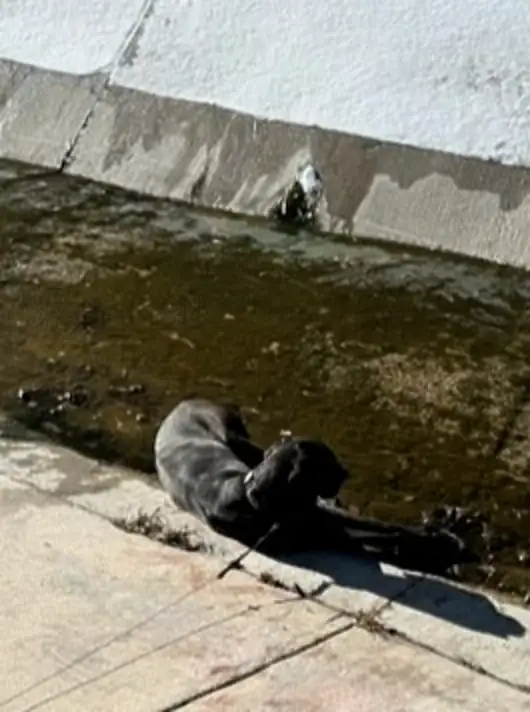
The animal was large, heavy, and completely immobilized. Its body was wedged in a position it could not escape from on its own. Dirt and debris surrounded it, evidence of repeated attempts to move, to pull free, to survive.
Its breathing was labored. Its eyes were dull with exhaustion. It had been there for some time, long enough for panic to give way to resignation. Large animals rely on strength to survive, but when strength fails, the fall is swift.
By the time the girl found it, the animal was running out of both energy and hope.
Why Large Animals Are Especially Vulnerable When Trapped
Size can be an advantage in the wild, but it becomes a liability in confinement. A 100-pound body requires space, leverage, and freedom of movement. When trapped, weight works against survival.
The animal’s muscles had begun to fatigue. Its attempts to escape had only tightened the trap. Dehydration and stress compounded the danger. Without intervention, the outcome would not have been survival.
The girl may not have understood all of that, but she understood one thing clearly. The animal needed help.
The Moment She Ran for Help and Refused to Stay Silent
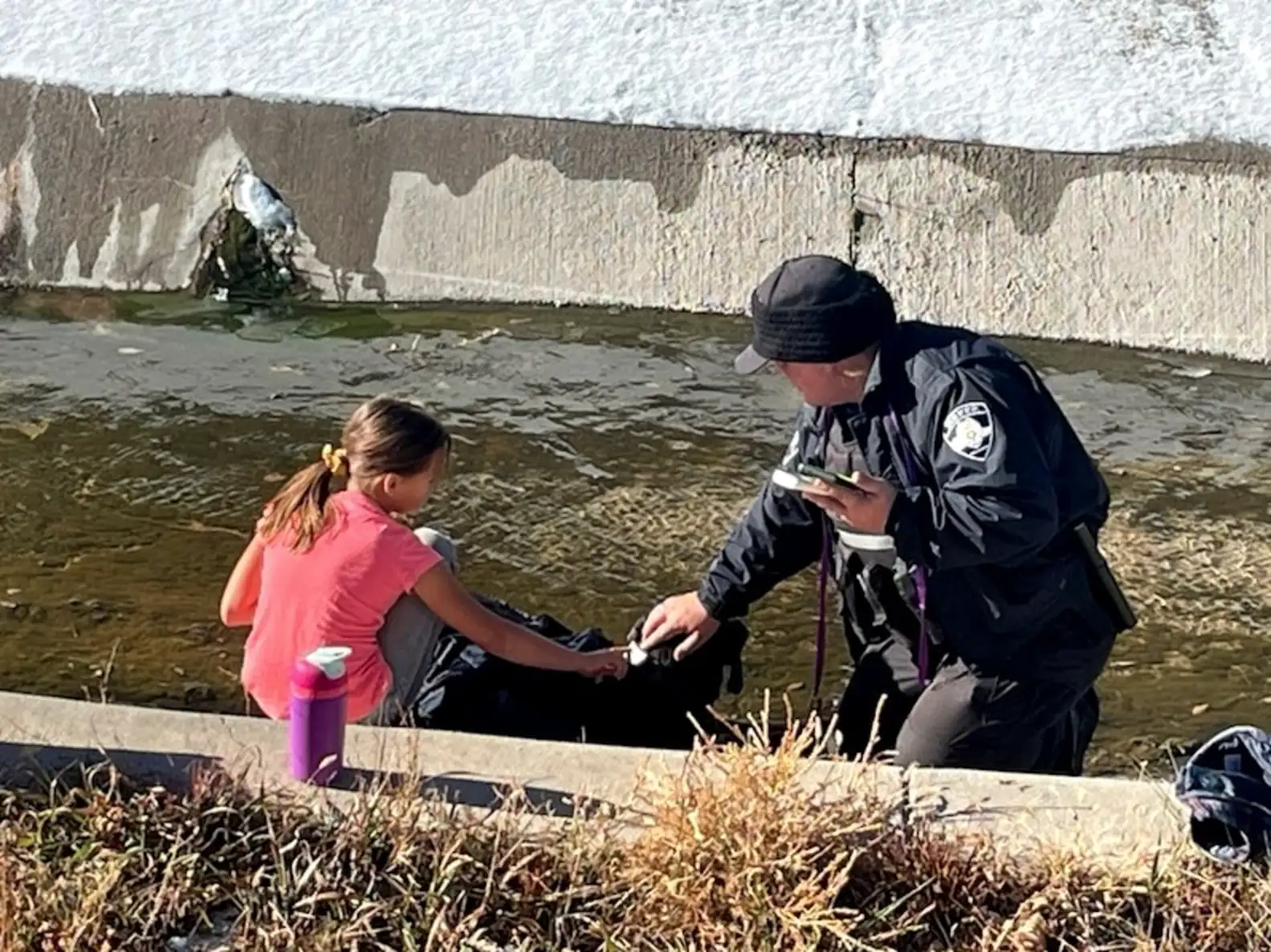
The girl did not try to solve the problem alone. She ran. She called out. She alerted adults nearby, insisting they follow her. At first, there was confusion. Then urgency.
Adults often hesitate when children describe something extraordinary. But her insistence, her clarity, and the emotion in her voice made it impossible to dismiss. They followed her back to the spot where the animal lay trapped.
What they saw erased any doubt.
Realizing the Rescue Would Not Be Simple

Freeing a 100-pound animal is not a task for one person. Or even two. The animal’s size, the nature of the trap, and its weakened condition meant that any wrong move could cause injury to both the animal and the rescuers.
Professional help was called. Rescue teams arrived with equipment, experience, and a clear understanding of the risks involved. Time was critical. Stress alone could push the animal beyond recovery.
As preparations began, the animal remained still, watching quietly, as if aware that help had finally arrived.
The Emotional Weight of Seeing Hope Slip Away
Rescuers later described the animal’s demeanor as haunting. It was not thrashing. It was not panicking. It was waiting. That quiet acceptance can be more unsettling than fear.
Animals often fight until they cannot anymore. When that fight stops, survival becomes uncertain. The rescuers understood that this was not just a physical rescue, but a psychological one. Restoring hope mattered almost as much as freeing the body.
How the Rescue Team Carefully Worked Against the Clock
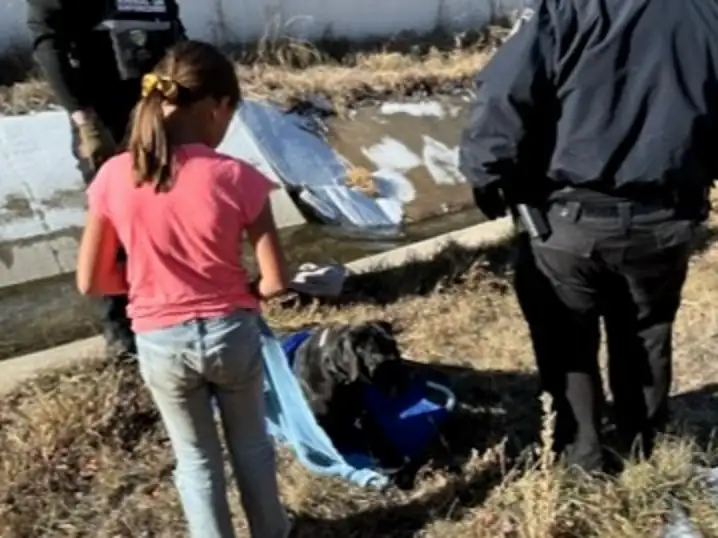
Every movement was calculated. Equipment was placed slowly. Voices stayed calm. The goal was to minimize stress while gradually loosening the trap.
The animal responded subtly. Its breathing changed. Its eyes followed movement. It sensed something shifting, even if it did not yet understand what.
After what felt like endless minutes, the final barrier gave way.
The animal was free.
The First Moments After Freedom Returned
Freedom did not look like celebration. It looked like hesitation. The animal did not leap away. It stood still, legs trembling, body unsure of itself after being immobilized for so long.
Then, slowly, it took a step.
And then another.
Those watching held their breath as the animal regained balance, strength returning in fragments. It did not run far. It simply moved away from the trap, creating distance between itself and the place where hope had nearly ended.
What Rescuers Noticed That Stayed With Them
After the rescue, many rescuers reflected on the role the girl played. Without her, the animal would not have been found in time. Adults pass by suffering every day, distracted, busy, convinced that someone else will notice.
A child noticed.
Her willingness to listen, to follow, and to insist made all the difference. In rescue work, timing is everything. This rescue happened at the very edge of what was still possible.
Why Stories Like This Matter More Than They Seem
At first glance, this is a rescue story. But beneath it lies something deeper. It is about awareness. About listening. About recognizing distress even when it is quiet.
The animal’s whimpers were not loud. They were not dramatic. They were easy to ignore. But they were real. And because someone listened, the ending changed.
The Bond That Formed Without Touch or Words
The girl did not touch the animal. She did not feed it. She did not free it herself. Yet a bond formed in that moment of discovery.
It was a bond rooted in recognition. One living being acknowledging another’s suffering and choosing action over indifference. That kind of connection does not require language.
What This Rescue Teaches About Compassion at Any Age
Compassion is often treated as something learned later in life. This story challenges that idea. The girl did not need instruction to care. She responded instinctively.
Her actions remind us that empathy does not depend on size, age, or authority. Sometimes, it begins with simply listening and refusing to walk away.
Conclusion
The trapped animal survived because a child heard something others might have dismissed. Because she followed instead of forgetting. Because she insisted instead of assuming someone else would help.
This story is not just about a 100-pound animal rescued from a trap. It is about attention. About courage that looks small but acts large. And about the power of compassion when it chooses to respond before it’s too late.
In the end, hope did not arrive loudly. It arrived as a quiet footstep, following a whimper, and refusing to turn back.