
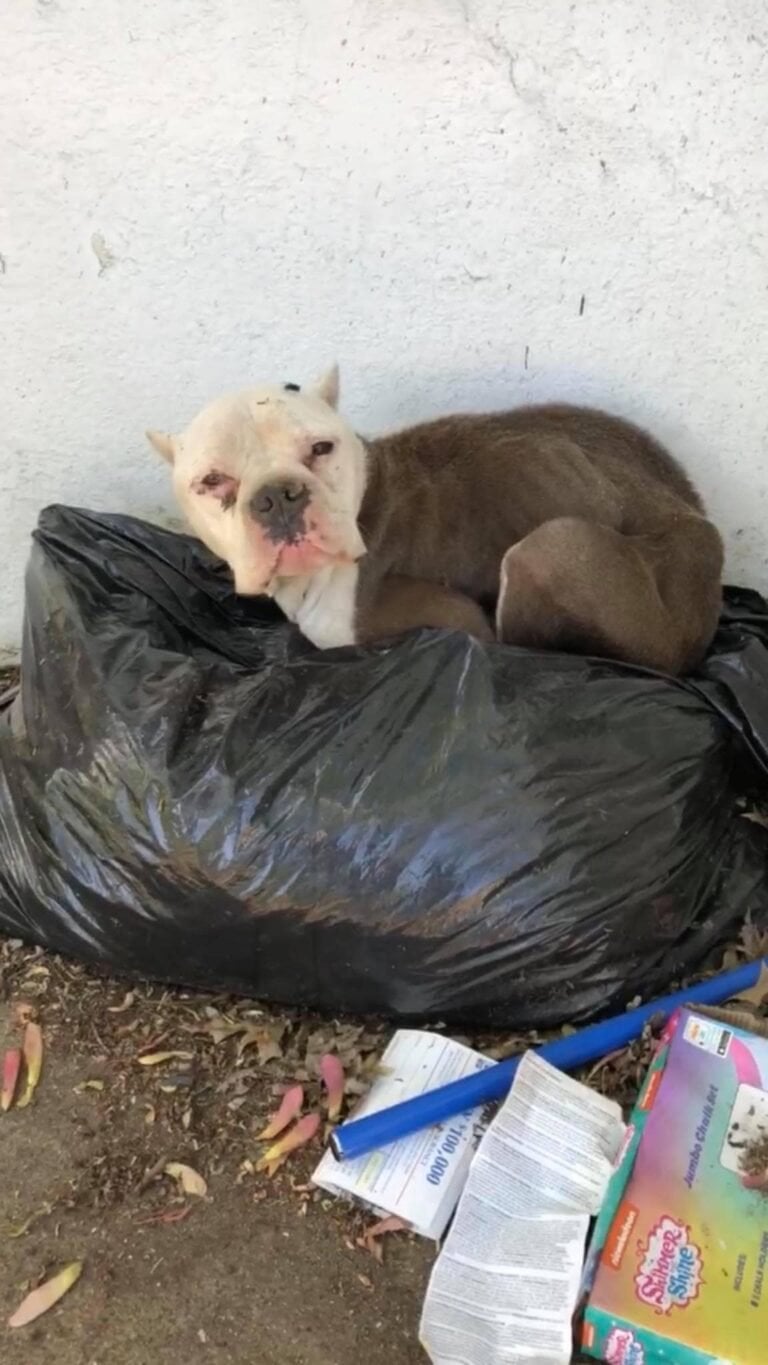
She answered a call that almost didn’t feel like one—a faint voice, a shaky report of a dog collapsed near a trash heap. Most would pass, thinking someone else would help. But she trusted her gut.
When Lakita, an American Bully, was found emaciated and lying on garbage, her life hung by a thread. What followed would turn her from street survivor into family pet, proving that one moment of compassion can rewrite a life.
Would you stop when others walk by? Could you act when your gut pulls you toward someone in need?
Table of Contents
- How Lakita Got Here: Abandonment, Survival, and Despair
- Rescue on a Dime: Life-or-Death Response
- From Trash Heap to Home: The Remarkable Transformation
- Why This Rescue Matters for Pet Owners & Home Safety
- The Psychology of Rescue: Healing Trauma in Animals
- Budgeting for Rescue: The Hidden Financial Side
- Preventing Neglect: What Every Pet Owner Should Know
- Technology, Awareness & The Future of Rescue
- Final Thought: One Decision, Lasting Impact
How Lakita Got Here: Abandonment, Survival, and Despair
Abandoned by her owners, Lakita wandered the streets of Kentucky, scavenging for food, dodging danger, and growing weaker day by day. When she finally collapsed near a stranger’s porch, she was barely alive.
The rescuer got the call late. She hesitated—street rescues carry risk—but something wouldn’t let her stay away. When she arrived, Lakita was skeletal, her spirit extinguished.
In that moment, the question was: could one person make the difference? The answer: yes.
Rescue on a Dime: Life-or-Death Response
The urgency of the situation cannot be understated. Lakita’s body had surrendered. Smell, skeleton, stiffness. The rescuer and a colleague lifted her gently, rushed her to animal control. No former owner stepped forward.
This rescue wasn’t glamorous. It was cold roads, trash piles, the smell of decay. Yet it became a turning point.
If you found an animal on the edge—would you have the courage to act? Would you say yes to rescue when you’d planned no detours?
From Trash Heap to Home: The Remarkable Transformation
Within two weeks of care, Lakita gained 14 pounds. Within months, she was running in a backyard, chewing bones, enjoying the sun. The transformation was astonishing.
She went from street ghost into a playful, loving companion. A family, the Sebastian Garrisons, saw her and knew she was theirs.
In her story lies this truth: when you offer an animal stability, love and care, they’ll show you their best self.
Why This Rescue Matters for Pet Owners & Home Safety

This is not just a heartwarming animal story. It speaks to responsibility, investment, and home-improvement logic.
- Adopting a rescued pet often means finances: vet bills, specialized care, emotional rehab.
- Home and yard safety matter: A dog like Lakita, newly healed, needs a secure space to thrive rather than relapse into fear.
- Emotional wellness: Pets carry trauma, and care is not just physical—it’s emotional healing.
Think of your pet and your home like a partnership. If you upgraded your kitchen, you’d budget. Why not upgrade the safety and emotional wellness of your pet too?
The Psychology of Rescue: Healing Trauma in Animals
Lakita carried more than hunger—she had trauma. Abandonment changes a dog. Rescue isn’t just pickup—it’s rehabilitation.
Animals who have endured neglect often show signs of anxiety, fear, distrust. Research shows that enriched environments, routine, and positive human interaction are key to recovery.
If your pet has a history, are you ready to invest in their emotional recovery as well as their physical?
In Lakita’s case, gentle training, stable routine, and kindness healed what neglect had wounded.
Budgeting for Rescue: The Hidden Financial Side
Rescue isn’t cheap. Vet bills, rehabilitation, home adaptation—these add up. Treating this situation like a home-improvement project helps. You budget for upgrades at home; you should budget for pet wellness too.
Let’s break it down:
- Emergency vet visit: high cost.
- Nutrition and specialized food: added monthly expense.
- Training and behavior work: time and money.
For owners and adopters, viewing pet care as an investment—not just a spontaneous purchase—means better outcomes for both pet and home.
Could you shift your mindset to see your pet’s wellbeing as part of your lifestyle investment?
Preventing Neglect: What Every Pet Owner Should Know
Lakita’s story had a happy ending, but so many don’t. How do we prevent abandonment from happening in the first place?
- Commit before you adopt—understand the long-term investment.
- Spay/neuter to avoid unwanted litters.
- Monitor for signs of distress or neglect—weight loss, avoidance, fear.
- Home-proof your space—secure yard, gates, safe play areas.
If you’re walking by your local animal shelter, ask: did this animal come from neglect? What support do they need?
Think: Would you walk away from a neglected animal today, or would you act like the rescuer did?
Technology, Awareness & The Future of Rescue
We’re not just talking about compassion—we’re talking about smart rescue.
Modern tools help:
- GPS trackers for dogs who roam.
- Home-security cams to monitor pet behavior when seniors are alone.
- Social-media platforms to highlight rescues and raise funding.
Lakita’s story went viral thanks to online sharing—her photos and transformation sparked hearts and funds.
Would you invest in tech that protects your pet and raises awareness? Is your home set up to keep your pet safe, day and night?
Final Thought: One Decision, Lasting Impact

A moment. That’s how Lakita’s rescue began—a gut feeling, a phone call, a climb from garbage to backyard fetch. Her journey highlights how one person, one decision, and one home can rewrite a life.
Are you ready to be that person for an animal in need? Will your home be the place they step into instead of the street they escape from?
In our next article, we’ll explore “Top 10 Home Upgrades You Can Make to Create a Pet-Friendly Sanctuary”, from secure fencing to calming zones. Stay tuned.