
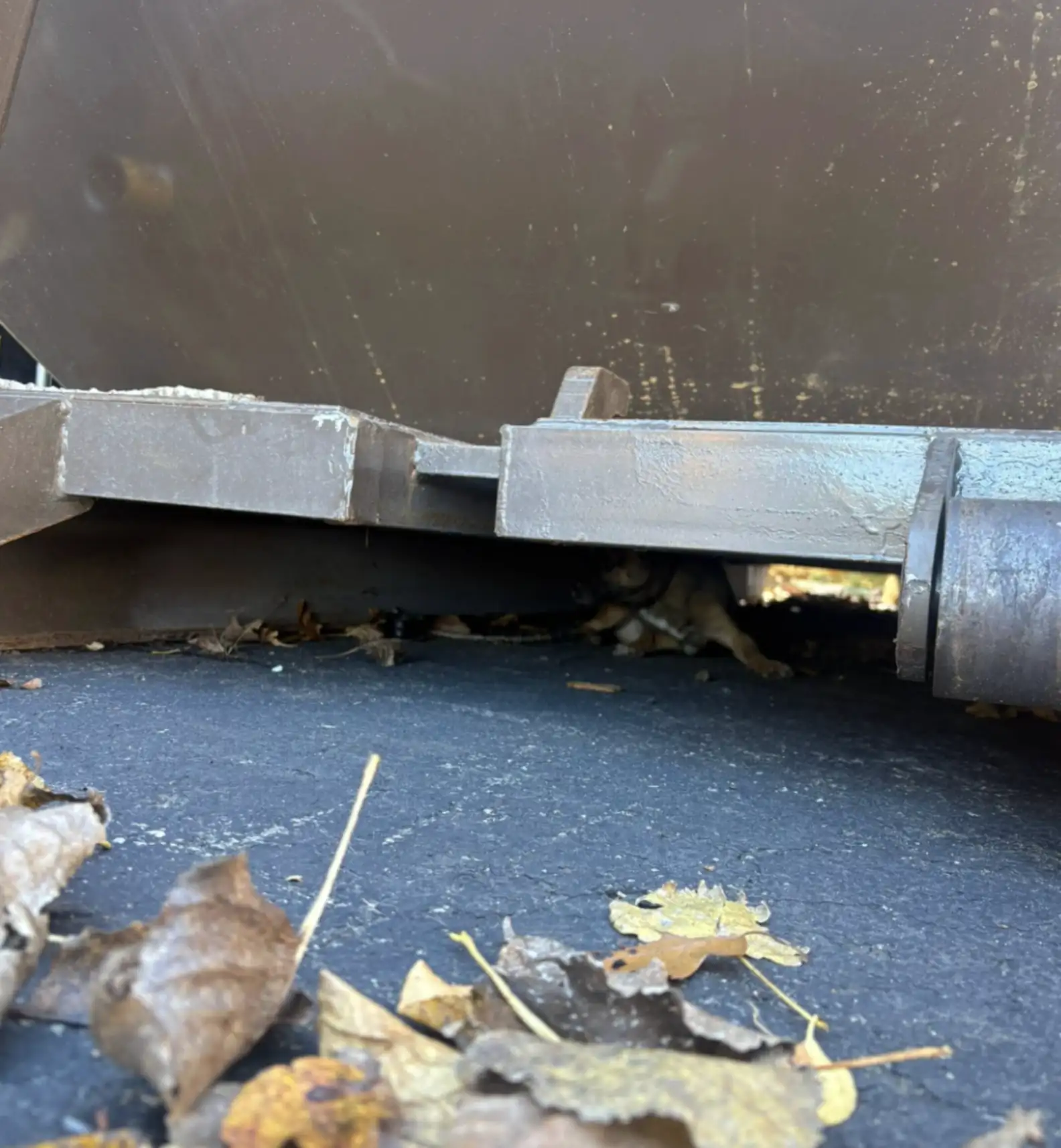
Event coordinators are trained to handle anything — power outages, weather surprises, parking disasters, last-minute guest requests, and unexpected equipment failures.
But no amount of experience could have prepared this team for what they found hiding beneath a dumpster on an ordinary workday.
Not a stray dog.
Not a raccoon.
Not a frightened kitten.
But a tiny, trembling, fuzzy baby — alone, vulnerable, and waiting for someone to notice.
The moment they saw her, everything else stopped.
Because sometimes, the most important task of the day isn’t part of the schedule.
Sometimes, it’s a life hidden in the shadows, hoping someone caring will look close enough to see her.
This is the story of how one frightened little baby captured a team’s entire attention — and changed their day, and their hearts, forever.
Table of Contents
- The Unexpected Discovery in the Middle of a Busy Day
- They Dropped Everything — Literally
- A Fuzzy Little Face Slowly peeked Out
- The Moment the Team Realized: She Had No One Else
- While They Waited, Something Beautiful Happened
- The Wildlife Team Arrived — And Was Shocked by What They Saw
- The Baby Finally Got a Name — and a Fresh Start
- Why Stories Like This Matter More Than We Realize
- How Common Are These Rescues? Much More Than People Think
- What Fuzzy Bloom Taught Everyone Involved
- Where Fuzzy Bloom Is Today
- Final Reflection: Sometimes the Biggest Wins Happen in the Smallest Moments
The Unexpected Discovery in the Middle of a Busy Day

The event staff were prepping for an upcoming gathering — setting up tents, checking equipment, reviewing logistics.
It was one of those days when every minute was packed.
But then someone heard a sound.
A faint rustle.
A high-pitched squeak.
A tiny scratching noise, almost impossible to notice under the hum of machinery and movement.
At first, they brushed it off.
Could be trash shifting.
Could be wind.
But the noise happened again.
This time, one coordinator paused.
Listened.
Turned towards the dumpsters near the back lot.
And that’s when they saw a small tuft of fur.
Barely visible.
Barely moving.
Barely hanging on.
They Dropped Everything — Literally
When they realized what they were looking at, instinct took over.
Clipboards hit the ground.
Radios were set aside.
Schedules forgotten.
One coordinator immediately shouted for others:
“Guys — there’s a baby under here!”
They didn’t know what species it was.
They didn’t know how injured it might be.
They didn’t know how it ended up alone.
But they did know one thing:
This tiny life needed help — and fast.
So, the entire team shifted from event prep to rescue mode.
A Fuzzy Little Face Slowly peeked Out
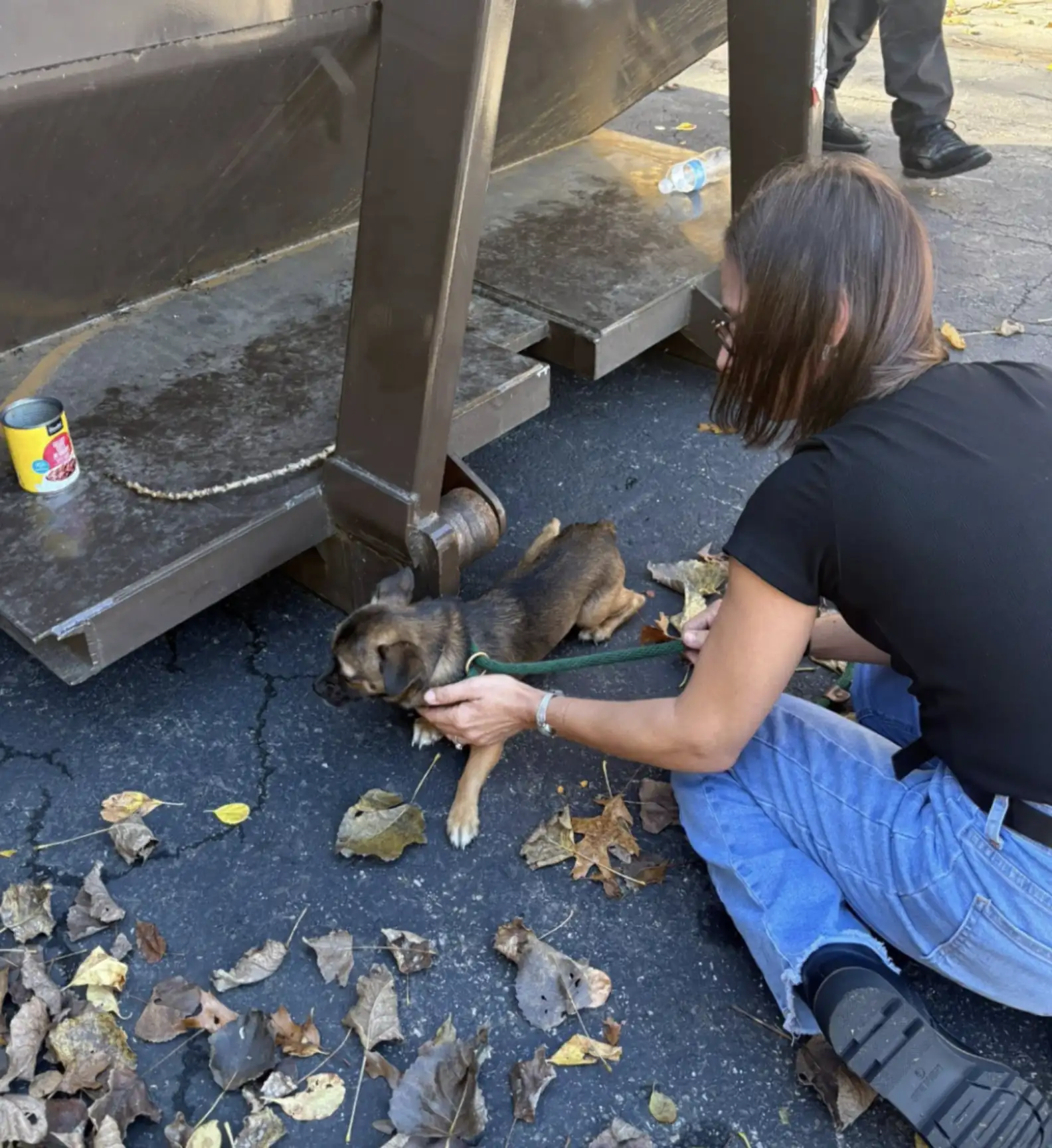
At first, the fuzzy creature stayed hidden — terrified and pressed against the cold metal under the dumpster.
She was shaking.
She was exhausted.
She was covered in grime and dust.
She looked like she hadn’t eaten in a long time.
The staff stayed low, quiet, gentle.
No loud noises.
No sudden movements.
Just patience and soft voices.
Then, one brave moment:
The baby shuffled forward, revealing herself fully for the first time.
And everyone gasped.
Because she wasn’t just any baby.
She was impossibly tiny.
Vulnerable.
Barely old enough to be alone.
And heartbreakingly sweet.
The Moment the Team Realized: She Had No One Else

The coordinators looked around for any sign of a mother.
They checked bushes.
Checked corners.
Checked nearby trash areas.
Looked for prints, nests, footprints — anything.
Nothing.
No mother.
No siblings.
No signs of safety.
This fuzzy baby was truly alone.
And they knew she wouldn’t survive long without help.
So they contacted the one group capable of saving her:
A local wildlife rescue and rehabilitation center.
But the rescue team was still several minutes away.
So the coordinators did what any compassionate person would do:
They stayed with her.
Protected her.
Watched over her like she was priceless — because she was.
While They Waited, Something Beautiful Happened
The tiny baby began to relax.
Not fully — just enough that her trembling slowed.
One coordinator offered water on the tip of a finger.
Another softly stroked the ground to show they meant no harm.
Another kept watch for predators — stray dogs, hawks, anything that might see an easy target.
And then, the sweetest moment:
She took a tiny step forward toward them.
Just one.
But it was enough.
Enough to say:
“I trust you.”
And that trust is something wild animals rarely give easily.
The Wildlife Team Arrived — And Was Shocked by What They Saw
When the wildlife rescuers pulled into the lot, they expected a normal call.
But when they saw the tiny baby — underweight, dehydrated, scared yet hopeful — their expressions changed instantly.
They gently scooped her into a soft carrier.
Wrapped her in warm towels.
Checked her breathing.
Checked her limbs.
Checked her hydration level.
“Good thing you found her,” one rescuer said.
“Another hour and she might not have made it.”
Everyone felt a mix of relief and heartbreak.
But also pride.
Because they’d made the difference.
They’d been the reason this tiny life was still alive.
The Baby Finally Got a Name — and a Fresh Start
At the wildlife center, the baby was cleaned up, fed, warmed, and thoroughly examined.
She was identified as a baby opossum — only a few weeks old.
She had likely fallen off her mother and couldn’t find her way back.
Opossums cling to their mother’s backs, but if they fall and the mother keeps moving, the babies are left orphaned.
Their survival depends entirely on humans noticing them.
This little one had been lucky — very lucky.
The rehab team named her Fuzzy Bloom, inspired by the way her soft baby fur puffed out after her first warm bath.
Photos of her recovery quickly spread online — melting hearts the way only a tiny rescued baby can.
Why Stories Like This Matter More Than We Realize
Stories like Fuzzy Bloom’s go viral because animals represent the innocence we’re all desperate to protect.
But there’s more.
These moments remind us that:
- tiny actions save lives
- kindness can shift the course of a day
- compassion has no job description
- even in busy moments, pausing for something vulnerable matters
- humans and wildlife can coexist safely
- hope often appears in unexpected places
And maybe the most important truth:
We become better people when we choose to care.
How Common Are These Rescues? Much More Than People Think
Wildlife rehabilitation centers report dozens of calls every week for:
- abandoned baby squirrels
- orphaned opossums
- baby raccoons
- injured birds
- lost fawns
- trapped domestic pets
- dehydrated rabbits
- animals stuck in fences, drains, garages, crawl spaces
Most people don’t know how many wild babies rely on humans noticing them.
A moment of awareness can mean the difference between survival and tragedy.
That’s why stories like this spread so fast — because people instinctively want to help.
What Fuzzy Bloom Taught Everyone Involved
The event coordinators went back to work that day, but something had changed.
Their energy shifted.
Their conversations became softer.
Their sense of purpose expanded.
Rescuing Fuzzy Bloom reminded them that:
✔ life moves fast — but moments of compassion slow it down in the best way
✔ you don’t need training to make a difference
✔ empathy is contagious
✔ every little life matters
✔ the world becomes better through tiny acts, not giant gestures
And they all agreed:
Saving her was the best part of their day.
Maybe even their year.
Where Fuzzy Bloom Is Today
Under the care of trained wildlife specialists, Fuzzy Bloom has:
- gained healthy weight
- learned to climb
- developed strong instincts
- played with other rescued opossums
- practiced for eventual release
As soon as she is big enough and strong enough, she’ll be released into a safe, protected habitat — a place where she can thrive the way she was meant to.
And because of a group of event coordinators who stopped everything…
She gets that chance.
Final Reflection: Sometimes the Biggest Wins Happen in the Smallest Moments
Life has a way of hiding miracles in unexpected places:
Under dumpsters.
Behind fences.
Inside forgotten corners of busy days.
When the coordinators found Fuzzy Bloom, they weren’t looking for heroism.
They were just listening.
Paying attention.
Allowing compassion to interrupt their schedule.
And maybe that’s the biggest lesson of all:
The world changes when ordinary people choose kindness in extraordinary moments.
Fuzzy Bloom may never understand the full story of her rescue.
But those who saved her will never forget it.
Because saving a life — any life — stays with you forever.