
Table of Contents
- When Shelter Staff Arrived to a Freezing Morning, Something Felt Wrong
- The Box That Raised Alarm Before It Was Opened
- What Shelter Workers Found Inside
- The Tearful Note That Explained Everything and Nothing
- Why Winter Abandonment Is So Dangerous
- The Emotional Toll on Shelter Workers
- How the Animal Slowly Began to Recover
- The Moral Complexity Behind Stories Like This
- Why Shelters Encourage Safe Surrender Instead
- What This Rescue Reveals About Compassion on Both Sides
- Conclusion
When Shelter Staff Arrived to a Freezing Morning, Something Felt Wrong
When shelter workers unlocked the doors that morning, the cold had already settled deep into the pavement. Frost clung to the ground, and the air carried the sharp stillness that only comes with winter’s harshest days. It was supposed to be an ordinary start to another shift filled with feedings, cleanings, and quiet routines. But just outside the entrance, something immediately caught their attention.
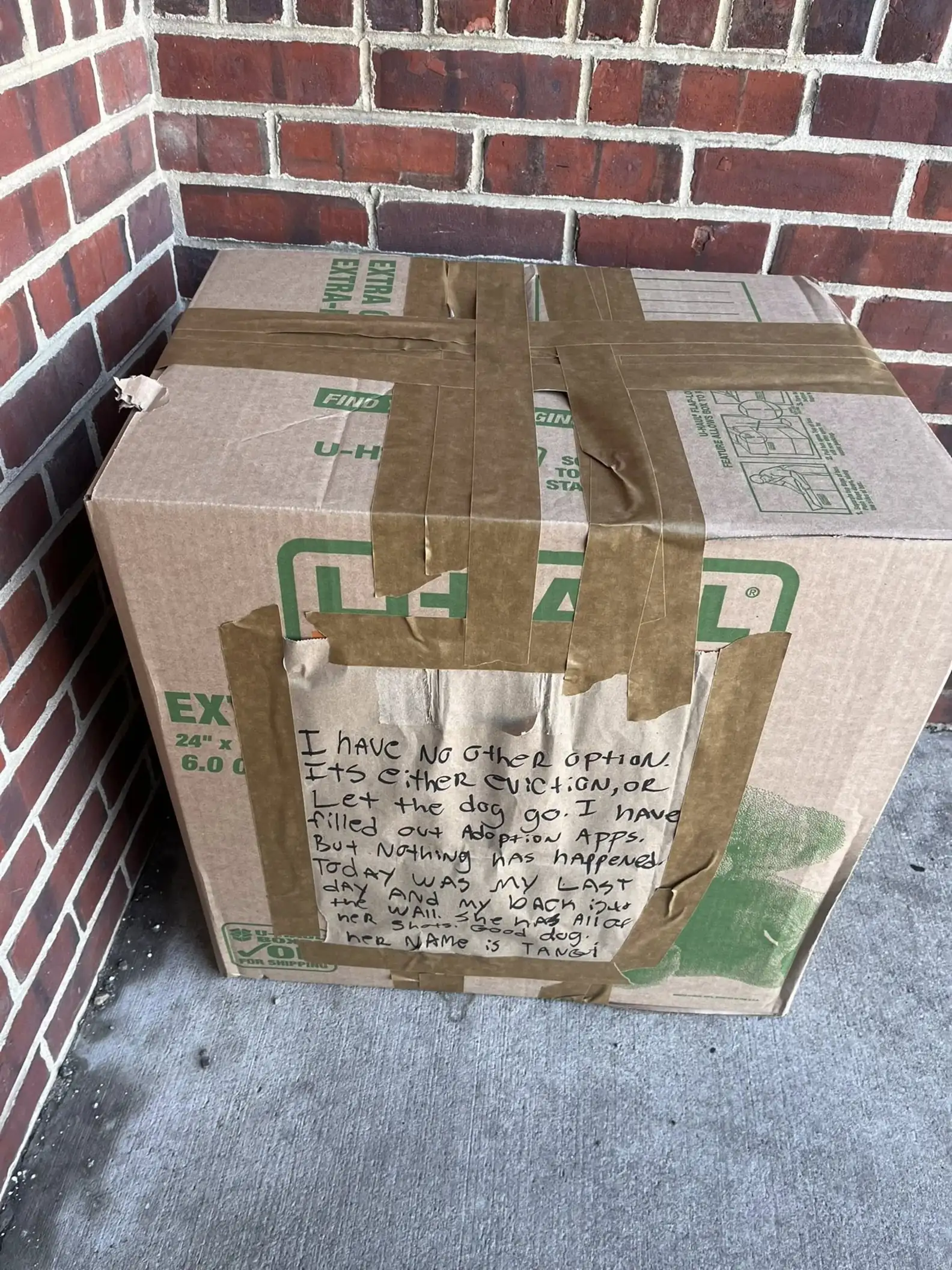
A cardboard box sat taped shut, placed deliberately near the door. It did not belong there. In temperatures this low, any animal left outdoors would be at serious risk. The box was sealed tightly, with no markings except a single sheet of paper taped on top. Before anyone opened it, the weight of what it might contain already filled the moment with dread.
The Box That Raised Alarm Before It Was Opened
Boxes appear outside shelters more often than people like to admit. Sometimes they contain kittens. Sometimes injured animals. Often they arrive without explanation. But this one was different. The tape was layered thickly, sealing every edge, as if someone had been afraid of what might escape or of what might happen if it did.
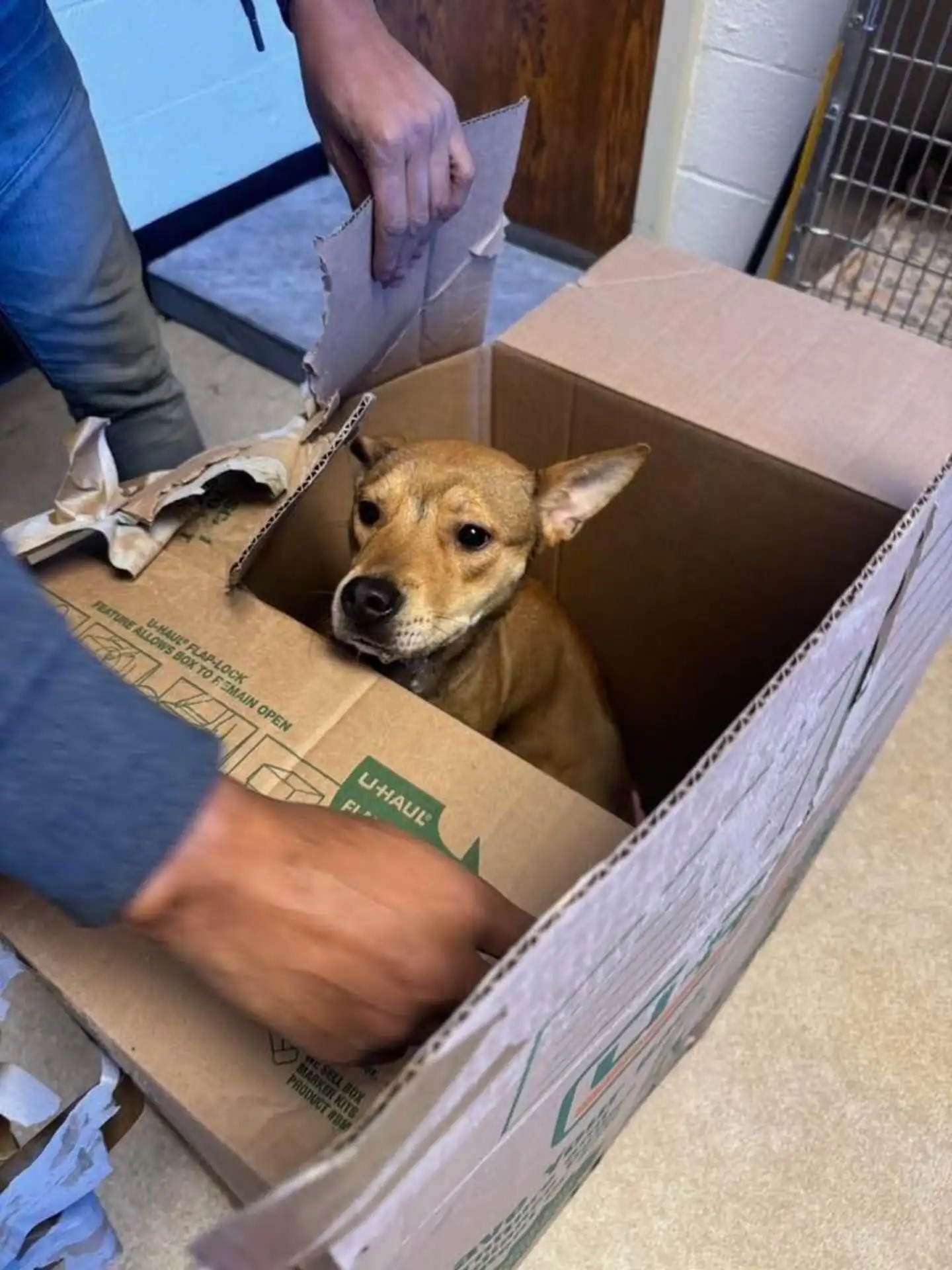
As staff crouched beside it, they noticed faint movement from inside. Whatever was in the box was alive. That realization shifted the urgency from concern to immediate action. Gloves were pulled on, scissors found, and the box was opened with shaking hands.
What Shelter Workers Found Inside
Inside the box was a small, trembling animal curled tightly into itself, conserving warmth in the only way it knew how. Its body was cold to the touch. Its breathing was shallow. It did not try to run. It barely moved at all.
The animal had been wrapped in thin fabric, offering little protection against the freezing temperature outside. Without intervention, it would not have survived much longer. Shelter workers moved quickly, lifting the animal from the box and rushing it indoors, where heaters hummed and blankets were ready.
But the story did not end with the rescue. The note taped to the box still waited to be read.
The Tearful Note That Explained Everything and Nothing

The note was written in uneven handwriting, the kind that suggests someone struggling to keep control. It apologized repeatedly. It begged for forgiveness. It explained that this was not an act of cruelty, but an act of desperation.
The writer described loving the animal deeply, caring for it as long as they could, and making an impossible decision when circumstances collapsed around them. Financial hardship, housing instability, and fear of surrendering the animal directly were all mentioned. The writer did not ask for recognition or contact. They only asked that the animal be kept safe.
For the staff reading it, the note complicated the emotions they already felt. Anger softened into sorrow. Judgment gave way to understanding.
Why Winter Abandonment Is So Dangerous
Leaving any animal outdoors in freezing conditions is extremely dangerous. Hypothermia can set in quickly, especially for smaller animals or those with short fur. Exposure weakens the immune system, making recovery even more difficult even if the animal is rescued in time.
Shelters see a rise in abandonment during colder months, often driven by economic stress and housing challenges. While abandonment is never safe, winter conditions drastically reduce the margin for survival. In this case, minutes mattered. Had staff arrived later, the outcome could have been devastating.
The Emotional Toll on Shelter Workers
Rescuing animals is rewarding, but it is also emotionally taxing. Shelter staff carry the weight of every story they encounter. Moments like this one linger long after the shift ends.
The workers who found the box spoke later about the silence that filled the room after the animal was safe. There was relief, yes, but also grief. Grief for the person who felt they had no other option. Grief for an animal that came so close to tragedy. And grief for a system that leaves people and animals trapped between impossible choices.
How the Animal Slowly Began to Recover

Once warmed and examined, the animal showed signs of stabilization. Warm fluids were administered. Food was offered carefully. Slowly, cautiously, life returned.
Over the next hours and days, the animal’s personality began to emerge. Fear gave way to curiosity. Trembling eased into cautious trust. Each small improvement felt like a victory, not just medically, but emotionally for the people caring for it.
The box that nearly became a coffin was now just a memory. What mattered was the second chance unfolding inside the shelter walls.
The Moral Complexity Behind Stories Like This
Stories of abandonment often trigger immediate outrage, but cases like this challenge simple narratives. The note revealed someone who cared deeply, but lacked resources, support, or trust in the system.
Shelter professionals emphasize that while abandonment is dangerous, it is often rooted in fear rather than malice. Many people worry about judgment, legal consequences, or being turned away. That fear can lead to choices that place animals at risk, even when the intention is protection.
Why Shelters Encourage Safe Surrender Instead
Most shelters offer surrender options designed to keep animals safe. These processes allow staff to ensure immediate care, prevent exposure, and gather information critical to the animal’s wellbeing.
When animals are left anonymously outside, shelters lose valuable time and context. The animal loses safety. And the person surrendering carries unnecessary guilt. This story underscores the importance of education and accessible support for people facing these heartbreaking decisions.
What This Rescue Reveals About Compassion on Both Sides
The taped-up box told two stories at once. One of danger and neglect narrowly avoided. And one of love stretched to its breaking point.
The shelter workers responded not with condemnation, but with care. They treated the animal. They honored the note. And they spoke publicly not to shame, but to remind others that help exists before desperation turns dangerous.
Conclusion
The freezing morning could have ended very differently. A sealed box could have become a tragedy. Instead, it became a reminder of how fragile lives are, and how quickly compassion can change outcomes.
This story is not just about abandonment. It is about systems, fear, love, and the quiet heroism of people who show up every day to protect those who cannot speak for themselves.
As the animal continues its journey toward recovery and eventually a new home, the note remains a silent witness. A reminder that behind every rescue is a story we may never fully know — and that kindness, when it arrives in time, can rewrite endings.