
Table of Contents
- Imagine a World Where Organ Transplants Don’t Depend on Blood Type
- The Transplant Crisis: A Problem That Needed a Radical Solution
- The Breakthrough: Turning a Regular Kidney Into a Universal One
- How the Universal Kidney Works (Explained Simply)
- Why This Could Be the Most Important Medical Breakthrough of the Decade
- This Could Be Step One in a Medical Revolution
- Is It Safe? Scientists Are Already Testing It
- Think About This Moment in History
- If This Happened to You… What Would You Do?
- This Is How Science Changes the World
- Final Thoughts: The Universal Kidney Is More Than a Scientific Breakthrough — It’s a New Chapter in Human Survival
Imagine a World Where Organ Transplants Don’t Depend on Blood Type
You wake up one morning knowing a lifesaving organ is finally available —
only to hear the words no patient ever wants to hear:
“I’m sorry… it’s not compatible with your blood type.”
For decades, that mismatch has cost lives.
It has stretched waiting lists.
It has forced families to endure months — and sometimes years — of painful uncertainty.
Now imagine hearing this instead:
“A donor kidney is ready for you.
Yes, it matches.
It matches everyone.”
This isn’t science fiction anymore.
It’s real.
Scientists have just created a universal kidney, an organ that can match any blood type — and it’s a breakthrough that could change the future of medicine forever.
But how does such a kidney even work?
And why is the entire medical world buzzing?
Let’s break it down.
The Transplant Crisis: A Problem That Needed a Radical Solution
Right now, more than 100,000 people in the U.S. alone sit on the kidney transplant waiting list.
Worldwide, that number climbs into the millions.
Yet every year:
- thousands die waiting
- matches fail
- blood type incompatibilities block donations
- organs go unused
Here’s the harsh truth:
A kidney can be perfectly healthy and lifesaving — but if the blood type doesn’t match, it becomes completely unusable for certain patients.
This limitation has shaped the entire transplant system.
Blood types decide:
- who gets matched
- how fast they get matched
- who has to wait longer
- who faces more risk
- who may never find a match at all
The idea of a “universal kidney” isn’t a luxury.
It’s a necessity.
And it could revolutionize finance in healthcare too — from medical travel to insurance frameworks to how countries allocate organ resources.
So how did scientists pull it off?
Prepare to be amazed.
The Breakthrough: Turning a Regular Kidney Into a Universal One
At the center of this discovery is something surprisingly simple:
Blood type markers live on the surface of blood vessels inside the kidney.
Remove those markers… and the organ becomes compatible with anyone.
Here’s the genius:
Scientists used special enzymes to wash away blood-type antigens — like a molecular exfoliation.
Think of it like this:
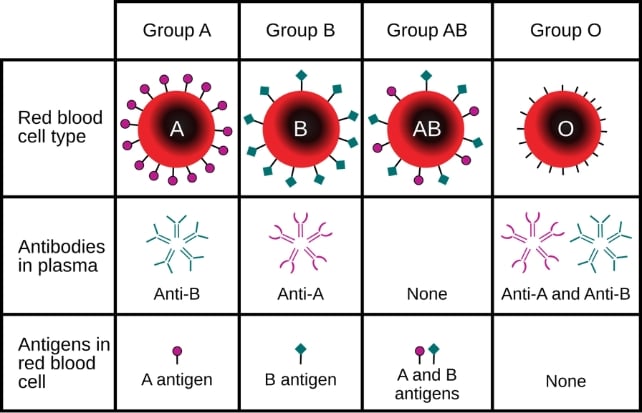
Your blood type (A, B, AB, or O) is determined by tiny sugars that decorate the outside of your cells.
They act like ID tags.
Your immune system reads them like a passport.
If the passport doesn’t match your body’s records?
Your immune system attacks.
This is why mismatched organs get rejected.
But what if you could wipe those ID tags clean?
That’s exactly what the new technique does.
How the Universal Kidney Works (Explained Simply)
Inside a kidney are tiny blood vessels lined with cells.
These cells carry antigens — the markers that signal blood type.
The scientists did this:
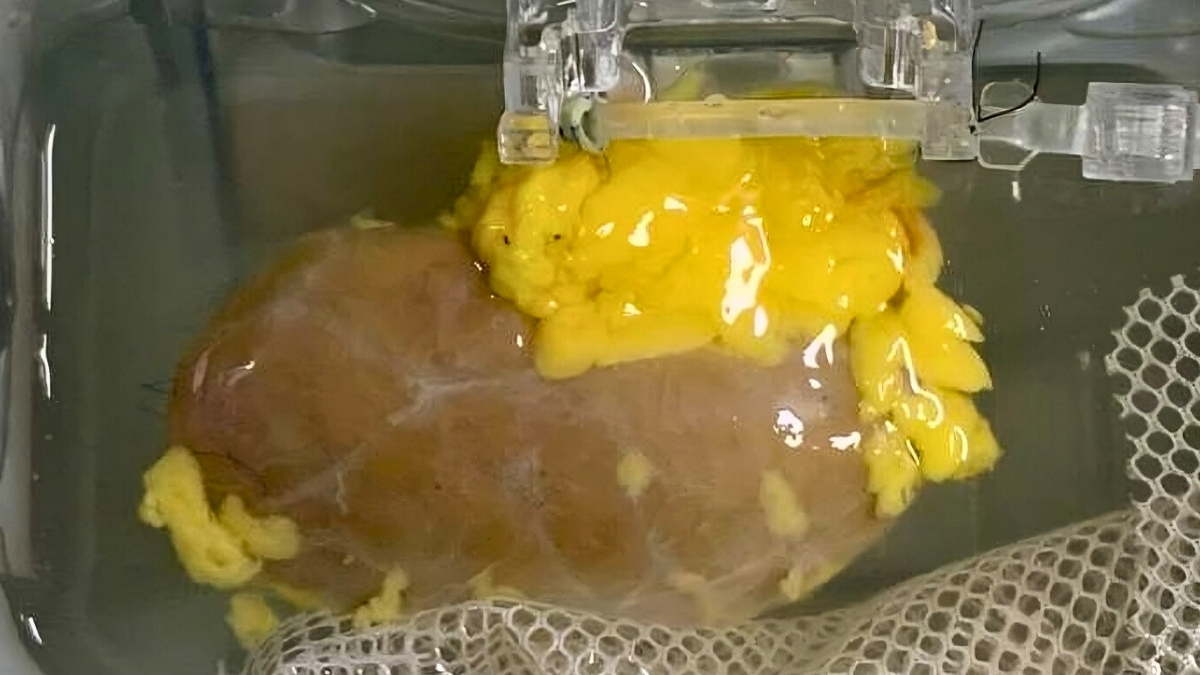
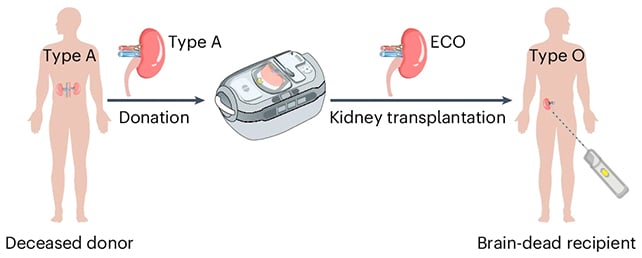
- Connected the kidney to a special perfusion machine
This machine pumps fluids through the organ, keeping it alive outside the body. - Added enzymes specifically designed to remove A and B antigens
Enzymes act like scissors that cut off unwanted sugar molecules. - Let the enzymes wash through the kidney for several hours
Like cleaning a complex biological filter. - Checked the kidney after the process
Result:
The antigen markers were gone.
Completely removed.
The kidney was transformed into something extraordinary:
A universal organ with no blood-type identity.
This means it can be transplanted into:
- A
- B
- AB
- or O recipients
without triggering an immune attack.
It’s like turning every kidney into Type O, the universal donor of the organ world.
Why This Could Be the Most Important Medical Breakthrough of the Decade
This isn’t just about science.
This is about giving people time — something no medical machine or financial system can manufacture.
Here’s what a universal kidney means:
1. Shorter Waiting Lists
People won’t have to wait for a perfect blood type match.
More kidneys become usable.
More lives get saved.
2. Fairer Allocation Systems
Right now, certain blood types wait much longer.
Universal organs could level the field.
3. Fewer Wasted Organs
Thousands of kidneys are discarded each year due to compatibility issues.
This eliminates a major barrier.
4. Lower Medical Costs Long-Term
Every year of dialysis costs up to $90,000.
A transplant saves that cost — for patients and healthcare systems.
5. New Hope for Medical Travelers
Countries struggling with organ shortages may finally catch up.
Transplant tourism — a controversial industry — could rapidly evolve.
6. Faster, Safer Transplants
Emergency cases could receive kidneys immediately, not after days of matching.
And then comes the most powerful impact:
7. It changes how we imagine organ donation entirely.
A world where organs don’t need to match blood type?
That’s a world where waiting lists shrink, survival rates rise, and fewer families receive devastating news.
This Could Be Step One in a Medical Revolution
Scientists already theorize:
- universal hearts
- universal livers
- universal lungs
- universal kidneys grown in labs
- 3D-printed organs without blood-type markers
The universal kidney might be the doorway to all of it.
If you remove the obstacle of blood type, the entire system becomes simpler, faster, and more humane.
But there’s still a question lingering…
Is It Safe? Scientists Are Already Testing It
Early lab results show the antigen-removal process works —
but the next step is what matters most:
testing it in real transplant conditions.
Researchers plan to:
- test universal kidneys in perfusion with human blood
- analyze immune responses
- transplant into model systems
- monitor long-term function
- ensure no hidden vulnerabilities exist
If everything goes well?
Human clinical trials could begin within a few years.
And after that…
The technology could become standard worldwide.
Imagine hospitals equipped to “convert” kidneys into universal ones onsite —
like prepping a lifesaving organ the way a surgeon preps an operating room.
Think About This Moment in History
Not long ago, organ transplants felt like experimental miracles.
Now, we’re looking at a future where:
- science edits organs
- compatibility becomes optional
- bioengineering solves shortages
- organ rejection drops dramatically
- patients live longer, healthier lives
- financial burdens shrink
- medical tourism becomes safer
- waiting lists no longer represent hopelessness
This isn’t evolution.
This is revolution.
A revolution built not in boardrooms or banks,
but in labs — one enzyme molecule at a time.
If This Happened to You… What Would You Do?
Imagine you or a loved one needed a kidney.
Then imagine doctors saying:
“We don’t need to check blood type anymore.
A universal kidney is ready.”
Would you feel relief?
Hope?
Shock?
Gratitude for the researchers who made it possible?
Or would you wonder:
- What does this mean for the future?
- How many people could be saved?
- How far can science really go?
If this moment were yours —
would you fight or just keep waiting?
It’s a question every family on the transplant list understands deeply.
This Is How Science Changes the World
Breakthroughs rarely arrive with fireworks.
Sometimes, they happen quietly:
A scientist watches an enzyme dissolve a blood-type marker —
and realizes humanity’s limits just shifted.
A kidney goes from incompatible to universal —
and suddenly millions have a chance they never had before.
Technology advances slowly, then all at once.
This discovery is an “all at once” moment.
A moment that redefines possibility.
A moment that future generations may look back on and say:
“This is when everything changed.”
Final Thoughts: The Universal Kidney Is More Than a Scientific Breakthrough — It’s a New Chapter in Human Survival
The ability to erase blood-type barriers doesn’t just push science forward.
It gives families more time.
It gives patients more hope.
It gives the world a new blueprint for healing.
This breakthrough proves something powerful:
We are not stuck with the limitations we inherit.
We can redesign them.
We can rebuild them.
We can rewrite them completely.
The universal kidney is not just an organ.
It’s a promise.
A promise that one day, no one will die waiting for a match that never comes.