

Table of Contents
- It Starts With the Ocean’s “Conveyor Belt” — And the Warning Just Came From Iceland
- What is the AMOC — The Ocean’s Hidden Warm Blanket for Europe and Beyond
- The Warning From Iceland: “Existential Risk” Isn’t an Exaggeration
- What Could Happen if the AMOC Collapses — Beyond Wandering Penguins and Snowfall
- ✔ Global ripple-effects
- Why the AMOC Might Be Near a “Tipping Point” — And What That Means for Homeowners and Travellers
- Can This Disaster Be Averted? Or Are We Too Late Already?
- What You Can Do Today — Practical Steps That Make a Difference
- Final Reflection: If the Ocean’s “Engine” Fails, Will You Be Ready?
It Starts With the Ocean’s “Conveyor Belt” — And the Warning Just Came From Iceland
Imagine the world’s climate system as a giant engine made of air, water and ice.
At the heart of it flows a powerful Atlantic current — the AMOC — transporting warm water from the tropics northward, giving Europe its relatively mild winters.
Now imagine that engine starts to slow.
That’s exactly what the government of Iceland has done: declared the potential collapse of the AMOC a national-security and existential threat.
Not climate change in general.
Not sea-level rise in 100 years.
But right now: a major ocean current failure that could upend weather, travel, food, home costs and more.
This isn’t an academic debate reserved for scientists.
It’s a wake-up call that touches your wallet, your thermostat, your holiday plans, and the future of global trade.
So what’s really happening under the waves — and why should you care?
What is the AMOC — The Ocean’s Hidden Warm Blanket for Europe and Beyond
The AMOC (Atlantic Meridional Overturning Circulation) is a complex global current system.
Here’s how it works:
- Warm water flows northward in the Atlantic, carrying tropical heat toward Europe.
- In the far north, the water cools, becomes denser and sinks, then travels back south at depth.
- This “conveyor belt” of water moderates global climate — particularly for Northern Europe.
If this engine slows too much or stops, the consequences ripple across continents: colder winters, altered rainfall, agriculture disrupted, sea levels changing.
Iceland knows this better than most — they live on the front line of Arctic melt, fresh-water influx and shifting ocean currents.
The Warning From Iceland: “Existential Risk” Isn’t an Exaggeration
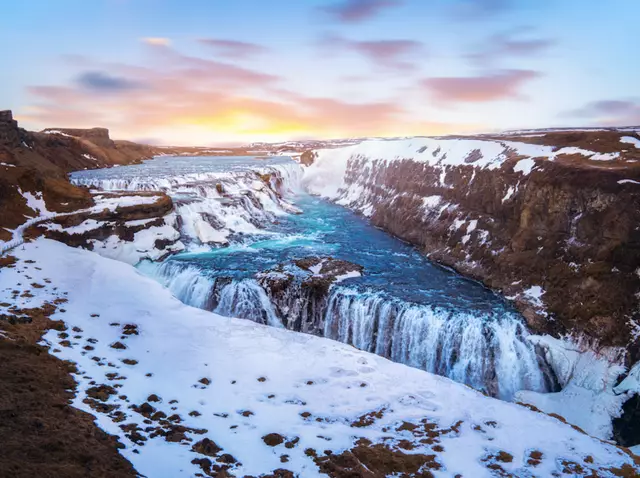
On November 12 2025, Iceland’s climate-minister declared the potential collapse of the AMOC a direct threat to national resilience.
Key points:
- The AMOC keeps Iceland and Northern Europe warm despite their high latitude.
- Melting Greenland ice and rising freshwater are interfering with the current’s flow.
- Economics, infrastructure, food-security and transport are all being factored in as potential risk areas.
Put simply: This isn’t just climate-science talk. It’s national security planning.
Iceland is mobilizing across ministries, not just environmental agencies — because the line between weather and economy just got thinner.
What Could Happen if the AMOC Collapses — Beyond Wandering Penguins and Snowfall
You might ask: “Okay, but if this current slows, does that really affect me?”
The answer: Yes — in more ways than you may expect.
✔ Financial impacts
- Home-improvement costs skyrocket: More extreme winters mean higher heating bills, stronger insulation demands, tougher home-maintenance.
- Travel & tourism: Northern European ski resorts could suffer shorter seasons. Sea-ice changes could benefit or damage Arctic cruise and adventure travel.
- Insurance & real estate: Cold snaps, flood risks, changing coastlines drive up premiums and influence property values.
✔ Health & infrastructure
- Extreme cold inland might strain healthcare systems.
- Power-grid stress from unfamiliar weather patterns.
- Home comfort risk: your HVAC system may need re-thinking.
✔ Global ripple-effects
- Altered rainfall in Africa, India, South America threatens food security.
- Ocean-current disruption affects fisheries, shipping lanes, global trade.
- Travel patterns change: flights rerouted, shipping corridors impacted.
The current isn’t far away. It’s right beneath us.
And its movement (or stillness) might determine whether your next winter feels like the one you signed up for.
Why the AMOC Might Be Near a “Tipping Point” — And What That Means for Homeowners and Travellers

“Tipping point” is a phrase you casually hear in climate articles, but in this case it matters more than ever.
Here’s why scientists are increasingly worried:
- The AMOC has already shown noticeable weakening.
- Models suggest that once a certain threshold of freshwater influx is passed, the system could degrade more rapidly, perhaps irreversibly.
- Iceland’s formal risk assessment signals policymakers believe the timeline might shrink.
For you and your family this translates to:
- Home-improvement signal: Invest in resilience — better insulation, backup heat sources, home water management.
- Travel signal: Holidays in Northern Europe may cost more or change seasonality.
- Financial signal: Global markets hate uncertainty; climate shocks mean volatility.
Even if the collapse happens decades from now, preparation today could mean savings tomorrow.
Can This Disaster Be Averted? Or Are We Too Late Already?
Good news: Nobody says the AMOC collapse is guaranteed.
We’re in a window of opportunity.
But the bad news: That window may be closing fast.
What we know:
- Rapid Arctic warming and Greenland melt are supplying vast quantities of freshwater — diluting the salty dense water needed to drive the engine.
- Reducing emissions, slowing ice melt, and protecting ocean-health can delay or reduce the risk.
- But once certain thresholds are crossed, research suggests recovery could take centuries.
For homeowners, travelers, and financial planners alike:
This is not merely an environmental story — it’s a business-continuity story.
What You Can Do Today — Practical Steps That Make a Difference
You don’t need to be a climate scientist to act. Here are concrete actions:
💡 Home Improvement
- Upgrade insulation, seals and windows — especially in colder climates.
- Install dual-fuel heating or heat-pump systems.
- Consider backup power sources or generators for extreme weather.
🌍 Travel & Lifestyle
- Explore “off-season” Northern Europe today (may change).
- Diversify travel destinations and regions; avoid “all-eggs-in-one-region” risk.
- Monitor climate-insurance policies for your destinations.
💼 Finance & Investing
- Look into ESG funds that focus on ocean-health and climate resilience.
- Consider real-estate in stable areas with fewer geophysical risks.
- Build emergency-fund cushion for weather-related surprise costs.
🧠 Awareness & Advocacy
- Stay informed about tipping-point science.
- Support policies that reduce greenhouse-gas emissions and support ocean-monitoring systems.
- Encourage local government adaptation planning.
These steps won’t stop the ocean current by itself — but they’ll protect you as we wait for the larger system to respond.
Final Reflection: If the Ocean’s “Engine” Fails, Will You Be Ready?
Casting your mind back centuries, the last major slowdown of the AMOC occurred during the onset of the last ice-age.
That was a global catastrophe.
Now ask yourself:
If one ocean current can influence the fate of continents —
then how prepared am I for the day things break?
Because Iceland is already prepping.
Governments are now acknowledging this isn’t “tipping-point science” for later.
It is now.