

Imagine a dark, abandoned reactor chamber—years after the disaster—and a mysterious black “growth” thriving instead of dying.
That’s exactly what scientists found in the exclusion zone of Chernobyl: a fungus that doesn’t just survive radiation—it absorbs it.
But this isn’t just a freak science story. It ripples into environmental health, home-remediation investment, travel to remote zones, and sustainable technology.
If a fungus can turn one of the most radioactive zones on Earth into a living lab, what can it teach you about your home, your health, your investment choices?
Table of Contents
- The discovery: how a fungus became a radiation eater
- Why this matters: health, environment, home and investment intersect
- The science behind the fungus: how it really works
- The home and health blueprint: lessons you can apply today
- The travel angle: visiting extremes, learning resilience
- The investment horizon: where this fungus may reshape business
- Why this story ends with a question—not a conclusion
The discovery: how a fungus became a radiation eater
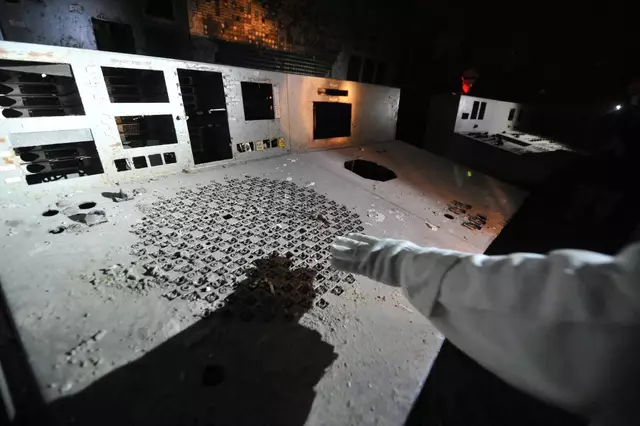
In the still-haunted halls of Reactor 4 at Chernobyl, researchers in the late 1980s and early 1990s noted something uncanny. On the charred walls and water pools of the site, a jet-black fungus was growing—lushly—even under intense gamma radiation.
The species: Cladosporium sphaerospermum — melanin-rich, dark-pigmented, and not just surviving but “feeding” on radiation in a process dubbed radiosynthesis.
Here’s how:
- The fungus uses melanin (the pigment also found in human skin) to absorb ionizing radiation, similar to how plants use chlorophyll to absorb sunlight.
- It grows faster near the radiation source—showing “positive radiotropism,” the ability to grow toward radiation.
- Despite lethal levels of radiation that killed most life forms, this fungus thrives.
If you were standing in Reactor 4, staring at this black web, what would you think: monster or miracle?
Why this matters: health, environment, home and investment intersect
Environmental health and bioremediation
Traditional cleanup of radioactive sites is expensive, dangerous, and slow. The idea that nature might help—via a fungus—is game-changing. According to the Times of India article, this discovery may unlock natural remediation techniques for radioactive waste.
If fungi can immobilize or absorb radiation, this might reduce costs for governments, change the balance sheet of clean-up projects, and redefine environmental investment.
Home improvement & building safety
Imagine your basement or home near a past industrial/radiological site, or even simply using materials that absorb harmful radiation from radon or other sources. The underlying principle: material choice, exposure mitigation, and environmental adaptation.
This fungus suggests one thing: material and biological innovation may migrate into home-remediation solutions. Could walls coated with melanin-based compounds become standard in high-radon zones?
Would you invest in radon counters, advanced insulation or “radiation-resistant” materials for your next renovation?
Travel, remote zones and risk awareness
Visiting Chernobyl’s exclusion zone is now a travel trend. But the deeper implications: learning how nature adapts in hazardous zones teaches travellers about risk, resilience, and extreme environments.
As people invest in remote-property, off-grid living, or adventure travel, understanding the ecology of where you live or visit—not just the surface beauty—becomes critical.
Investment & the technology frontier
This discovery opens investment possibilities: biotech firms developing radiation-absorbing materials, home-improvement companies adapting new insulation technologies, environmental services firms specializing in nuclear clean-up innovation.
If you’re scanning the investment horizon, this is a niche with high-intent keywords: “radiation remediation”, “bio-shield materials”, “environmental cleanup equity”.
As you consider your next home improvement project, travel destination, or investment: ask yourself—what unseen risk or opportunity is beneath the surface?
The science behind the fungus: how it really works
Melanin and radiation conversion
Studies (including those at the Chernobyl site) show melanin in fungi is not just pigment—it is an active participant in radiation absorption.
In the lab, melanised fungal strains have grown faster under radiation exposure than non-melanised ones. Melanin changes structurally under radiation and appears to enable the fungus to convert radiation into chemical energy.
Radiosynthesis and positive radiotropism
Radiosynthesis: using ionizing radiation for metabolic needs, analogous to how plants use sunlight. The observed phenomenon of fungi growing toward radiation sources is called positive radiotropism.
Limitations and questions
While the potential is big, it’s also early stage. Scientists caution: we don’t yet fully understand how to scale this, how safe it is, or how to harness it outside extreme zones.
The open loop: If nature can convert this kind of hazard into energy or growth, what else might it help us convert—waste heat, CO2, nuclear by-products?
The home and health blueprint: lessons you can apply today

For your home: design with environment in mind
- Consider radon testing, building materials with better radiation shielding (especially in older homes or near former industrial zones).
- Use natural light, ventilation, and smart wall materials to reduce cumulative exposure to indoor hazards.
- Explore eco-innovative products: coatings, paint additives, materials inspired by melanin or shielding technologies.
- Holidaying in exotic or remediated zones? Know your environmental exposures—not just mosquitoes or sunburns.
- At home, monitor air, ensure good filtration, check for old contaminated sites nearby, and invest in long-term wellness rather than quick fixes.
For your investment portfolio: spotting emerging niches
- Look for companies working on radiation-resistant materials, bioremediation services, or eco-restoration in former industrial zones.
- Real-estate in formerly contaminated zones might now be undervalued while the tech improves—opportunity awaits the informed.
Would you invest now in materials and homes that factor in “unseen energies” like radiation, micro-hazards, or biological-environment interfaces?
The travel angle: visiting extremes, learning resilience
Visiting the Chernobyl exclusion zone has become a surreal travel draw. But what if instead of just selfies, you learn about resilience—how life adapts under extreme stress?
Lessons for your travel decisions:
- Choose destinations based not just on beauty but resilience narratives—how animals and organisms bounce back.
- Seek “hidden science” experiences—it makes travel richer and more meaningful.
- Consider how climate change, contamination, and remediation shape future travel hotspots.
If you were planning your next adventure, would you pick the pristine beach or the reclaimed industrial zone? Which will tell the stronger story?
The investment horizon: where this fungus may reshape business
Biotech & new materials
Companies exploring melanin-inspired shielding could enter markets in space tech, nuclear cleanup, and eco-construction. Early-stage investments tend to carry risk—but also promise.
Environmental cleanup services
Sites like Chernobyl, Fukushima and other nuclear zones may increasingly rely on bioremediation over brute-force excavation. That shift creates services, contracts, jobs, and infrastructure.
Real-estate and home improvement
If building materials evolve with these biological insights, homeowners upgrading insulation, walls, or basement radon shields may benefit—especially in areas once discounted due to “environmental risk.”
Are you ready to pay for home upgrades that not only look good—but protect you against invisible hazards?
Why this story ends with a question—not a conclusion
Nature often solves what we can’t. In the most radioactive zones on Earth, a humble fungus found a way to convert hazard into growth. That doesn’t mean danger is gone—but it means innovation can come from unexpected places.
And your home, your investment choices, your health, travel and materials—may all benefit from being more like that fungus: adapting, converting risk, growing stronger.
So here’s the question for you:
If a fungus can thrive where humans won’t go, how much value might there be in building homes, lives and investments in places others ignore?
Would you buy a property near a former industrial exhaustion zone—if you knew the technology to shield and adapt was emerging?
Would you upgrade your home materials now, betting on a future where invisible risks become visible protections?
The fungus may not have all the answers yet—but it offers the blueprint.