

If evolution were a talent show, most animals would be scrappy contestants trying a little bit of everything—some dance, some sing, some juggle. Cats, on the other hand, would walk in, deliver one flawless performance, and leave the judges stunned. And they’ve been doing it for millions of years.
From house cats stalking toy mice to tigers prowling dense forests, every feline is cut from the same biological blueprint: sleek, efficient, and built to kill with precision. But here’s the twist—scientifically speaking, their lack of variety isn’t a limitation. It’s a sign of perfection.
Why have cats changed so little over time when evolution is all about change? Why do scientists say that from skull shape to genome structure, felines are among the most stable—and successful—mammals on Earth? And what does that reveal about the fluffy companion curled up on your sofa?
To understand why evolutionary biologists view cats with such admiration, we need to zoom in on the science behind their form, function, and fascinating sameness.
Table of Contents
What Does “Perfect” Mean in Evolution?
In everyday language, “perfect” implies flawlessness—a subjective mix of aesthetics, personality, and utility. But in evolutionary biology, perfection has a far more specific and measurable meaning: how well an organism is adapted to its ecological niche, and how little it needs to change over time to thrive.
Cats, according to evolutionary biologist Dr. Anjali Goswami, are a rare example of this kind of “perfection.” Unlike many animals that evolve rapidly, developing new traits to adapt to shifting environments or competitive pressures, cats have largely stayed the same—because their core design works extraordinarily well. As Goswami puts it, cats haven’t needed to reinvent themselves. They’ve mastered a single ecological strategy—carnivory—and executed it so precisely that further change has been unnecessary.
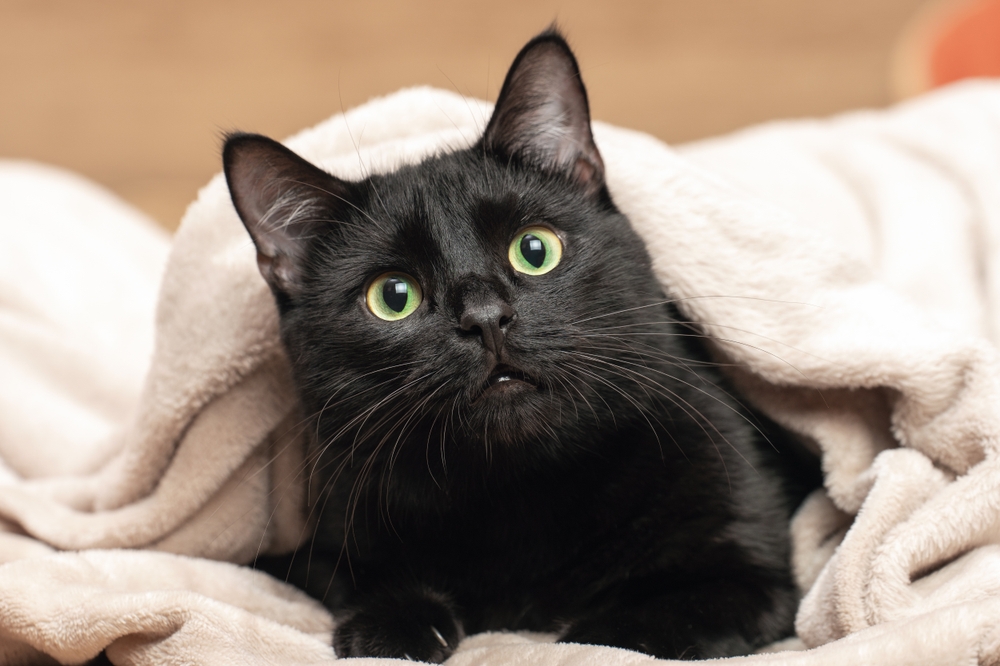
This evolutionary efficiency is visible across the entire cat family, or Felidae. From the small, solitary sand cat to the enormous, group-dwelling lion, every feline species shares a strikingly similar body plan, behavior, and skill set. They hunt alone (with a few exceptions), rely heavily on stealth and pounce techniques, and are anatomically refined for one purpose: to be expert predators.
In evolutionary terms, such functional uniformity is rare. Most animal groups diversify as a response to environmental pressures, creating a broad range of forms and behaviors to increase survival odds. Think of rodents, bats, or even bears—each species trying out different diets, social structures, and survival strategies. Cats do the opposite. Their success lies in sameness, not variation.
This challenges a common assumption in evolutionary science: that diversity equals success. Cats make the case that doing one thing extremely well can be even more advantageous than doing many things decently. Goswami goes so far as to contrast them with groups like rodents or bats, which are diverse in form but, in her words, “keep trying different things because they haven’t figured out how to do any one thing really well.”
The Anatomical Secrets Behind Cat Specialization

At the core of this design is the “slicing pair”: a unique set of teeth shared by all members of the carnivoran order (which includes dogs, bears, and cats). In most carnivores, these upper premolars and lower molars act like scissors to cut meat. But while other species retain additional molars for grinding plants or mixed diets, cats have shed almost everything behind the slicing pair. What remains is vestigial—tiny peg-like teeth that serve little to no function in processing food. This anatomical decision locks cats into being obligate carnivores. They don’t dabble in omnivory like foxes or bears—they hunt, kill, and eat meat. Full stop.
Their physical uniformity across species further underscores this specialization. Whether you’re looking at a housecat or a mountain lion, their skeletal structures are remarkably alike. Evolutionary biologists, including Goswami, note that even trained experts struggle to distinguish between the skulls of a tiger and a lion. The differences are minimal—mostly scale and subtle shifts in muscle mass—not the drastic facial and structural diversity seen in dogs or primates.
One of the most intriguing aspects of cat development is their facial neoteny—the tendency to retain juvenile features into adulthood. Most mammals, including dogs, undergo significant cranial reshaping as they mature; their faces elongate and proportions shift. But a kitten and an adult cat? Practically mirror images. That baby-faced round head persists, giving cats a consistent and highly recognizable profile regardless of age or breed.
This developmental constraint helps explain why cats show so little variation compared to dogs, whose breeding has exploited their flexible skull morphology. Because cats’ developmental blueprint is more fixed, breeders can mostly play with coat patterns and colors, but not much else. Their structure simply doesn’t leave much room for modification—nor does it need to.
In this way, every domestic cat carries the blueprint of a wild predator, scaled down but undiluted in purpose. The same lithe muscles that launch a cheetah at 70 mph power the pounce of a living room tabby. Whether they’re hunting gazelles or toy mice, cats operate from a design so effective it has resisted major changes for millions of years.
Why Cat DNA Is Remarkably Stable
In a groundbreaking study published in Nature Genetics, researchers at Texas A&M University and collaborators compared the genomes of multiple cat species—from lions and tigers to domestic house cats. What they found was striking: cats have significantly fewer segmental duplications—repeated DNA segments that often lead to structural rearrangements—than other mammalian groups. In fact, primates, including humans, have about seven times more of these duplications than cats. These extra copies in primates are associated with rapid genetic changes, but also increased vulnerability to disorders such as autism and certain cancers.
By contrast, the felid genome is streamlined. There are fewer duplications, fewer rearrangements, and far more conserved regions of DNA. This translates into less genetic drift and a slower pace of evolution, aligning with what researchers observe in feline morphology: minimal change over time. Dr. Bill Murphy, a specialist in feline evolution, notes that the chromosomes of lions and domestic cats are almost indistinguishable—a level of genetic continuity that is rare among mammals with such different body sizes and habitats.
Yet, cats are not devoid of genetic variation. What little change does occur is highly targeted. For example, a fast-evolving region on the X chromosome—particularly a repetitive element called DXZ4—appears to play a role in speciation, the process that leads to the formation of new species. This subtle mechanism likely contributed to the divergence between species like the domestic cat (Felis catus) and the jungle cat (Felis chaus), even though their overall genomes remain closely aligned.
Another layer of complexity lies in olfactory genes, which vary significantly among cat species. Tigers, who roam vast territories, retain a broad range of scent-detection genes—crucial for finding prey and mates. Lions, who live in social groups, have lost some of these genes, relying more on social cues than solitary scent tracking. Meanwhile, domestic cats, cushioned by human proximity, have shed many of these genes altogether. Even so, they retain a predator’s sensitivity to smell where it still matters—detecting food or marking territory.
Why Other Species Can’t Do What Cats Do

In the evolutionary race, many animals have attempted to replicate the feline formula—but none have succeeded in matching its precision. Cats aren’t just effective predators; they are uniquely effective. So much so that entire lineages across evolutionary history have tried to mimic them, only to fall short or fade away.
Take marsupials, for instance. In prehistoric Australia, species like the now-extinct thylacine (often called the Tasmanian tiger) developed cat-like traits—sleek bodies, carnivorous diets, solitary hunting behaviors. These were examples of convergent evolution, where unrelated species independently evolve similar features to adapt to similar ecological roles. But while they may have looked and acted like cats, these stand-ins never achieved the same anatomical and genetic refinement—and crucially, they didn’t endure.
The same story plays out across the tree of life. Creodonts, an extinct group of carnivorous mammals, tried their own version of the feline lifestyle. Modern animals like weasels and even some canids also share certain feline traits: lithe bodies, sharp senses, carnivorous diets. Yet despite their versatility or adaptability, none exhibit the evolutionary consistency or long-term dominance that defines the cat lineage.
As Dr. Anjali Goswami points out, the true hallmark of cats is not just that they’re good at what they do—but that other animals trying to be like them eventually have to do something else to survive. They “dip in and dip out of being cats,” as she says, but the ecological niche cats occupy is so specifically and thoroughly claimed that competitors are either outcompeted or forced to adapt away.
Even within the reptile world, only one group arguably comes close: monitor lizards. Like cats, they show dramatic size variation but maintain a remarkably consistent predatory body plan. They, too, are solitary hunters with carnivorous diets. Yet, monitors are the exception that proves the rule—rarities in a biological landscape where most animals must adapt, diversify, and compromise.
Cats, meanwhile, have refined their specialization to such a high degree that they’ve become evolutionary outliers. Unlike the adaptable bear that dabbles in omnivory or the domestic dog shaped by thousands of years of selective breeding, cats have never needed to do more than be cats. Their form and function are so complete that even time itself has had little cause to alter them.
What Domestic Cats Reveal About Our Relationship With Nature

Domestic cats may nap on our couches and chase laser pointers, but beneath the surface, they remain wild at heart—genetically and behaviorally close to their ancient ancestors. That closeness is not just a curiosity; it reveals something profound about how humans interact with nature, and how we’ve shaped—and been shaped by—our relationships with animals.
Unlike dogs, which have been domesticated for over 20,000 years and bred for utility—herding, guarding, retrieving—cats domesticated themselves. Genetic and archaeological evidence suggests that the African wildcat (Felis silvestris lybica), the ancestor of today’s housecat, began living near early agricultural communities about 9,000–10,000 years ago. The reason? An abundance of rodents. In return for pest control, humans tolerated their presence. Over time, the friendlier, less fearful cats were more likely to stay—and reproduce.
What’s striking is how little the domestic cat has changed since then. Behaviorally, they’re nearly identical to their wild cousins: territorial, nocturnal, solitary hunters. Anatomically, they are still equipped with the same reflexes, muscle coordination, and tools for survival. Even in our homes, cats remain the sleek, silent predators evolution designed them to be.
This closeness to their natural form speaks to a respect for biological integrity—but it’s not without complication. As purebred cat breeding becomes more popular, we begin to see the consequences of artificial selection overriding natural selection. Breeds like the Persian, with its flattened face, or the Scottish Fold, with its cartilage mutation, may be visually distinctive, but often suffer from chronic health issues that wild or naturally occurring domestic cats do not. In trying to “improve” on evolution, human intervention has at times undermined what nature perfected.
These breeding practices raise an ethical question: What happens when aesthetic preference overtakes functional design? In the wild, a cat with obstructed breathing or joint deformities wouldn’t survive. Yet in the pet trade, these traits can be rewarded and amplified. It’s a reminder that our power to shape life should come with a responsibility to preserve its original strengths—not diminish them for novelty’s sake.
Why You Should Appreciate (and Possibly Adopt) a Cat

Cats aren’t just endearing companions—they’re living testaments to evolutionary success. Their biology, behavior, and history offer compelling reasons to not only admire them, but to consider sharing your home with one. Here’s why:
A Living Example of Evolutionary Excellence
Domestic cats are not diluted versions of their wild cousins—they are nearly identical. From their muscular build and stealthy reflexes to their solitary hunting instincts, they embody the same evolutionary design perfected over millions of years. When you share your home with a cat, you’re not just housing a pet—you’re living alongside a highly refined product of natural selection.
Simplicity as Strength
Unlike many species that evolved through diversification and compromise, cats succeeded through refinement. Their consistent body plan, limited facial variation, and focused predatory toolkit reflect an evolutionary path where adaptability came not from variety, but from mastering a narrow ecological role. That simplicity is part of what makes them so biologically remarkable—and so unique among companion animals.
A Companion That Respects Its Origins
Cats were never bred to obey or perform. Their domestication was mutual and gradual, driven by their own needs and instincts. Today, their independence and self-regulation often contrast with the high-maintenance dynamics seen in many dog breeds. In this way, cats maintain a closer tie to their wild ancestry—reminding us what coexistence with nature, rather than control over it, can look like.
The Ethical Choice in a Human-Altered World
Appreciating cats also means respecting the biology that makes them successful. With the rise in demand for purebred cats—often bred for appearance rather than health—comes the risk of ignoring the very evolutionary strengths that define felines. Many extreme-bred cats, like Persians or Scottish Folds, suffer from preventable health issues. Choosing to adopt from shelters or support healthy, natural breeding practices is a way to align admiration with responsibility.
An Everyday Encounter with the Wild
Cats offer a rare connection to the natural world from within our homes. They don’t perform tricks or follow commands in the way other pets might. Instead, they invite quiet observation—of instinct, of elegance, of evolutionary purpose. To appreciate a cat is to recognize that you’re witnessing nature’s work, not just a domesticated animal, but a wild blueprint that has endured—and thrived—unchanged.
The Legacy of the Cat
After millions of years of evolution, cats haven’t just survived—they’ve excelled. Their anatomy, behavior, and even their genes reveal a blueprint that nature has seen little reason to revise. While other animals diversify, adapt, and evolve rapidly to stay afloat in changing environments, cats have stayed astonishingly the same—because what they are works.
They are not generalists, but specialists perfected for a role so essential that attempts by other species to replicate it have fallen short. Their design is a triumph of evolutionary precision, and their presence in our lives bridges the gap between the wild and the domestic in a way no other animal does.
Understanding this isn’t just about scientific curiosity—it deepens how we see the animals we live with. It reminds us that cats aren’t just cute, quirky companions; they are enduring, efficient, and exceptional creatures whose very existence is a testament to nature’s quiet brilliance.