

Table of Contents
- Origins of the Robot Digital Passport Program
- What the Digital Passport Includes
- Practical Effects on the Used Robot Market
- Why Traceability Matters in Robotics
- Global Competitive Dynamics
- What Comes Next for the Passport System
- Ethical and Policy Questions Raised
- Impact on AI and Robotics Standards Worldwide
- What This Means for the Future
- Conclusion
Origins of the Robot Digital Passport Program
The idea of giving robots passports is rooted in China’s strategic ambition to lead the world in humanoid robotics by 2027 and to grow its domestic robotics market into a multibillion dollar economic force by 2030. This objective aligns with national priorities around technological sovereignty indigenous innovation and competitive advantage over other major economies in emerging technologies such as artificial intelligence automation and machine learning. Addressing regulatory gaps around traceability and accountability was seen as both necessary and foundational to achieving that goal.
In contrast with many countries that still lack formal frameworks to register or identify artificial agents China’s MIIT moved relatively quickly to pilot a system that could govern robots comprehensively. The program began as a partnership between government regulators national research institutions and leading robotics manufacturers. Its origins lie partly in practical needs: as humanoid robots proliferate across factories service sectors research labs and educational environments it becomes harder for regulators and operators to know which machines are in operation where they are working and how they have been maintained. This is particularly pressing for humanoid robots whose advanced mobility and AI capabilities make them substantially more complex than traditional industrial automation systems.
The solution China devised is deceptively simple in concept: assign a machine readable unique identifier to every humanoid robot much like a vehicle identification number in the automotive world. But the implications extend far beyond tracking: in China’s design the identifier becomes a key to an evolving digital record that captures a robot’s full operational biography.
What the Digital Passport Includes
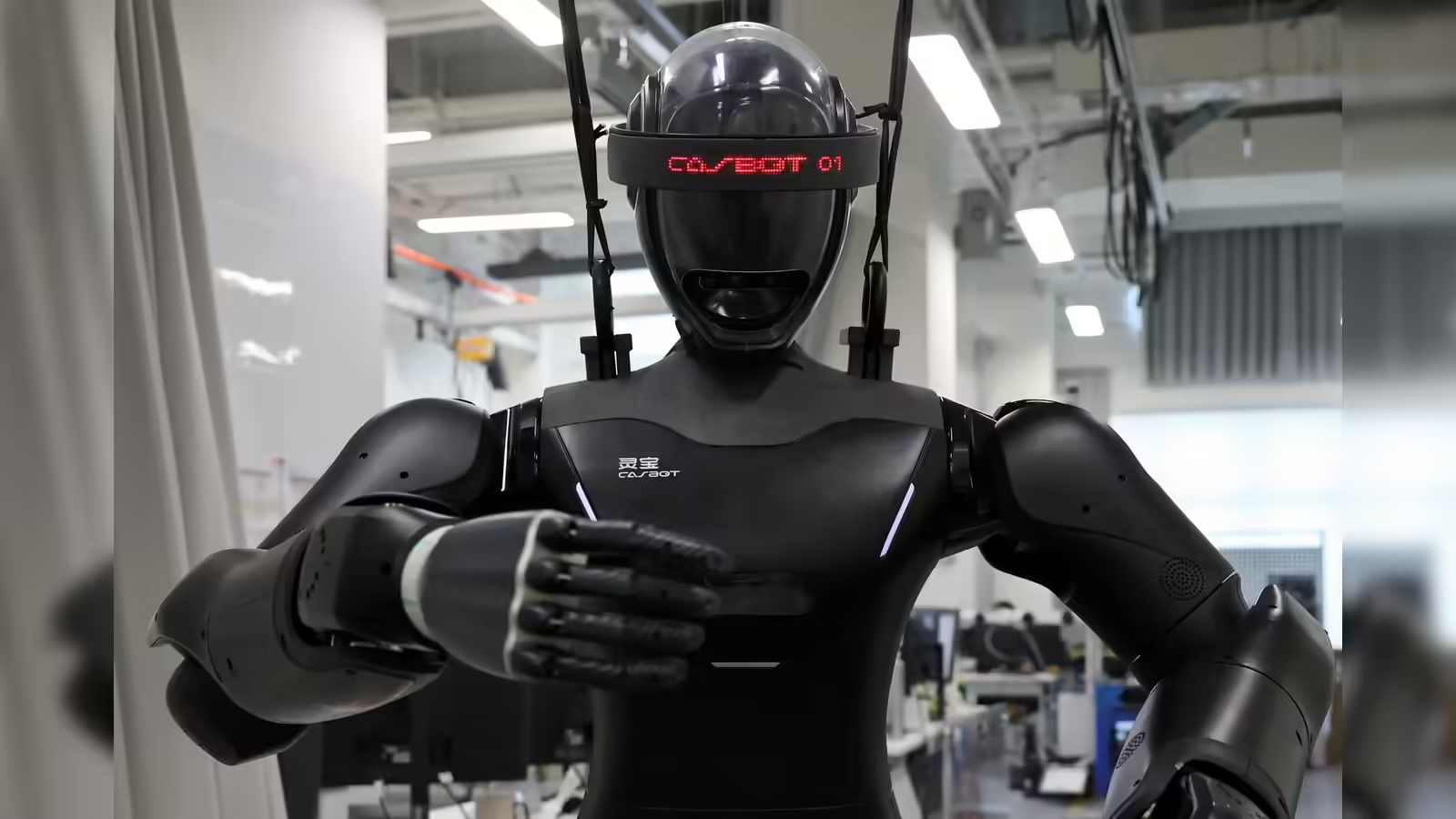
At the core of the passport system is a 29‑character code that is issued to each humanoid robot during production and logged in a national registry. This code serves as a machine’s permanent identity but functions as merely the tip of an extensive data iceberg. Beyond the identifier lies a live data platform that logs a range of information about the robot’s life cycle and performance:
- Manufacturer details noting the company responsible for production and initial specifications.
- Hardware and software attributes which include sensor suites actuator types processing capabilities and embedded AI systems.
- Operational records capturing usage scenarios from factory lines to educational assistance roles.
- Maintenance history detailing when components were serviced or replaced and by whom.
- Real‑time status metrics such as joint wear movement precision and battery health.
Together these data points form a comprehensive and continuously updated footprint of each robot’s life. Think of it as a permanent logbook that never disappears even if ownership changes hands. The data remains accessible through authorized portals enabling transparency that was previously absent in automated machine management.
Practical Effects on the Used Robot Market
One of the most immediate and tangible impacts of the digital passport initiative lies in the used robot market. Until now buying a second‑hand humanoid robot was something of a gamble. Prospective buyers lacked reliable ways to verify a robot’s operational history risk factors and maintenance backbone in the same way car buyers use vehicle history reports tied to VINs to make informed decisions.
China’s system aims to eliminate much of that uncertainty. By logging operational history and maintenance records publicly or with controlled access prospective purchasers can verify whether a robot has undergone repairs or replacements, how many hours it has been in operation and whether it experienced exceptional stress or abnormal usage. This boosts confidence among buyers and could expand secondary markets, making robotics more fluid and accessible for smaller businesses, educational institutions and startups that may not afford new units.
Manufacturers such as Optics Valley Dongzhi, Glroad and Qirobotics have already completed tests with MIIT filing and coding their robots into the system. This early adoption by domestic industry heavyweights sets a precedent that accelerates the registry’s rollout and helps create a critical mass of traceable machines. It also pressures lagging competitors in other countries to consider similar systems to remain viable in international markets where transparency and traceability will become selling points rather than optional features.
Why Traceability Matters in Robotics

Traceability in robotics serves multiple strategic purposes beyond simple identification. First it enhances safety and liability management. If a humanoid robot causes an incident such as malfunctioning on a factory line, injuring a worker or causing property damage the digital passport allows investigators to determine if the issue stemmed from software faults, hardware defects or neglected maintenance by the operator. That clarity simplifies legal proceedings and insurance claims by tying incidents to verifiable data points rather than ambiguous narratives.
Second it supports regulatory oversight. As humanoid robots become more autonomous and interact more closely with humans in workplaces, public spaces and even private homes regulators face mounting pressure to ensure these machines operate responsibly and predictably. A data rich passport system enables authorities to monitor compliance with safety protocols, mandated updates and end‑of‑life disposal procedures, helping reduce risks that might otherwise go unnoticed until after accidents occur.
Third it encourages better maintenance practices. When robot owners know that every repair, replacement and operating hour is recorded and potentially scrutinized, there is an incentive to invest in proper upkeep. This could prolong machine lifespans, improve performance consistency and lower long‑term total cost of ownership. China’s approach effectively internalizes best practices across the entire robotics ecosystem.
Global Competitive Dynamics

China’s humanoid robot passport system is not merely a domestic regulatory experiment; it has significant implications for global competition in advanced technologies. According to industry research China already controls more than eighty percent of global humanoid robot production, a figure that dwarfs output in the United States, Europe and East Asia. This dominant position amplifies the influence of Chinese standards and practices, particularly if global partners and buyers adopt compatible systems to facilitate cross‑border trade and compatibility.
American robotics companies for example are largely still in pilot phases with their technologies and have no equivalent national framework for traceability or machine identity. Without such standards, US firms risk falling behind in markets where traceability becomes an expected feature of robot lifecycles. In practical terms this means that Chinese made robots backed by passport data could be perceived as more reliable, cheaper to insure, easier to resell and safer to deploy at scale. These advantages compress pricing expectations worldwide and exert competitive pressure on foreign manufacturers to match traceability frameworks or lose market share.
There is also a geopolitical dimension. China’s robot passport initiative feeds into broader narratives around technological leadership, digital sovereignty and standards competition. Just as the country has sought to shape norms in telecommunications, digital payments and AI ethics, robotics passports represent another frontier where Beijing aims to define the rules rather than adapt to them.
What Comes Next for the Passport System
At the time of writing the official issuance of robot digital passports begins once MIIT finalizes national standards, a process that depends more on regulatory sign‑off than on technical readiness. The pilot program currently covers robots deployed in manufacturing, service industries and educational settings. The long‑term vision is broader: officials have signaled that eventually all humanoid robots entering the Chinese market will be required to carry these digital identities.
This gradual rollout highlights a careful balancing act between innovation and regulation. Authorities want to encourage robotics adoption while ensuring adequate oversight that minimizes risks. Part of this effort involves refining the data schemas, access permissions and privacy controls that govern how passport information is stored, shared and used. These considerations are increasingly important as robots equipped with advanced AI systems begin to interact more autonomously with humans and sensitive environments.
International stakeholders are watching closely. Some countries and multinational corporations have initiated discussions with Chinese counterparts about interoperability, data sharing agreements and harmonizing standards. Others view China’s move with skepticism, concerned that tech governance frameworks tied so closely to a single national authority could create dependencies or asymmetries in global supply chains.
Ethical and Policy Questions Raised

The idea of machine passports inevitably raises deeper ethical and policy questions about autonomy, digital identity and human oversight of intelligent systems. What rights or responsibilities, if any, should machines have when they operate autonomously? Should robots be traceable only by manufacturers and regulators, or should owners and perhaps even users have access to certain records? How will data privacy concerns be balanced against transparency goals?
Some ethicists argue that any system which treats robots as traceable entities with lifelong records inches us closer to anthropomorphizing machines in ways that blur lines between humans and artificial agents. Others contend that robust identification is essential to manage complex distributed systems safely and ethically.
There are also questions around who controls the data and how it might be used beyond safety and regulation. For example, could insurers adjust premiums based on robot histories? Could employers use operational records to make hiring or deployment decisions? And how will individuals interacting with robots know what they should expect in terms of behavior, capabilities and limits?
Impact on AI and Robotics Standards Worldwide
China’s foray into robot digital passports could influence international norms and contribute to the development of global standards around AI and robotics governance. International bodies such as the International Organization for Standardization, the World Intellectual Property Organization and AI safety coalitions are already grappling with frameworks that address machine accountability, interoperability and ethical deployment.
China’s system adds a concrete large‑scale example of how such frameworks might be constructed in practice. The combination of traceability, live data logging and national oversight offers a model that other countries might emulate or adapt. Even critics acknowledge that if widely adopted, similar passport systems could help mitigate risks associated with autonomous machines by establishing clearer lines of responsibility and traceable operational histories.
At the same time, the dominance of Chinese manufactured humanoid robots means that global acceptance of these standards could inadvertently give China disproportionate influence over how robotic identities are maintained, shared and interpreted across borders. Negotiating shared frameworks that respect sovereignty while ensuring interoperability will become an important area for diplomacy, technical collaboration and policy innovation.
What This Means for the Future

China’s decision to issue digital passports to humanoid robots is more than a bureaucratic milestone: it is a signal of how deeply nations are thinking about the governance of intelligent machines as essential infrastructure rather than optional add‑ons. In a future where humanoid robots assist in factories, hospitals, classrooms and homes, questions about traceability, safety and accountability will only grow more urgent.
Whether other countries adopt similar systems or develop alternative approaches, the era of treatable machine identities has begun. How we manage these identities will influence not just the economics of robotics but also public trust, legal norms and the shape of human machine coexistence.
Conclusion
As China builds out its robot digital passport registry the world watches not just a technological trend but a regulatory experiment with far‑reaching implications. By assigning unique, traceable identities to humanoid robots Beijing aims to streamline safety oversight enable robust secondary markets and consolidate its position as a global leader in advanced robotics. This initiative opens new chapters in AI regulation geopolitical competition and ethical debates about how we govern entities that are neither human nor simple machines. Its impact will be felt in boardrooms, factories, regulatory agencies and public discourse as societies grapple with the opportunities and challenges of an increasingly automated future where machine identities matter as much as human ones. The passport may be digital but its effects are poised to shape a tangible new reality for the age of intelligent robots.