
Table of Contents
- Why Chris Wright’s words mattered immediately
- The Strait of Hormuz remains the real pressure point
- Oil markets are reacting to every hint of de escalation
- Trump’s pressure campaign is widening the story
- The human and strategic cost behind the energy story
- Can a conflict like this really end within weeks
- What Americans should expect at the pump
- A short timeline with enormous consequences
Why Chris Wright’s words mattered immediately
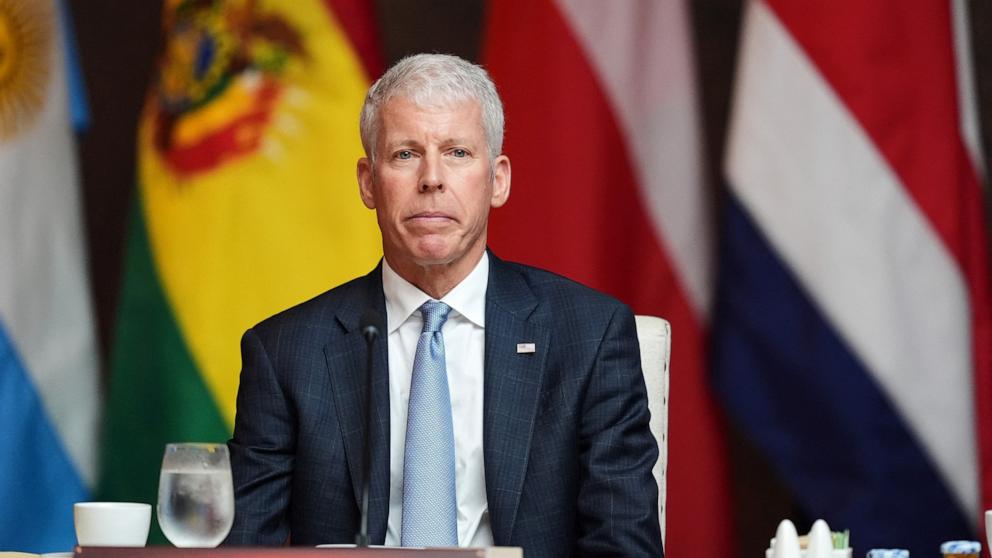
Cabinet secretaries do not usually throw around short war timelines lightly, especially when the conflict in question is affecting global commodity prices in real time. That is why Wright’s remarks landed with such force. According to Reuters, he has been part of the administration’s broader response to a conflict that has already led to major oil supply disruptions, emergency reserve discussions, and concerns from top US energy executives that the crisis could worsen.
What gave his statement extra weight is that he was not speaking in the abstract. He was effectively telling the public that high fuel costs and energy volatility could remain painful for a little while longer, but that the administration believed the disruption would not drag on indefinitely. That message matters politically because energy prices often become the most visible domestic consequence of overseas conflict. Voters may not follow every battlefield development, but they notice gasoline, transport costs, and the prices of goods tied to shipping and fuel.
At the same time, Wright was careful not to oversell certainty. Reuters reported that officials and analysts still see the situation as fragile, with continued attacks, blocked shipping, and the possibility that even after fighting ends, restoring stable energy flows could take longer. That means his remarks offered confidence, but not a guarantee of instant normalization.
The Strait of Hormuz remains the real pressure point
Any serious discussion of this war quickly arrives at the Strait of Hormuz. The narrow waterway has become the central artery of the crisis because it handles a massive share of global oil and liquefied natural gas exports. Reuters reported that roughly one fifth of the world’s oil and LNG normally moves through the strait, which has been largely blocked since the conflict escalated.
That is why Wright’s forecast matters beyond the battlefield. If the war ends soon, the next big question is whether the strait can actually reopen safely and quickly. If it cannot, then even a military de escalation may leave global markets under stress. Reuters has reported that shipping industry requests for naval escorts have faced limits, with the US Navy telling the industry that escorts were not possible for now because of the risks. Iran has threatened vessels and maritime traffic has been severely disrupted.
This is the uncomfortable truth beneath all optimistic timelines. Wars may end in a political sense before their economic damage ends in practice. Tankers do not instantly return to normal routes just because officials start talking about closure. Insurance costs, military threats, damaged infrastructure, and market fear can keep prices elevated even after the loudest phase of conflict begins to cool.
Oil markets are reacting to every hint of de escalation
Energy traders have spent days reading every official comment for clues about how long the disruption may last. Reuters reported that oil prices had surged sharply during the conflict, then plunged more than 11% in a single day after President Donald Trump predicted de escalation and signaled confidence that the war might wind down sooner than feared.
That kind of violent price movement tells its own story. The market is not only reacting to lost supply. It is reacting to uncertainty. Traders are trying to answer a series of difficult questions in real time. Will the Strait of Hormuz reopen? Will tankers move freely again? Will Gulf producers be able to restore full output? Will shipping attacks continue even if the main phase of the war slows?
Wright’s comments added another layer to that calculation. A senior official saying the conflict will certainly end within weeks gives investors a reason to bet that the worst may not last. But Reuters has also reported that analysts remain cautious because even a large strategic reserve release would only cover part of the lost supply for a limited period, and restoring damaged facilities or shipping confidence may take much longer.
So in practical terms, Wright’s forecast may help calm sentiment, but it does not erase the structural vulnerability exposed by the war. The world has once again seen how quickly one regional chokepoint can become a global economic alarm bell.
Trump’s pressure campaign is widening the story
The story is no longer only about fighting between the US, Israel, and Iran. It has expanded into an argument over who should bear responsibility for protecting global commerce. Reuters reported that Trump has called on countries that rely heavily on Gulf oil, including China, Japan, South Korea, Britain, and France, to help secure the Strait of Hormuz.
That move matters because it changes the diplomatic frame. The White House is effectively saying that the economic benefits of the strait were shared internationally, so the security burden should be shared too. But allies have not all responded enthusiastically. Reuters reported that Japan and Australia had no plans to send ships, reflecting both legal constraints and political caution.
This hesitation exposes another weakness in optimistic war timelines. Even if Washington believes the conflict can be wrapped up soon, reopening a globally vital shipping lane may require broader cooperation than the US can command automatically. Some governments may prefer to wait for de escalation rather than risk deeper military involvement. Others may calculate that assisting too openly could make them targets. In that sense, the next few weeks may not only test military endurance. They may test alliance discipline and the limits of US influence in a crisis where every participant wants stability but not everyone wants direct exposure.
The human and strategic cost behind the energy story
It is easy for coverage like this to become dominated by oil charts, fuel prices, and tanker routes. But the war has already produced a heavy human toll. Reuters reported that the conflict has caused widespread destruction in Iran and beyond, with thousands killed and major infrastructure hit, including Iran’s Kharg Island oil export hub. The war has also disrupted airports, cargo movement, and humanitarian access in the region.
That wider damage is important because it helps explain why officials like Wright are under pressure to project some kind of timeline. The longer the war continues, the more likely it is that energy disruption becomes just one part of a broader regional destabilization. Humanitarian deliveries become harder. Air travel suffers. Insurance and freight costs rise. Governments begin making contingency plans for prolonged instability rather than short term disruption.
Reuters also reported that the United Nations has called for humanitarian cargo to be allowed through the Strait of Hormuz, warning that delays and rising costs are affecting food and medicine deliveries. That shows how quickly a military conflict over strategy and deterrence can become a wider crisis for civilians.
Can a conflict like this really end within weeks
That is now the central question. Wright says yes. Markets hope yes. Consumers certainly want yes. But wars do not always obey political timelines. Reuters reported that Israeli Foreign Minister Gideon Saar said the war would end when Israel and the United States decide it is time, but he did not give a precise timeline, even as other US officials suggested a shorter horizon.
That gap is revealing. It shows that different officials may agree on the broad goal of ending the conflict without necessarily sharing the same assumptions about how quickly battlefield realities, Iranian responses, and diplomatic opportunities will line up. Trump has also made strong claims that the war is already “very complete,” while at other moments continuing to push for more international help in the Gulf.
So yes, the conflict may end within weeks. Reuters reporting suggests senior US officials genuinely see that as plausible. But plausible is not the same as settled. A conflict can move from intense strikes to lower level confrontation without truly resolving. Shipping lanes can remain dangerous after main operations slow. Iran can continue influencing energy markets even if its conventional capabilities are damaged. Analysts quoted by Reuters have stressed that Tehran may still hold the key to reopening energy markets, because military pressure alone may not be enough to restore confidence and traffic in the strait.
What Americans should expect at the pump
For ordinary Americans, the question becomes much simpler. When will fuel prices ease. Wright’s answer, as reflected in Reuters reporting, is that people should feel the effects of elevated prices for a few more weeks, with relief more likely once the conflict ends and energy flows stabilize.
That does not mean every station in every state will move in perfect sync. Gasoline prices are shaped by crude costs, refining capacity, shipping conditions, regional inventories, and local taxes. But the basic logic is clear. As long as traders fear major loss of supply from the Gulf, crude remains under upward pressure. Once the risk of prolonged disruption falls, so should some of that premium.
Still, there is a caution here that deserves emphasis. Reuters has reported that even after one sharp oil selloff tied to de escalation hopes, analysts warned that full supply recovery would take time, especially if facilities remain offline or insurers and shippers stay wary. In other words, the public may see some relief before the deeper system is fully repaired.
A short timeline with enormous consequences

What makes Wright’s statement so striking is not just the forecast itself. It is the scale of what hangs on it. If he is right, then the world may be weeks away from moving out of the most dangerous phase of a conflict that has rattled markets, blocked a crucial trade route, and raised fears of a much wider regional war. If he is wrong, then governments, businesses, and consumers may be underestimating how long this disruption could last.
That is why the next few weeks will matter so much. They will test whether military pressure produces closure or only another stage of instability. They will test whether allies are willing to help secure global trade routes or prefer to stand back. And they will test whether energy markets can regain trust after a shock that once again exposed just how fragile the global fuel system remains.
For now, Wright’s message offers a rare note of confidence in a conflict defined by danger and uncertainty. But confidence is not the same thing as resolution. Until ships move more freely, prices ease more reliably, and the shooting truly stops, his prediction will remain what it is today: one of the clearest timelines offered so far, and one of the most consequential.