
Table of Contents
- What If a 10,000-Year-Old Predator Walked the Earth Again?
- Dire Wolves: Not Just Big Wolves — But Something Entirely Different
- Scientists Are Developing Genetic “Blueprints” for Extinct Species
- Why Scientists Want Dire Wolves Back — And It’s Not for Entertainment
- But There’s a Problem — And It Forces Scientists to Rethink Everything
- So What Can De-Extinction Technology Actually Do Today?
- The Dire Wolf Becomes the Symbol of a New Scientific Era
- The Ethical Debate: Are We Playing God, or Repairing What Humans Broke?
- What the Next 20 Years Could Look Like
- A New Scientific Frontier — And We’re Standing at the Edge
What If a 10,000-Year-Old Predator Walked the Earth Again?
Imagine walking through the forest and hearing a howl not heard since Ice Age megafauna roamed North America — a low, haunting call from a creature believed gone forever:
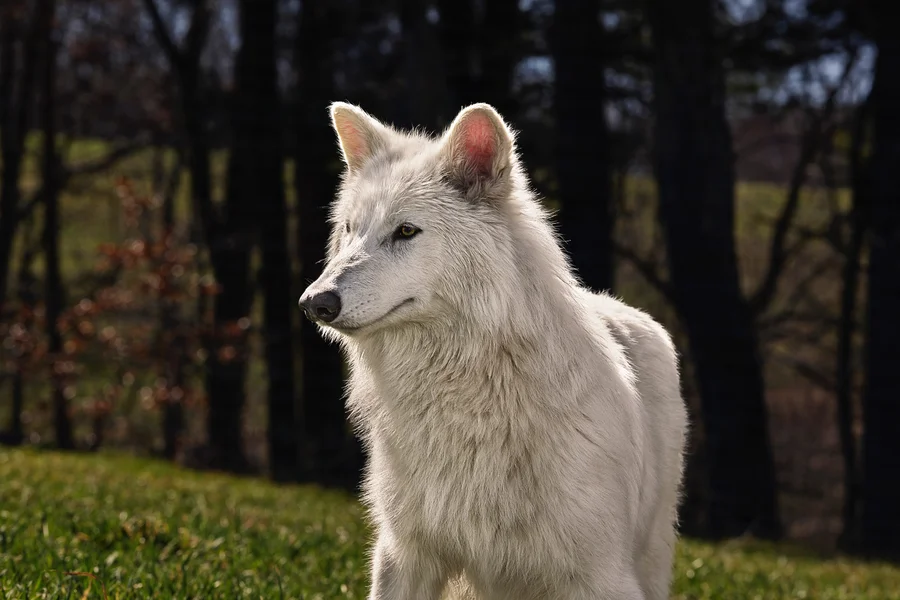
The dire wolf.
For decades, the idea of resurrecting extinct species belonged to science fiction. Something you’d see in movies. Something exciting, impossible, and vaguely terrifying.
But today, in real laboratories, using real technologies, scientists are closer than ever to reversing extinction. And the dire wolf — a legendary creature known from fossils and pop culture — has become a symbol of what might soon be possible.
What scientists have uncovered could transform not only the future of wildlife, but the fate of endangered species across the globe.
But before we get there, you must understand one thing:
Bringing back a species isn’t as simple as “cloning a fossil.”
And what researchers have discovered about the dire wolf’s DNA changes everything we thought we knew.
Dire Wolves: Not Just Big Wolves — But Something Entirely Different
If you grew up believing dire wolves were simply oversized gray wolves, prepare for your world to shift.
When geneticists sequenced dire wolf DNA, they discovered something shocking:
Dire wolves are not wolves at all.
They split from the wolf lineage over 5 million years ago — long before humans even existed. In fact, they are so distant that they cannot interbreed naturally with any modern canid:
- not gray wolves
- not coyotes
- not dogs
This means traditional hybrid-based de-extinction methods — the ones scientists plan to use for mammoths — will not work here.
So how do you bring back an animal with no living relatives?
That’s where the next breakthrough comes in.
Scientists Are Developing Genetic “Blueprints” for Extinct Species
To revive an extinct species with no close relatives, scientists must build its genome almost from scratch — like assembling a puzzle with half the pieces missing.
This requires:
- ancient DNA samples pulled from fossilized remains
- computational reconstruction using modern reference genomes
- CRISPR gene editing to insert ancient genes into living cells
- synthetic biology tools to design missing DNA regions
- cross-species cloning methods to grow an embryo in a surrogate host
It’s part archaeology, part genetics, part engineering — but remarkably, all of it is now technologically possible.
The process is still experimental, but the conceptual framework exists.
It’s not about recreating a dire wolf perfectly.
It’s about creating a functional analog — an animal genetically, physically, and ecologically similar enough to fill the role the dire wolf once played.
And that brings us to one of the biggest questions in de-extinction:
Should we bring species back simply because we can?
Why Scientists Want Dire Wolves Back — And It’s Not for Entertainment
Bringing back dire wolves isn’t about spectacle or Jurassic Park fantasies.
It’s about ecosystems.
Dire wolves were apex predators of the Ice Age. They kept herbivore populations balanced, shaped landscapes, and influenced behavior in species that still exist today.
Their extinction — driven by climate change and shifting prey patterns — left a void that other predators have struggled to fill.
Scientists believe a recreated dire-wolf-like species could:
- stabilize overgrazed regions
- support grassland restoration
- reduce invasive species pressures
- strengthen biodiversity resilience
- rebalance prey populations such as deer
This is the same ecological reasoning behind the wolf reintroduction in Yellowstone — a project that reshaped rivers, forests, and entire food webs.
If one predator can reshape an entire national park, imagine what reviving ancient ones could do.
But There’s a Problem — And It Forces Scientists to Rethink Everything
Bringing back a species that died 10,000 years ago raises enormous challenges:
1. Missing DNA Pieces
Ancient DNA is damaged, incomplete, and broken into tiny fragments.
Scientists must reconstruct what’s missing without guessing incorrectly.
2. Finding a Suitable Surrogate
Dire wolves are so genetically unique that no living animal is a perfect match.
Advanced reproductive technology must evolve further.
3. Behavioral Unknowns
How do you teach a species extinct for millennia to hunt, socialize, and survive?
Behavior is inherited and learned — a complicated mix.
4. Ecological Risk
If reintroduced, could they:
- outcompete modern predators?
- disrupt ecosystems?
- endanger livestock?
Bringing back a species is one thing.
Releasing it responsibly is another entirely.
So What Can De-Extinction Technology Actually Do Today?
Here’s where reality and hype finally diverge.
Scientists cannot yet resurrect perfect replicas of extinct species.
But they can do something incredibly powerful:
1. Restore Lost Traits in Endangered Animals
Using gene editing, researchers can reintroduce ancient alleles that make species more resilient:
- disease resistance
- climate adaptability
- fertility improvements
2. Engineer Hybrid Animals with Extinct Characteristics
For example, creating a “mammoth-like” elephant helps protect Arctic permafrost.
3. Boost Genetic Diversity in Struggling Populations
This could save critically endangered species like:
- cheetahs
- red wolves
- Amur leopards
4. Reverse Damage Done by Human Activity
Gene editing can remove harmful mutations caused by inbreeding, pollution, or habitat loss.
5. Build Future-Proof Species
Climate change is accelerating faster than evolution.
Genetics may help species survive the next century.
In other words:
De-extinction isn’t just about bringing back the past.
It’s about protecting the future.
The Dire Wolf Becomes the Symbol of a New Scientific Era
Even if scientists never recreate a dire wolf perfectly, the research itself unlocks breakthrough tools for wildlife conservation.
The dire wolf represents:
- the limits of what we can understand
- the possibilities of what we can build
- the ethical questions we must answer
Its revival isn’t about nostalgia.
It’s about innovation, responsibility, and imagination.
And it forces us to ask:
If we had the power to undo extinction — would we?
And should we?
The Ethical Debate: Are We Playing God, or Repairing What Humans Broke?
Supporters argue:
- Humans caused most modern extinctions.
- We have a moral duty to restore damaged ecosystems.
- Technology offers hope where traditional conservation fails.
Critics argue:
- Recreated species may suffer or struggle to adapt.
- Ecosystems have changed too much to support them.
- Resources should focus on protecting living species.
But both sides agree on one thing:
The science is accelerating faster than the global conversation.
And that conversation must happen now.
What the Next 20 Years Could Look Like
Here’s the realistic timeline scientists propose:
5 Years From Now
- More ancient genomes reconstructed
- First successful creation of cell lines with dire wolf DNA
- Gene-edited canid embryos developed in labs
10–15 Years From Now
- Viable hybridized animals with dire wolf traits born
- Controlled habitat trials begin
- New conservation models emerge
20+ Years From Now
- Release of engineered predators into managed ecosystems
- Revival of traits once thought lost forever
- Endangered species boosted by ancient genetic diversity
The future won’t look like Jurassic Park.
It will look like a world where extinction is no longer a dead end.
A New Scientific Frontier — And We’re Standing at the Edge
The idea of dire wolves roaming North America again is both thrilling and unsettling.
It challenges our understanding of nature.
It questions our authority over life and death.
It forces us to rethink our impact on the planet.
And yet…
It also offers hope.
- Hope for endangered species.
- Hope for damaged ecosystems.
- Hope for reversing the harm humans have caused.
We stand at the threshold of a new era — not of monsters reborn, but of science restoring what was lost, piece by piece, gene by gene.
The dire wolf is not back yet.
But the technology that might one day revive it is here.
And the world of conservation will never be the same again.