
Table of Contents
Seeking a New Identity
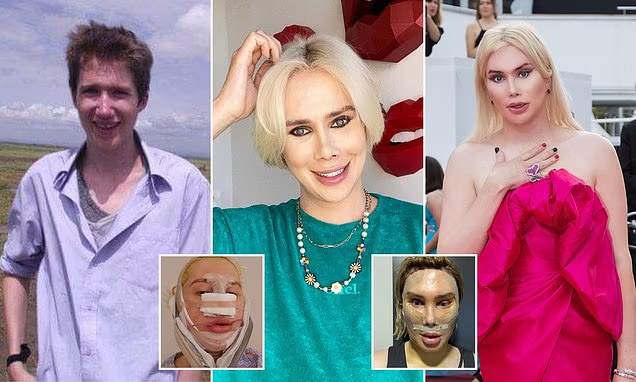
At the heart of this transformative journey was the desire to belong—to feel at home in a body that matched an idealized version of himself. For years, this individual idolized the aesthetics of Korean women, driven by a belief that altering his appearance would provide the fulfillment he was seeking. The $700K investment covered numerous surgeries: facial reconstruction, eyelid surgery, and rhinoplasty, all designed to bring him closer to this ideal. It wasn’t just about physical beauty; it was about searching for an identity that resonated with his inner self, a quest that many could relate to when feeling disconnected from their own reflection.
But as the surgeries piled up, the expected sense of satisfaction remained elusive. Instead of finding clarity, he found confusion and a deep sense of dissatisfaction, which would later pave the way for his decision to detransition.
A Misalignment Between Body and Mind

The process of transformation wasn’t easy. While the surgeries improved his outward appearance, they also brought a series of unexpected challenges. The body’s pain from multiple surgeries was only the surface of the struggle. Mentally and emotionally, the physical changes he’d made didn’t align with the sense of fulfillment he thought they would provide. As time passed, he began to question whether the person he was becoming was truly who he wanted to be.
The physical changes weren’t the only challenges; societal expectations also weighed heavily. Despite his altered appearance, he began to feel a sense of alienation, as though the transformation wasn’t enough to help him feel truly seen or accepted. The realization that his pursuit of an external ideal was incomplete pushed him to a crossroads: Should he continue down this path, or should he rediscover his original identity?
Finding Comfort in Authenticity
After years of living as a Korean woman, the man made the profound decision to begin detransitioning back to a man. This decision wasn’t made lightly, and it came with its own set of challenges. The surgeries couldn’t be easily undone, and the emotional toll of detransitioning was just as taxing as transitioning had been.
Detransitioning is often a process full of uncertainty and introspection. For this individual, it was an emotional roller coaster of reclaiming his identity. His decision to revert to being a man wasn’t driven by regret but by a deeper understanding of himself. He realized that no amount of surgeries or societal validation could change who he truly was on the inside.
Struggling With Self-Acceptance

The decision to detransition wasn’t solely about physical changes; it was also about emotional and psychological healing. The man openly shared how challenging it was to let go of the idealized image of femininity that had driven his surgeries. There was a deep sense of loss as he came to terms with the fact that his external transformation didn’t lead to the internal peace he had hoped for.
However, detransitioning allowed him to regain control over his own identity. He reflected on the immense emotional and psychological toll that attempting to fit into a mold dictated by external influences had on his mental well-being. In detransitioning, he found a sense of clarity and self-compassion that had been missing during the years of his transition.
Embracing One’s True Self
After deciding to detransition, the man began the journey of reconnecting with the person he was before the surgeries. This wasn’t an easy or quick process, but it involved embracing his true self, without the need for drastic alterations to his appearance. For him, reclaiming his identity meant letting go of societal pressures and embracing his natural self. The journey was about rediscovering who he was beneath the surgeries, beneath the idealized image of perfection.
His decision to detransition wasn’t an attempt to invalidate the experiences of those who choose to transition, but rather a reminder that self-identity is a fluid, ever-evolving process. Authenticity, he discovered, comes from accepting oneself fully, without trying to fit into an external mold of beauty or gender.
What Detransitioning Teaches Us About Gender and Identity

This individual’s journey opens up important conversations about gender, identity, and the societal pressures that influence our decisions about self-expression. Detransitioning is a topic that is often overlooked or misunderstood, yet it holds valuable lessons about self-discovery and the importance of being true to oneself. His story serves as a reminder that identity is not something that can be molded by external expectations, but rather something that must be understood and accepted from within.
The societal conversation about transition and detransition needs to expand to include more voices, experiences, and complexities. Everyone’s path to self-identity is different, and it’s important to acknowledge that there is no one-size-fits-all approach. This individual’s story highlights the importance of listening to one’s inner voice and making decisions that align with who we are, rather than who society wants us to be.
Moving Forward with Compassion and Self-Acceptance
As we reflect on this journey, it’s clear that the path to self-acceptance is not linear. It is filled with obstacles, self-reflection, and sometimes difficult decisions. For this man, detransitioning has been a powerful, transformative experience that has allowed him to rediscover his authentic self. His story is a testament to the complexity of gender identity and the importance of embracing who we are, without the pressure to conform to societal ideals.
Ultimately, his journey is about finding peace within, a reminder that self-acceptance comes from understanding our true selves, free from the influences of external pressures. As society continues to evolve, it’s crucial that we approach these conversations with empathy, support, and the understanding that each person’s journey is unique.