

The idea lands with a jolt because it flips a familiar script. Most of the world treats travel as an indulgence you earn after exhaustion, not something you reach for before you break. Yet Sweden’s tourism authorities are now openly encouraging people to walk into a clinic with a document in hand and ask a physician for something that looks like a prescription—only instead of pills, it points toward forests, saunas, cold plunges, art, music, and the small social rituals that make life feel human again. Visit Sweden calls the initiative “The Swedish Prescription,” and it positions the country as a “destination on prescription,” built around evidence that time in nature and culture can support mental and physical health.
Table of Contents
- The pitch is simple on the surface
- What Sweden is selling is not “a cure,” but a different on-ramp to care.
- The campaign also leans on a growing global trend
- If you strip away the headlines, Sweden’s “prescription” is essentially a curated menu of evidence-linked behaviors.
- The science argument Sweden highlights is less about one magical activity and more about stacking small inputs that change the nervous system’s baseline.
- The details matter, so Sweden adds “fine print” through guides and suggested experiences
- Still, Sweden’s boldest move is psychological
- The most persuasive parts of the campaign are the ones that feel measurable.
- The skeptics, however, have a fair point
- what if healthcare took environment seriously?
- If Sweden’s “doctor-prescribed vacation” becomes a trend, it could change how destinations compete.
- The most realistic takeaway is also the simplest
- In the end, Sweden’s pitch isn’t that a vacation is medicine
The pitch is simple on the surface
Visit Sweden frames the country’s lifestyle as unusually compatible with recovery—easy access to green spaces, a culture that normalizes slowing down, and traditions that nudge people toward balance rather than constant stimulation. The campaign language leans into the idea that many modern problems—stress overload, poor sleep, low mood, burnout—are not always fixed by adding more effort. Sometimes they’re softened by subtraction: less noise, fewer notifications, fewer crowded schedules, more daylight, more movement, more breath. That’s the emotional hook. But Sweden also tries to ground it with credibility, pointing to research-linked activities and naming academic partnership with Karolinska Institutet, one of the country’s best-known medical universities.
What Sweden is selling is not “a cure,” but a different on-ramp to care.
Public-health experts have long noted that prevention is where many systems struggle, partly because prevention looks boring on a calendar. You don’t feel heroic scheduling a walk. You feel heroic surviving the week. Sweden’s strategy tries to change that psychology by borrowing medicine’s authority: if a doctor writes it down, the activity stops being optional “self-care” and becomes legitimate healthcare behavior. Visit Sweden’s downloadable prescription-style guide is designed for that exact purpose—patients can bring it to a doctor to start a conversation, and clinicians can use it to recommend Sweden-focused experiences aligned with a patient’s needs.
The campaign also leans on a growing global trend

In many countries, some clinicians encourage patients to spend time outdoors as part of managing stress, mood, and general wellbeing. Sweden isn’t claiming to invent the entire category of nature prescriptions—but it is trying to be the first nation to package itself as an actual place that can be “prescribed” in this way, with an official tourism board putting the claim front and center. That framing is why the campaign has traveled so fast online: it’s weird enough to share, and reasonable enough to argue about. A business group write-up describing the concept notes that selected doctors have been identified who support issuing such prescriptions, and that Sweden highlights three broad “program areas” around nature, social connection, and arts/culture.
The Visit Sweden campaign emphasizes three big buckets: stress relief through nature, everyday balance through lifestyle rituals, and mood-lifting through culture.
It’s not subtle about the mechanisms. The messaging repeatedly returns to the idea that nature exposure can ease stress, that cultural engagement can lift mood, and that social rituals can rebuild the sense of connection many people lose when life becomes purely task-based. Even the most “Swedish” words—like fika—are presented not as cute trivia but as behavior design: a built-in pause, small food, warm drink, and permission to stop rushing for a moment.
The science argument Sweden highlights is less about one magical activity and more about stacking small inputs that change the nervous system’s baseline.

Think about how stress really works in daily life. It’s rarely one catastrophe. It’s accumulation—micro-alarms, constant alerts, long sitting hours, shallow sleep, no daylight, no movement, no quiet. Sweden’s campaign pushes the opposite stack: daylight, walking, slower meals, heat-and-cold contrasts, reduced light pollution, and cultural experiences that pull attention away from rumination. Some coverage of the campaign notes it is backed by research from Karolinska Institutet and references global survey findings suggesting many people would be open to spending more time in nature if a doctor prescribed it.
The details matter, so Sweden adds “fine print” through guides and suggested experiences
The campaign does not function like a national health service that funds your flight. It’s not a medical program that replaces diagnosis or treatment. Instead, it’s a structured prompt: talk to your doctor, consider nature/culture/social connection as complementary supports, then—if appropriate—use Sweden as the location where you practice those supports. The PDF guide is explicit about being a conversation starter and a prescribing template rather than a ticket.
Still, Sweden’s boldest move is psychological
Many adults postpone rest because rest feels irresponsible. They’ll say they’ll travel when work calms down, when the kids are older, when the money is perfect, when the inbox is empty—conditions that rarely arrive. A “doctor-prescribed” framing disrupts that story. It implies that rest is not a reward for finishing life; it’s maintenance required to keep living it. That’s why the campaign resonates beyond travel circles. It’s not just Sweden marketing Sweden. It’s an argument about what modern societies consider valid reasons to stop.
The most persuasive parts of the campaign are the ones that feel measurable.
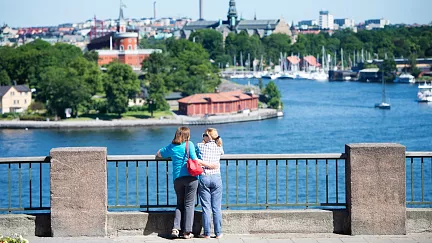
Sleep quality. Stress load. Mood stability. Energy. Focus. Social connection. These are not abstract goals; people notice them. And Sweden’s environment makes the pitch easier: vast forests, accessible lakes, long summer daylight, winter quiet, and a cultural identity built around moderation rather than excess. The campaign’s supporters include doctors featured by Visit Sweden who frame nature and cultural engagement as evidence-based supports for mental and physical wellbeing.
The skeptics, however, have a fair point
Burnout can be tied to workplace conditions, financial pressure, trauma, caregiving, chronic illness, and more. A trip cannot fix structural problems. And for many people, international travel is expensive, time-consuming, and not accessible. That’s the ethical edge of the story: if wellbeing becomes branded as a destination experience, does it accidentally imply that healing belongs to those who can afford it? Sweden’s campaign tries to soften that critique by emphasizing behavior—nature time, cultural engagement, social rituals—rather than luxury. But the critique remains, especially in a world where “wellness” marketing can become exclusionary fast.
what if healthcare took environment seriously?
For decades, medicine has treated environment as background—something to note, not something to prescribe. But more clinicians now acknowledge that loneliness, sedentary routines, and chronic stress can shape health outcomes. Sweden’s initiative, even if partly promotional, pushes that idea into the mainstream. It makes people ask a more interesting question than “Where should I travel next?” It asks: “What kind of environment does my nervous system need to recover?”
If Sweden’s “doctor-prescribed vacation” becomes a trend, it could change how destinations compete.
Tourism marketing has often been about sights, luxury, or adrenaline. Sweden is betting on something quieter: credibility, calm, and the promise of a reset. Other countries may respond with their own “evidence-backed” wellness itineraries. But Sweden currently holds the attention because it framed the concept like a medical intervention, complete with documents and physician quotes, not just a spa package.
The most realistic takeaway is also the simplest
Because the real prescription is behavioral. More nature. More movement. More culture. More connection. Less frantic living. Sweden is merely the billboard. If the campaign nudges even a fraction of people to treat rest as legitimate, to talk to a doctor about stress, or to stop seeing recovery as weakness, then it has already accomplished something beyond tourism.
In the end, Sweden’s pitch isn’t that a vacation is medicine
That’s why the idea spread. It’s strange, it’s shareable, and it touches a nerve: people are tired, and they’re looking for permission to stop being tired. Sweden’s “Swedish Prescription” simply puts that permission in a familiar format—one page, one signature line, and a destination that claims the side effects might include feeling like yourself again.