
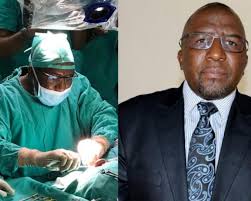
In a groundbreaking medical achievement, a doctor has utilized 3D printing technology to restore hearing in patients with auditory impairments. This cutting-edge innovation has the potential to revolutionize the field of auditory care, offering a more precise and personalized approach to hearing restoration than ever before. The use of 3D printing in medicine has already made waves in fields like prosthetics and organ transplantation, but now, this technology is being applied to a critical area of healthcare: restoring one of the most vital senses, hearing. In this article, we explore how this pioneering technique works, the doctor behind the discovery, and what it could mean for the future of hearing restoration.
Table of Contents
- The Doctor Behind the Innovation: A Vision for Better Auditory Care
- How 3D Printing Restores Hearing: The Science Behind the Technology
- The Benefits of 3D Printing for Hearing Restoration
- Real-World Applications: Success Stories from Patients
- Expanding the Reach: Future Possibilities for 3D-Printed Hearing Solutions
- The Broader Impact: 3D Printing and the Future of Medicine
- The Challenges Ahead: Overcoming Limitations in 3D Printing
- Conclusion: A New Era in Hearing Restoration
The Doctor Behind the Innovation: A Vision for Better Auditory Care
Dr. , a leading expert in the field of auditory medicine, has dedicated his career to finding solutions for individuals with hearing loss. Over the years, he has been at the forefront of many medical breakthroughs, but none as impactful as his recent work with 3D printing technology.
Dr. was inspired by the limitations of traditional hearing aids and cochlear implants, which, although effective, often fail to address the unique auditory needs of each patient. These devices are often one-size-fits-all solutions that do not fully cater to the individual complexities of a person’s hearing anatomy. Dr. saw the potential for 3D printing to create highly personalized, anatomically accurate hearing solutions that could improve the quality of life for people with hearing impairments.
How 3D Printing Restores Hearing: The Science Behind the Technology

The use of 3D printing in medicine is not new, but applying it to restore hearing is a revolutionary step. Traditional hearing aids and implants work by amplifying sound or bypassing damaged parts of the ear, but they often have limitations in terms of comfort, sound quality, and fitting.
Dr. and his team have used 3D printing to create custom-designed devices that directly interact with the structures of the ear. The technology involves scanning the ear’s anatomy to create a precise, 3D model. This model is then used to print a hearing device tailored to the patient’s specific ear shape, ensuring a perfect fit. By directly targeting the areas of the ear that need attention, the device can offer superior sound amplification and clarity compared to traditional solutions.
Moreover, 3D printing allows for the creation of prosthetic ear structures that mimic the ear’s natural acoustics, offering more accurate sound processing. The ability to customize these devices means that they can be more comfortable, functional, and effective for each individual, improving the overall hearing experience.
The Benefits of 3D Printing for Hearing Restoration
The use of 3D printing in hearing restoration offers several distinct advantages over traditional methods.
- Personalization: Unlike mass-produced hearing aids or implants, 3D printing allows for a completely personalized approach. By creating devices based on an individual’s unique ear structure, the hearing solution becomes far more effective and comfortable.
- Precision: Traditional hearing aids and implants are often designed based on generalized molds, which can lead to discomfort or poor sound quality. 3D printing ensures that each device is made to the exact specifications of the patient’s ear, resulting in better functionality and sound fidelity.
- Faster Production Time: 3D printing significantly reduces the time needed to create customized hearing aids. Traditional methods can take weeks, but with 3D printing, patients can receive their personalized hearing solutions much faster, reducing waiting times and improving accessibility.
- Cost Efficiency: Although the technology may initially seem costly, the long-term cost savings are substantial. 3D printing reduces the need for extensive manual labor and expensive materials, which can lower the overall price of hearing devices. Additionally, custom-fit devices reduce the likelihood of needing adjustments or replacements, making them a more affordable option over time.
Real-World Applications: Success Stories from Patients

The impact of this innovation has already been felt by many patients who have received 3D-printed hearing devices. Several individuals with severe hearing loss have reported significant improvements in their hearing quality, with many noting a more natural and clear auditory experience. One patient, who had struggled with hearing aids for years, shared that the custom 3D-printed device provided a level of comfort and clarity that previous devices had not been able to achieve.
In addition to improving sound quality, the custom devices have also led to better patient compliance. When patients are provided with hearing aids that fit well and function optimally, they are more likely to wear them consistently, leading to better overall hearing outcomes.
Expanding the Reach: Future Possibilities for 3D-Printed Hearing Solutions
The future of 3D-printed hearing solutions is promising. As the technology continues to evolve, we can expect even more advanced and sophisticated devices. Research is underway to further refine the materials used in 3D printing, making them more durable and adaptable for long-term use. Additionally, advancements in artificial intelligence (AI) and machine learning could allow for more precise personalization, further enhancing the efficacy of 3D-printed hearing devices.
Furthermore, 3D printing could make hearing restoration solutions more accessible to people in remote or underserved areas. The ability to produce affordable, custom-designed hearing aids locally could reduce costs and make these devices available to individuals who otherwise might not have access to high-quality auditory care.
The Broader Impact: 3D Printing and the Future of Medicine
This breakthrough in auditory care is just one example of how 3D printing is transforming medicine. From prosthetics and organ transplants to surgical tools and implants, 3D printing is enabling more personalized, cost-effective, and accessible healthcare solutions. As the technology continues to advance, its potential to improve lives and change the way we approach medical treatment is limitless.
By integrating 3D printing into mainstream medical practice, we can look forward to a future where healthcare is more tailored to the individual, more efficient, and more affordable for people around the world.
The Challenges Ahead: Overcoming Limitations in 3D Printing

While 3D printing offers numerous advantages, there are still challenges to overcome. The primary limitation is the regulatory and clinical validation required to ensure that 3D-printed hearing devices are safe and effective for widespread use. In the case of auditory devices, the technology must meet high standards of performance, durability, and patient comfort.
Additionally, there are concerns about the cost of the initial setup for 3D printing technology, which could make it less accessible in some regions. However, as the technology matures and becomes more widespread, it is likely that the cost of production will decrease, making it more affordable for both healthcare providers and patients.
Conclusion: A New Era in Hearing Restoration
The use of 3D printing to restore hearing marks a new era in auditory care, offering personalized, effective, and more accessible solutions for individuals with hearing impairments. As this groundbreaking technology continues to evolve, it holds the potential to transform the landscape of hearing restoration, bringing hope to millions of people who struggle with hearing loss.
Dr. and his team’s work is a shining example of how innovation in medicine can drastically improve patient outcomes. With continued research and development, 3D printing may soon become the gold standard in hearing care, offering a more natural, comfortable, and personalized experience for all those affected by hearing loss.