
Table of Contents
- When a Tech Titan Looks Into the Future — and Sees 12 Years of Red
- Why Musk Believes a 12‑Year Run Is Likely — And What’s Fueling His Confidence
- What a 12‑Year Republican Era Could Look Like: Policy, Economy, & Society
- But There Are Big “Ifs” — Why Musk’s Forecast Is Far From Guaranteed
- What This Means for Everyday Americans — Think Money, Jobs, Real Estate, and More
- Why Musk Spoke Up — And What His Voice Means for the Intersection of Tech, Business & Politics
- The Ethical and Moral Questions — Should a Billionaire Be Predicting Our Political Future?
- Now What? How Americans, Investors — and You — Should Watch 2026–2036
- Final Thought: Prediction Is Not Destiny — But It Shapes How We Prepare
When a Tech Titan Looks Into the Future — and Sees 12 Years of Red
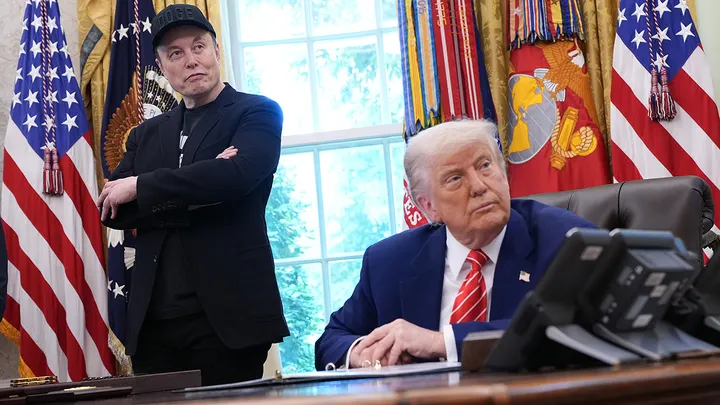
When most people log off after a virtual meeting, they go back to dinner or the evening news. But when you’re Elon Musk, a 20‑minute video appearance at a reunion of his former government‑efficiency team can end with a bold political prophecy.
Musk told attendees at a November 2025 gathering of members from Department of Government Efficiency (DOGE) that the U.S. is entering a “great 12‑year span.” According to him, that span begins with Trump’s second term — and continues with not one, but two terms of JD Vance.
That’s 2025 through 2036: twelve years under a Republican‑dominated White House. Whether you call it optimism or audacity, it’s a prediction that reverberates far beyond a private gathering.
But what would 12 years of united Republican leadership — shaped by Musk’s worldview — truly mean?
Why Musk Believes a 12‑Year Run Is Likely — And What’s Fueling His Confidence
Musk has reasons to believe in this trajectory.
- He was once the head of DOGE — the Trump administration’s pet project aimed at streamlining federal bureaucracy and cutting waste. His proximity to political power gave him a front‑row view of inner workings.
- The GOP currently holds melting‑ice momentum: after Trump reclaimed the presidency in 2024, the Republican wave swept many battleground states. Vance, the current VP, is widely regarded as the front‑runner for 2028 under many conservative circles.
- Musk may be placing a bet — not just on politics, but on history repeating itself: once a party gains certain power bases and institutional control, sustaining power becomes easier.
Musk’s prediction is less about wishful thinking — more like a calculated forecast, informed by what he’s seen inside the corridors of power.
What a 12‑Year Republican Era Could Look Like: Policy, Economy, & Society
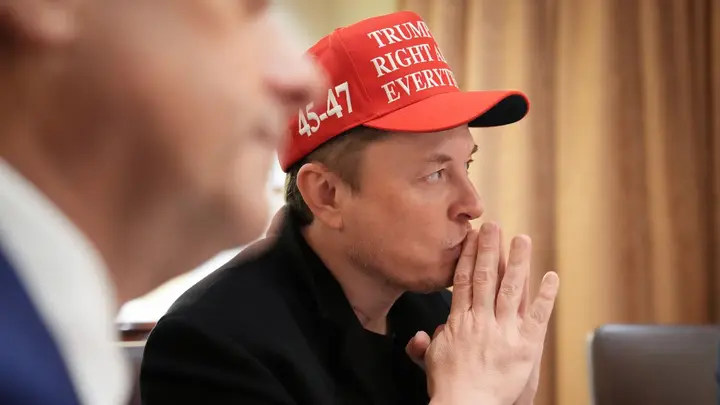
A long, uninterrupted period under conservative leadership isn’t just about who sits in the Oval Office. It could reshape everything from regulation and global trade to domestic policy and market dynamics.
1. Regulation and Government Spending
Under Musk’s brief tenure at DOGE, sweeping promises were made to slash “federal overspending” — targeting agencies from USAID to Social Security.
If a GOP‑led government holds power for 12 years, that drive may accelerate: deregulation, deep cuts to social‑welfare programs, reductions in federal oversight — potentially triggering major shifts in how government interacts with industries, citizens, and the global economy.
2. Economic & Market Impact
Investors and markets tend to like certainty — but sweeping policy shifts can spark volatility. A prolonged Republican run could bring:
- Tax reform, lower corporate taxes, maybe deregulated energy and environmental policies
- A hotter hand for fossil‑fuel industries (given recent rollback of EV‑mandates under Trump) — benefiting energy investors, perhaps hurting green‑tech firms
- Changes in trade policy, tariffs, and international relations that could send ripple effects across global supply chains — especially relevant for anyone shopping for cars, appliances, or electronics.
3. Tech, Innovation & Space Ambitions
Musk’s influence means this era might mix conservative governance with radical tech ambition: Robotics, AI, and perhaps space efforts reminiscent of Musk’s fascination with future‑forward projects. Reports from the reunion show he touched on “space colonization” and science‑fiction‑style visions for the future.
That could make 2028–2036 especially turbulent — but also potentially visionary, depending on execution and public buy‑in.
4. Social, Civil, and Cultural Changes
History shows that long periods of single‑party dominance often lead to lasting cultural and institutional shifts. Lawmaking, Supreme Court appointments, civil‑rights enforcement — all could shift significantly depending on who holds power and what their priorities are.
In short: this isn’t just politics — it’s a potential re‑wiring of America’s social and institutional landscape.
But There Are Big “Ifs” — Why Musk’s Forecast Is Far From Guaranteed

Predictions, even from powerful ones, don’t unfold on their own. Musk’s 12‑year vision carries deep assumptions — and many things could derail it.
⚠️ Elections Aren’t Automated
Voter sentiment can shift fast. Economic downturns, wars, scandals, or unforeseen crises (think pandemics, climate shocks) could upend even the safest lanes.
🔁 Internal Divisions — GOP Is Not Monolithic
The Republican Party isn’t a monolith. Trump‑era Republicans, populists, libertarians, traditional conservatives, and establishment figures — all jockey for influence. Power plays, factional infighting or radical shifts in platform could fragment that projected 12‑year stretch.
🌍 Global Events Could Reshape Everything
America doesn’t exist in a vacuum. Geopolitical shifts — China’s trajectory, climate disasters, global recessions — might force policy changes no one foresees.
🤖 Technology & Public Backlash
If Musk’s forecast includes accelerating AI, automation, and space ambitions — these come with big tradeoffs: job dislocation, inequality, ethical questions. Public backlash could derail even the strongest political forecasts.
What This Means for Everyday Americans — Think Money, Jobs, Real Estate, and More
It’s easy to treat political predictions like academic speculation. But what Musk is forecasting — if it happens — will hit everyday lives hard.
- Real estate & home improvement markets: Deregulation, infrastructure shifts, energy‑policy changes — could influence mortgage rates, home‑value inflation, and energy‑efficiency standards.
- Personal finance & investment: Markets may swing with pro‑business tax cuts or energy deregulation. Investors may flock to fossil‑fuel, defense, and traditional industries; green or heavily regulated sectors could lag.
- Job market: Automation, deregulation, and shifting trade policies could reshape which sectors hire — especially manufacturing, tech, energy, defense, and service industries.
- Cost of living & consumer prices: Changes in tariffs, trade, energy, and regulation might affect prices — for fuel, utilities, goods — which impacts everyday budgets.
For many Americans — homeowners, employees, investors — Musk’s forecast isn’t just page‑one drama. It’s financial planning in real time.
Why Musk Spoke Up — And What His Voice Means for the Intersection of Tech, Business & Politics
Why did Musk make this prediction at a private DOE reunion?
- He’s deeply invested — financially, ideologically, and personally — in the shaping of government policy. His past role at DOGE wasn’t ceremonial. He actively pushed for sweeping cuts and reforms.
- By projecting a long-term GOP run, he signals to investors, companies, and markets: “Expect stability (at least in party control). Plan accordingly.”
- Musk’s vision is strategic: mix conservative governance + major tech ambition, possibly opening space for deregulation in favor of technological growth — which aligns with Musk’s long-term interests in AI, space, and automation.
In short — this isn’t just prediction. It’s a strategic forecast, shaped by power, influence, and long-term planning.
The Ethical and Moral Questions — Should a Billionaire Be Predicting Our Political Future?
When a tech billionaire floats presidential forecasts, raising millions and influencing policy — there are questions we can’t ignore.
- Democratic risks: Does a forecast from a billionaire effectively influence public sentiment, media coverage, and investor decisions — skewing democracy in favor of money and power?
- Transparency & influence: With Musk no longer formally in government, but still influential — how transparent are the mechanisms behind such predictions? Who’s setting the agenda?
- Inequality and accountability: If a 12‑year Republican run brings deregulation and favors certain industries, how will it affect social equity, labor rights, environmental protections?
It’s not just speculation. It’s a test of how power, wealth, and political vision interact — and who gets left behind.
Now What? How Americans, Investors — and You — Should Watch 2026–2036
If Musk’s forecast comes to pass — or even nudges the national conversation — the next decade could rewrite playbooks.
For citizens:
- Stay informed. Track legislative developments, election cycles, and economic shifts.
- Think long-term. Whether it’s real estate, retirement savings, or career planning — consider how a 12-year rule might affect your financial path.
For investors & entrepreneurs:
- Watch sectors likely to benefit: traditional energy, defense, infrastructure, deregulated industries, perhaps AI and robotics under favorable regulation.
- Diversify. Market volatility could spike if global events or internal fractures disrupt the forecast.
For policymakers & citizens concerned with democracy:
- Demand transparency. Keep government accountable — watchdog groups, independent media, and civic engagement will matter more than ever.
- Think broadly. Nationwide policies will shape energy, environment, labor, education — long-term impacts on society at large.
Final Thought: Prediction Is Not Destiny — But It Shapes How We Prepare
Elon Musk’s 12‑year prediction is bold. It’s forward‑looking. It’s ambitious.
But above all — it’s shaping expectations. It invites investors to invest, citizens to vote differently, companies to strategize for stability or disruption, and nations to reconsider alliances.
Will his prediction become reality? Maybe.
Will it force America to prepare differently? Almost certainly.
Because when a voice as loud as Musk’s calls out a future — whether we like it or not — we all lean in to listen.