

Table of Contents
- The Hook: What If One Man Could Dim the Sun? Musk Thinks He Can — And He Just Announced How.
- The Plan: A Giant Solar Shield Made of Thousands of Satellites
- Why Musk Says Earth Needs This Now
- How SkyShield Would Work — In Theory
- Scientists Warn: “This Could Change Weather Patterns Worldwide.”
- Supporters Say: “We Have No Time Left. We Need Bold Solutions.”
- What This Means for Governments, Energy Companies, and Everyday People
- The Biggest Question: Do We Trust One Billionaire With the Planet’s Thermostat?
- But Here’s the Twist: Musk Says He Won’t Launch It Without “Global Consensus” — Whatever That Means
- Could This Actually Work? Scientists Say… Maybe.
- In the End, Musk’s Plan Forces Us to Face a Moral Truth
- A Question to Leave You With
The Hook: What If One Man Could Dim the Sun? Musk Thinks He Can — And He Just Announced How.
Imagine waking up one day and the sunlight is different.
It’s softer.
Cooler.
Dimmer.
Not because of clouds.
Not because of weather.
But because humanity placed something between Earth and the sun — on purpose.
That’s the future Elon Musk says is now scientifically possible.
And he wants to make it happen.
Musk has proposed one of the boldest, most controversial climate solutions the world has ever heard:
A massive constellation of satellites designed to partially block sunlight before it reaches Earth.
Not to create darkness.
Not to blot out the sky.
But to cool the planet.
And the internet exploded.
Some call it genius.
Some call it madness.
Others call it the beginning of humanity’s era of climate engineering.
This is the story of a billionaire who thinks he can dim the sun — and the world trying to decide whether to stop him, support him, or simply strap in for whatever comes next.
The Plan: A Giant Solar Shield Made of Thousands of Satellites
According to Musk, the idea is simple in theory and massively complicated in execution.
He wants to launch a constellation of reflective satellites — somewhat like Starlink but much larger and specialized — into a stable orbit between Earth and the sun.
Their purpose?
Reflect or diffuse a tiny percentage of sunlight before it reaches Earth’s surface.
Just 1–2% less solar radiation, scientists say, could dramatically reduce global temperatures.
Musk believes this could:
- slow ice melt
- reduce extreme heat waves
- cool the oceans
- protect agriculture
- buy time while humanity transitions to clean energy
He calls the project:
“SkyShield.”
Critics call it:
- reckless
- sci-fi nonsense
- dangerous geoengineering
- climate control gone too far
Supporters call it:
- ambitious
- visionary
- the kind of radical idea needed for a radical problem
Who’s right?
That depends on one thing:
Whether you believe blocking sunlight is humanity’s last resort — or its worst mistake.
Why Musk Says Earth Needs This Now
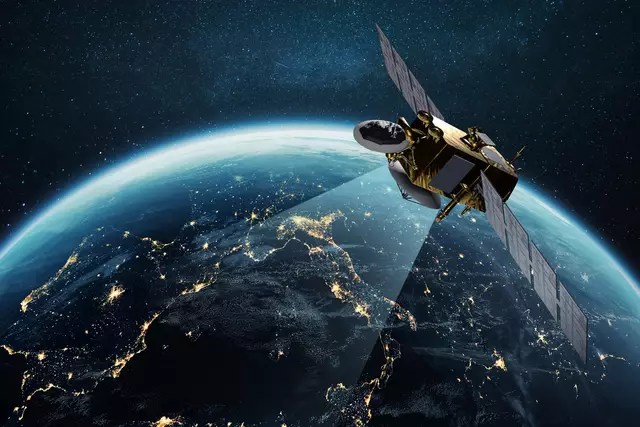
If Musk’s plan sounds extreme, it’s because the situation he’s responding to is extreme.
Global temperatures are rising faster than predicted.
Heat waves are becoming deadlier.
Sea levels are rising.
Wildfires are devastating ecosystems.
Climate tipping points are approaching.
And Musk argues that clean energy isn’t enough — not fast enough.
“We have to cool the planet, not just slow the warming,” he said.
Solar Radiation Management (SRM) — a class of geoengineering that includes sun-blocking ideas — has been discussed for decades by scientists.
But no one has ever had:
- the funding
- the rockets
- the satellites
- the audacity
to actually attempt it.
Except, possibly, Elon Musk.
How SkyShield Would Work — In Theory
The idea sounds impossible, but it’s based on real physics.
Here’s how it supposedly works:
1. Satellite Constellation
Thousands of satellites equipped with:
- reflective surfaces
- adjustable panels
- orientation control
These would reflect a tiny fraction of sunlight away from Earth.
2. Lagrange Point Positioning
The satellites would sit at L1, a stable point between Earth and the sun where gravitational forces balance.
This keeps the constellation “floating” in place without excessive fuel.
3. Adjustable Shading
Panels could:
- tilt
- shift
- open or close
allowing fine-tuned solar control depending on climate conditions.
4. Global Coverage
The system wouldn’t cause darkness or shade — just reduce incoming solar radiation slightly.
Like placing a sheer curtain between Earth and the sun.
5. Emergency Override
If something goes wrong, the system could shut down or reposition.
At least, that’s the idea.
But critics have questions Musk didn’t fully answer.
Scientists Warn: “This Could Change Weather Patterns Worldwide.”
Solar-blocking technology is not a new idea — but it is one of the most controversial.
Climate scientists warn that tinkering with sunlight has:
- unpredictable consequences
- global and unequal side effects
- risks for rainfall, monsoons, and crops
- legal and ethical issues
- geopolitical implications
For example:
- Too little sunlight could devastate agriculture.
- Weather patterns could shift unpredictably.
- Some regions might cool while others warm.
- If the system fails suddenly, Earth could rapidly heat (“termination shock”).
One climate physicist said:
“Geoengineering is Pandora’s Box. Once opened, you can’t close it again.”
Another said:
“We don’t understand the planet well enough to dim the sun safely.”
Still, others argue that doing nothing is far riskier.
Supporters Say: “We Have No Time Left. We Need Bold Solutions.”
Musk’s supporters — including some environmental technologists — argue that the world has reached a point where radical ideas are necessary.
They believe:
- climate change is accelerating too fast
- traditional strategies are too slow
- thousands will die from heat waves
- ecosystems will collapse
- nations won’t meet climate goals
They see SkyShield as:
- a temporary emergency measure
- a technical solution that buys time
- a real alternative to climate catastrophe
And they say Musk is the one person with:
- rockets (SpaceX)
- satellites (Starlink)
- funding (Tesla/SpaceX valuation)
- global influence
- ability to move fast
Who else can build something like this?
Governments can’t agree on anything.
The UN debates too slowly.
Private companies don’t have the scale.
Musk, they argue, is the only one willing to try.
What This Means for Governments, Energy Companies, and Everyday People

If Musk actually launches a sun-blocking constellation, the consequences would ripple through every part of society.
Governments would panic.
Who controls the climate?
Who decides the shade levels?
What happens if countries disagree?
Energy companies would scramble.
Solar power depends on sunlight.
Less sunlight = less electricity.
Would Musk’s plan indirectly disrupt renewable energy?
Agriculture would be affected.
Crops depend on precise sun cycles.
Even a small change alters yields.
Insurance companies would adjust risk models.
Weather changes = economic uncertainty.
Everyday people would notice changes.
Sunlight intensity.
Temperature.
Possibly the color of the sky.
This isn’t just a science project.
It’s a shift in the fabric of daily life.
The Biggest Question: Do We Trust One Billionaire With the Planet’s Thermostat?
This is the fear experts are shouting from the rooftops:
One man — no matter how intelligent — should not control a global climate system.
Geoengineering isn’t local.
It affects every country.
Every ocean.
Every ecosystem.
Every person.
If Musk launches SkyShield:
- Who regulates it?
- Who monitors it?
- Who prevents abuse?
- What if nations disagree with Musk’s settings?
- What if a malfunction causes global harm?
And perhaps the most important:
What happens if Musk decides to do it even without global permission?
He has:
- his own rockets
- his own satellites
- his own manufacturing
- enough wealth to fund it
What happens when climate control becomes privatized?
We are entering new ethical territory.
But Here’s the Twist: Musk Says He Won’t Launch It Without “Global Consensus” — Whatever That Means
Musk claims that SkyShield will only be deployed after:
- scientific review
- international signoff
- public debate
- environmental approval
But critics argue that “global consensus” is vague.
Does it mean:
- approval from the UN?
- approval from major nations?
- approval from scientists?
- approval from Musk himself?
No one knows.
And in the world of high-speed tech innovation, promises can change quickly.
Could This Actually Work? Scientists Say… Maybe.
Surprisingly, some scientists say the concept is plausible.
Earth has natural sun-shading events:
- volcanic eruptions
- dust clouds
- seasonal variations
When Mount Pinatubo erupted in 1991, global temperatures temporarily dropped.
If nature can dim the sun, maybe we can too — carefully.
NASA has already studied sun shields.
Harvard has researched stratospheric aerosol injection.
The idea isn’t new.
What’s new is having:
- SpaceX rockets
- low-cost satellite production
- a billionaire willing to gamble everything
- global urgency
It could work.
It could fail.
It could reshape the world for centuries.
In the End, Musk’s Plan Forces Us to Face a Moral Truth
Climate change is no longer a theoretical threat.
And Musk’s announcement — wild as it sounds — exposes a truth society doesn’t want to confront:
We are running out of time.
Whether SkyShield is:
- salvation
- insanity
- a distraction
- a last resort
depends on who you ask.
But one thing is certain:
The idea of blocking the sun is no longer science fiction.
It’s a proposal.
A debate.
A possibility.
And Musk has dragged it into the public conversation whether we like it or not.
A Question to Leave You With
If the future of the planet depended on one choice —
Would you dim the sun to save humanity?
Or would you trust the Earth to heal without intervention — even if it means we might not survive the wait?
Your answer says everything about how you see the future.
And soon, governments, scientists, and citizens around the world may need to answer that same question — for real.