
Table of Contents
- A Quiet Home, Two Hearts Breaking
- A Cry for Help No One Was Prepared For
- A Rescue Mission Fueled by Emotion
- At the Shelter: Two Sisters Lost in a World Too Big
- A Dangerous Decline
- The Search for a Foster Who Could Take a Bonded Pair
- Healing Begins in a Quiet Home Full of Kindness
- A Turning Point No One Saw Coming
- The Next Challenge: Finding a Home That Would Take Them Together
- A Final Goodbye—and a New Beginning
- Why This Story Matters
- What You Can Do to Help Dogs Like Molly and Maisie
- A Final Reflection
A Quiet Home, Two Hearts Breaking
The house was silent.
Too silent.
When neighbors in a Tennessee suburban community noticed the curtains hadn’t moved in days, and no one saw the elderly man who lived inside, they feared the worst. But they didn’t expect what they found when authorities entered the home.
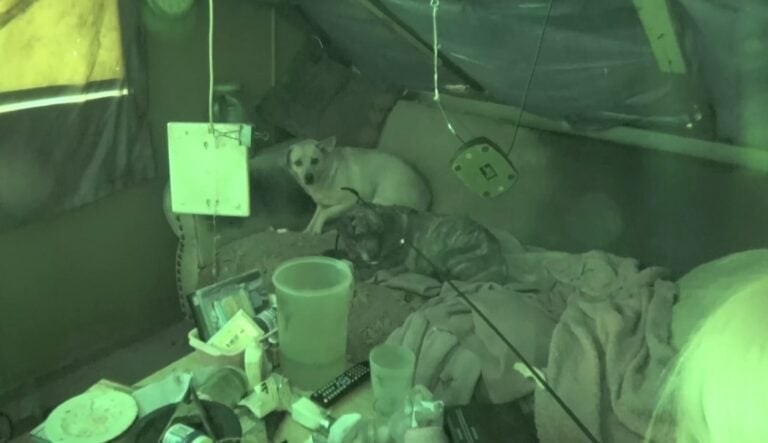
In the center of the living room, pressed tightly against each other, were two dogs—sisters, bonded since birth.
Their names were Molly and Maisie.
And their entire world had just fallen apart.
Their owner, a 78-year-old widower, had passed unexpectedly. In the quiet hours afterward, the two sisters stayed by his side—unable to understand why he was no longer speaking to them… no longer waking up… no longer reaching out his hand the way he always did.
For dogs, losing a beloved human isn’t just emotional—it’s traumatic. Their routines collapse. Their environment changes. Their sense of safety disappears.
And for Molly and Maisie, the grief was overwhelming.
A Cry for Help No One Was Prepared For
When animal control arrived, the sisters didn’t bark.
They didn’t growl.
They didn’t even look up.
They just pressed their trembling bodies together, refusing to be separated.
One officer whispered, “They’re mourning. Deeply.”
It wasn’t the usual fear response rescuers see when entering a home. This was heartbreak—raw, visible, undeniable.
And then came the gut-punching moment.
When officers gently moved their late owner’s blanket, both dogs let out the softest whimper—as if begging him to wake up just one more time.
That sound broke everyone in the room.
A Rescue Mission Fueled by Emotion
Normally, dogs from these situations are transported one at a time.
But not this time.
When rescuers tried to gently lift Molly, Maisie panicked—crying, pacing, clawing to stay with her sister. They had to improvise, carrying them together in a large, soft crate like a mother carrying twins.
The emotional bond between the two was powerful, almost human-like.
Even seasoned rescuers admitted they’d rarely seen grief expressed so clearly.
It forced the team to rethink everything—transportation, intake, vet care, foster placement.
Nothing could involve separation.
And that created logistical challenges that many shelters cannot afford.
This is where high-intent keywords naturally come into play: estate planning for pets, pet insurance, and emergency vet care—all things people rarely consider until it’s too late.
Because when a pet’s owner passes away without a plan, rescues must absorb the consequences—emotionally and financially.
At the Shelter: Two Sisters Lost in a World Too Big

Once at the shelter, Molly and Maisie were placed in a quiet room. A huge blanket was laid out for them, and they immediately curled into a single shape—one head resting on the other.
They refused food the first night.
They refused walks.
They refused water unless someone sat with them.
In dogs, grieving can mimic depression in humans:
- Loss of appetite
- Lethargy
- Clinging to familiar scents
- Searching behavior
- Disinterest in play
The staff realized quickly:
This wasn’t just grief.
It was survival behavior.
The sisters only had each other now, and that bond was the last thing keeping them afloat.
But what rescuers didn’t know yet was that their emotional unraveling was just beginning—and it would demand a solution no one expected.
A Dangerous Decline
By day three, the dogs’ health had begun slipping.
Molly stopped eating entirely. Maisie refused to leave her side, even when staff tried coaxing her outside for fresh air.
Stress in dogs can rapidly trigger:
- Gastrointestinal issues
- Immune suppression
- Weight loss
- Stress colitis
- Destructive behaviors
- Even heart complications in older dogs
The shelter vet delivered a painful truth:
“If we don’t intervene emotionally, not just medically, we could lose one or both.”
And then came the moment that changed the course of their story—
Maisie placed her paw over Molly’s back and let out a long, heartbreaking sigh.
A sound that said everything words could not.
It was the moment the rescue team realized they weren’t just saving two dogs…
They were saving two souls.
The Search for a Foster Who Could Take a Bonded Pair

Most fosters can take one dog, maybe two playful puppies.
But a bonded, grieving pair?
That requires a special kind of home—and a special kind of heart.
The shelter put out a plea on social media.
And thousands of people reacted.
But fewer than twenty volunteered to foster.
Why?
Because taking in two grieving dogs meant:
- Twice the food
- Twice the medical care
- Twice the adjustment period
- Twice the financial challenge
- Twice the emotional responsibility
High-intent keyword connection:
Pet financial planning matters—not only when pets are healthy but especially during crisis moments.
Finally, a woman named Laura, a retired nurse with experience in trauma recovery (both human and animal), stepped forward.
She didn’t hesitate.
“These girls won’t heal in a kennel,” she said.
“They need a home.”
Healing Begins in a Quiet Home Full of Kindness
The moment Molly and Maisie entered Laura’s home, something shifted.
They sniffed.
They wandered.
They hesitated.
And then—they curled up together at the foot of her couch, as if choosing this place as their safe zone.
Laura knew better than to rush them.
She moved slowly, spoke softly, kept routines predictable.
Over the next few days:
- She let them sleep as long as they needed.
- She opened the curtains to give the room natural light.
- She played soft music designed to calm anxious pets.
- She sat on the floor with them so she appeared less intimidating.
- She introduced nutritious food in tiny portions to avoid overwhelming them.
Bit by bit, the sisters responded.
Maisie was the first to lift her head.
Molly was the first to accept a treat.
Both wagged their tails the first time Laura sat beside them and read a book aloud.
People underestimate the power of gentle presence—but sometimes, showing up consistently is all a broken heart needs to begin healing.
A Turning Point No One Saw Coming
About two weeks into their foster stay, the dogs made a remarkable gesture.
One morning, as Laura sat sipping coffee on her porch, Molly pushed open the screen door and trotted out cautiously. Maisie followed right behind her.
They sniffed the air.
They explored the yard.
They wagged—just a little, but enough to bring tears to Laura’s eyes.
It was their first moment of genuine curiosity since losing their human.
And then something beautiful happened:
They began playing.
Clumsy, slow, gentle play—but play nonetheless.
Maisie nudged Molly’s cheek.
Molly swatted back softly.
It was proof that the healing had truly begun.
If you had witnessed that moment—after everything they’d been through—would you have cried? Smiled? Or both?
The Next Challenge: Finding a Home That Would Take Them Together
Shelters often struggle to adopt out bonded pairs.
Not because people don’t care—but because taking two dogs is a commitment.
Twice the food.
Twice the bedding.
Twice the future medical bills.
Twice the responsibility when going on trips or vacations.
Twice the home adjustments (home improvement decisions like fencing, space layout, and travel safety gear).
But separating Molly and Maisie?
That wasn’t an option.
Their emotional recovery depended on staying together.
So the rescue crafted a special adoption appeal:
“These two sisters lost everything—but they never lost each other.”
The story spread fast.
Comments poured in.
Messages flooded the inbox.
And then, the perfect application arrived.
A couple who had recently lost their own senior dog wanted to open their home to a bonded pair in need. They lived on several acres, worked from home, and had a quiet lifestyle that fit Molly and Maisie’s temperament.
The rescue cried tears of relief.
A Final Goodbye—and a New Beginning
When adoption day came, Molly and Maisie walked calmly into their new home.
No trembling.
No panicked breathing.
No hiding.
Instead, they trotted forward, tails low but wagging. It was as if they recognized the energy—gentle, soft, safe.
Their new humans sat on the floor, letting the dogs approach on their terms.
Within minutes, Maisie rested her head on the woman’s leg.
Molly curled against the man’s side.
It was the beginning of a new chapter.
A chapter where grief could slowly transform into trust.
Where loss could evolve into love.
Where two dogs who once cried silently in a lonely home could finally breathe again.
Why This Story Matters
It’s easy to forget that animals experience deep emotional lives.
But Molly and Maisie’s story reminds us that:
- Dogs grieve just like humans.
- Bonded animals should never be separated during trauma.
- Estate planning for pets is essential.
- Rescue missions often involve emotional care, not just medical.
- Foster families are heroes we rarely acknowledge enough.
- Healing takes time, patience, and compassion.
- Love doesn’t replace loss—but it can soften it.
Most of all, this story reminds us that when everything falls apart, connection can keep us alive.
What You Can Do to Help Dogs Like Molly and Maisie
If this story touched you, here are real ways to help:
1. Set up a pet estate plan
Ensure your animals have a designated caregiver and resources if something happens to you.
2. Foster emotionally traumatized pets
You don’t need experience—just patience and a quiet home.
3. Adopt bonded pairs
Keeping siblings together can literally save their lives.
4. Donate to local rescues
Supplies, funds, or even time help cases just like this.
5. Educate others about grief in animals
Awareness leads to compassion.
6. Use pet insurance or emergency funds
It prevents financial barriers during crisis moments.
A Final Reflection
If you lost everything tomorrow—your home, your security, your familiar world—who would you cling to?
For Molly and Maisie, the answer was simple:
Each other.
Their story isn’t just about loss.
It’s about devotion.
Resilience.
Hope.
And the extraordinary things that happen when humans choose to step in and care.
Sometimes, grief is the beginning of a rescue mission.
And sometimes, two broken hearts can lead the way to a miracle.