

Table of Contents
- A First Treasure Hunt Turns Into a Historic Discovery
- Why the Find Captured So Much Attention
- The Pendant’s Religious Meaning Adds Depth to the Story
- A Field Becomes a Bridge to the 1500s
- The Human Side of the Discovery
- What Happens After a Find Like This
- Why the Pendant’s Value Was About More Than Gold
- The Lasting Appeal of Beginner’s Luck
- What This Discovery Still Says Today
A First Treasure Hunt Turns Into a Historic Discovery
The heart of the story is disarmingly simple. A young boy named James Hyatt, just three years old, was trying out a metal detector for the first time alongside his father in a field in England. For many families, such an outing would have ended with nothing more than a few muddy shoes and a fun memory. Instead, the detector signaled something unusual almost immediately. James later described it in the most childlike and unforgettable way possible: it “went beep beep beep.”
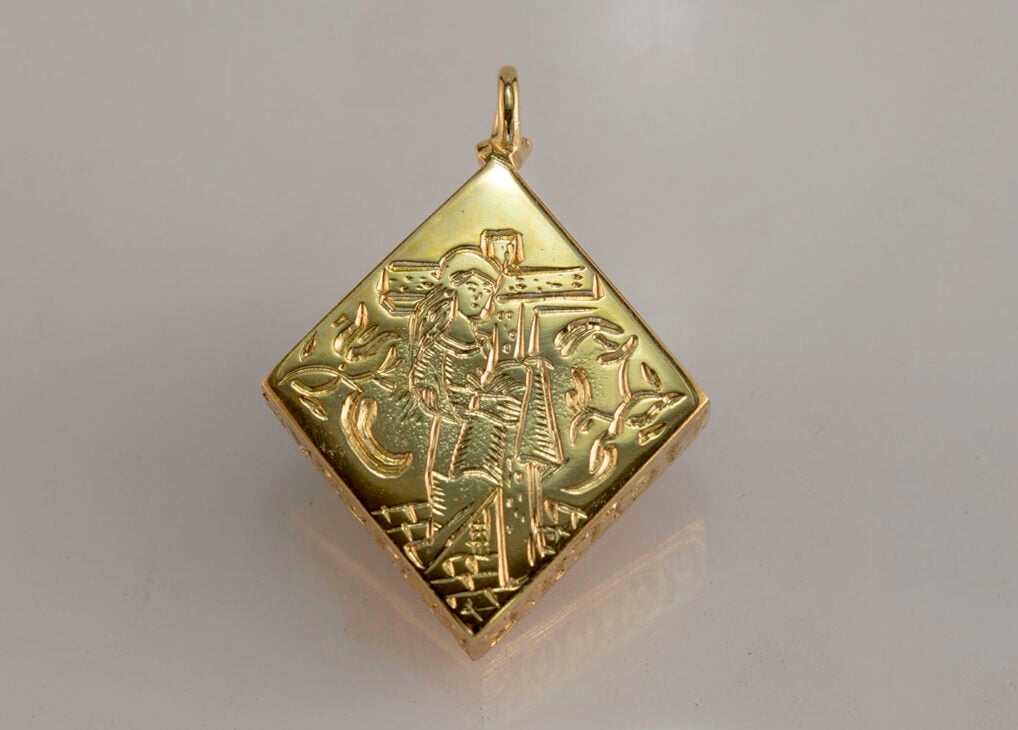
His father began digging, and what they found was far from an ordinary scrap of buried metal. The object turned out to be a 500-year-old gold pendant, rich in religious imagery and historical meaning. Experts later estimated its value at about $4 million. In an instant, a quiet day in a field became a story of national fascination, reminding people everywhere that history sometimes reveals itself in the least expected way and through the least expected hands.
Why the Find Captured So Much Attention

Treasure stories always have an emotional pull, but this one had several layers that made it especially powerful. The first, of course, was James’s age. There is something almost cinematic about the idea of a toddler discovering a priceless object that had lain hidden for centuries. It created a contrast that felt both magical and real: one of the oldest surviving objects from England’s religious past found by someone just beginning to understand the world around him.
The second reason the story spread so widely was the object itself. This was not a random coin or damaged relic. It was a carefully crafted gold pendant, likely connected to the late medieval period, with striking devotional imagery. Suddenly the story was no longer just about luck. It was about history, religion, craftsmanship, and the strange survival of beauty across half a millennium.
Then there was the value. Estimates that placed the pendant at around $4 million transformed the discovery from a charming anecdote into a headline grabbing event. People who might not normally care about medieval artifacts suddenly paid attention. The figure gave the story scale, drama, and a tangible sense of wonder.
The Pendant’s Religious Meaning Adds Depth to the Story
According to the details made public at the time, the pendant weighed roughly a third of an ounce and had a gold content of about 73 percent. But its importance was not based on precious metal alone. The engraved imagery suggested deep religious significance. Experts indicated that the pendant likely depicted the Virgin Mary and also featured imagery associated with the five wounds of Christ.
This matters because objects like this were not only decorative. In the late medieval period, devotional jewelry often carried personal and spiritual meaning. A pendant such as this may have served as a sign of faith, protection, or status. It may have been worn in prayer, carried in daily life, or valued as a deeply personal object tied to religious devotion. That kind of symbolism gives the find an emotional weight beyond the gold itself.
The British Museum reportedly noted that devotion to the blood and wounds of Christ was a hallmark of late medieval piety. That observation helps place the pendant in a larger historical world. It was not merely an ornament from the past. It was part of a spiritual culture, one that shaped how people understood suffering, redemption, and sacred imagery. In that sense, James Hyatt did not just find treasure. He found a surviving fragment of belief.
A Field Becomes a Bridge to the 1500s

One of the most fascinating parts of stories like this is the setting. The pendant was found in a field, a place so ordinary that it would have seemed unremarkable to almost anyone passing by. That contrast between the everyday landscape and the extraordinary object beneath it gives the discovery a special kind of power.
England is full of such places, fields and farmlands that appear quiet and familiar but sit on layers of forgotten history. Every path, boundary, and patch of soil may hold traces of lives long gone. In this case, one small part of that hidden past re-emerged in glittering form. The field instantly became more than a stretch of land. It became a bridge between the present and a distant past.
That is part of what makes metal detecting so appealing to many enthusiasts. It offers the tantalizing possibility that history is not confined to museums and textbooks. Sometimes it is waiting in open country, buried just inches below the surface, preserved by chance until the right person comes along.
The Human Side of the Discovery
It is easy to focus on the artifact, but the emotional core of the story lies in the father and son who found it together. There is something especially memorable about the image of a parent introducing a small child to a hobby and unexpectedly watching that child stumble into history. It turns an archaeological story into a family story.
James’s role in the discovery also gave the public a moment of innocence in a world where news is often dominated by conflict, crisis, and cynicism. He was not searching for fame or fortune. He was simply participating in a new experience, responding with delight when the machine made a sound. That innocence made the discovery feel even more remarkable. The story was not driven by ambition. It was driven by curiosity.
At the same time, the find inevitably changed the circumstances around the family, at least for a while. Public attention followed, along with interest from experts and institutions. The discovery that began as a playful outing became a matter of national heritage and serious monetary value. That transformation, from family pastime to historic event, is part of what gave the story its lasting appeal.
What Happens After a Find Like This

Stories of buried treasure do not end when the object is lifted from the soil. In many cases, the next chapter involves experts, museums, field owners, and legal processes that determine the artifact’s significance and future. In this case, it was reported that if the pendant were sold, the Hyatts would share the proceeds with the owner of the field where it was found.
This aspect of the story reflects a larger truth about heritage finds. Objects of great age and cultural value are not treated like ordinary possessions. They often belong to a web of responsibilities involving ownership, preservation, and public historical interest. That can add complexity, but it also helps ensure that important finds are documented and studied rather than disappearing into private obscurity.
For the public, this legal and institutional side can seem less exciting than the moment of discovery. Yet it is essential. Without expert evaluation, the pendant might have remained just an intriguing object. Instead, it became a recognized historical artifact with documented religious and cultural significance. That recognition is what transforms lucky discovery into lasting history.
Why the Pendant’s Value Was About More Than Gold
Whenever a story includes a multimillion dollar estimate, people naturally focus on the money. But the real value of the pendant was never only financial. Gold content alone does not explain why experts placed such a high figure on it. The pendant’s craftsmanship, age, rarity, and condition all contributed to its importance.
Objects that survive from the medieval period, especially those tied to elite or devotional culture, carry value because they are witnesses to vanished worlds. They tell historians about artistic style, religious life, personal adornment, and even broader social patterns. A pendant that may have belonged to someone of status or deep devotion opens a small window into the mindset and culture of its time.
That is what lifts the story above the level of a lucky jackpot. James Hyatt’s find mattered not just because it was valuable, but because it preserved meaning. It connected modern audiences with a period of English history that still fascinates scholars and the public alike. In that sense, the pendant was both treasure and testimony.
The Lasting Appeal of Beginner’s Luck
There is another reason this story has endured in public memory: it plays into one of humanity’s favorite ideas, that extraordinary fortune can strike without warning. James was not a seasoned treasure hunter with years of experience. He was a child trying a metal detector for the first time. That detail gives the story a near-mythic quality.
Beginner’s luck has a special place in popular imagination because it feels both unfair and wonderful. It suggests that the world still contains surprises that cannot be planned or earned through strategy alone. In a culture that often celebrates expertise, effort, and relentless pursuit, stories like this remind people that wonder sometimes arrives uninvited.
Of course, chance is only part of the picture. James was there because his father took him out into the field. The detector was there. The land had remained undisturbed long enough for the artifact to survive. History, curiosity, family, and luck all converged in a single moment. That complexity is part of what keeps the story so compelling even years later.
What This Discovery Still Says Today
More than a charming headline, this discovery continues to resonate because it speaks to something deeper. It reminds us that the past is not as distant as it seems. It lies beneath places we walk across without thinking, hidden in landscapes that appear ordinary until something extraordinary emerges. It also reminds us that history is not always uncovered by professional archaeologists or scholars. Sometimes it is found by ordinary people, even children, who happen to be in the right place at the right time.
That is why the story of James Hyatt and the gold pendant still feels so alive. It is about value, yes, but it is also about wonder. It is about how a child’s first small adventure opened a door into a world five centuries old. It is about the fragile survival of beauty, faith, and craftsmanship across time. And it is about the thrilling possibility that the earth beneath us still holds secrets capable of astonishing the modern world.
In the end, the pendant was not just a priceless object. It was a reminder that history can surface in the blink of an eye, announced by nothing more dramatic than a child hearing a machine go “beep beep beep.” That image, simple and unforgettable, may be the true treasure at the center of the story.