
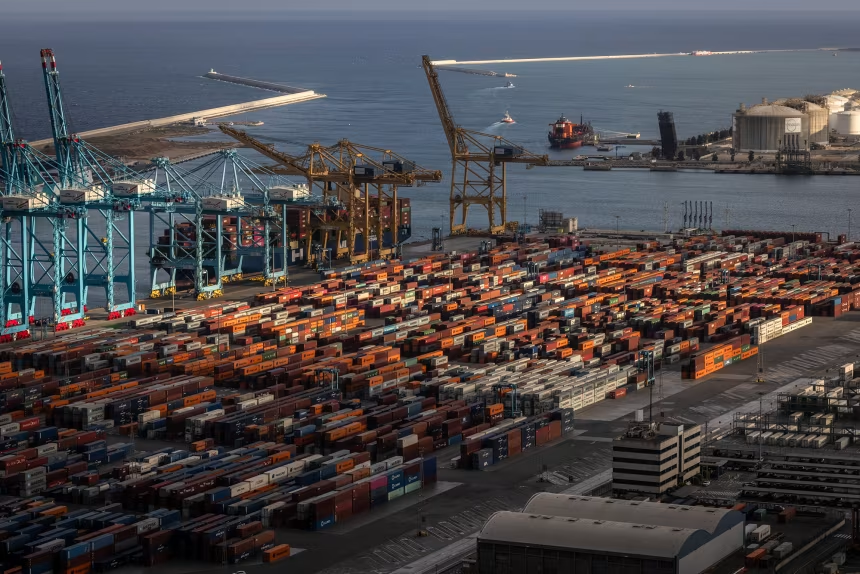
Table of Contents
A Major Setback in EU-US Relations
In a dramatic turn of events, the EU-US trade deal that was expected to streamline transatlantic trade and boost economic growth has been frozen indefinitely. This unexpected development has raised significant concerns among policymakers, economists, and business leaders across both continents. The deal, once hailed as a beacon of cooperation between two of the world’s largest economies, was seen as crucial for modernizing trade relations and addressing the complexities of global commerce in the 21st century. The indefinite delay now raises the question: What does this mean for the future of EU-US relations and the broader global economy?
The Background
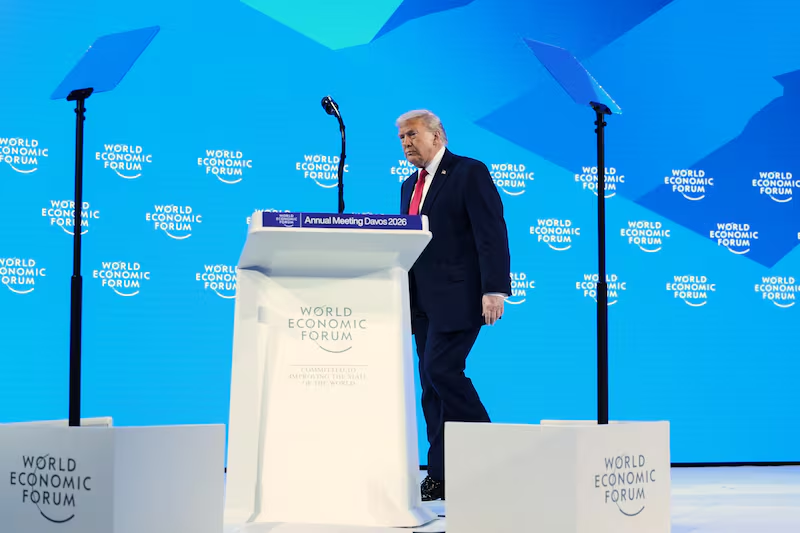
The EU-US trade deal, also known as the Transatlantic Trade and Investment Partnership (TTIP), was first proposed over a decade ago with the aim of reducing trade barriers, harmonizing regulations, and fostering deeper economic ties between the EU and the US. Supporters of the deal argued that it would result in billions of dollars in economic benefits, creating jobs and boosting trade by eliminating tariffs and standardizing regulations in key industries like agriculture, technology, and manufacturing. Additionally, it was expected to create a unified front in global trade negotiations, particularly with emerging markets and China.
However, the road to finalizing the agreement has been fraught with challenges, including disagreements over regulatory standards, concerns about job losses in certain sectors, and political shifts in both regions. Despite these hurdles, the TTIP negotiations had progressed significantly, but the recent decision to freeze talks has left many wondering what went wrong.
Key Context:
- Political Challenges: Rising nationalism and protectionism have altered the political landscape, with populist movements questioning the benefits of international trade deals.
- Regulatory Differences: Significant differences between EU and US regulations, especially in agriculture and environmental policies, have created friction in negotiations.
The Stalling of Negotiations: What Went Wrong?
The decision to freeze the EU-US trade deal was a direct result of multiple factors that surfaced in recent months. On one hand, the Biden administration in the United States expressed concerns about the potential economic and political costs of moving forward with the deal, particularly as global supply chains remain volatile due to the ongoing effects of the COVID-19 pandemic. On the other hand, European leaders have also voiced concerns about the deal’s potential impact on labor markets, environmental standards, and data privacy regulations.
Furthermore, the current geopolitical landscape has added another layer of complexity. As tensions rise between major powers like China and Russia, there are increasing questions about whether the EU and US should prioritize trade agreements or focus on broader geopolitical stability and security concerns. The decision to freeze the deal reflects a shift in priorities on both sides of the Atlantic.
Key Events:
- Late 2025: Negotiations hit an impasse over regulatory standards and labor concerns.
- January 2026: The European Commission announced that talks would be suspended indefinitely, citing unresolved issues and shifting priorities.
Implications for Global Trade

The indefinite delay of the EU-US trade deal has far-reaching implications for both regions and the broader global economy. Economists predict that the failure to finalize this agreement could hinder economic recovery efforts, particularly in the wake of the pandemic. Businesses that were counting on the agreement to ease trade barriers will now face continued uncertainty, and industries that were poised to benefit from increased access to each other’s markets will have to adapt to the status quo.
In addition to the economic impact, the political fallout from the stalled deal could weaken the global standing of both the EU and the US. As the world’s largest economies, both regions have historically played a leading role in shaping international trade policies. However, the failure to conclude this trade agreement could signal a retreat from multilateralism and open the door for rising economic powers like China to assert more influence in global trade.
Key Issues:
- Impact on Business: Companies that rely on cross-Atlantic trade could face delays, higher costs, and regulatory complexities.
- Geopolitical Consequences: The delay could shift the balance of power in international trade, with emerging economies like China gaining a competitive edge.
What’s Next? The Road to Resolution

As the EU and US grapple with the aftermath of this decision, the question remains: what comes next for transatlantic trade relations? While the trade deal may be frozen for now, both sides have expressed a commitment to continuing dialogue on certain aspects of the agreement, particularly in areas like digital trade, intellectual property protection, and security cooperation.
There is also the possibility that the EU-US trade deal could be revisited in the future, albeit with significant modifications to address the current political and economic realities. The two sides may decide to break the agreement into smaller, more manageable parts that can be negotiated separately, focusing on areas where consensus is more achievable.
Possible Scenarios:
- Revised Deal: Smaller, more targeted agreements could replace the comprehensive TTIP framework.
- Geopolitical Shift: As the EU and US focus more on security and defense, trade agreements may take a backseat in favor of strengthening alliances.
Global Reactions
The freeze in EU-US trade talks has prompted a range of reactions from key stakeholders in both regions and beyond. In Europe, leaders from various countries have voiced their disappointment, stressing the importance of continued cooperation with the US in the face of rising global economic challenges. Meanwhile, US businesses have expressed frustration over the delay, particularly those in sectors like tech, agriculture, and manufacturing, which were expected to benefit from reduced trade barriers.
Internationally, the delay has sparked interest in how other global players, particularly China, will respond. As the US and EU retreat from comprehensive trade agreements, China has increasingly sought to position itself as the leader in global trade, establishing new trade pacts with emerging economies.
Key Reactions:
- European Leaders: Calls for continued dialogue and a focus on smaller trade agreements.
- US Business Community: Concerns over missed opportunities for economic growth and market access.
- Global Diplomacy: China’s role in global trade becomes more prominent as the EU and US re-evaluate their positions.
Conclusion
The indefinite freeze of the EU-US trade deal marks a pivotal moment in global trade relations. While it’s unclear when or if the deal will ever come to fruition, the economic and political consequences of the delay will be felt for years to come. As the world adjusts to a new trade reality, the EU and US must reassess their priorities and strategies, focusing on smaller, more achievable goals while navigating an increasingly complex global economic environment. Whether this marks the end of the EU-US trade deal or the beginning of a new chapter remains to be seen, but one thing is certain: the landscape of global trade is changing, and the two largest economies must adapt to stay competitive.