
Drawing faces becomes much more exciting when you stop following the usual rules and start mixing unexpected features. Imagine pairing sharp, dramatic eyes with soft cheeks, an oversized nose with delicate lips, or bold eyebrows with a tiny chin. These creative combinations can help you design characters that feel more expressive, memorable, and full of personality. Whether you are practicing portraits or building an original character, these facial feature ideas will inspire you to experiment and discover a style that feels uniquely yours.
Table of Contents
- 1. Build Facial Features Step by Step
- 2. Exploring Nose Shapes with Simple Lines
- 3. Practising Expressive Lip Shapes
- 4. Understanding Lips from Every Angle
- 5. Eyes and Lips Full of Personality
- 6. Constructing Noses with Basic Forms
- 7. Drawing Eyes in Dynamic Perspective
- 8. Realistic Features Through Confident Shading
- 9. A Dramatic Three-Quarter Face Study
- 10. Adding Colour to a Delicate Portrait
- 11. Facial Features Through Light and Shadow
- 12. Creating Stylish and Expressive Eyes
- 13. Practising Smiles, Noses, and Full Lips
- 14. Building a Face with Geometric Guidelines
- 15. A Simple Guide to Balanced Face Proportions
- 16. Exploring Eye Shapes from Different Angles
- 17. Sketchbook Studies of Eyes and Noses
- 18. A Delicate Portrait Drawn in Blue Ink
- 19. Capturing Emotion Through the Eyes
- 20. Mixing Facial Features the Picasso Way
- 21. Constructing a Face with Confident Lines
- 22. A Sketchbook Full of Expressive Eyes
- 23. Watching a Portrait Come to Life
- 24. Facial Features from Multiple Viewpoints
- 25. Bold Eye Designs with Graphic Personality
1. Build Facial Features Step by Step
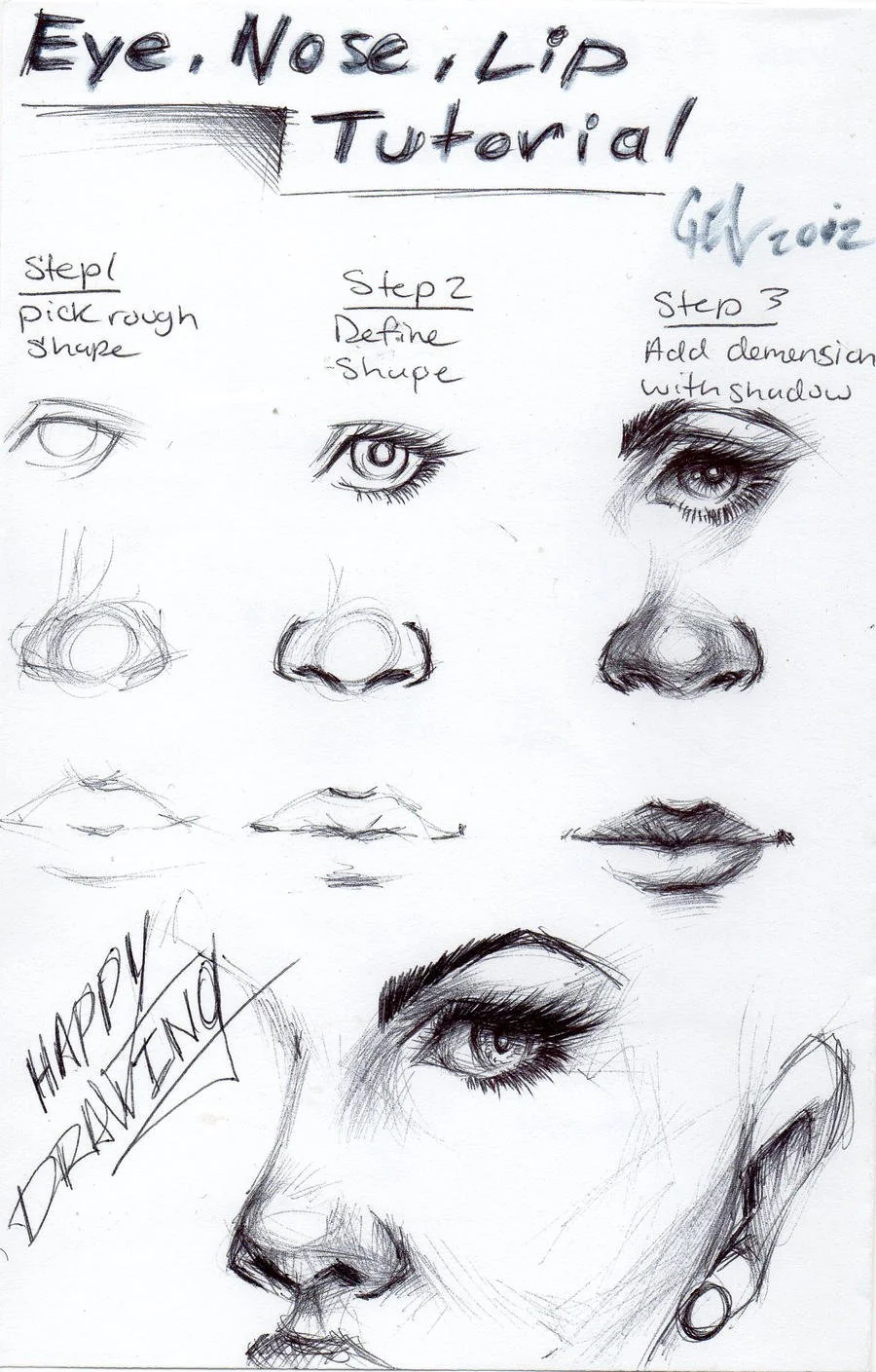
This practical sketch guide shows how eyes, noses, and lips develop from loose outlines into dimensional features. The gradual progression makes shading feel less intimidating while highlighting how small adjustments can transform a simple drawing. It is a helpful reminder that polished portraits begin with basic shapes. Grab your pencil and practise each feature one step at a time.
2. Exploring Nose Shapes with Simple Lines
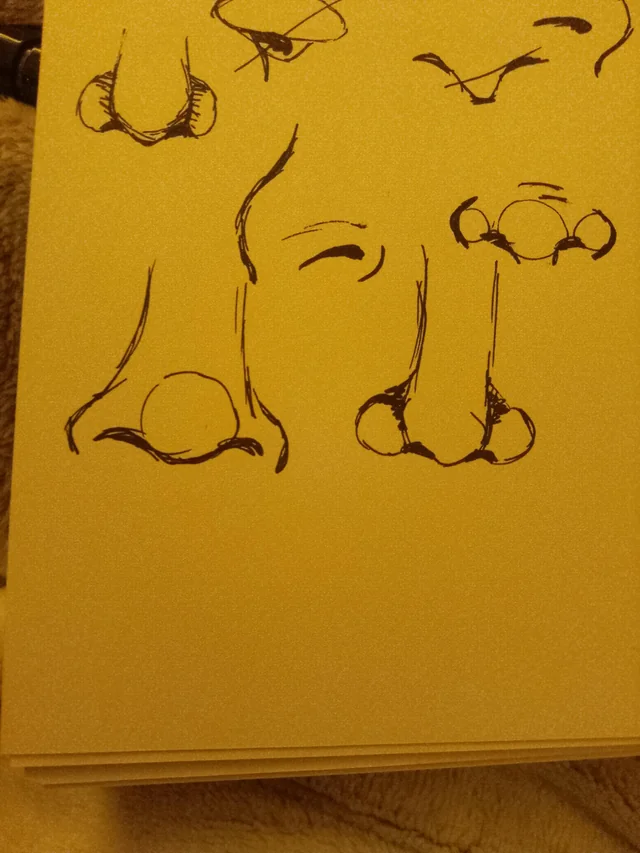
A few carefully placed curves can create surprisingly different nose shapes, from softly rounded tips to sharper, more structured profiles. This study keeps everything loose and approachable, making it perfect for artists who want to understand form without overcomplicating the process. Try copying these examples, then experiment with your own variations to give every character a distinctive look.
3. Practising Expressive Lip Shapes
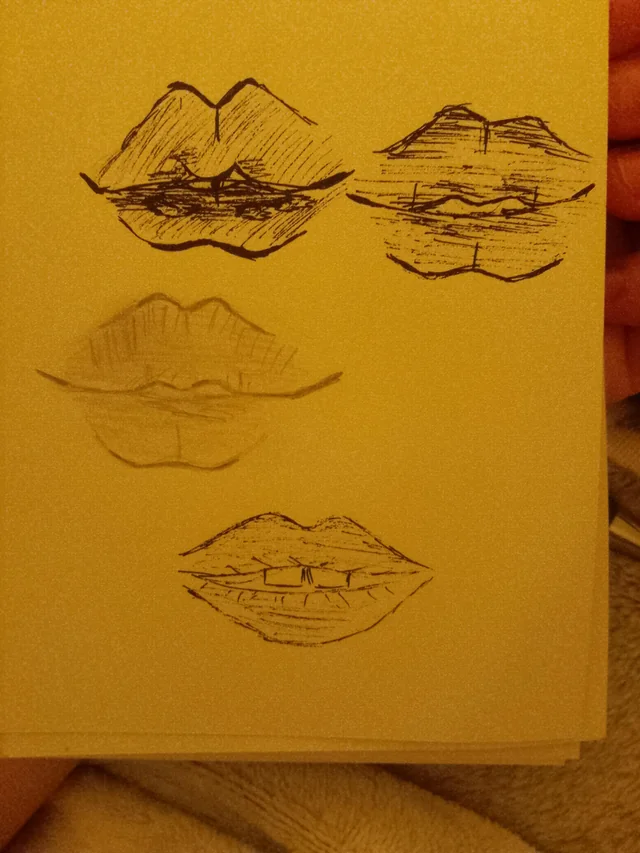
These quick lip studies explore fullness, structure, shading, and subtle differences in expression. Each sketch shows how the cupid’s bow, corners, and centre line can completely change the personality of a mouth. The unfinished quality also makes the page feel wonderfully experimental. Use these examples as warm-up exercises, then create a collection of lip shapes in your own style.
4. Understanding Lips from Every Angle
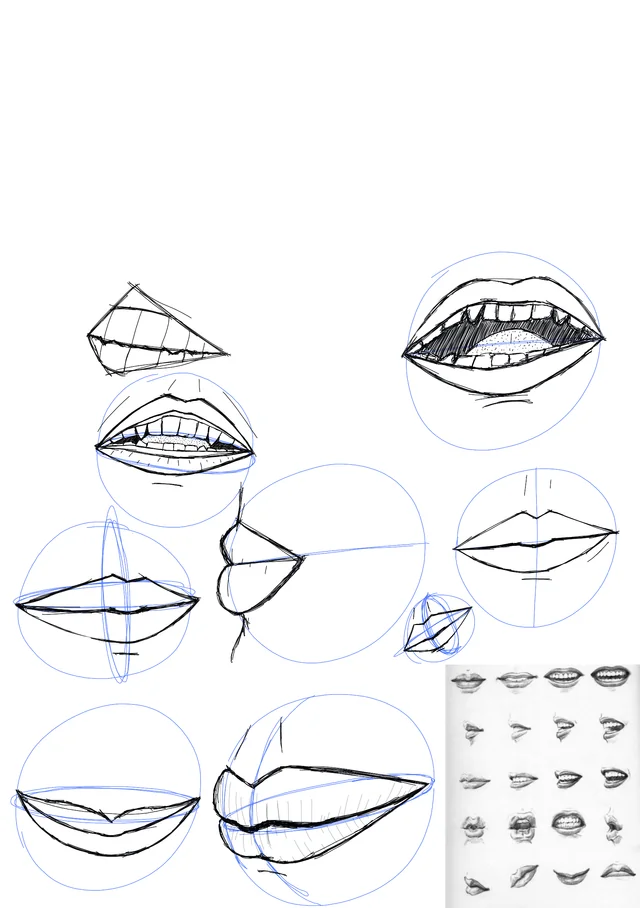
Drawing lips becomes much easier when you begin with circles, centre lines, and simple construction shapes. This study explores front, side, and three-quarter views while revealing the volume beneath each outline. It is a smart way to avoid flat-looking mouths and improve facial perspective. Pick one angle, follow the guidelines, and repeat it until the form feels natural.
5. Eyes and Lips Full of Personality
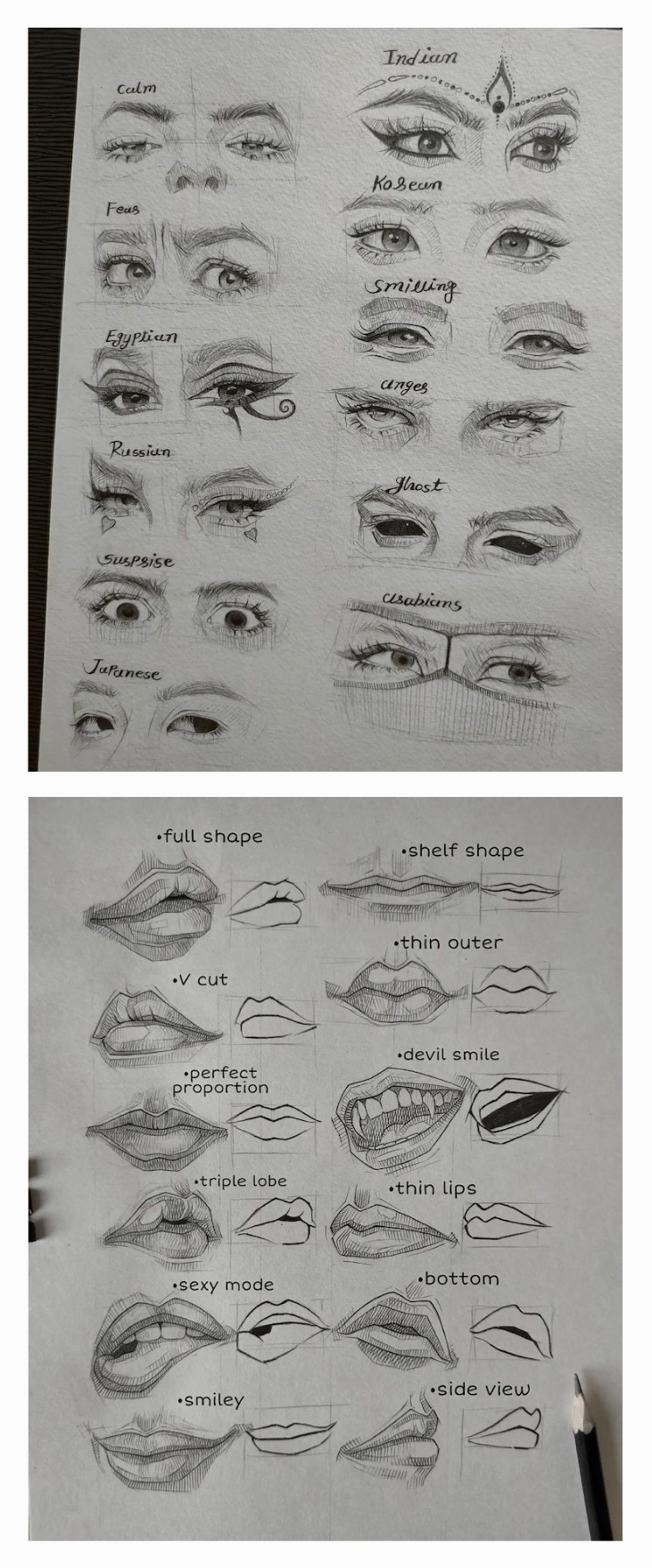
This detailed reference page turns facial features into a library of emotions, cultural inspirations, dramatic styles, and imaginative expressions. From calm eyes to playful smiles and fantasy-inspired mouths, every example offers a fresh character idea. It proves that small changes can tell entirely different stories. Choose your favourite combination and use it to design an unforgettable original character.
6. Constructing Noses with Basic Forms
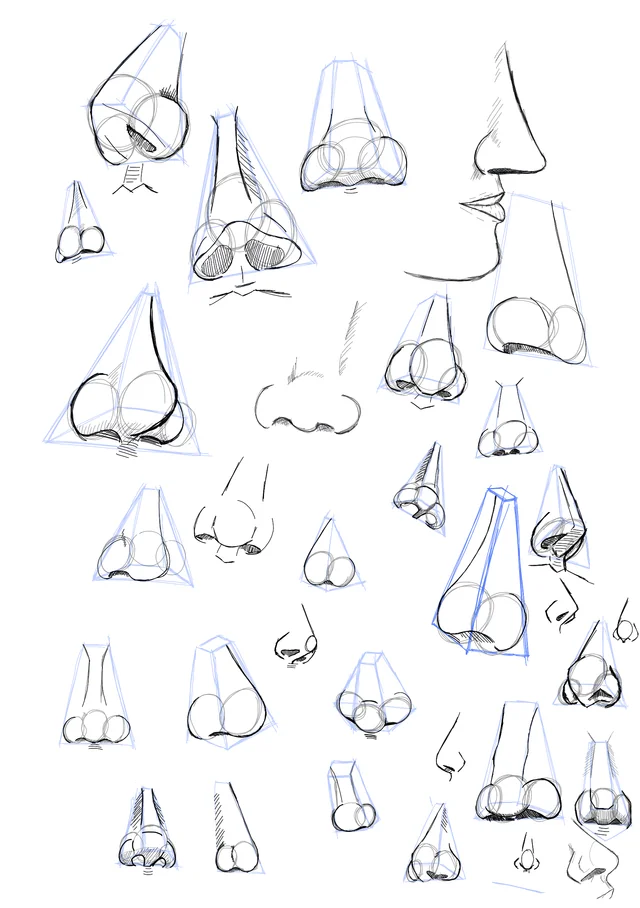
Triangles, circles, and directional lines provide the foundation for this wide-ranging nose study. By breaking the feature into manageable forms, the artist explores front views, side views, upward angles, and dramatic perspectives. This method is especially useful for keeping proportions consistent. Start with the blue construction shapes, add the final contours, and practise several viewpoints on one page.
7. Drawing Eyes in Dynamic Perspective
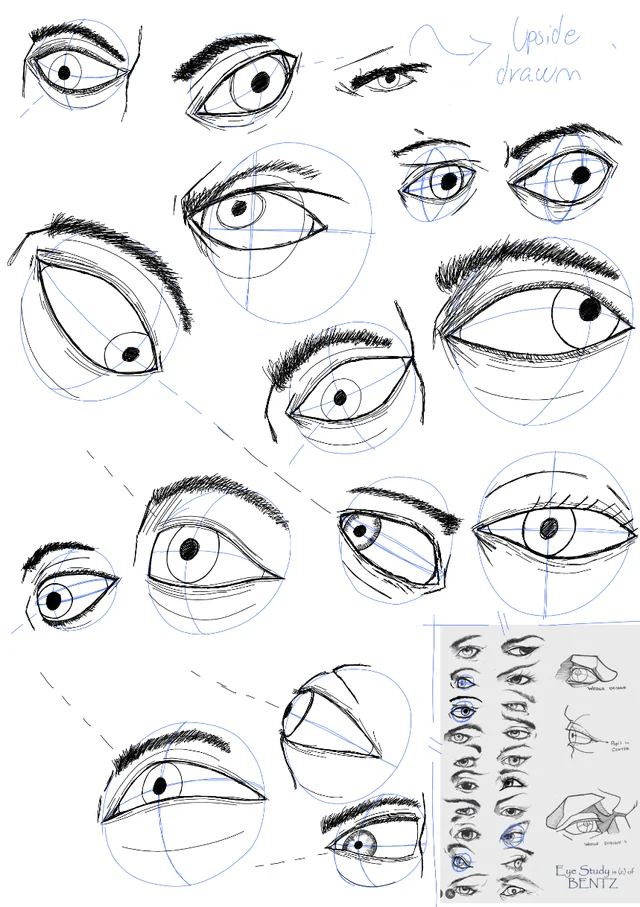
This energetic eye study demonstrates how circular guidelines and directional axes help maintain structure across different angles. The examples move from straightforward views to tilted, upward, and sideways perspectives, making the page especially useful for expressive character art. Notice how the eyelids wrap around the eyeball rather than sitting flat. Try these constructions and bring more depth to your portraits.
8. Realistic Features Through Confident Shading
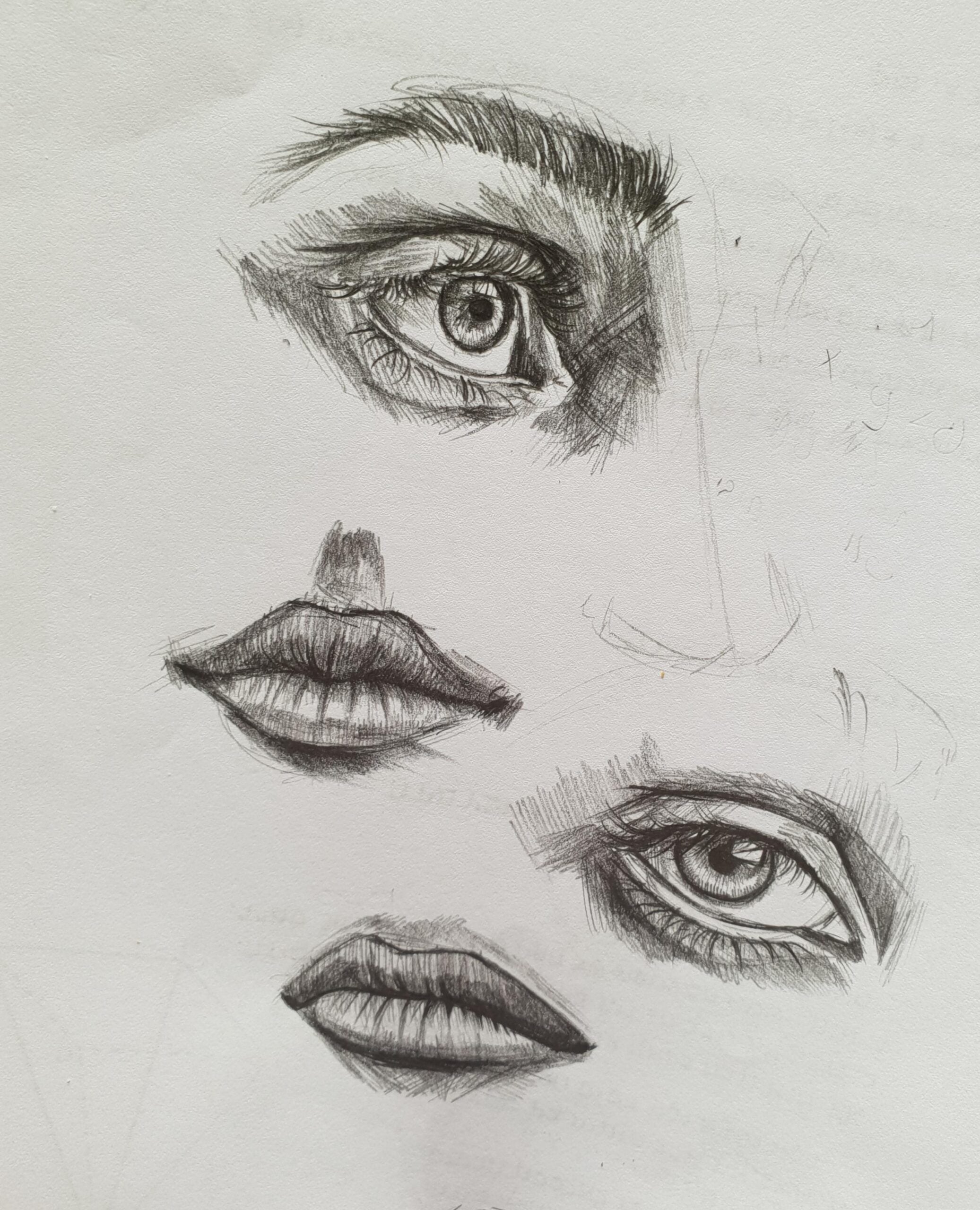
Deep shadows, delicate hatching, and carefully observed highlights give these eye and lip sketches a wonderfully realistic presence. The unfinished nose outline adds an interesting contrast, showing that a study can still feel compelling before every feature is complete. Focus on one small area at a time, build your values slowly, and let this page inspire your next realism practice session.
9. A Dramatic Three-Quarter Face Study
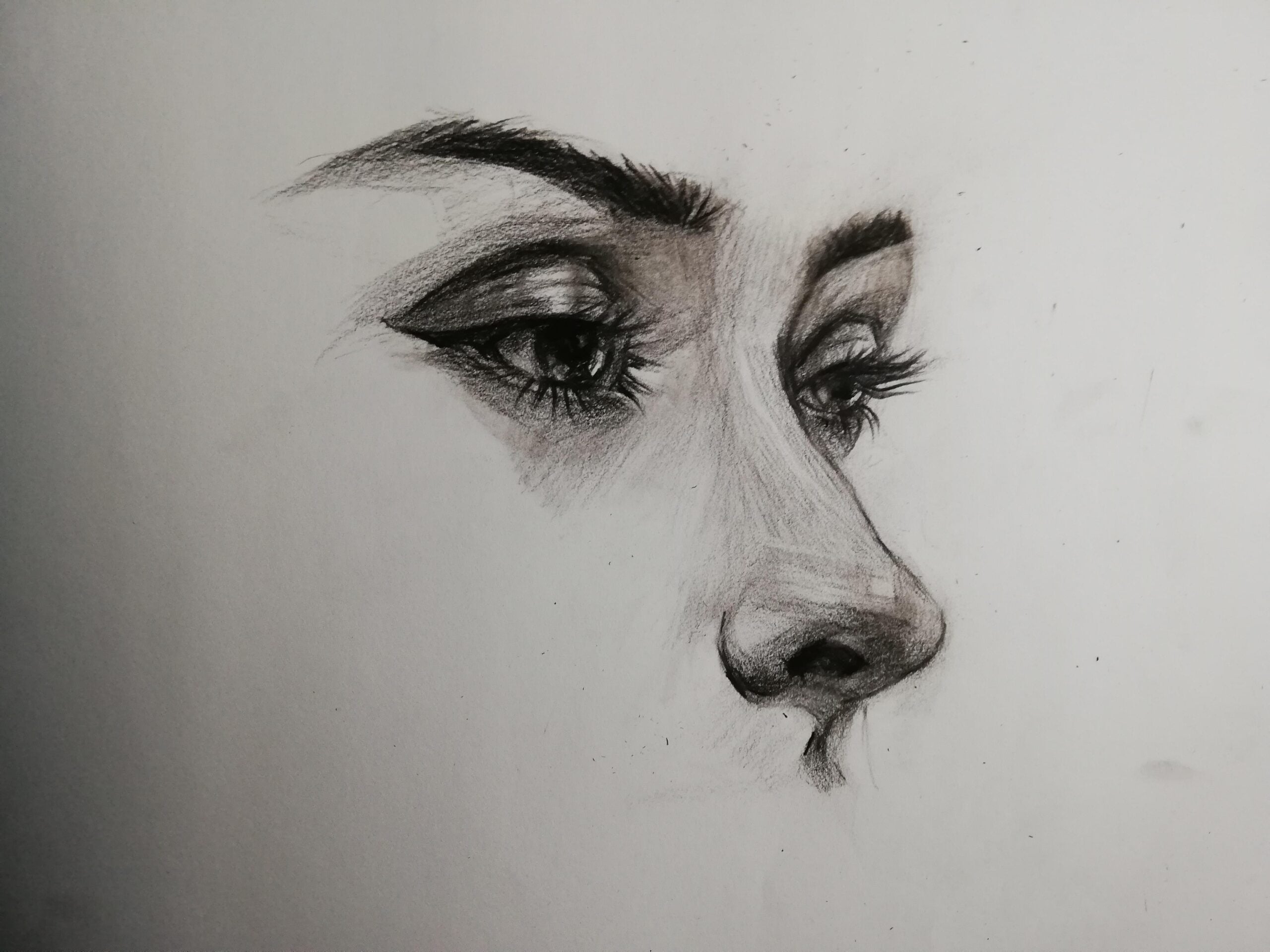
This striking graphite sketch captures a face from a challenging three-quarter angle, combining bold eye makeup with subtle modelling around the nose. Soft transitions create facial volume, while darker lashes and brows pull attention toward the gaze. It is a strong example of using contrast selectively. Practise this angle yourself and experiment with balancing sharp details against gentle shading.
10. Adding Colour to a Delicate Portrait
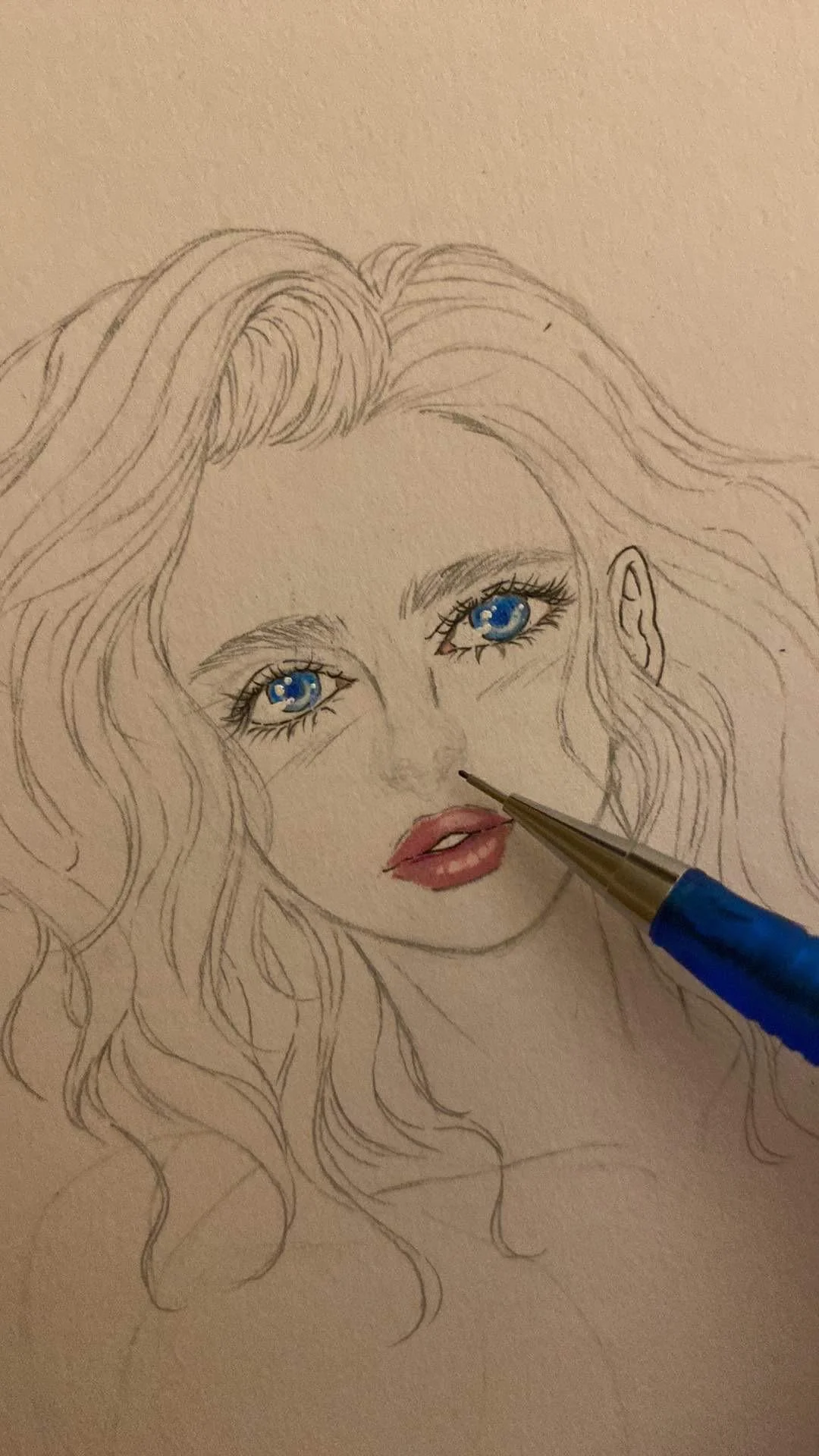
Bright blue eyes and softly painted pink lips bring a playful burst of colour to this graceful pencil portrait. The flowing hair remains lightly outlined, allowing the facial features to become the centre of attention. A visible pencil tip adds a charming work-in-progress feeling. Try adding colour to only two or three features and watch your sketch instantly come alive.
11. Facial Features Through Light and Shadow
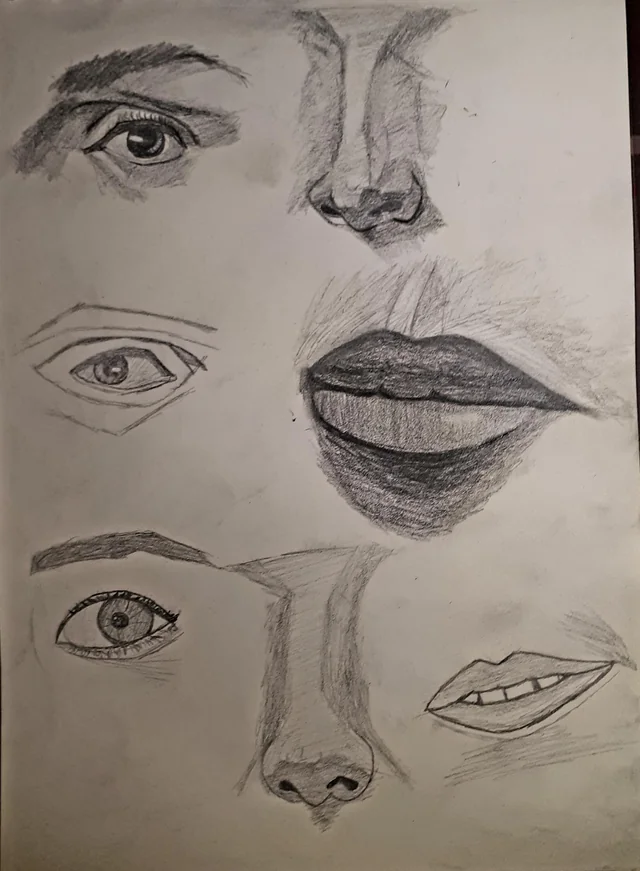
This sketch page explores eyes, noses, and lips using different levels of graphite shading. Some features are carefully rendered, while others remain lightly outlined, creating an interesting contrast between structure and detail. It is a great reminder that every portrait begins with focused practice. Choose one feature, study its shadows, and recreate it in your own sketchbook today.
12. Creating Stylish and Expressive Eyes
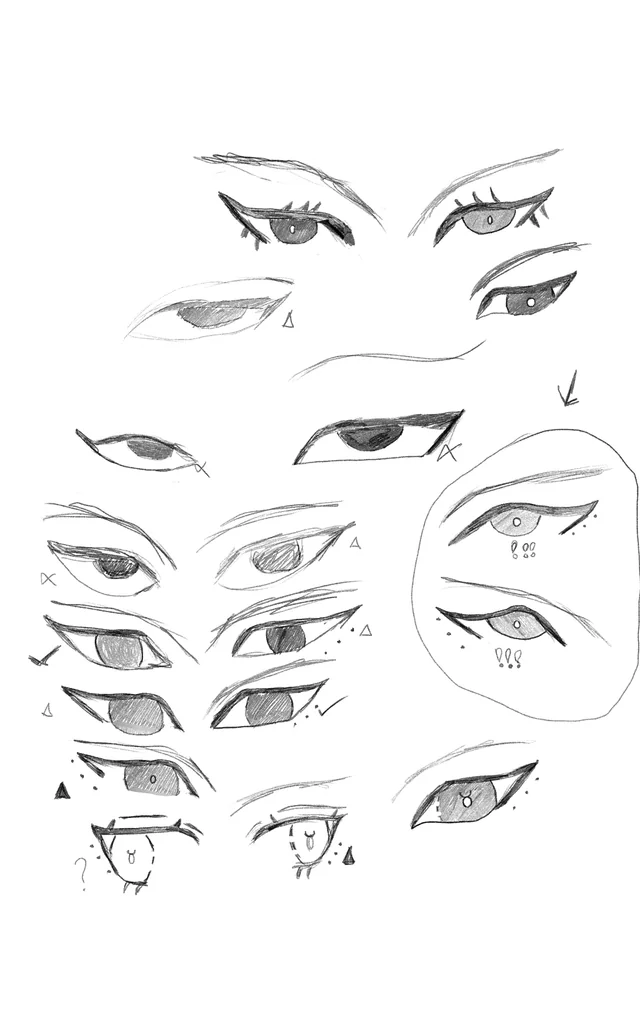
From sharp eyeliner to softer, downward-looking shapes, this collection shows how eye design can instantly change a character’s mood. Small details such as angled corners, bold lashes, and decorative marks add plenty of personality. The loose arrangement makes the page feel playful and experimental. Pick your favourite eye style and use it to inspire a brand-new character.
13. Practising Smiles, Noses, and Full Lips
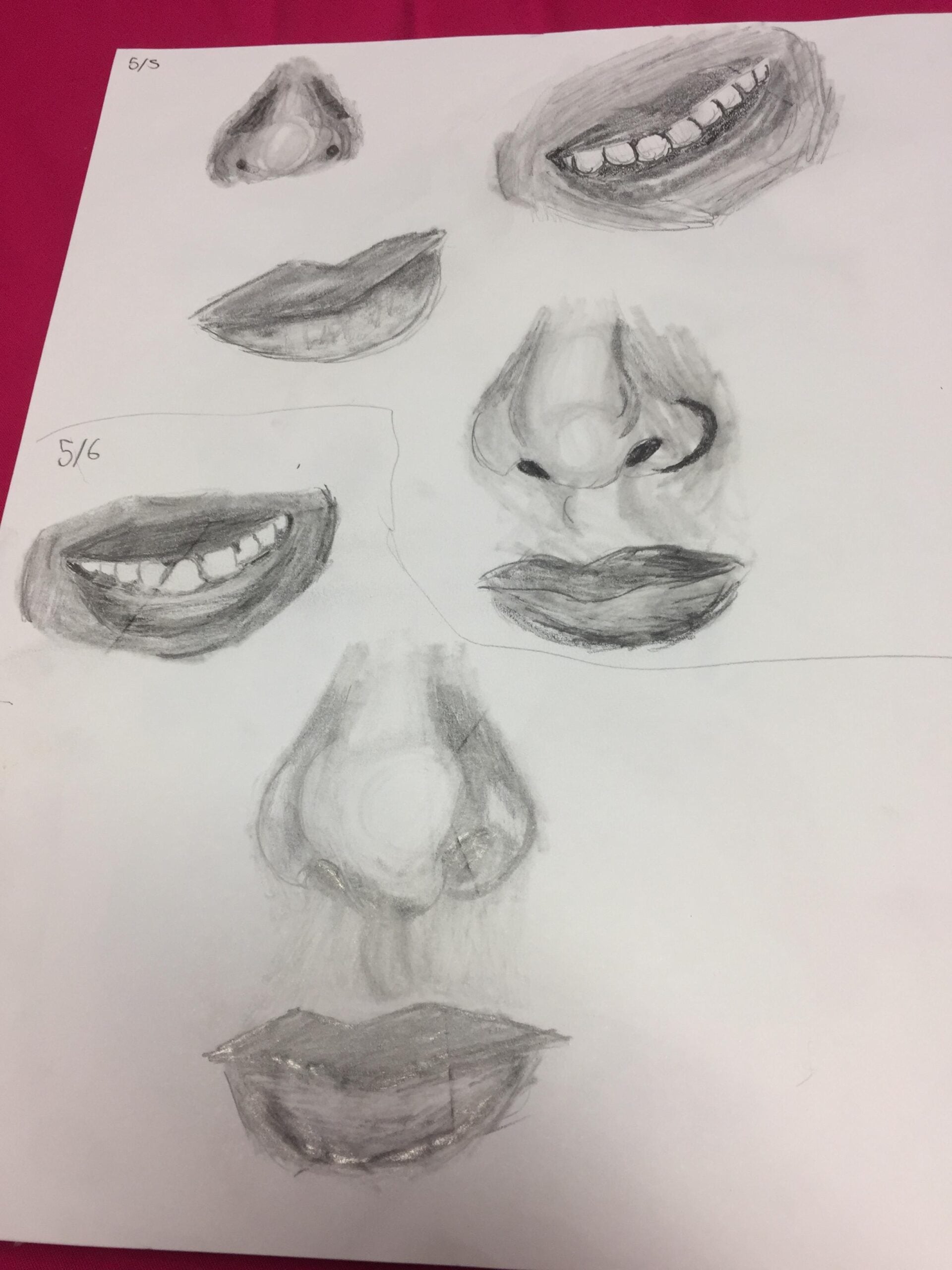
This facial feature study focuses on the small details that bring expressions to life. Bright smiles, rounded noses, and softly shaded lips are explored through loose graphite strokes and layered values. Each attempt captures a slightly different shape and emotion. Try drawing the same feature several times, adjusting the lighting and expression until you discover a version that feels uniquely yours.
14. Building a Face with Geometric Guidelines
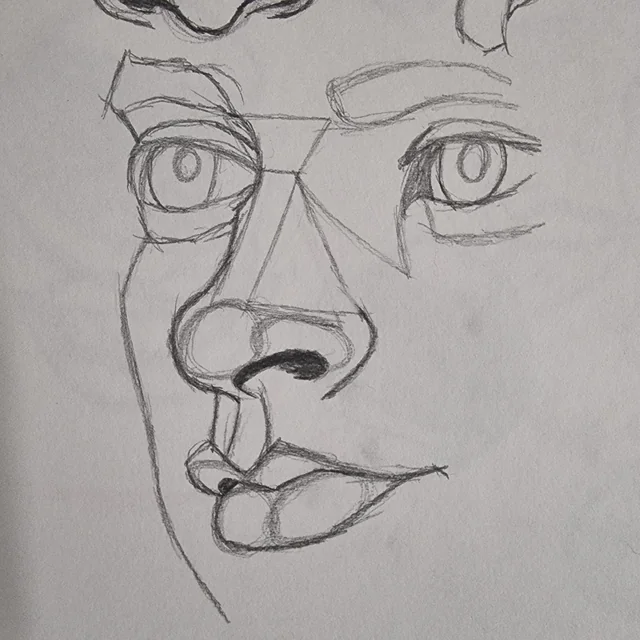
Simple circles, angled lines, and overlapping shapes form the foundation of this stylised portrait. The visible construction marks reveal how the eyes, nose, and lips fit together before shading is added. It is an excellent exercise for understanding facial structure without chasing perfection. Start with basic geometry, keep your lines loose, and see what kind of face begins to emerge.
15. A Simple Guide to Balanced Face Proportions
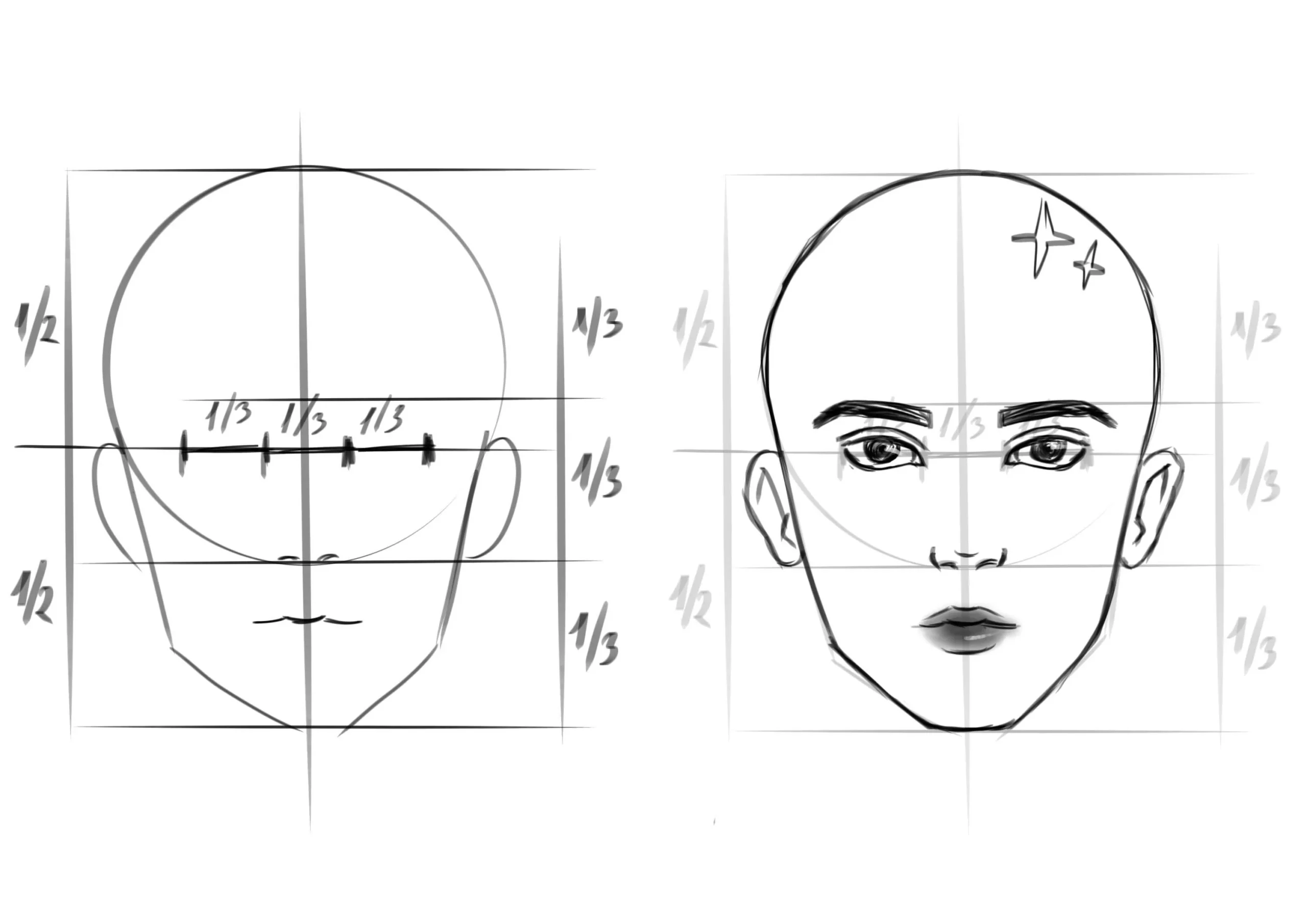
This clear proportion study demonstrates how dividing the head into halves and thirds can help position the eyes, nose, mouth, and ears. The finished example shows how basic measurements create a balanced and appealing face. It is especially helpful for artists who struggle with placement. Follow the guidelines once, then redraw the face without them to test your progress.
16. Exploring Eye Shapes from Different Angles
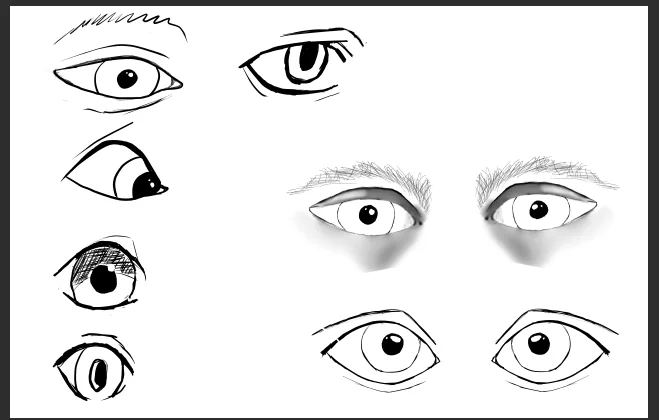
This page presents several eye styles ranging from bold cartoon designs to softer, more dimensional sketches. Changes in pupil size, eyelid shape, and viewing direction make each example feel completely different. It is a useful reference for creating expressive faces without adding complicated details. Copy a few designs, then combine their best features into your own signature eye style.
17. Sketchbook Studies of Eyes and Noses
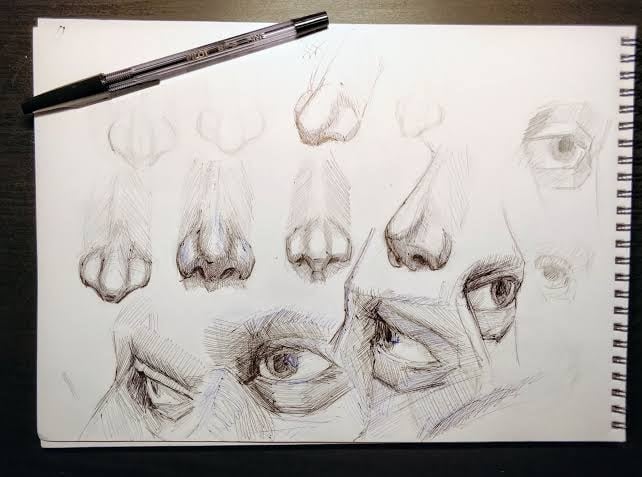
Filled with carefully shaded noses and intense eye studies, this sketchbook page captures the value of repetition. Cross-hatching creates depth, while the different angles help build a stronger understanding of facial form. The unfinished studies also make the creative process feel honest and approachable. Fill one page with repeated features and watch your confidence improve with every drawing.
18. A Delicate Portrait Drawn in Blue Ink
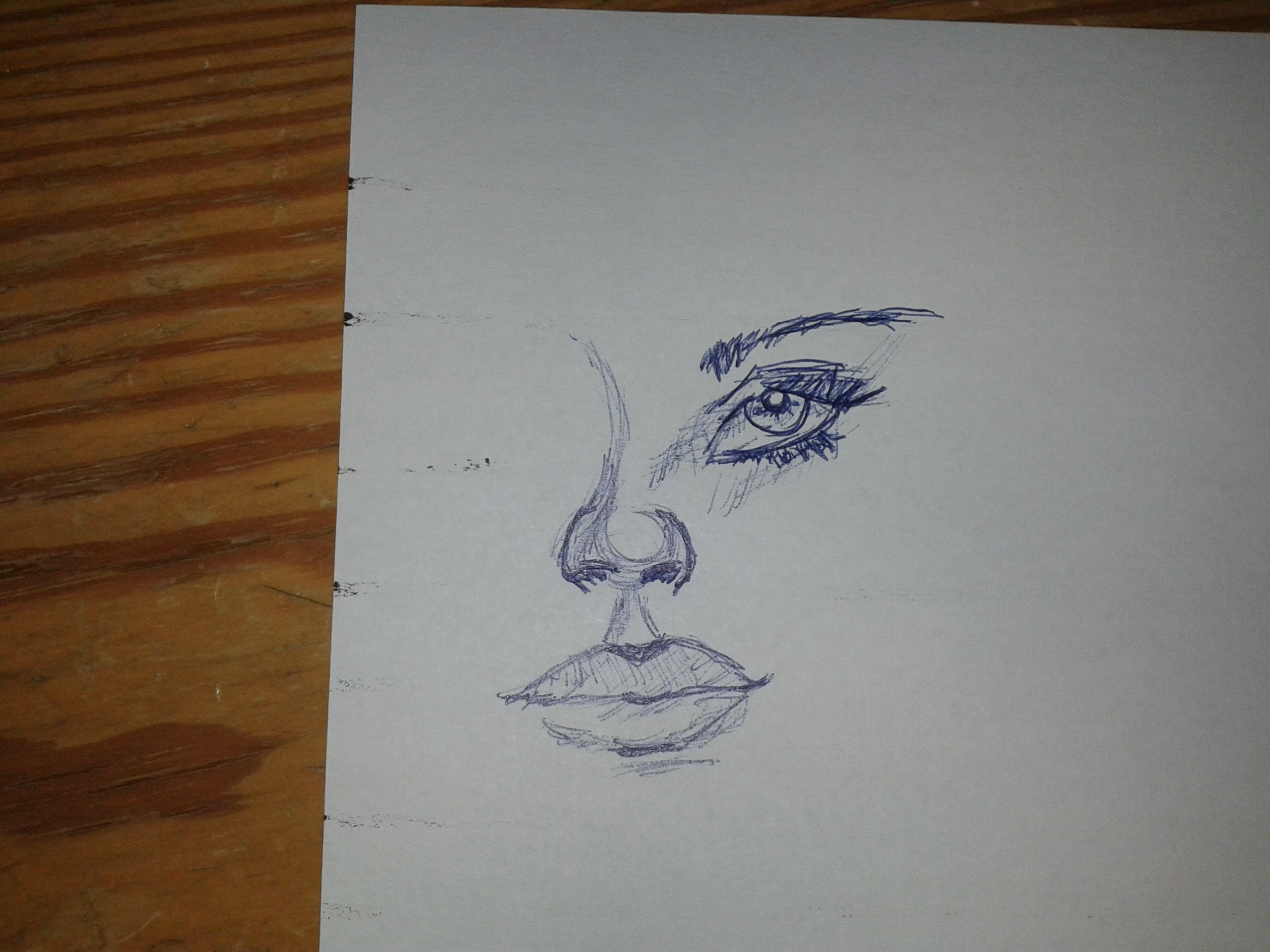
This partial face sketch uses blue pen lines to create a graceful eye, softly shaped nose, and expressive lips. Leaving much of the face unfinished gives the drawing a mysterious, artistic quality while keeping attention on the strongest features. It proves that a portrait does not need to be complete to feel captivating. Try your own minimalist portrait using just one pen.
19. Capturing Emotion Through the Eyes
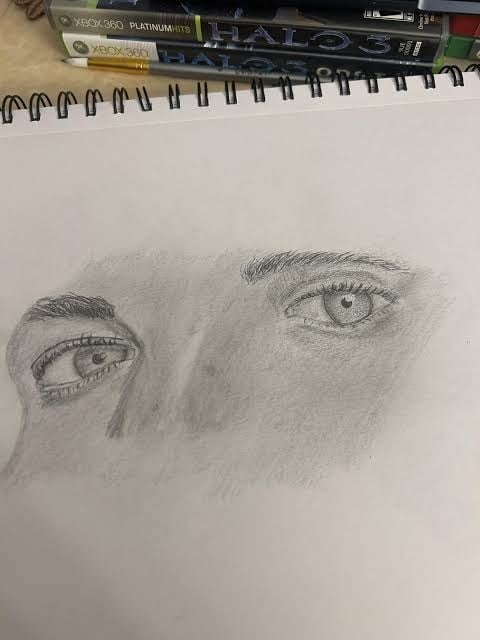
Soft graphite shading surrounds these carefully observed eyes, creating a quiet and thoughtful expression. The difference between the two eye shapes adds natural character, while the subtle shadows begin to suggest the rest of the face. This study shows how powerful a gaze can be on its own. Focus on the eyes in your next portrait and let them tell the story.
20. Mixing Facial Features the Picasso Way
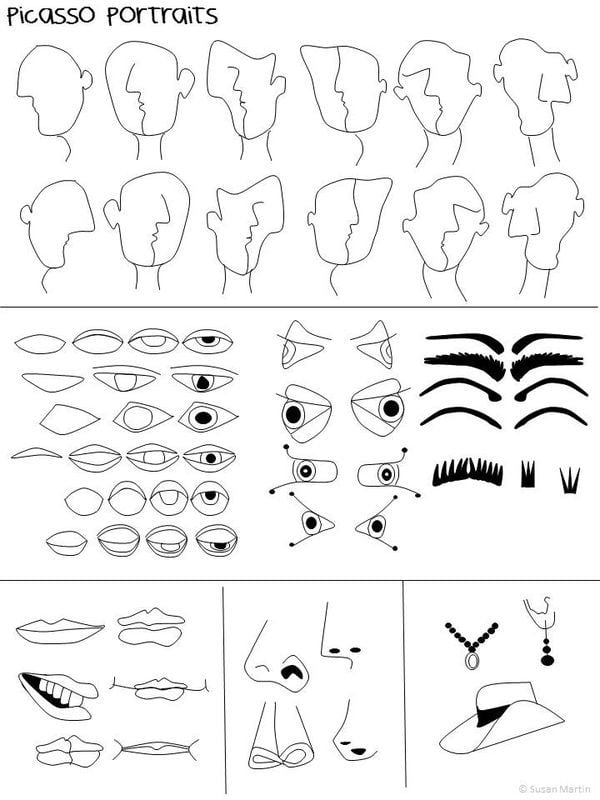
This playful reference sheet encourages artists to mix unusual face shapes, eyes, brows, noses, lips, and accessories. Inspired by abstract portraiture, it removes the pressure to make everything realistic or perfectly symmetrical. The endless combinations make it ideal for creative warm-ups. Close your eyes, choose one feature from each section, and design a wonderfully unexpected portrait.
21. Constructing a Face with Confident Lines
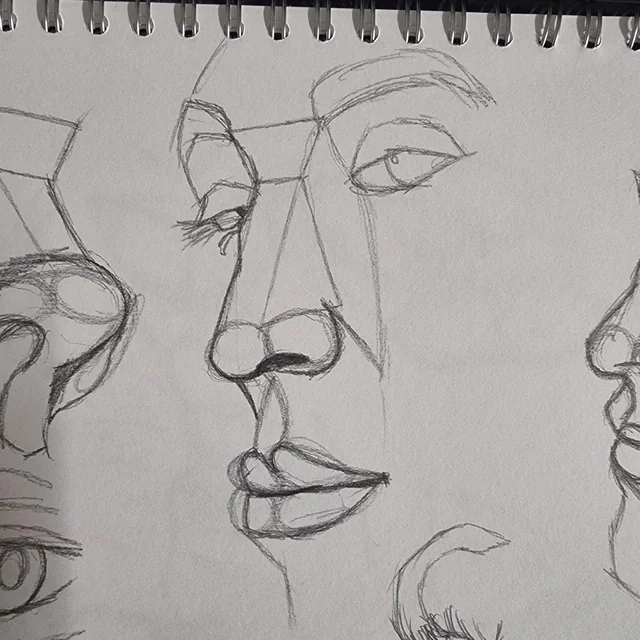
This portrait study uses visible construction lines to map the eyes, nose, lips, and overall facial structure. The unfinished edges give it a raw sketchbook charm, while the stronger contours show where the artist chose to focus. It is a useful exercise for improving proportion and placement. Start loosely, refine gradually, and let the face develop naturally on the page.
22. A Sketchbook Full of Expressive Eyes
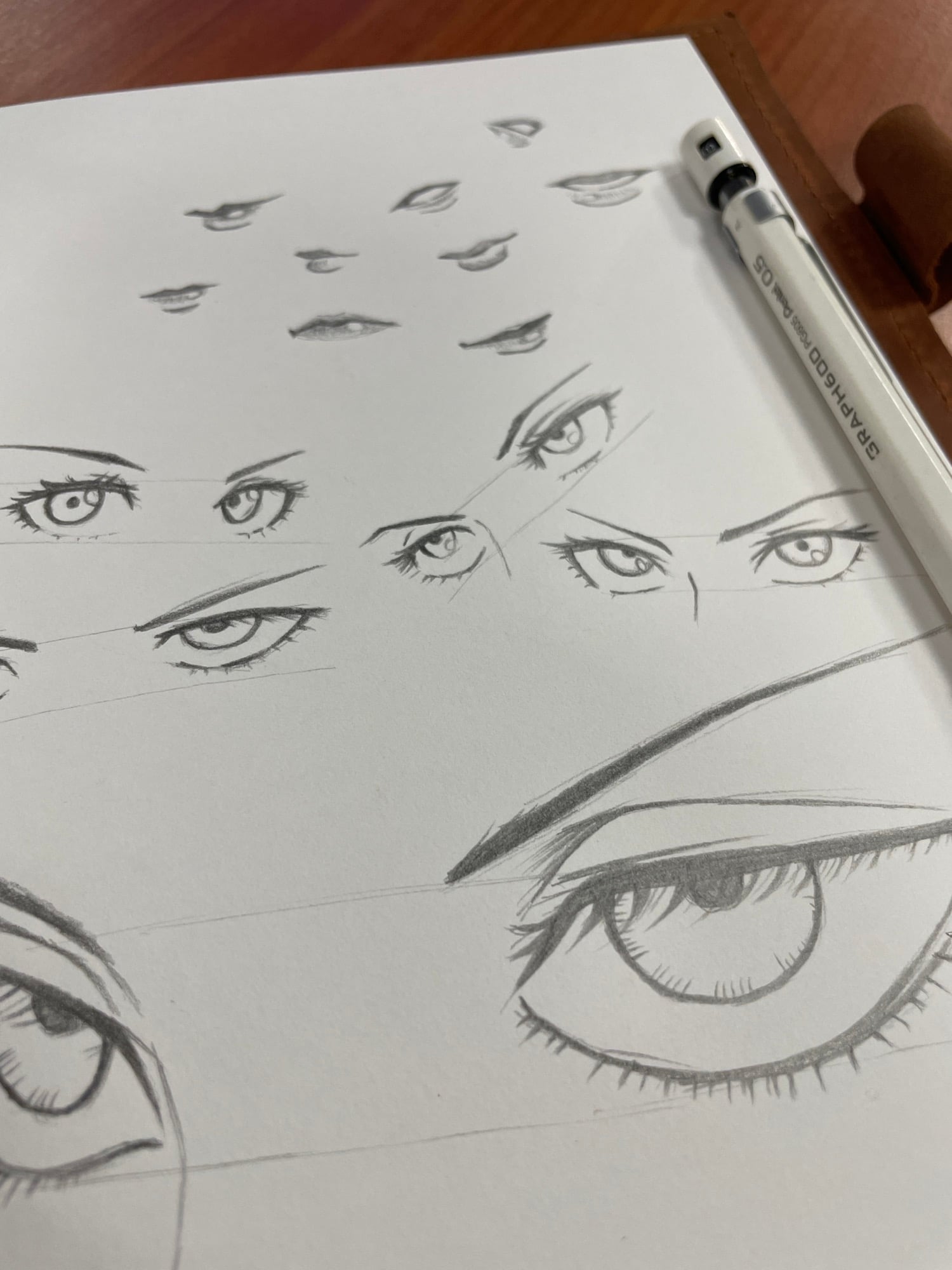
This lively practice page explores eyes in different sizes, angles, and moods, from soft and curious to sharp and intense. The smaller lip studies at the top add variety and show how repeated practice builds confidence. Pick three eye designs that catch your attention, redraw them with your own details, and create a character around your favourite expression.
23. Watching a Portrait Come to Life
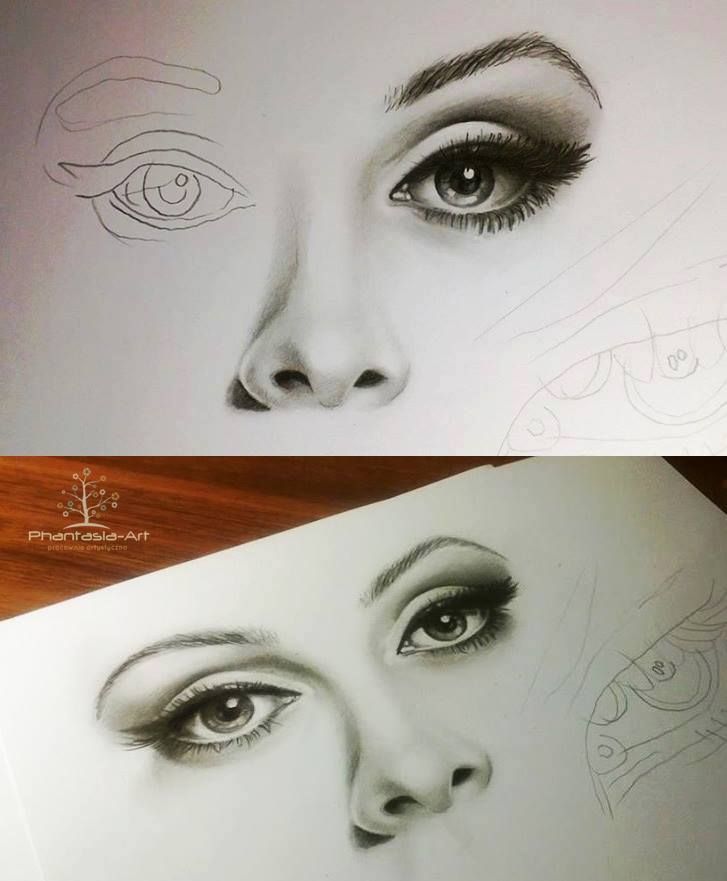
This before-and-after drawing shows how careful shading can transform simple outlines into realistic facial features. The completed eye and nose feel polished and dimensional, while the remaining guidelines reveal the process behind the result. It is a motivating reminder that detailed portraits grow slowly. Work on one feature at a time and enjoy watching your drawing gradually become more lifelike.
24. Facial Features from Multiple Viewpoints
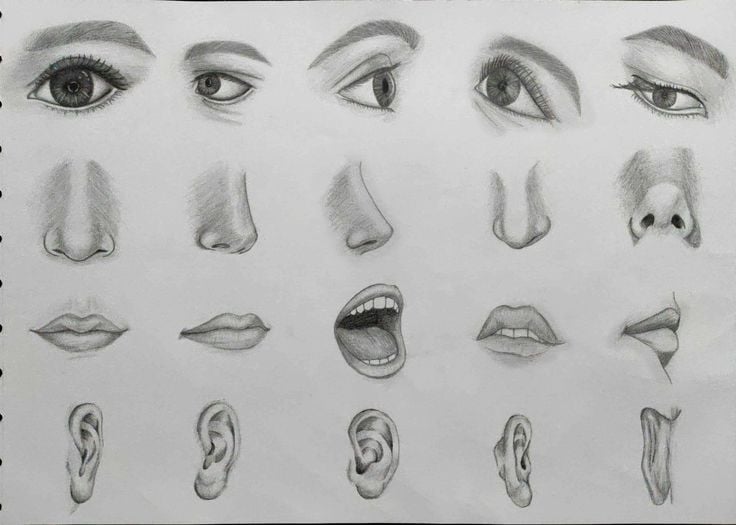
This organised reference page studies eyes, noses, lips, and ears from several angles. Each row highlights how a feature changes when viewed from the front, side, or three-quarter position, making it especially useful for portrait practice. Instead of drawing the same face repeatedly, choose one feature and sketch it from five viewpoints to strengthen your understanding of form.
25. Bold Eye Designs with Graphic Personality
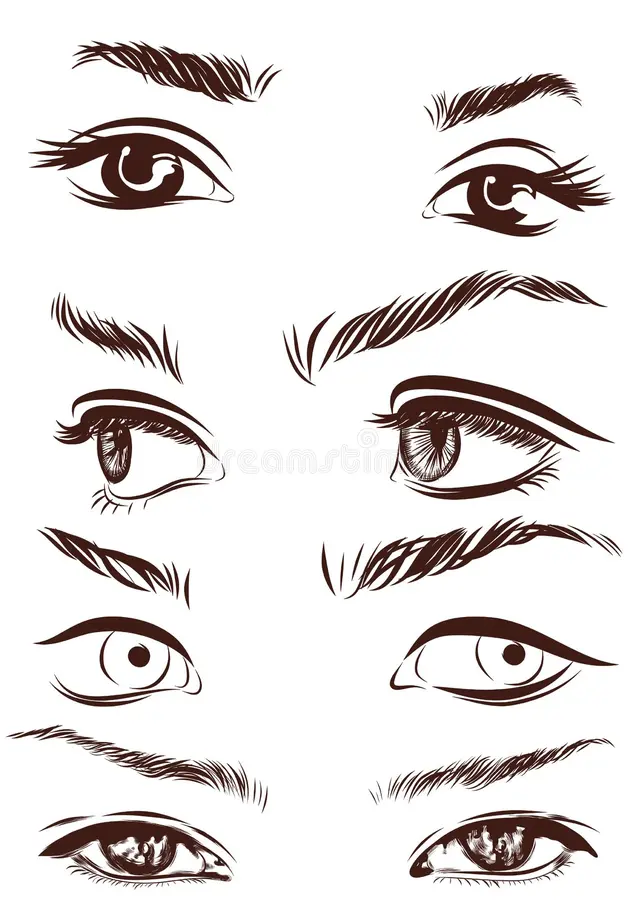
These high-contrast eye illustrations rely on sweeping lashes, strong brows, and simplified shapes to create memorable expressions. Each pair has its own personality, ranging from elegant and dreamy to alert and dramatic. The clean graphic style makes them perfect for character design inspiration. Choose one pair, adjust the eyebrow angle, and see how quickly the entire mood changes.