
Table of Contents
- The White House Briefing That Changed the Tone
- Jeff Sessions and the Romans 13 Defense
- What the Zero Tolerance Policy Actually Did
- Why the Administration Framed It as Law and Order
- The Human Cost Behind the Policy
- Religion, Morality, and Public Backlash
- The Expanding Network of Child Shelters
- The Walmart Shelter and the Optics of Scale
- Capitol Hill, Political Pressure, and the Search for an Exit
- What the Controversy Really Exposed
The White House Briefing That Changed the Tone
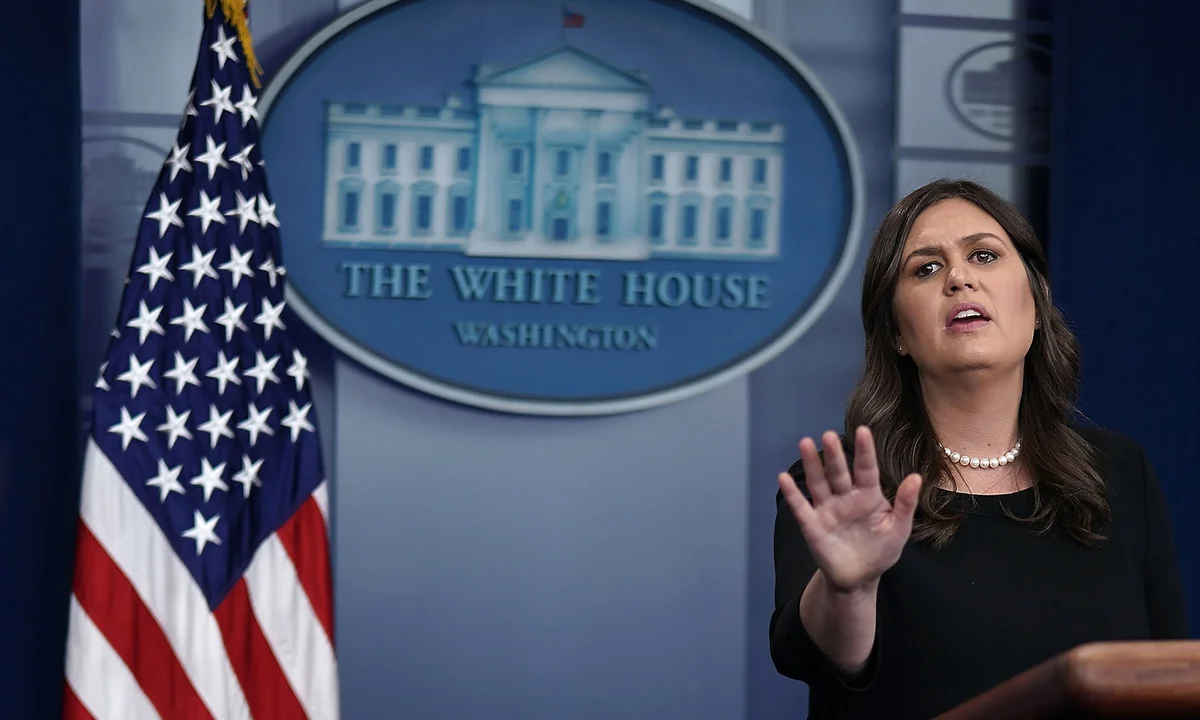
The controversy sharpened during a White House briefing when Sanders was asked directly about Sessions’ use of the Bible to justify family separation. The question was pointed and morally loaded: where in the Bible does it say it is right to take children away from their mothers? Sanders, while saying she was not specifically familiar with the attorney general’s exact reference, answered that it was “very biblical to enforce the law” and insisted that this principle appears throughout scripture.
That answer immediately pushed the conversation beyond immigration mechanics. It placed the administration’s argument within a religious frame, whether intentionally or not. In a country where faith remains deeply interwoven with public life and political identity, that matters. Invoking the Bible is never neutral. It suggests not only legality, but righteousness. It implies that obedience to government authority may itself be morally required.
For critics, that was exactly the problem. The administration was not merely saying it had the power to enforce the border. It was presenting harsh enforcement as morally defensible, even spiritually grounded, at the exact moment horrifying stories of children being taken from their parents were dominating headlines.
Jeff Sessions and the Romans 13 Defense
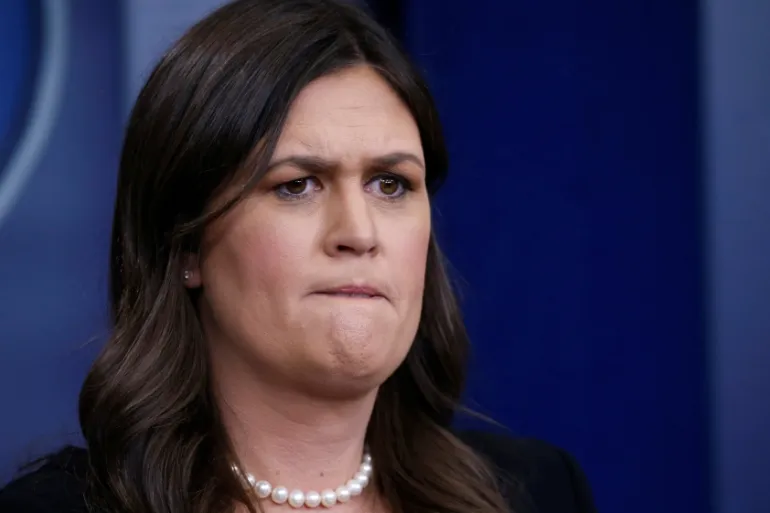
The White House response did not emerge in a vacuum. It followed remarks from Attorney General Jeff Sessions, who cited Romans 13, a biblical passage often invoked in debates about authority and obedience. Sessions argued that people should obey the laws of the government because God has ordained government for the purpose of order.
That reference was immediately recognized as one of the most controversial possible scriptural choices. Romans 13 has a long and troubled history in political argument. It has been used at various times to defend state power, suppress dissent, and justify social order even in morally compromised systems. For many theologians and historians, it is a passage that cannot be quoted casually, especially not in defense of policies widely condemned as cruel.
Sessions’ argument was straightforward on its face. Governments have laws. Those laws must be enforced. Order protects the weak. But critics argued that such reasoning empties morality from political action. If any law can be defended simply because it exists, then the moral content of law no longer matters. That is why the backlash was so fierce. The administration was being accused not just of defending a policy, but of using religion to sanctify state force.
What the Zero Tolerance Policy Actually Did
At the heart of the controversy was the administration’s zero tolerance policy, announced in 2018 as part of a more aggressive immigration crackdown. Under this approach, adults who crossed the southern border without authorization were to be criminally prosecuted. Because children generally could not be held with parents in criminal detention in the same way, the practical result was that families were separated.
This is a crucial point. The separations were not some accidental byproduct of nature or chaos. They flowed from a policy choice. The administration chose to prosecute all crossings more aggressively, knowing that doing so would lead to children being split from their parents. That is why critics rejected claims that the government’s hands were tied by law.
Before the zero tolerance policy, families were often kept together while immigration cases proceeded through civil processes. There were already serious debates about detention, asylum, and deportation, but the deliberate expansion of criminal prosecution altered the equation. The new policy transformed the border from a legal bottleneck into a site of family rupture.
Why the Administration Framed It as Law and Order
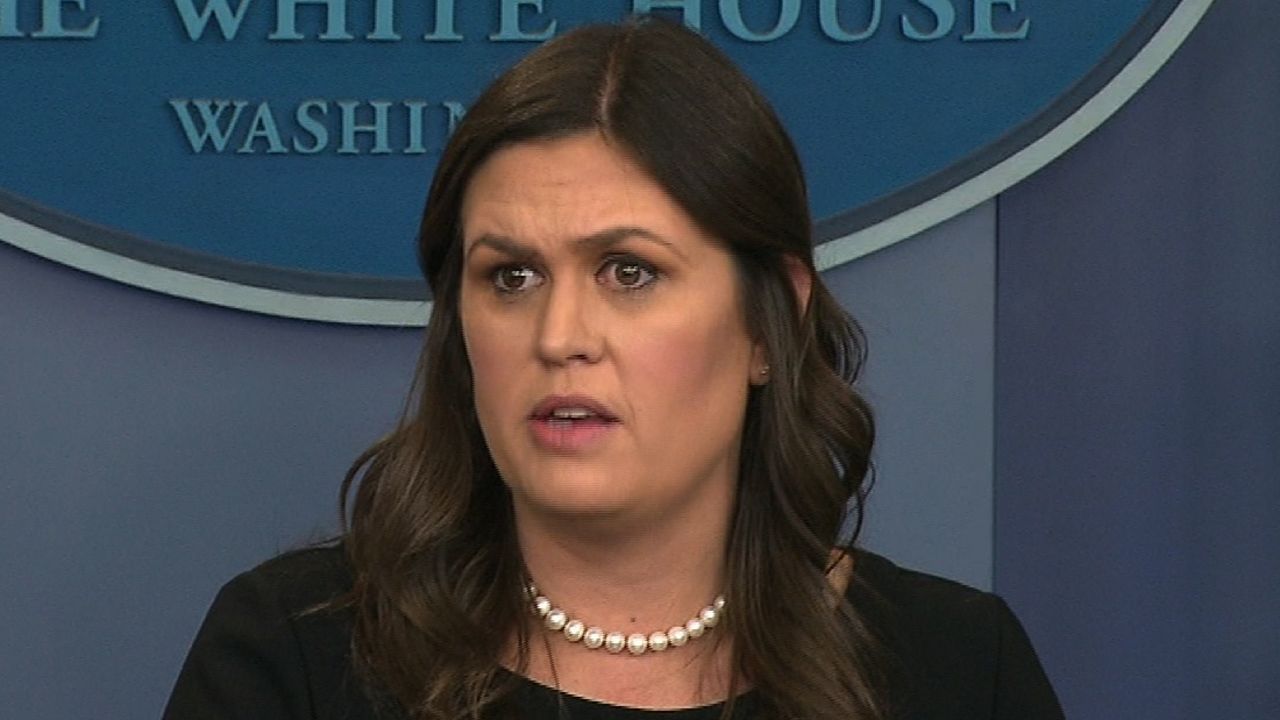
The White House consistently defended the policy in the language of law, order, and deterrence. Sessions had argued that if adults brought children across the border illegally, they would be prosecuted and the children would be separated as required by law. President Donald Trump and Sanders also blamed Democrats, claiming the crisis resulted from bad legislation rather than executive choice.
This framing served a strategic purpose. By presenting separations as the unavoidable result of the law, the administration could shift moral blame onto lawmakers, previous systems, or even the migrants themselves. The message was simple and politically potent: the government was merely enforcing rules, and anyone upset by the consequences should blame those who broke the law or failed to change it.
But that argument did not hold up cleanly under scrutiny. Critics pointed out that the separations were tied to administrative decisions, not a binding requirement that parents and children must always be split. In other words, the administration was choosing an interpretation and method of enforcement that maximized harshness, then describing that harshness as inevitable.
That is a powerful pattern in modern politics. Policies are designed, then narrated as though they were forced upon those who designed them.
The Human Cost Behind the Policy
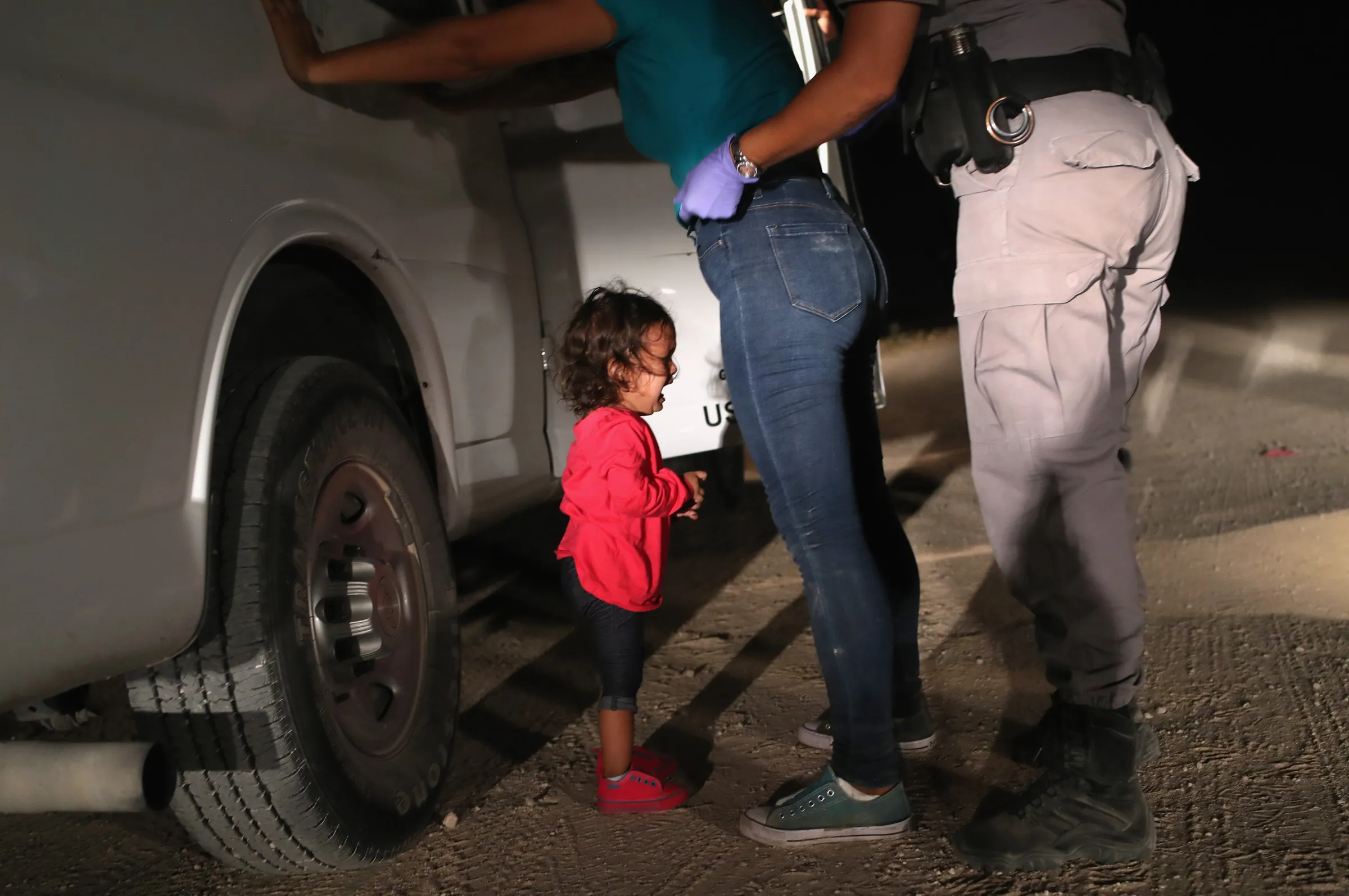
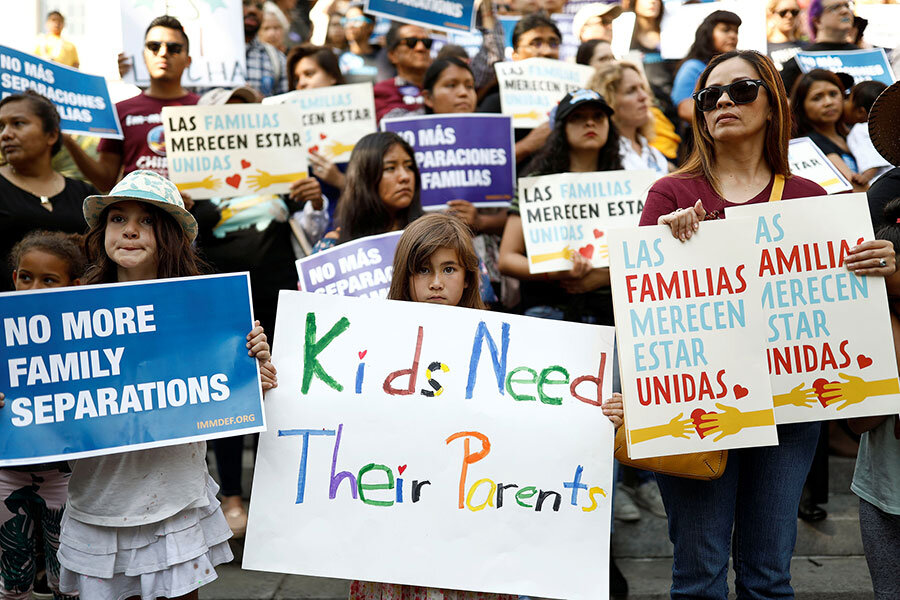
What made the public reaction so intense was not only the policy itself, but the vivid human stories emerging from the border. Children were being taken from parents who often did not know where their sons or daughters were going. Parents were detained while children were placed in government facilities or shelters. Some were very young. Many were frightened. The emotional shock of these accounts cut through normal partisan language.
This is why the administration’s defense sounded so stark to many Americans. It arrived in the middle of heartrending stories, images of minors in detention, and growing evidence that federal systems were straining under the pressure. Moral outrage is always amplified when policy becomes visible through children.
Even for people who supported tougher immigration enforcement, the image of toddlers and young children separated from sobbing mothers and fathers was difficult to defend. The policy stopped looking like abstract border management and started looking like institutionalized trauma.
That transformation in public perception is important. Governments often rely on distance to sustain controversial policies. But once the consequences become concrete, with faces, names, and stories, the political calculus changes.
Religion, Morality, and Public Backlash
The religious defense of the policy was especially risky because it activated criticism from groups the administration might otherwise have expected to support it. Prominent evangelical voices, church leaders, and faith based organizations joined the condemnation. The United Nations human rights office also criticized the practice, adding international pressure.
This broad backlash revealed something important. Even among communities committed to biblical authority and respect for law, there was a limit to how far the language of obedience could go when confronted with suffering children. For many Christians, the administration’s use of scripture felt selective, incomplete, or morally distorted. The Bible contains many themes, including mercy, hospitality, justice, care for the vulnerable, and compassion for strangers. Critics argued that the White House had chosen one thread of scripture while ignoring the others.
That is why the argument over Romans 13 became so charged. It was never just a question of whether the passage exists. It was a question of whether it could be responsibly invoked in this context without becoming a tool of moral evasion.
The Expanding Network of Child Shelters
As criticism mounted, reports emerged that the federal government was opening additional temporary facilities for unaccompanied migrant children because existing shelters were reaching capacity. One such location was in Tornillo, Texas, near El Paso, in a remote desert area where temperatures could become extreme. The government said the site would be able to accommodate hundreds of children in the coming days.
This detail deepened public alarm. It suggested that the family separation policy was not only active, but growing large enough to require expanded infrastructure. Critics saw that as evidence the administration was building a system around family rupture rather than addressing an emergency with restraint.
Descriptions of “soft sided structures” and temporary housing in the desert only added to the unease. Lawmakers who visited or learned about these sites raised concerns about isolation, conditions, and the practical and emotional reality of placing children in such environments. The image of young migrants being housed in remote structures while parents sat elsewhere in detention became one of the defining symbols of the controversy.
In politics, infrastructure often reveals intention. When a government expands the physical apparatus needed to sustain a policy, it becomes harder to argue that the policy is temporary, accidental, or merely reactive.
The Walmart Shelter and the Optics of Scale
At the same time, officials gave journalists a tightly managed tour of a shelter in Brownsville, Texas, housed inside a former Walmart and holding nearly 1,500 children. That image hit the public imagination with unusual force. A retail superstore transformed into a mass child shelter sounded less like orderly immigration processing and more like a portrait of a bureaucracy overwhelmed by the consequences of its own decisions.
Scale changes everything. A handful of cases can be described as unfortunate. Hundreds of separations can be described as administrative strain. But once shelters are filled with large numbers of children, and new sites are being opened to handle overflow, the public begins to see not isolated hardship, but a policy system built around separation.
That perception matters because public opinion is shaped not only by law or principle, but by imagery. A former Walmart filled with migrant children and desert facilities prepared for more made the crisis feel industrial in scale. It looked like the federal government had normalized something extraordinary.
Capitol Hill, Political Pressure, and the Search for an Exit
As the crisis intensified, negotiations in Congress began to include proposals that would end the policy of separating children from parents while also addressing broader immigration disputes. Republican lawmakers reportedly discussed legislation that would stop family separation and pair that change with protections for Dreamers and large sums for border security, including funding for a wall.
This revealed the political fragility of the administration’s position. Even lawmakers broadly aligned with tougher immigration enforcement could see that family separation had become a reputational and moral liability. The policy was damaging not just because opponents hated it, but because it was becoming harder for supporters to explain it.
The White House continued blaming Democrats and bad laws. But on Capitol Hill, the search for legislative alternatives suggested a growing recognition that the administration needed some kind of exit. In politics, the loudest defense of a policy often comes just before the scramble to modify it.
What the Controversy Really Exposed
The Sarah Sanders briefing moment remains significant because it exposed the deeper logic behind the family separation controversy. This was never just a bureaucratic dispute over processing migrants. It was a test of how far a government would go in using children as part of an enforcement strategy, and how far it would go rhetorically to defend that strategy.
By invoking the Bible, directly or indirectly, the administration elevated the argument. It invited the public to see the policy not only as legal, but as morally grounded. That decision intensified rather than softened the backlash, because it forced a more fundamental question into view: can a policy that deliberately separates families in order to deter migration ever be squared with the values of compassion, justice, and human dignity that leaders claim to uphold?
That question did not disappear when the briefing ended. It lingered because the issue reached far beyond one administration or one policy memo. It touched the core tension of democratic government itself: whether law is enough on its own, or whether law must always answer to a higher standard of humanity.
In the end, the family separation crisis became one of the defining moral confrontations of the Trump era because it made visible what harsh policy often tries to hide. It showed that the language of order can coexist with suffering, that appeals to legality can mask deliberate cruelty, and that scripture, when used carelessly in politics, can become less a source of wisdom than a shield against accountability.