
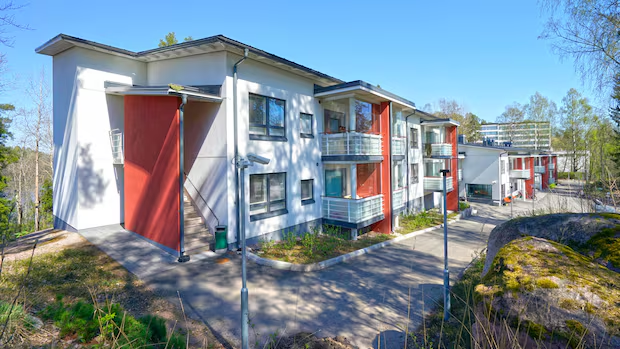
When Finland took a groundbreaking approach to tackling homelessness, the world took notice. Rather than relying on temporary shelters or costly long-term interventions, the Finnish government chose a unique solution: providing small, permanent homes for the homeless. This initiative, known as the “Housing First” model, has dramatically reduced homelessness across the country and proved that offering homes is not only a humane approach but also a more cost-effective strategy than allowing homelessness to persist. In this article, we will explore how Finland’s commitment to providing homes for those in need has reshaped social policy and why it is a model that many other nations are now looking to replicate.
Table of Contents
- The Crisis of Homelessness in Finland: A Growing Problem
- The Housing First Model: A Revolutionary Approach
- Why Housing First Works: The Cost-Effectiveness of Small Homes
- Breaking Down the Benefits: More Than Just Housing
- The Social Impact: Changing Lives and Communities
- A Model for Other Nations: Spreading the Housing First Approach
- Challenges and Criticisms of the Housing First Model
- What This Means for the Future: A More Humane Approach to Housing
- Conclusion: A Global Call to Action
The Crisis of Homelessness in Finland: A Growing Problem
Homelessness in Finland was once a persistent and troubling issue. Like many countries, Finland saw a rise in homelessness due to factors such as poverty, mental health issues, addiction, and the lack of affordable housing. By the late 1990s, Finland’s homeless population was at an all-time high, with thousands living on the streets or in temporary shelters. The traditional response to homelessness had been to offer temporary housing solutions, such as shelters, which were often overcrowded and lacked long-term stability.
However, Finland’s policymakers recognized that this approach was not effective. The social costs of homelessness — including emergency healthcare, social services, and law enforcement — were higher than the cost of providing permanent homes. It became clear that a more sustainable, cost-effective solution was needed to address this complex issue.
The Housing First Model: A Revolutionary Approach

In the early 2000s, Finland introduced the “Housing First” model, a shift from traditional temporary housing to providing permanent homes for homeless individuals. The key idea behind Housing First is simple: people who are homeless need a home first and foremost, and only once they have stable housing can they address other issues like addiction, unemployment, or mental health. The model rejects the idea that homeless individuals need to “earn” their right to housing by meeting certain criteria, such as getting sober or finding a job.
Under the Housing First program, Finland provides small, permanent homes for individuals, with no strings attached. These homes are fully equipped with all necessary amenities, and tenants are free to live there as long as they want. Support services, such as counseling and job training, are offered, but they are not a requirement for housing.
Why Housing First Works: The Cost-Effectiveness of Small Homes
Finland’s Housing First model has proven to be far more cost-effective than traditional approaches to homelessness. While critics initially questioned the feasibility of providing permanent housing to the homeless, the results have been striking. Studies have shown that providing stable housing reduces the need for costly emergency services, such as hospital visits, police interventions, and shelters.
A study by the Finnish government found that the cost of homelessness — including the costs associated with emergency healthcare, policing, and temporary shelter services — far outweighed the cost of providing permanent homes. In fact, Finland discovered that providing small homes was not only more humane but also more financially sustainable in the long run.
By offering individuals a place to live, Finland significantly reduced the need for temporary shelters, which often require high maintenance costs and are less effective at addressing the underlying causes of homelessness. Additionally, providing stable housing allowed people to regain their independence, leading to fewer emergency service interventions and a decrease in the overall social costs of homelessness.
Breaking Down the Benefits: More Than Just Housing

The benefits of the Housing First model go beyond cost savings. For the individuals who have benefited from the program, having a permanent home means security and stability. Many former homeless individuals report that having a place to live gave them the opportunity to rebuild their lives. They could focus on improving their mental health, finding stable employment, and building relationships without the constant stress of living on the streets.
Additionally, providing small homes also had a positive effect on communities. With fewer people living on the streets, public spaces became cleaner and safer. The stigma around homelessness also decreased as more individuals had the opportunity to live in stable, permanent housing.
The Social Impact: Changing Lives and Communities
The social impact of the Housing First initiative has been profound. Finland’s approach challenges the long-held assumption that people must solve their personal problems before they can access housing. By offering immediate housing, Finland allows individuals to regain control over their lives, giving them the opportunity to pursue education, employment, and social integration without the instability of homelessness holding them back.
Moreover, the program has led to a noticeable reduction in homelessness in Finland. As of recent reports, Finland has become one of the few countries in Europe to reduce homelessness significantly. While homelessness rates have been increasing in many European nations, Finland’s rates have dropped, with the Housing First model being credited for much of this success.
A Model for Other Nations: Spreading the Housing First Approach

The success of the Housing First model in Finland has sparked interest worldwide. Countries like the United States, Canada, and the UK have begun exploring the implementation of similar models. Cities in the US, including Salt Lake City and Houston, have adopted the Housing First approach with promising results. Finland’s model has demonstrated that providing housing to the homeless not only improves lives but also reduces long-term costs for governments and communities.
However, the challenge for other countries is to replicate Finland’s success in a different socio-political context. The scale of homelessness varies widely by country, and the resources needed to provide small homes and support services can be significant. Still, Finland’s experience proves that it is possible to make a lasting change in the fight against homelessness.
Challenges and Criticisms of the Housing First Model
While the Housing First model has seen great success, it is not without its challenges. One criticism is the potential for an over-reliance on government funding to sustain the program. Providing permanent homes and support services requires a significant investment, and some worry that the cost could become unsustainable over time.
Additionally, some critics argue that the Housing First model does not address the root causes of homelessness, such as poverty, lack of affordable housing, and social inequality. They suggest that the model could be enhanced by integrating more preventative measures to reduce the number of people becoming homeless in the first place.
Despite these criticisms, the overwhelming success of Finland’s approach — in terms of both reducing homelessness and saving money — has made it a compelling model for other countries to consider.
What This Means for the Future: A More Humane Approach to Housing
Finland’s innovative approach to homelessness through small homes is not just a model for housing but a model for how society can better address complex social issues. By focusing on providing basic needs first and foremost, Finland is not only offering homes but also hope and stability to thousands of people who otherwise would have remained on the streets.
As the world faces rising housing costs and increasing inequality, Finland’s Housing First model offers valuable lessons in compassion, efficiency, and sustainability. By viewing housing as a human right and not a privilege, Finland is leading the way toward a future where no one has to face homelessness.
Conclusion: A Global Call to Action
Finland’s success in reducing homelessness by providing small homes has proven that there is a better way to approach social issues. It is a model that emphasizes the importance of securing basic human needs first, thereby fostering the conditions for people to rebuild their lives. As the Housing First model gains traction internationally, it serves as a reminder that, with the right resources and support, it is possible to end homelessness and create a more just and compassionate world.