
Table of Contents
- The Fire That Triggered The Emergency
- The Moment CPR Began
- Why CPR On Animals Is Rare But Critical
- The Signs Of Life Returning
- Firefighters And Their Bond With Animals
- The Role Of Training And Instinct
- Why This Story Resonated So Widely
- Smoke Inhalation And The Hidden Danger To Pets
- The Aftermath For The Dog And The Community
- A Reflection On What This Rescue Means
- Closing Perspective
The Fire That Triggered The Emergency
The fire erupted inside a Santa Monica apartment complex, sending smoke pouring through the building and prompting emergency calls from residents. Fire crews arrived quickly, moving into the structure as flames spread and smoke thickened.
According to firefighters on scene, conditions inside the apartment were severe. Smoke inhalation posed an immediate threat not only to residents but to anyone trapped inside. Firefighters conducted a rapid search, moving room by room.
That is when they found the dog.
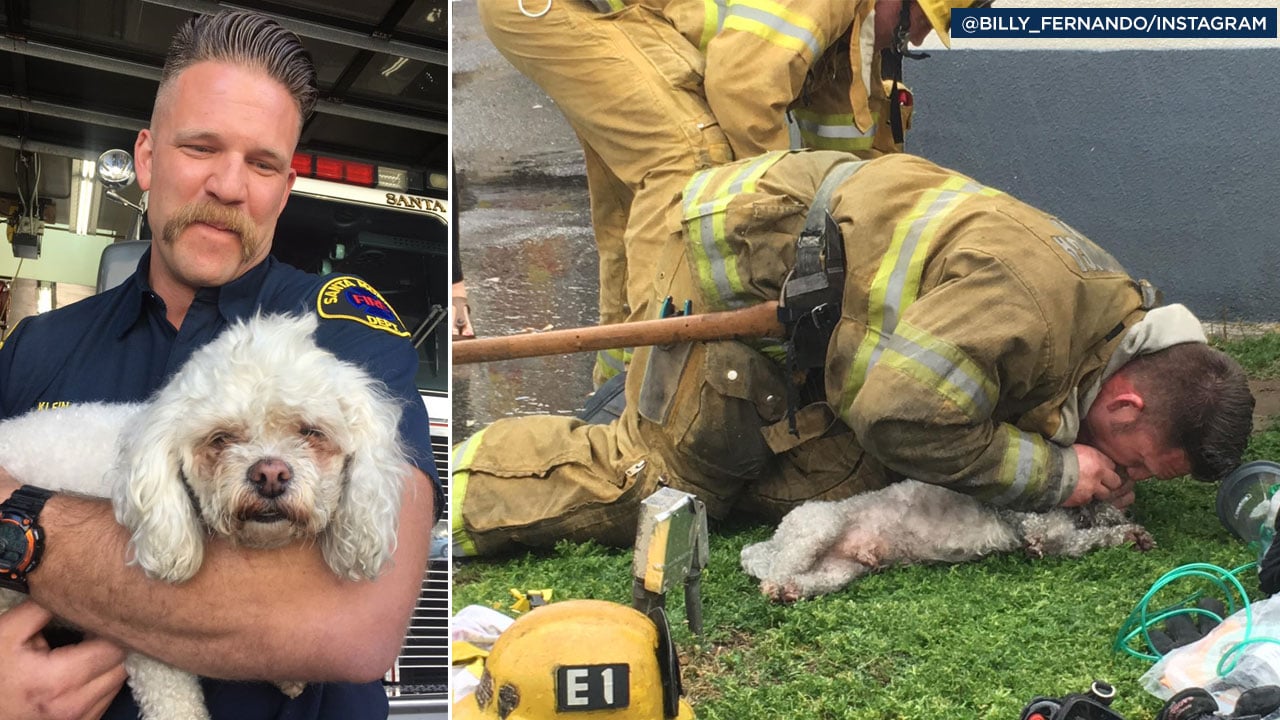
The animal was pulled from the apartment unresponsive, its body limp from smoke exposure. To many, it would have looked like the end. But for one firefighter, it marked the beginning of a fight.
The Moment CPR Began
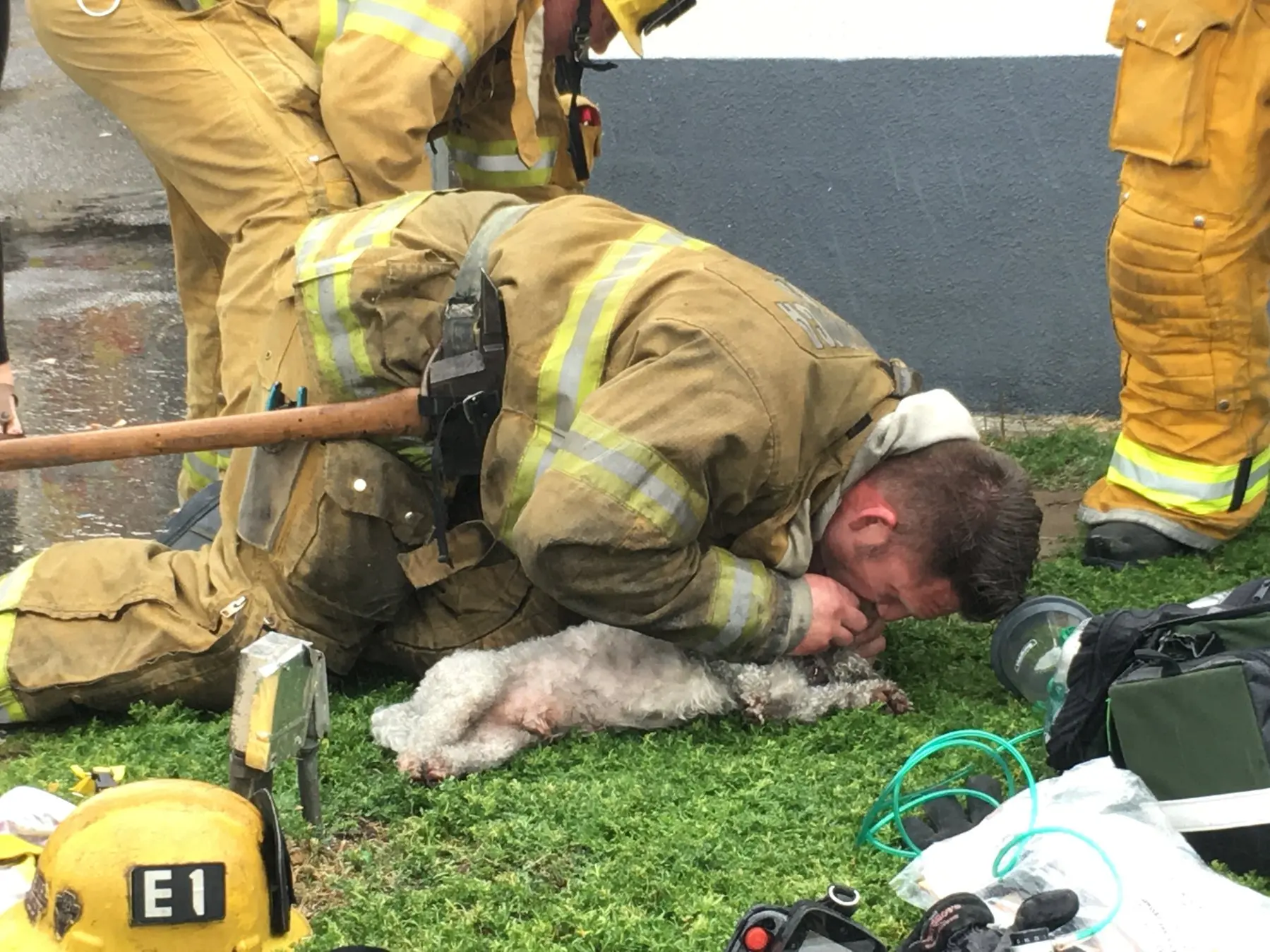
As firefighters exited the building, attention turned immediately to medical response. One firefighter knelt beside the dog and began CPR without hesitation.
Dog CPR is not widely understood by the public, but many firefighters receive basic training in animal resuscitation. The technique requires controlled chest compressions and careful attention to airway positioning. It is physically demanding and emotionally taxing, especially when results are not immediate.
Minutes passed. Then more minutes. The firefighter did not stop.
Witnesses later said the effort continued for close to twenty minutes. In emergency response, that is an eternity. Most people would have assumed the dog could not survive. But the firefighter refused to give up.
Why CPR On Animals Is Rare But Critical
Animal CPR is rarely successful after prolonged smoke inhalation. Unlike humans, animals often suffer severe respiratory damage quickly due to their smaller airways and proximity to smoke near the ground.
Veterinary experts explain that prolonged CPR increases the chance of oxygen re entering the bloodstream, but only if done correctly and consistently. Stopping too early can eliminate the only chance of recovery.
In this case, persistence made the difference. The firefighter maintained steady compressions and monitored subtle signs of response.
Then something remarkable happened.
The Signs Of Life Returning
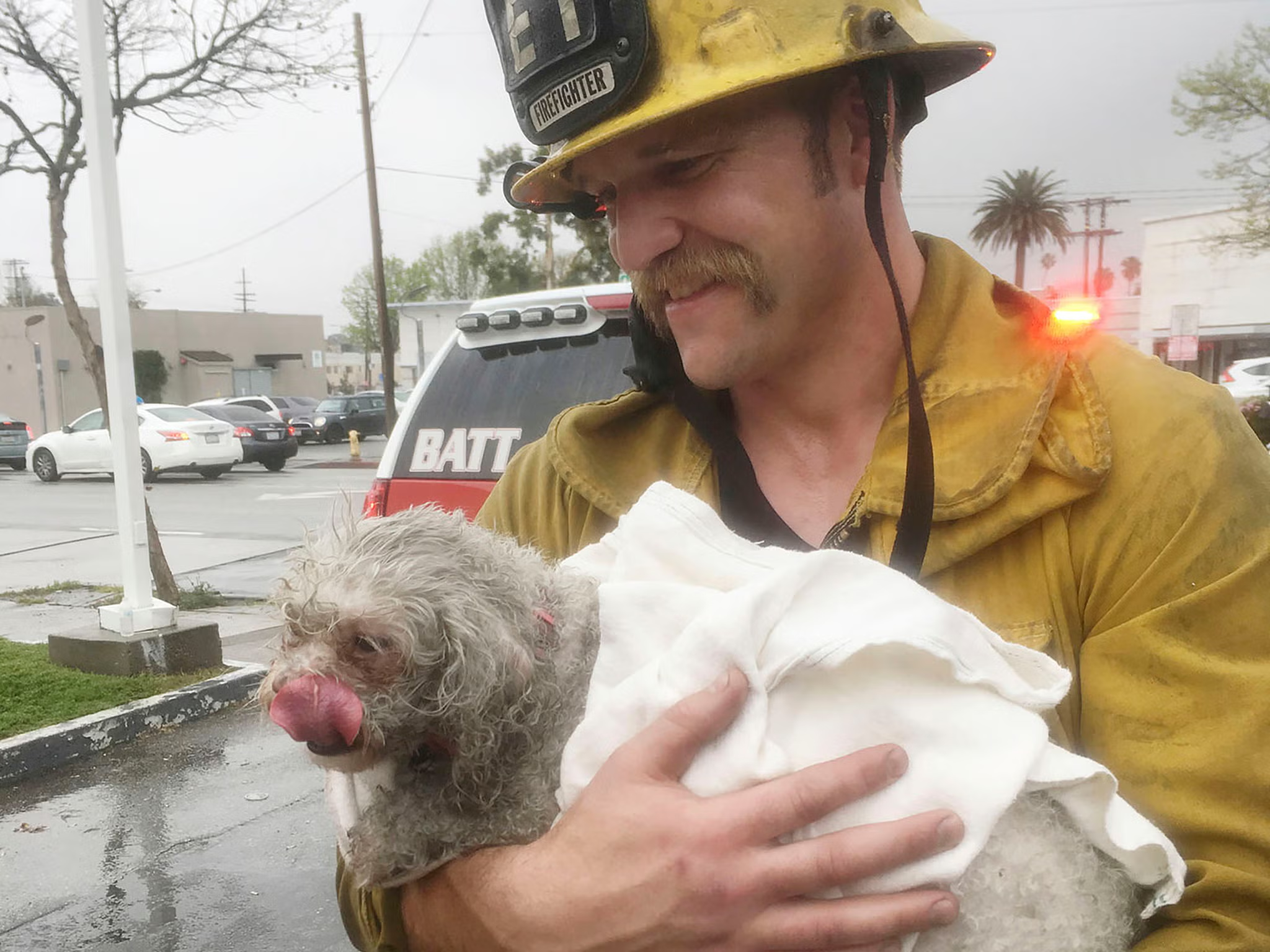
After nearly twenty minutes, the dog began to show signs of breathing. A small gasp. A faint movement. Enough to signal that the effort had not been in vain.
The moment was emotional for everyone present. Firefighters who face danger daily described it as one of those rare instances where exhaustion is replaced instantly by relief.
The dog was then rushed for veterinary care, where it continued to stabilize. What began as a lifeless rescue turned into a story of survival.
Firefighters And Their Bond With Animals
Firefighters often say that rescuing pets carries a unique emotional weight. Animals are family members, even if they cannot speak. Saving them means saving a piece of someone’s life.
In many fires, firefighters encounter pets who did not make it. Those losses linger. That is why moments like this stand out.
This rescue reminded many responders why compassion matters just as much as protocol.
The Role Of Training And Instinct
While emotion played a role, this rescue was also a testament to training. Firefighters are conditioned to act under pressure, to assess situations quickly, and to commit fully once a decision is made.
The firefighter who performed CPR later explained that stopping never crossed their mind. As long as there was a chance, the effort continued.
This mindset is drilled into emergency responders. You do not stop until you are certain there is nothing more you can do.
Why This Story Resonated So Widely
Stories like this resonate because they reflect values people want to believe in. Persistence. Compassion. Refusal to accept loss prematurely.
In a world often dominated by bad news, a story where effort leads to life feels extraordinary. It reminds people that actions matter, even when outcomes seem unlikely.
The image of a firefighter kneeling beside a dog, compressing its chest for twenty minutes, became symbolic of hope itself.
Smoke Inhalation And The Hidden Danger To Pets
Veterinarians emphasize that smoke inhalation is one of the leading causes of death for pets in fires. Even animals rescued alive can deteriorate hours later.
That is why immediate oxygen and CPR can be life saving. It is also why pet owners are encouraged to include animals in emergency planning.
Simple steps like window decals indicating pets inside and keeping leashes accessible can save critical seconds.
The Aftermath For The Dog And The Community
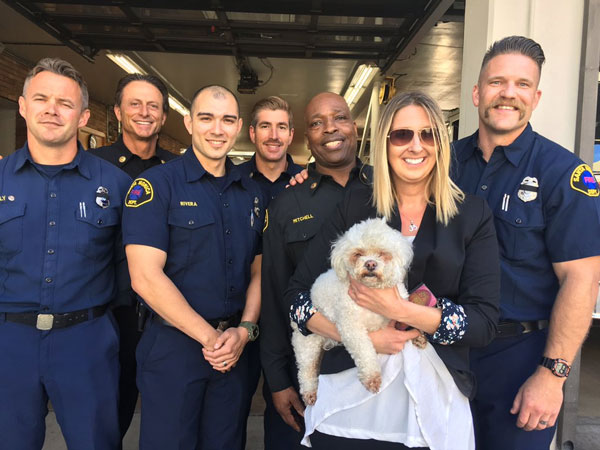
The dog survived and continued receiving care. While full recovery takes time, veterinarians expressed optimism.
For the community, the story became a reminder of the human side of emergency response. Firefighters are not just professionals performing tasks. They are individuals making split second decisions driven by empathy.
Residents later expressed gratitude not only for the fire being controlled, but for the life that was saved against the odds.
A Reflection On What This Rescue Means
This incident highlights an often overlooked truth. Heroism is not always loud. Sometimes it is quiet persistence long after others would stop.
The firefighter could have moved on to the next task. Instead, they stayed.
In emergency response, success is often measured in seconds. In this case, it was measured in endurance.
Closing Perspective
The Santa Monica firefighter who saved a dog using CPR did more than revive an animal. They reminded people that compassion does not have limits based on species.
In the smoke and chaos of an apartment fire, one responder chose to fight for a life that could not ask for help.
That decision transformed a tragedy into a moment of hope.
And long after the flames were extinguished, that act continued to burn brightly in the hearts of everyone who witnessed it.