

Table of Contents
- Time to Stand Against America’s Nationalism
- A Growing Threat to Global Democracy
- The Implications of America’s Turn Toward Nationalism
- The Role of Global Elites in Shaping America’s Future
- The Importance of Coalition-Building in the Fight Against Nationalism
- California’s Role in Leading the Global Charge
- Rebuilding Global Trust in American Leadership
- Implications for America’s Role in Global Governance
- Conclusion:
Time to Stand Against America’s Nationalism
In a compelling speech delivered at the 2026 World Economic Forum in Davos, Switzerland, California Governor Gavin Newsom made a bold call to global elites to unite against the rise of nationalism in the United States and its increasingly isolationist policies. Speaking to an audience that included political leaders, business magnates, and cultural figures, Newsom highlighted the dangerous implications of America’s growing retreat from global cooperation and democracy.
Newsom’s comments are part of his ongoing efforts to position himself as a leading voice in international diplomacy and progressive politics. By urging the world’s elites to take a stand against America’s inward turn, Newsom is challenging global leaders to reconsider their approach to the United States and the broader geopolitical landscape.
A Growing Threat to Global Democracy

In his speech, Newsom warned that America’s increasing tendency towards isolationism and nationalistic policies poses a serious threat to the stability of the international order. He described the United States as retreating into itself, under the leadership of nationalist movements and figures, which have prioritized domestic policies over international alliances.
According to Newsom, this inward shift could undermine global democracy by encouraging authoritarianism and populist rhetoric, which has already begun to erode democratic institutions in several countries. He emphasized that the current political climate in America fosters divisions not only within the U.S. but also threatens to ripple across the globe, destabilizing international cooperation.
For Newsom, the answer lies in global solidarity, with the world’s business and political elites coming together to oppose the forces of isolationism that threaten not just America’s future, but also global peace and security. He argued that a united front could help strengthen democracy, combat authoritarianism, and preserve the open global trading system.
The Implications of America’s Turn Toward Nationalism
Newsom pointed out that the rise of nationalist politics in America is not just a temporary political trend but a deepening philosophical shift that is reshaping American foreign policy. The trend began in earnest with the election of Donald Trump in 2016, who promoted “America First” as the cornerstone of his administration. This policy, which centered on prioritizing American interests at the expense of international agreements, left global leaders uncertain about the future of their alliances with the U.S.
Newsom further illustrated how the Trump administration‘s pullback from major international agreements like the Paris Climate Accord and the Iran Nuclear Deal set the stage for America’s growing disconnection from the world. This isolationist policy not only disrupted international trade but also damaged diplomatic relationships that had taken years to build.
According to Newsom, these policies have been exacerbated by the rise of right-wing populism, which has continued to gain traction in America under successive administrations. This has made it more difficult for the U.S. to play its traditional role as a global leader, a trend Newsom sees as detrimental to world peace and economic cooperation.
The Role of Global Elites in Shaping America’s Future
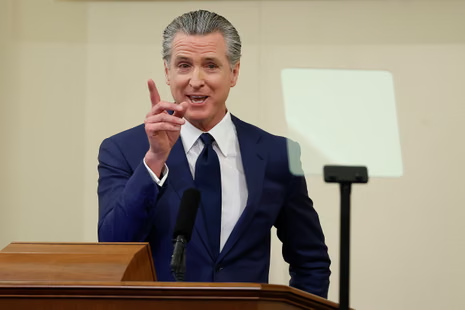
In his address, Newsom urged business magnates, political leaders, and global decision-makers to recognize their role in shaping the future of America and, by extension, the future of the global community. He called for a collective push to challenge the populist agenda and to advocate for policies that promote international cooperation rather than division.
Newsom pointed out that global elites, who wield significant economic and political influence, have the power to shape public opinion and influence government policy. By using their influence to oppose nationalist rhetoric and support globalism, they can help preserve the international liberal order that has provided stability and economic prosperity for the world’s economies for decades.
The Importance of Coalition-Building in the Fight Against Nationalism
To combat America’s nationalist shift, Newsom stressed the need for international coalitions that can act in unison to promote progressive ideals like democracy, freedom of speech, and human rights. He emphasized that global elites have the resources and connections to build effective coalitions that can challenge populist movements both within the U.S. and around the world.
According to Newsom, the world is at a critical juncture where the future of democracy is on the line. As nationalism spreads across countries, populist leaders are increasingly gaining power, undermining democratic institutions and opening the door for authoritarianism to flourish. To counter this, Newsom advocates for strong, coordinated global action by political and business leaders to stand against these movements.
California’s Role in Leading the Global Charge

As Governor of California, Newsom has positioned himself as a progressive leader who not only focuses on domestic issues but also has a broader vision for global engagement. He has championed environmental initiatives, immigration reform, and social justice on the world stage, making California a key player in global diplomacy.
During his speech, Newsom referenced California’s efforts to lead on environmental policy despite the federal government’s withdrawal from the Paris Agreement under Trump. He emphasized that while America’s federal government may retreat from international commitments, states like California will continue to play an active role in global cooperation on issues like climate change, trade, and human rights.
Rebuilding Global Trust in American Leadership
One of the key themes of Newsom’s speech was the need to restore trust in American leadership on the global stage. He expressed concern over how the U.S.’s growing nationalist sentiment has tarnished its reputation as a leader of the free world. To regain the trust of global allies, Newsom believes that the U.S. must demonstrate its commitment to democracy and international cooperation through both policy change and rhetoric.
Newsom suggested that for America to once again be seen as a beacon of democracy and global leadership, it must actively work to reverse the damage caused by recent isolationist policies. This will require a significant shift in national priorities, away from nationalism and toward embracing a shared global future.
Implications for America’s Role in Global Governance
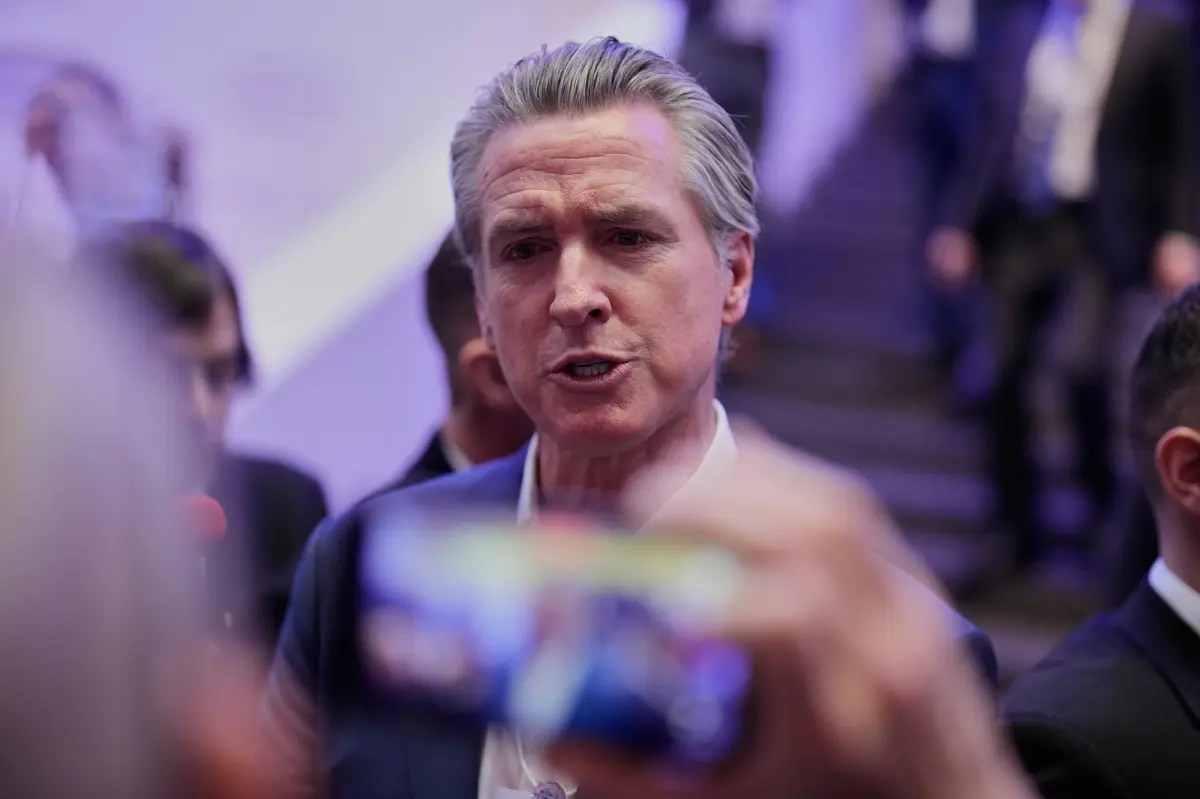
Newsom’s comments bring to light the implications of America’s current political climate for global governance. The shift toward nationalism could undermine the country’s leadership in international organizations such as the United Nations, World Trade Organization, and World Health Organization. Newsom’s call for global elites to stand against these shifts is part of his broader effort to ensure that the U.S. remains a champion of international cooperation rather than a solitary figure in global politics.
Moreover, Newsom’s speech highlights the growing divide between progressive and conservative forces within the U.S. and the international community. As the U.S. becomes increasingly polarized, the need for stronger international coalitions to defend democracy has never been more urgent.
Conclusion:
Gavin Newsom’s speech at the World Economic Forum signals a new chapter in the battle between nationalism and globalism. By calling on the world’s elites to oppose the rise of nationalism in America, Newsom is not just challenging the current state of U.S. politics but is also laying the groundwork for a global movement to preserve the values of democracy and international cooperation.
As the world moves into a new era of geopolitical instability, it is clear that the actions of global elites will be critical in shaping the future of international relations. Newsom’s call to action could be the spark that drives a more unified global response to the growing threat of nationalism and authoritarianism.