
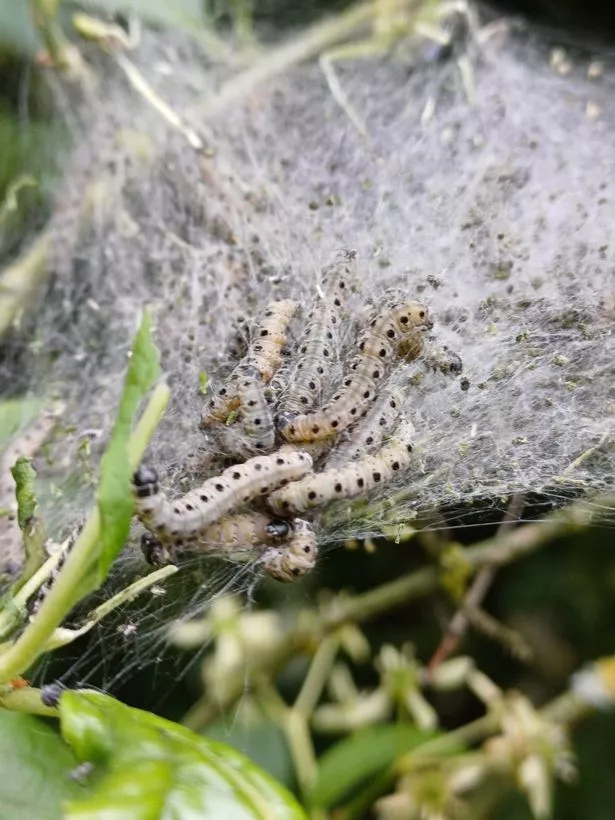
You wake up, open your curtains — and your entire street looks like a scene from a horror movie.
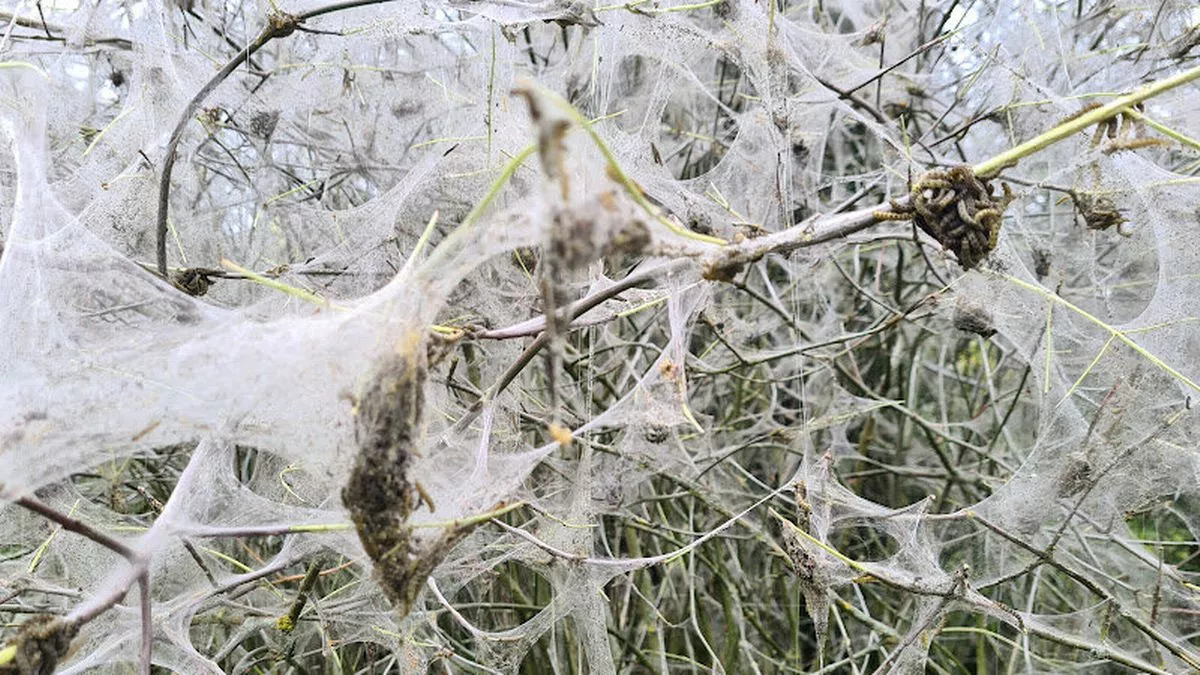
Trees wrapped in thick, white webbing.
Bushes smothered in ghost-like sheets.
Branches hidden beneath a pale, silky blanket.
This isn’t Halloween.
This isn’t fog.
This isn’t human-made.
It’s caterpillars.
Millions of them.
Across parts of the UK, residents have walked outside to find their neighborhoods transformed overnight into something that looks straight out of a post-apocalyptic film. Entire trees swallowed in white. Streets shimmering with silk. And an unsettling silence beneath it all.
What caused this?
How dangerous is it?
And why does it feel like nature is sending a message?
Let’s unravel the mystery.
The Morning It Happened — “It Looked Like the Trees Had Been Mummified”
Locals described the sight the same way:
“The trees looked like they’d been wrapped in giant cocoons.”
The webbing was so thick you couldn’t see bark, leaves—sometimes not even branches. Everything was covered in a pale, silky blanket several meters long.
And all of it happened almost overnight.
Residents rushed to social media with photos: ghost trees, shimmering hedges, fences draped in silver threads that glistened eerily in the morning light.
But the unsettling part wasn’t the webbing itself…
It was what was crawling underneath.
Thousands — sometimes millions — of caterpillars.
Meet the Culprits: Ermine Moth Caterpillars, Nature’s Fastest Web Builders
The species responsible for this dramatic takeover is the ermine moth caterpillar, tiny insects with a powerful survival strategy:
They don’t make small webs.
They make massive, communal web fortresses that can engulf entire trees.
These webs serve several purposes:
- Protection from predators
- Shelter while feeding
- A safe environment for transformation
- A way to travel collectively
Think of it like a giant silk city built overnight by thousands of tiny architects.
What’s shocking is their speed — these caterpillars can blanket a full-size tree in as little as 72 hours.
If you saw your tree suddenly smothered in white, how would you react — panic, curiosity, or instant Google search?
Why Now? The Environmental Trigger Behind the Sudden Outbreak

Scientists believe several factors triggered this eerie explosion:
Table of Contents
1. A Warm, Wet Spring
Ideal for caterpillar survival and growth.
2. Fewer Natural Predators
Bird populations fluctuate, leaving more caterpillars unchecked.
3. Rapid Reproduction Cycles
One female ermine moth can lay hundreds of eggs at once.
4. Climate Change
Warmer temperatures extend the insects’ active season.
It’s a reminder that when climate patterns shift—even slightly—nature responds dramatically.
These webs may be creepy, but they’re also clues.
Are the Webs Dangerous? The Answer Is Surprisingly Reassuring
Residents naturally worried:
- Will this kill my trees?
- Are the caterpillars poisonous?
- Can they damage my home?
- Is this harmful to kids or pets?
Good news:
The webs are not harmful to humans or animals.
The caterpillars don’t bite, sting, or carry dangerous toxins.
Your trees will survive.
Despite the horror-movie appearance, the caterpillars rarely cause long-term damage.
Most trees bounce back fully once the insects leave.
Your home is safe.
The webs cling to vegetation, not brick, siding, or roofing.
But still… waking up to see your entire hedge wrapped tightly in a white cocoon is enough to unsettle anyone.
Because the real fear isn’t danger — it’s the suddenness.
What else can nature change overnight?
Inside the Web: A Creepy Yet Fascinating Ecosystem
If you dare to look closely, you’ll see:
- Caterpillars moving in synchronized groups
- Leaves disappearing as they feed
- Silken tunnels where they travel
- Tiny dark specks — caterpillar droppings
- Glimmers of cocoons forming
It’s unnerving.
But also mesmerizing.
Inside those ghostly sheets, thousands of tiny creatures are preparing for one of nature’s most dramatic transformations:
turning into ermine moths.
Soon, they’ll emerge — delicate, white-winged insects with black spots, resembling miniature snow leopards of the sky.
What begins as something frightening becomes something unexpectedly beautiful.
The Financial Angle: Should Homeowners Worry About Costs?

If you’re a homeowner, sudden natural events make you think about money:
- Will I need pest control?
- Will tree removal be required?
- Should I budget for garden repair?
Here’s the truth:
Most outbreaks cost homeowners £0.
The webs usually disappear naturally in a few weeks.
But in severe cases, some people choose to hire:
- tree-care professionals
- pest-management teams
- garden restoration services
The financial impact is small compared to pest outbreaks like termites or Japanese beetles — but unexpected expenses always feel stressful.
A good rule of thumb:
If the tree still has leaves after the caterpillars leave, it will fully recover.
Travel Shock: When Tourists Think They’ve Entered a Haunted Forest
Visitors who stumbled upon these ghostly trees were stunned.
Some thought it was:
- A Halloween art installation
- Pollution damage
- A fungus
- A movie filming location
- An alien-like biological phenomenon
Beach walkers, cyclists, photographers, and hikers all reported stopping in awe.
It’s a reminder that travel isn’t just about destinations — it’s about moments that make us pause and rethink what’s “normal.”
If you were traveling and saw an entire road lined with ghost trees, would you walk closer or turn back?
Home Improvement Reality: How to Protect Your Garden and Trees
Concerned gardeners always ask:
“How do I stop this from happening again?”
You can’t completely prevent nature from doing what it does — but you can strengthen your home environment:
- Keep trees pruned
- Remove egg clusters in winter
- Increase bird-friendly landscaping
- Use pheromone traps
- Encourage beneficial insects (ladybugs, beetles)
A healthier ecosystem keeps outbreaks smaller and shorter.
Health & Wellness: Why These Webs Trigger Stress (And Why It’s Normal)
Even though the webs are harmless, the emotional reaction is real.
Psychologists explain:
Humans associate webs with:
- danger
- decay
- predators
- abandonment
- contamination
So when people see enormous sheets covering their environment, the instinctive reaction is discomfort.
But the solution is education.
Once people know the webs are temporary and harmless, fear transforms into fascination.
And fascination reduces stress.
Some families even turned the event into learning experiences for kids — observing caterpillars, studying metamorphosis, and taking nature photos.
A creepy moment can become a curiosity moment.
How Long Will the Ghostly Webs Last?
Usually:
2–3 weeks.
Then:
- The caterpillars pupate
- The silk begins to deteriorate
- Rain helps wash the webs away
- Trees re-leaf and recover
One morning the webs are there.
Then, suddenly, they’re gone.
Just like they arrived.
A fleeting glimpse into one of nature’s strangest survival strategies.
Final Thoughts: A Creepy Sight With a Surprisingly Beautiful Purpose
Yes, the ghostly webs are shocking.
Yes, they look like something straight out of a dystopian landscape.
Yes, they make people uneasy.
But they also reveal:
- the resilience of nature
- the adaptability of species
- the hidden ecosystems all around us
- the delicate balance of climate and wildlife
- the beauty behind the bizarre
Next time you see a tree wrapped in silk, remember:
It’s not a sign of danger — it’s a sign of transformation.
A reminder that nature is always working, always moving, always shifting…
even when we’re not watching.
If you woke up tomorrow and saw your street wrapped in white webs —
would you step outside to investigate… or pull the curtains closed?