

Table of Contents
- A Monster Emerges from the Deep
- The Legend of the Doomsday Fish
- Science vs. Myth: Why Oarfish Appear
- Anatomy of a Sea Giant
- Oarfish Sightings Around the World
- The Oarfish and Earthquake Myths
- Lessons from the Deep: Science Meets Folklore
- High-Stakes Research: What Scientists Are Learning
- The Financial Angle: Conservation and Eco-Tourism
- Awe, Curiosity, and the Unknown
A Monster Emerges from the Deep
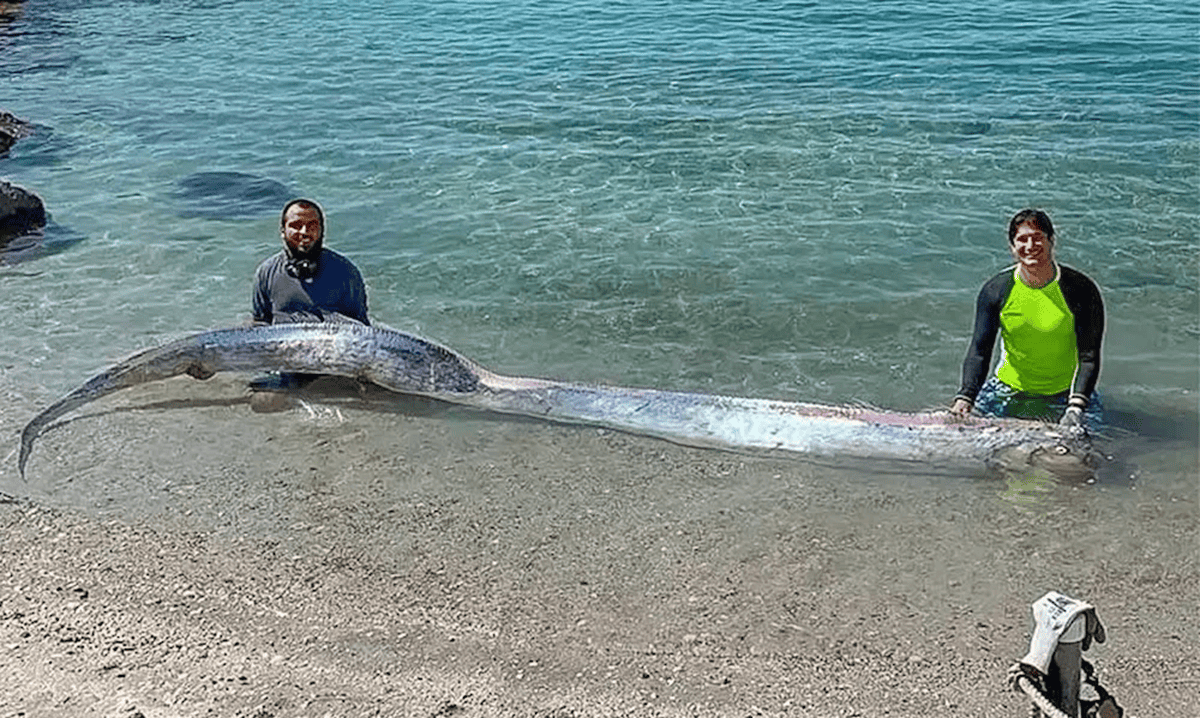
Imagine walking along a sunlit beach and spotting a 36-foot sea creature washed ashore. Its silver, ribbon-like body shimmers in the sun. Its eyes stare blankly at the sky, as if carrying secrets from the ocean depths. This is not a scene from a movie—it’s the reality of encountering a giant oarfish, often dubbed the “doomsday fish.”
Giant oarfish, scientifically known as Regalecus glesne, are the longest bony fish in the world. Some can reach lengths longer than a school bus. And for centuries, sailors whispered that seeing one meant impending disaster—sometimes even earthquakes.
If you saw a creature like this, would you run—or stand in awe?
The Legend of the Doomsday Fish
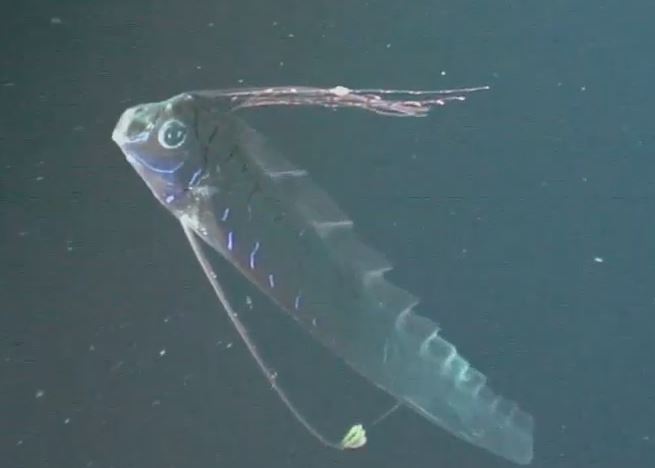
Legends of the giant oarfish stretch across centuries and continents. Japanese folklore calls them “Ryugu no tsukai,” messengers from the undersea Dragon Palace. Fishermen believed that spotting one meant an earthquake was near. In 2011, after the devastating Tohoku earthquake, oarfish sightings surged, reviving fears and fascination.
But how much truth lies in these tales? Scientists argue that the connection is likely coincidental—but human imagination is powerful. When a mysterious, 36-foot fish appears, it’s hard not to link it to dramatic events.
Science vs. Myth: Why Oarfish Appear
Oarfish are deep-sea dwellers, typically inhabiting waters between 656 and 3,280 feet. They rarely approach the surface, which is why sightings are so rare. Most appearances occur when the fish are sick, dying, or disoriented, washed toward shallow waters by strong currents or changes in ocean pressure.
Scientists theorize that oarfish do not predict earthquakes. Instead, environmental factors like temperature shifts, seismic activity affecting the ocean floor, or even storms may force these giants upward. Yet, in cultures that value omens and symbolism, a rare creature showing up suddenly can feel like a warning from nature itself.
If environmental changes can drive a deep-sea giant to the surface, what other secrets might the ocean be hiding?
Anatomy of a Sea Giant
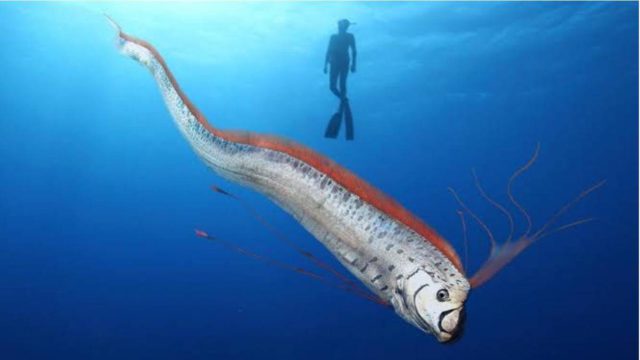
The oarfish’s body is unlike any other. Ribbon-like and silver, with a red dorsal fin running the length of its body, it undulates gracefully through water. Unlike predatory sharks, the oarfish feeds primarily on plankton, small crustaceans, and tiny fish.
Its long, flexible body is designed for efficiency, not aggression. Yet, for humans encountering one for the first time, its size and shape evoke fear. Historically, these sightings may have inspired myths of sea serpents. Sailors’ tales from the 16th century often describe massive, undulating creatures that terrorized ships—but many were likely giant oarfish.
Have you ever imagined that myths could be grounded in real creatures, only rarely seen by humans?
Oarfish Sightings Around the World
From the coasts of Japan to California, oarfish have made headlines when washing ashore. In 2019, a 21-foot oarfish stunned locals in California, sparking viral videos and endless social media speculation. Each sighting draws crowds, scientists, and photographers hoping to document a glimpse of the ocean’s elusive giants.
Interestingly, these sightings often coincide with unusual seismic activity. While this does not prove causation, it adds layers to the legend. Could it be that humans are connecting the dots where none exist—or is nature sending subtle signals?
The Oarfish and Earthquake Myths
The earthquake-omen theory isn’t entirely dismissed in modern science. Some researchers suggest that tectonic shifts on the ocean floor might disturb deep-sea habitats, inadvertently pushing oarfish closer to shore. This indirect connection could explain why cultures have long associated oarfish appearances with quakes.
Yet, skeptics warn that correlation is not causation. For every oarfish spotted, countless more go unseen. If the fish were truly reliable earthquake predictors, warnings would be far more consistent.
Lessons from the Deep: Science Meets Folklore
The giant oarfish illustrates a fascinating intersection of science, mythology, and human perception. Ancient cultures revered the creature as a messenger from the deep, while modern scientists seek to understand its biology and behavior. Both perspectives offer lessons: one about imagination and storytelling, the other about ocean ecosystems and species survival.
In a world where extreme weather, earthquakes, and climate change challenge our understanding, could studying rare species like the oarfish provide unexpected insights?
High-Stakes Research: What Scientists Are Learning
Studying oarfish is difficult due to their deep-sea habitat. Researchers often rely on washed-up specimens, rare sightings, and submersible expeditions. Every encounter offers data: size, weight, diet, reproductive behavior, and even genetic insights into longevity and adaptation.
These findings have broader implications. Understanding deep-sea organisms can inform marine conservation, fisheries management, and even climate models. After all, the health of deep-sea ecosystems impacts everything from global fish stocks to carbon storage.
The Financial Angle: Conservation and Eco-Tourism
Rare species like the giant oarfish have economic significance, too. Eco-tourism focused on wildlife, diving expeditions, and marine photography can generate income for coastal communities. Conservation funding often hinges on public fascination with such mysterious creatures.
Investing in marine science isn’t just ethical—it can be profitable. Protecting habitats ensures sustainable tourism, supports fisheries, and even drives media attention for conservation campaigns.
Could this long, shimmering sea serpent be more than a curiosity? Could it hold keys to sustainable business and environmental stewardship?
Awe, Curiosity, and the Unknown
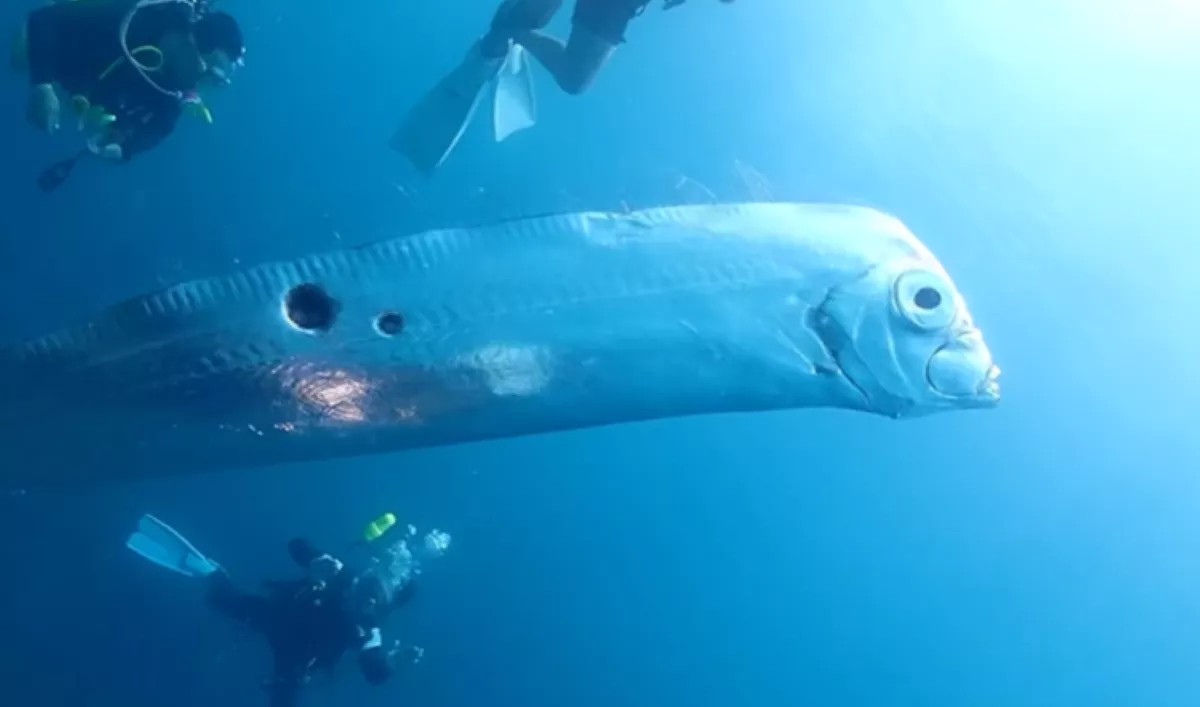
Ultimately, the giant oarfish is a symbol of the unknown. For humans, encountering such a creature triggers awe, fear, and imagination. For scientists, it presents an opportunity to understand the deep ocean and its secrets.
The oarfish teaches patience, humility, and wonder. It reminds us that our planet is far larger, stranger, and more mysterious than any city, lab, or home improvement project could contain.
Next time you hear about an earthquake or see something unusual on the shore, consider the deep-sea giants silently swimming below. Are they messengers, survivors, or merely misunderstood creatures of legend?
Conclusion: The Doomsday Fish Lives On
The giant oarfish continues to capture imaginations. Its blend of mystery, science, and myth ensures it remains a compelling story—from sailors’ tales to modern viral news. Scientists, travelers, and even investors in eco-tourism alike can learn from this elusive ocean dweller.
Could the ocean be hiding other wonders that challenge our understanding of nature, risk, and legend? Only time—and careful observation—will tell.