
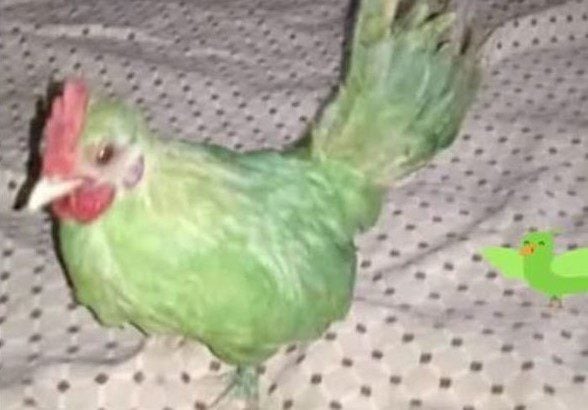
Imagine scrolling through an online marketplace, spotting what appears to be a bright green parrot—for sale.
Now imagine that “parrot” is actually a chicken… painted green.
That’s exactly what happened in Karachi, Pakistan: a seller dyed a hen, listed it as a parrot online for PKR 6,500, and the internet exploded.
But this story isn’t just a goofy viral moment. Underneath the laughs lie bigger questions about consumer trust, online selling markets, animal welfare—and yes, money and value.
Stick around—because this chicken-that-wasn’t-a-parrot opens a door into some surprising corners of finance, pets, internet culture and ethics.
Table of Contents
- The viral moment: a green-painted hen and a bargain listing
- Why we care: pets, online trust & money
- How the scheme apparently worked (and where it cracked)
- Broader lessons: what this means for you (yes, you)
- The social-media loop: why this story keeps surfacing
- What if this happened in your marketplace/home town?
- Why this matters beyond the laugh
- Final thoughts: what you take away
Here’s what we know: According to multiple sources, a man in Karachi listed a bird online (via OLX or similar platform) for PKR 6,500 (about US $22–30) claiming it was a parrot.
The twist: the bird was, in fact, a chicken dyed bright green to mimic a parrot’s look. The photo and listing circulated on Instagram and Facebook, sparking disbelief and laughter.
One typical reaction: “Murgi ko tota bana diya” (Hindi/Urdu for “The chicken has been turned into a parrot”).
If this happened to you—would you scroll on and laugh, or stop to dig into the listing? What if it were your money or your time on the line?
Why we care: pets, online trust & money
The online pet-market boom
Online marketplaces make it easy to buy and sell pets. Less overhead than a storefront. But: less regulation, less visibility.
When someone lists what appears to be a parrot—buyers may assume they know the species, know the value, trust the photos.
But when the photo hides reality (green‐painted chicken) the risk isn’t just mis-labelled bird—it’s trust, money, disappointment.
Money, value and deception
PKR 6,500 may not sound like a fortune—but in its context it’s meaningful. For the seller: a profit opportunity. For the buyer: potentially a bad deal.
In broader terms: If buyers assume a “parrot” worth X, but instead get a chicken worth Y (< X), the loss is real. Multiply that across many such deals and you see how small scams erode trust in marketplaces.
And for our bigger theme: this touches finance. How we value things. What we pay for. What we get vs what we expect.
Animal welfare & ethics
Beyond money: Dyeing a chicken raises questions of animal welfare—stress, toxicity of paint, hygiene.
When pets become “products” in online listings, ethics matter. If a chicken is passed off as a parrot, who ensures the animal’s wellbeing? Who verifies the species?
If you bought the “parrot,” how would you feel when you realise it clucks instead of squawks?
How the scheme apparently worked (and where it cracked)
Step by step
- Seller acquires or already has a chicken.
- Paints it green (or applies dye) to approximate parrot plumage.
- Takes photos and uploads listing on online marketplace (OLX or equivalent) declaring it a “green parrot for sale.”
- Sets price (PKR 6,500) and hopes for buyer.
- If a buyer shows up or contacts, seller may rely on lack of species knowledge by buyer, quick sale, or small value to avoid scrutiny.
- The listing is spotted online, shared on social media, and viral laughter ensues.
Why it broke down
- A buyer or social-media user recognised the bird as a chicken, not a parrot.
- Animal-lover or internet user posted the image.
- The listing resurfaced months later (viral again) showing how these stunts thrive in social media loops.
- Lack of species knowledge by buyer(s) is exploited; lack of oversight by marketplace enables the listing.
- Eventually becomes more “funny meme” than hidden scam—but the financial/ethical implications remain.
Broader lessons: what this means for you (yes, you)

If you buy pets online
- Always ask for proof of species (photos, video, behaviour) not just listing claims.
- Research typical price range: if listing looks like a deal too good to be true, maybe it is.
- Beware photos that look “too perfect” (bright dye, odd colours). Ask for live footage.
- Know your legal rights: some jurisdictions protect buyers from mis-labelling; some marketplaces offer guarantees.
If you sell items (or want to)
- Honesty breeds trust—and long-term value. If you build a reputation, you’ll sell more, easier.
- Exploiting ignorance may bring a quick sale—but can backfire (viral exposure, complaints, lost future business).
- In pet trade especially: animal-welfare rules, species-verification can matter legally and ethically.
For home-improvement businesses & service providers
- Stories like this spread fast on social media—if you’re in the service or home-improvement space, use the “unexpected” angle.
- Example: “We repaint old wooden chairs—but unlike making a chicken look like a parrot, our colour matching is transparent.”
- Use niche anecdotes to connect with audience: weird viral scam → leads into advice about value, trust, proper materials.
For finance & consumer-behaviour
- This anecdote is small—but symbolic: it’s about value perception vs reality. You pay for “parrot” but get “chicken”.
- That gap is central to many consumer-finance issues: overpriced houses marketed as premium homes, used cars mis-represented, appliances claimed as “smart” but lacking features.
- By staying vigilant about what you’re getting, you protect your money and your expectations.
- The image of a bright-green “parrot” that turns out to be a chicken has meme-potential.
- Social platforms love the absurd, the unexpected. “Did someone really paint a chicken?” yes, apparently.
- Every time someone reposts, someone else reacts, makes jokes: “Are buyers blind?” —and the loop continues.
- For platforms: viral stories drive engagement, clicks, shares.
- For you as reader/consumer: keep in mind—viral doesn’t always equal verified. Some details may be missing. Always ask: is this real? Or just funny?
What if this happened in your marketplace/home town?
Imagine you’re running a local classifieds site, or you’re a buyer in a small town:
- A seller lists “exotic bird – green parrot, great price!”
- You inspect, ask questions. The seller avoids showing the bird’s behaviour, only pictures. Purchase made. Later you realise it’s a dyed chicken.
- Your loss: purchase price, possible vet cost if bird mis-behaves, trust in the site shaken.
- Marketplace’s loss: reputation.
- Seller’s gain: quick sale, maybe minimal cost.
- Ethical cost: animal welfare, legal risk.
Would you, in that moment, walk away? Or be tempted by the “bargain”?
Why this matters beyond the laugh
Yes—it’s funny. But beneath the giggles lie real-world implications:
- Market regulation: Online marketplaces may need stricter species-verification for animal listings.
- Consumer education: Buyers must know what to ask, what price ranges are realistic.
- Animal protection: Dyeing animals to mis-label may violate local animal-welfare or trade laws.
- Trust economy: When small scams proliferate, they erode overall trust in online platforms—making every buyer more cautious, which slows legitimate trade.
And for you: in whatever you buy online (pets, home-improvement services, used electronics), a little skepticism is healthy.
Final thoughts: what you take away

- A green-painted chicken masquerading as a parrot is more than a silly meme—it’s a lesson in value, trust and representation.
- When you encounter listings, ask: is the price right? Is the image maybe hiding something? Can I verify?
- As a seller, you gain more by being honest than by pulling off a quick fake.
- As a reader & consumer, the laugh is fine—but the question stays: “If this happened to me, would I just chuckle or learn something?”
Next time you hear a story that sounds like “You can’t make this stuff up”—ask yourself: what’s the underlying message? Because often the funniest story has the most important lesson.