
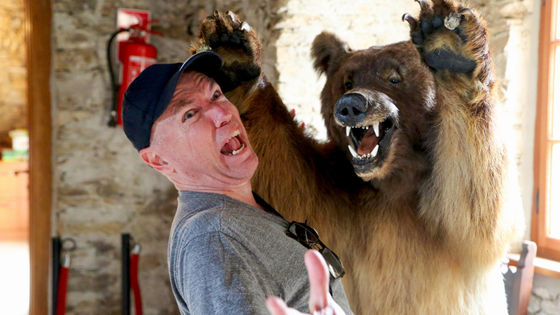
When the results of a nationwide survey revealed that a surprising number of Americans believe they could defeat a grizzly bear in a physical fight, wildlife experts did not respond with amusement. They responded with concern. The idea of an unarmed human overpowering one of North America’s most formidable predators is not just unrealistic—it highlights a deeper misunderstanding of wildlife, human capability, and risk perception that could have serious consequences.
The survey, conducted to explore how people perceive their ability to defend themselves against animals, uncovered a striking pattern. While confidence against smaller animals might seem plausible, responses regarding apex predators revealed a disconnect between belief and biological reality. Grizzly bears, which can weigh over 600 kilograms, run faster than a horse over short distances, and possess claws capable of tearing through bone, were nonetheless viewed by some respondents as beatable opponents.
This was not merely an exercise in bravado. Psychologists and wildlife researchers saw something else embedded in the answers: a modern illusion of control, fueled by distance from nature, media portrayals, and a lack of firsthand experience with wild animals. What follows is an exploration of why these beliefs exist, what the data actually shows, and why misunderstanding wildlife strength can be genuinely dangerous.
Table of Contents
- What the Survey Actually Asked and Revealed
- The Reality of a Grizzly Bear’s Physical Power
- Why Humans Overestimate Their Chances
- What Wildlife Experts Find Alarming
- The Psychology of “Winning” Against Nature
- Gender Differences in Survey Responses
- How These Beliefs Affect Real-World Safety
- What Science Says About Human Strength Limits
- Why These Surveys Still Matter
- The Broader Cultural Implications
- What This Means Going Forward
What the Survey Actually Asked and Revealed
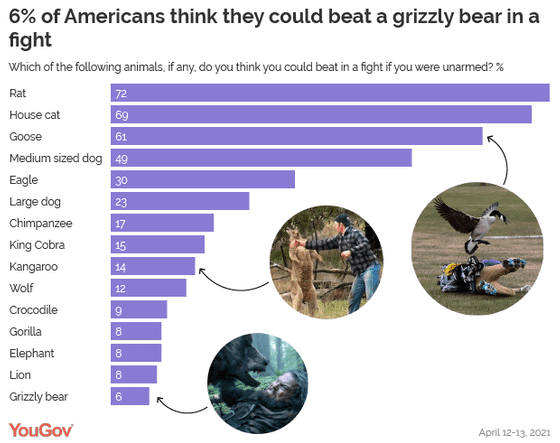
The survey posed a simple but provocative question to thousands of participants: which animals do you think you could defeat in a fight if you were unarmed? The list ranged from small mammals to large predators, including wolves, lions, and grizzly bears.
While most respondents recognized their limitations against animals like lions or gorillas, a notable percentage claimed they could take on a grizzly bear. Even more striking was that confidence varied significantly by gender and age, with younger respondents and men more likely to believe they could win such encounters.
Experts note that surveys like this are not about literal intent. Few respondents expect to actually fight a bear. Instead, these answers reveal perceived strength, dominance, and imagined resilience. But when those perceptions clash so dramatically with biological facts, it becomes a red flag for how people understand real-world risks.
The Reality of a Grizzly Bear’s Physical Power
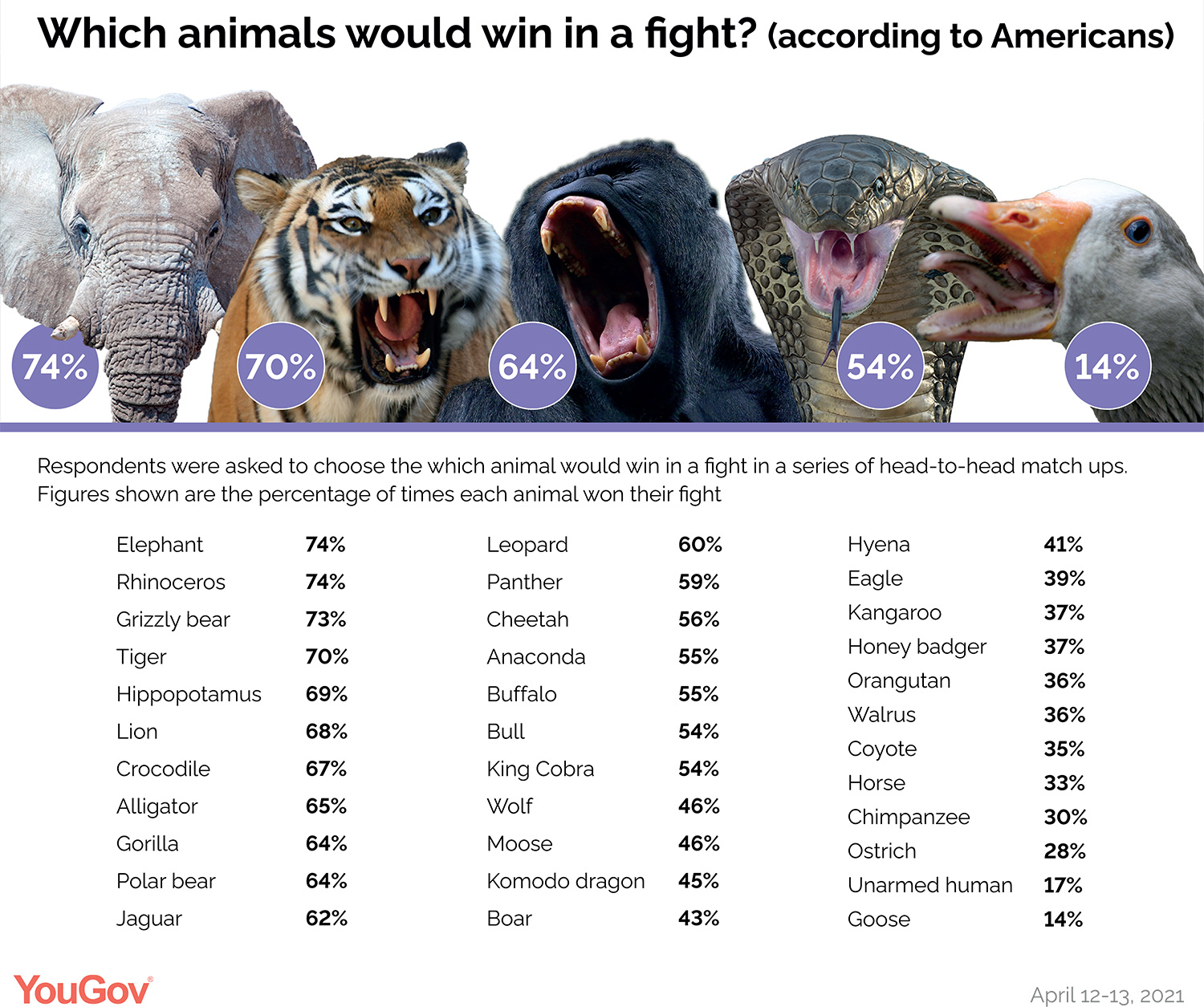
To understand why this confidence is so misplaced, it helps to understand what a grizzly bear actually is. Adult male grizzlies can weigh over 600 kilograms and stand nearly three meters tall when upright. Their shoulder muscles are among the strongest of any land mammal, evolved specifically for digging and tearing.
A single swipe from a grizzly’s paw can shatter bone. Their bite force exceeds that of most large predators, capable of crushing skulls and tearing through dense muscle. They can sprint at speeds exceeding 50 kilometers per hour, outpacing humans easily, and their endurance allows them to sustain bursts of power that would exhaust a person almost immediately.
Wildlife biologists emphasize that even trained professionals with deterrents treat grizzly encounters with extreme caution. The idea of defeating one unarmed is not just unlikely—it is virtually impossible.
Why Humans Overestimate Their Chances
Psychologists suggest several reasons why people overestimate their physical capabilities against animals. One is optimism bias, the tendency to believe negative outcomes are less likely to happen to oneself. Another is media distortion. Movies, video games, and viral videos often portray humans surviving impossible encounters, subtly reinforcing unrealistic expectations.
There is also a cultural factor. In societies increasingly removed from daily interaction with wildlife, animals become abstract concepts rather than living, unpredictable beings. Without firsthand experience, it becomes easier to imagine control where none exists.
This overconfidence is not limited to bears. The same survey showed inflated confidence against wolves, large dogs, and even crocodiles. But grizzly bears stand out because of the sheer disparity between perception and reality.
What Wildlife Experts Find Alarming
Wildlife experts warn that these beliefs can influence behavior, particularly in areas where humans and bears coexist. Overconfidence may lead people to ignore safety guidelines, approach wildlife for photos, or underestimate the importance of bear-proofing campsites.
In regions like Alaska, Montana, and parts of Canada, bear encounters are rare but potentially deadly. Most attacks occur when bears feel threatened or surprised. Human behavior plays a significant role in whether an encounter escalates.
Experts stress that respect, not confidence, is the key to safety. Understanding one’s vulnerability is essential when sharing landscapes with powerful wildlife.
The Psychology of “Winning” Against Nature
Another layer of analysis focuses on why people frame these encounters as “winning” or “losing.” Psychologists argue that this reflects a deeper human narrative of dominance over nature, a belief reinforced by technology and urban living.
Historically, humans survived alongside predators through cooperation, caution, and avoidance—not physical dominance. The idea that strength alone determines survival is a modern misconception.
By framing wildlife encounters as fights, people ignore the reality that survival depends on awareness, preparation, and respect for animal behavior, not physical prowess.
Gender Differences in Survey Responses
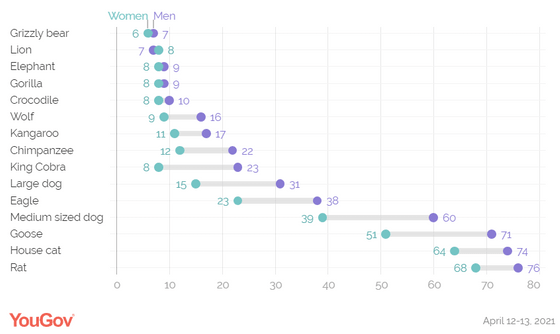
The survey revealed notable differences in responses between men and women. Men were significantly more likely to believe they could defeat large animals, including grizzly bears. Researchers caution against simplistic interpretations but suggest social conditioning plays a role.
Men are often encouraged to associate masculinity with strength and fearlessness, which may influence how they answer hypothetical questions. Women, on the other hand, tended to assess risk more conservatively.
This does not mean one group is right or wrong in general, but it highlights how cultural narratives shape risk perception, sometimes in dangerous ways.
How These Beliefs Affect Real-World Safety
Misconceptions about wildlife strength can have tangible consequences. In national parks and wilderness areas, park rangers frequently encounter visitors who ignore warnings, approach animals too closely, or fail to secure food properly.
Such behavior not only endangers humans but also wildlife. Bears that become habituated to human presence or food often have to be relocated or euthanized, creating tragic outcomes driven by human misunderstanding.
Education, experts argue, is the most effective tool. Accurate knowledge about animal behavior and capabilities saves lives on both sides.
What Science Says About Human Strength Limits
From a physiological perspective, humans are endurance specialists, not power fighters. We evolved to run long distances and cooperate socially, not to overpower large predators physically.
Even elite athletes lack the muscle density, claw structure, and bite force of large carnivores. Human skin offers little protection, and reflexes are insufficient against animals evolved for combat.
This scientific reality makes the survey responses less humorous and more concerning, as they reveal a gap between perception and biological truth.
Why These Surveys Still Matter
Some may dismiss the survey as a joke or internet curiosity, but researchers insist it serves a purpose. It exposes how people think about risk, nature, and their own bodies. Understanding these beliefs allows educators and policymakers to address misconceptions before they translate into dangerous behavior.
Public awareness campaigns about wildlife safety often focus on rules, but experts argue they should also address mindset—helping people understand not just what to do, but why humility matters in nature.
The Broader Cultural Implications
This survey also reflects broader cultural attitudes toward control and invincibility. In a world where technology solves many problems, it becomes easy to forget that some forces remain beyond human control.
Wild animals are not adversaries to be conquered but living beings with instincts, power, and ecological roles. Reframing the narrative from dominance to coexistence may be essential for future conservation efforts.
What This Means Going Forward
As human development continues to expand into wildlife habitats, encounters will become more frequent. How people perceive those encounters will shape outcomes.
Experts emphasize that survival depends on knowledge, preparation, and respect—not confidence or strength. Surveys like this serve as reminders that understanding our limits is not weakness, but wisdom.
The belief that a human could defeat a grizzly bear may seem harmless in theory, but in reality, it underscores a dangerous gap between perception and nature’s truth. Closing that gap could save lives—human and animal alike.