
Table of Contents
- The Split-Second That Changes Everything
- The Real Stories Behind Helmet Laws
- What Actually Happens in a Crash
- “It Saved My Life” — Real People, Real Impact
- The Psychology of Risk
- The Science of Survival
- How Not Wearing a Helmet Costs More Than You Think
- “It’s Just Not Comfortable” — The Common Excuse
- Kids and Helmets: Where Habits Start
- The Emotional Cost of Ignoring Safety
- Technology Is Making Helmets Smarter
- The Viral Power of Awareness
- A Challenge for You
The Split-Second That Changes Everything
It happens in a heartbeat.
A car turns left without signaling. A cyclist hits a pothole. A motorcyclist swerves to avoid a stray dog.
In that instant, everything changes.
One moment you’re heading to work, the next, you’re in an emergency room — all because of one small decision: to wear a helmet or not.
You might think it won’t happen to you. Everyone does — until it does.
The Real Stories Behind Helmet Laws
Scroll through social media long enough, and you’ll find hundreds of photos and videos showing exactly why helmets matter — some shared by people who survived accidents because of them.
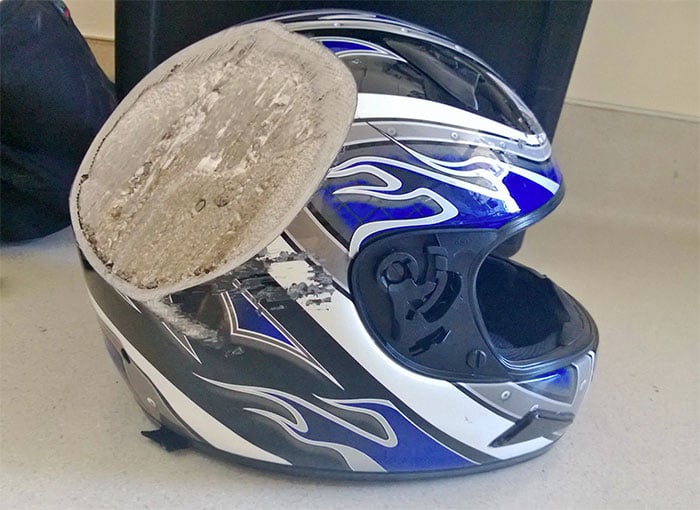
In Bored Panda’s compilation, one photo stood out: a rider’s helmet split in half after a crash, while the person who wore it walked away with just minor scrapes.
It’s not luck. It’s physics.
A good helmet absorbs impact energy that would otherwise hit your skull and brain — reducing the risk of fatal injury by up to 70%, according to the World Health Organization.
That means something as simple as strapping on a helmet can literally mean the difference between life and death.
What Actually Happens in a Crash
When you’re moving at 60 km/h, your body isn’t just traveling — it’s carrying massive kinetic energy.
If you hit something and you’re not protected, that energy transfers directly to your head. The skull fractures. The brain collides with the inner walls of the cranium.
That’s how traumatic brain injuries happen — the kind that can permanently change your ability to think, speak, or walk.
A helmet acts like a crumple zone for your head.
It absorbs the shock. It redistributes the force. It gives you a second chance.
If that sounds dramatic, that’s because it is.
“It Saved My Life” — Real People, Real Impact

One Reddit user posted photos of his completely shattered helmet with a simple caption:
“If I didn’t wear this, I wouldn’t be typing this.”
Another story came from a mountain biker in California who hit a rock and went flying over his handlebars. His helmet split clean down the middle — but he suffered only a mild concussion.
Doctors told him, “Without it, you would’ve been dead on arrival.”
Every person who shares a photo of their destroyed helmet is sharing proof — that a $100 piece of gear can protect a million-dollar life.
The Psychology of Risk
Here’s the paradox: most people who skip helmets don’t do it because they don’t know the risks.
They do it because they believe they’re in control.
Humans are hardwired for optimism bias — the belief that bad things happen to others, not us.
That’s why even experienced riders sometimes take shortcuts. “It’s just a short ride,” they say. “I’ll be careful.”
But the truth is, most serious accidents happen within five kilometers of home.
So, if you think wearing a helmet is optional because you’re “just going around the corner,” think again — that’s where most tragedies begin.
The Science of Survival
Helmets are more than hard shells. They’re engineering marvels designed to manage energy transfer during impact.
- Outer shell: Distributes the initial blow.
- Inner foam liner: Compresses to absorb shock energy.
- Padding and straps: Keep the helmet securely in place.
According to a study in the Journal of Accident Analysis & Prevention, properly fitted helmets reduce the risk of severe brain injury by up to 88% in cyclists and 69% in motorcyclists.
That’s not marketing hype — that’s measurable science.
And yet, millions still ride without them.
Why? Because the benefits are invisible — until the moment they’re not.
How Not Wearing a Helmet Costs More Than You Think
Let’s look beyond safety for a second.
In most countries, not wearing a helmet can also hit you where it hurts most: your wallet.
- Fines and penalties: Many regions impose heavy fines for helmetless riding.
- Insurance denial: Some insurers refuse to pay for head injury claims if you weren’t wearing a helmet.
- Long-term costs: A traumatic brain injury can cost hundreds of thousands of dollars in medical bills and lost income.
So whether it’s health, wealth, or peace of mind — you can’t afford not to wear one.
“It’s Just Not Comfortable” — The Common Excuse
Sure, older helmets used to be bulky, heavy, and stuffy. But technology has changed that.
Modern helmets are lightweight, breathable, and aerodynamic. Some even have built-in cooling vents, anti-fog visors, and Bluetooth communication systems.
In other words, wearing a helmet has never been more comfortable — or stylish.
Still think it doesn’t look cool?
Try explaining that to someone in a hospital bed.
Kids and Helmets: Where Habits Start
Here’s where it gets serious.
Studies show that children who grow up seeing parents wear helmets are five times more likely to wear them as adults.
That means your decision today doesn’t just protect you — it shapes your child’s behavior for life.
One mother in Bored Panda’s feature shared how her son’s helmet cracked during a fall from his bike. He was shaken, but unharmed.
She said, “He’s scared to forget it now — and so am I.”
Because helmets don’t just save heads — they save families from heartbreak.
The Emotional Cost of Ignoring Safety
Talk to any emergency room nurse, and they’ll tell you — the hardest part isn’t treating injuries. It’s watching loved ones wait outside, not knowing if their child, partner, or friend will wake up again.
One doctor put it simply:
“Every day, I see two kinds of riders — those who wear helmets and those who wish they had.”
That’s not fearmongering. That’s reality.
And it’s a reality we have the power to change with a single strap and buckle.
Technology Is Making Helmets Smarter
Today’s helmets are evolving beyond protection.
Some of the latest designs feature:
- Crash detection sensors that alert emergency services after impact
- Built-in GPS tracking for safer solo rides
- Carbon-fiber shells that combine strength with ultralight comfort
Smart helmets are becoming a $2.5 billion global market, expected to grow as urban biking and electric scooters become more popular.
That means your safety gear might soon double as a lifesaving communication device.
So the next time you invest in new tech, consider upgrading your helmet — it could be the smartest gadget you’ll ever buy.
The Viral Power of Awareness
The reason stories like Bored Panda’s resonate so strongly is simple: they remind us that danger isn’t abstract — it’s personal.
Every cracked helmet photo, every survivor’s post, every story that ends with “I walked away” adds to a growing movement.
A movement that says: wearing a helmet isn’t about fear — it’s about respect.
Respect for your life, your loved ones, and everyone who shares the road with you.
A Challenge for You

Tomorrow, when you get on your bike, scooter, or motorcycle, ask yourself:
“If something unexpected happens in the next five seconds, am I protected?”
Because five seconds is all it takes to make a decision — and sometimes, it’s the last one you’ll get to make.
So buckle up, strap on your helmet, and be the reason someone else decides to wear theirs too.
Because one day, that simple act might just save a life.
Maybe even yours.