
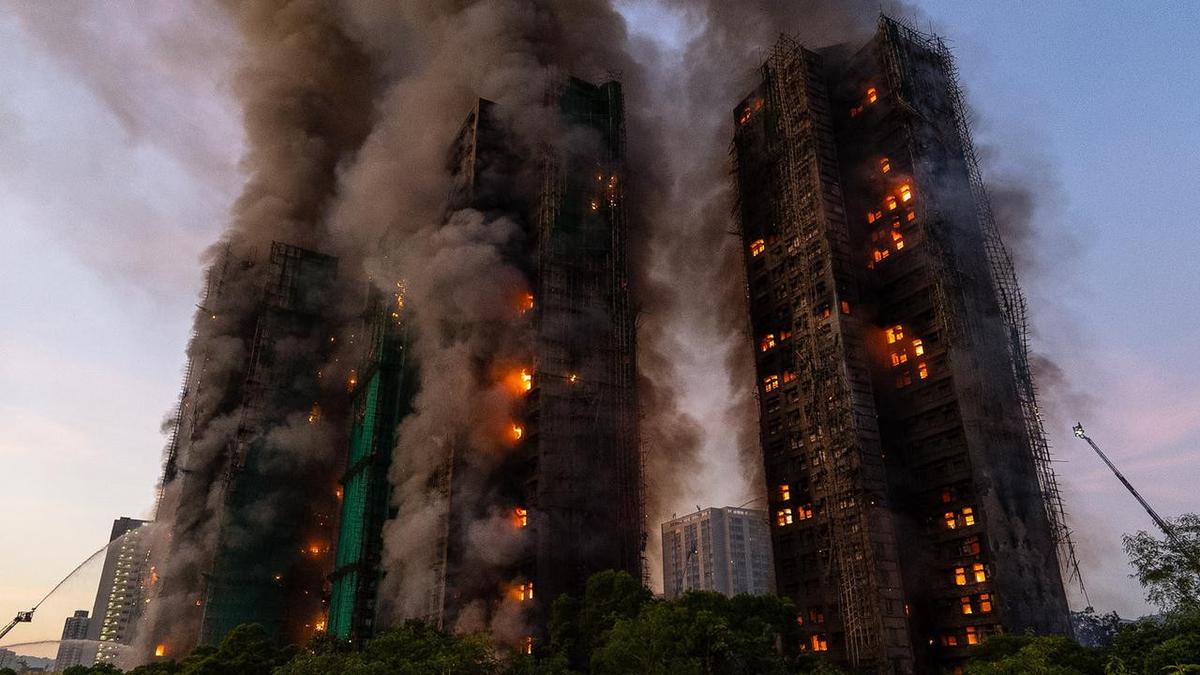
The fire started like a whisper.
A spark flickered along the bamboo scaffolding of a luxury high-rise residential complex in Hong Kong, and within minutes, that whisper became a roar—an inferno wrapping itself around the building like a living creature.
By the time firefighters reached the scene, flames were already racing up the structure, turning the bamboo skeleton into a towering torch.
Four people lost their lives.
Dozens were injured.
And a city known for its engineering precision was suddenly asking one terrifying question:
Table of Contents
How did this happen—again?
Because this wasn’t just a tragic accident.
It was a warning.
About construction practices.
About urban safety.
About climate-driven fire risks.
About insurance implications for homeowners.
And about what happens when centuries-old building methods collide with modern megacities.
But to understand why this fire spread so fast, you need to understand something most people outside Asia don’t know:
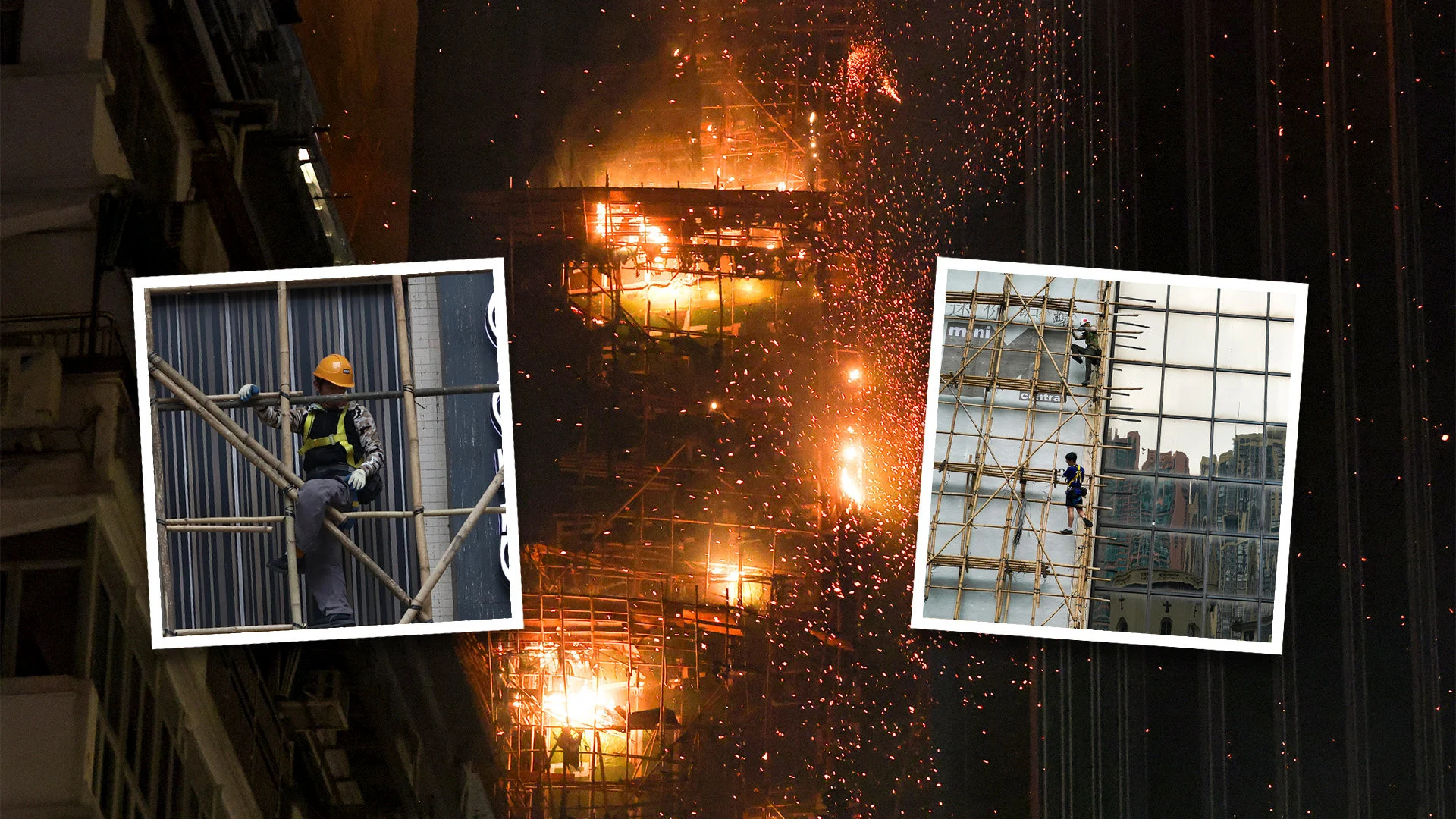
Hong Kong still builds skyscrapers using bamboo scaffolding.
And that’s where this story becomes bigger than one fire.
It becomes a lesson about how cities grow—and how quickly they can burn if even one thing goes wrong.
THE NIGHT THE SCAFFOLDING CAUGHT FIRE
It was just after sunrise when residents of the high-rise complex smelled smoke.
At first, some assumed it was a neighbor cooking.
But then the hallways filled with the sound no city dweller ever forgets:
The high-frequency, heart-pounding wail of a fire alarm.
When residents looked outside their windows, they saw something terrifying—
flames climbing the bamboo scaffolding that wrapped the building like a web.
Witnesses described it as a “vertical firestorm.”
Bamboo—light, dry, and reactive—burned with shocking speed, dropping ash and flaming splinters into the streets below.
Firefighters arrived within minutes.
But in fires like this, minutes feel like hours.
The scaffolding collapsed.
Smoke filled corridors.
People were trapped.
Four did not make it out alive.
But this tragedy didn’t just start a conversation about a single fire.
It reignited a debate older than the skyscrapers themselves.
WHY DOES A CITY FULL OF BILLION-DOLLAR SKYSCRAPERS STILL USE BAMBOO?
To understand Hong Kong, you need to understand bamboo.
For centuries, bamboo scaffolding has been used across Asia.
It’s cheap.
It’s light.
It’s flexible.
It can survive typhoons better than metal in many situations.
And construction workers can assemble it faster than most modern systems.
Walk through Hong Kong, and you’ll see bamboo rising 30, 40, even 50 stories into the sky—woven like a net, tied with nylon straps, dancing in the wind.
Tourists photograph it.
Locals barely notice it.
Developers rely on it.
But when things go wrong, they go very wrong.
Because bamboo is still… bamboo.
A natural material.
Highly flammable.
Vulnerable to extreme heat.
And increasingly threatened by climate-driven temperature spikes.
A city famous for neon lights, megastructures, and global business now faces a question that blends culture with safety:
Can bamboo scaffolding survive in a world that’s getting hotter, denser, and more unpredictable?
And the implications stretch beyond construction.
THE FIRE THAT SPARKED FEAR IN HOMEOWNERS AND INVESTORS
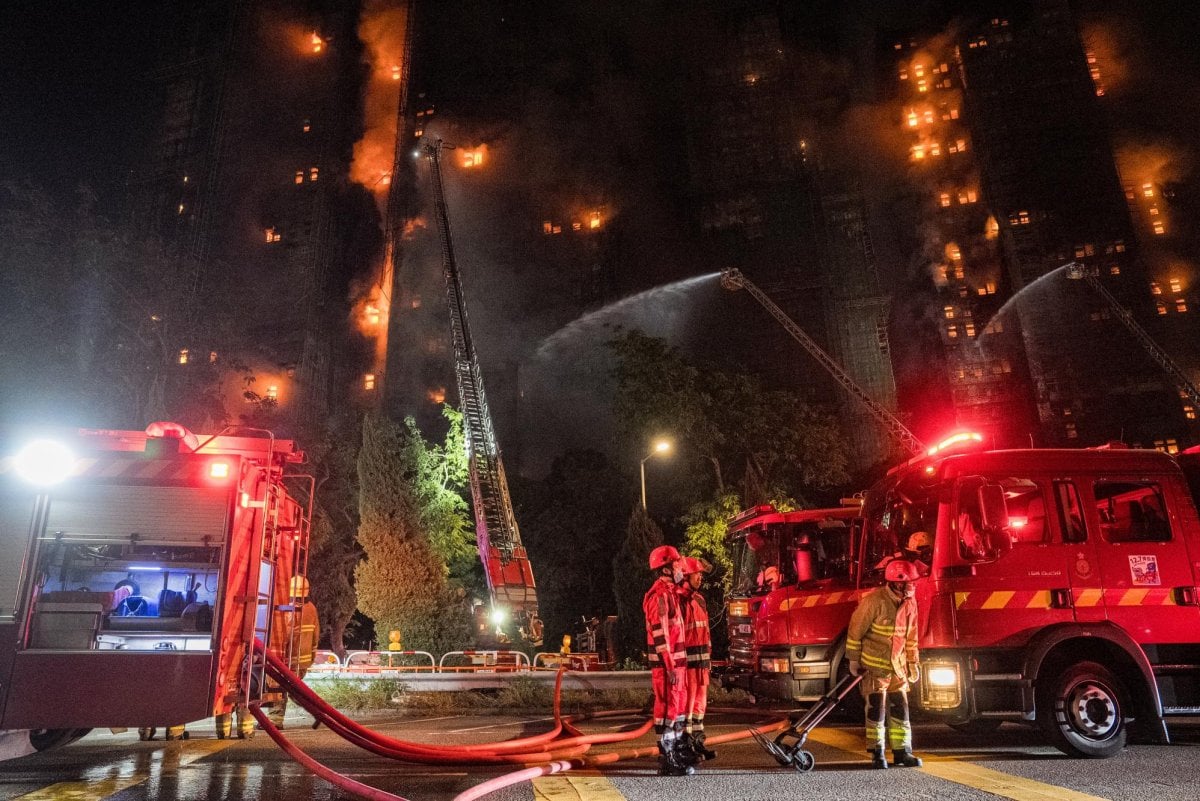
When the flames engulfed the building, the financial ripple was immediate:
- Property insurers raised concerns
- Landlords questioned their liability
- Homebuyers wondered if their investments were safe
- Developers rushed to review safety protocols
- Renovation projects across Hong Kong paused for evaluation
Real estate is one of Hong Kong’s most valuable assets.
A single high-rise can represent billions in:
- Mortgages
- Rent
- Maintenance contracts
- Commercial leases
- Insurance policies
- Investor portfolios
When a fire tears through a building that’s still under renovation or construction, the financial damage is often larger than the flames themselves.
Some insurers are already predicting higher premiums for buildings using bamboo scaffolding.
Others are reevaluating coverage for “traditional construction methods.”
But that’s just the economic side.
There’s also the human side—the part people rarely discuss until it’s too late.
WHAT IT FEELS LIKE TO BE TRAPPED IN A BURNING HIGH-RISE
Imagine waking up to smoke.
You open your door and see a hallway that looks like a scene from a disaster movie—thick air, low visibility, alarms echoing through endless concrete corridors.
Would you go for the stairs?
Would you wait for firefighters?
Would you risk the balcony?
In moments like this, panic is as dangerous as flame.
Residents described:
- People rushing in different directions
- Mothers covering their children’s mouths
- Seniors struggling to move down staircases
- Pets crying in carriers
- Neighbors knocking on doors trying to wake each other
- Smoke so thick you couldn’t see your own hands
If this happened to you, would you fight for the exit—or stay inside and wait?
That’s the question many survivors asked themselves that night.
And the fact that the fire moved so rapidly has re-ignited fears about high-rise safety around the world.
Because what happened in Hong Kong…
could happen anywhere.
CLIMATE CHANGE IS MAKING URBAN FIRES MORE DANGEROUS
This fire didn’t happen in isolation.
Experts warn that global warming is increasing:
- Heat waves
- Humidity spikes
- Wind intensity
- Electrical strain on buildings
- Drying of construction materials
- Fire load in densely packed cities
In Hong Kong’s case, bamboo that once resisted moisture is now drying out more quickly in extreme heat.
Dry bamboo + ignition source + wind funnel created by tall buildings = disaster.
Urban planners are warning that climate-driven fires may become:
- Faster
- Hotter
- More unpredictable
- Harder to control
And not just in Hong Kong.
Cities at risk include:
- Manila
- Mumbai
- Jakarta
- Dubai
- Seoul
- Tokyo
- Guangzhou
- Singapore
The question isn’t if more fire emergencies will happen.
It’s how prepared cities are when they do.
And this leads to the next layer of the story—one that affects homeowners everywhere.
WHAT HOMEOWNERS NEED TO KNOW ABOUT HIGH-RISE FIRE RISK
High-rise fires are rare, but when they happen, the outcomes are severe.
This incident has prompted people to reevaluate:
- Insurance coverage for high-rise fire damage
- Emergency exit designs
- Ventilation systems
- Fire-resistant building materials
- Smoke-pressure zones
- Sprinkler efficiency
- Construction codes
- Renovation safety compliance
In many cities, older buildings are overdue for upgrades—some built decades before modern fire standards existed.
If your home is in a tower or condo, ask yourself:
Do you know where the nearest fire exits are?
Do you know how long smoke would take to fill your corridor?
Do you know if your building uses materials that can withstand extreme heat?
Most people don’t.
Most people only learn during an emergency.
This is why fire risk is becoming a key factor in property value—and something investors monitor closely.
WHAT THIS MEANS FOR PROPERTY VALUES AND INSURANCE
Experts predict the aftermath of this fire could impact:
1. Insurance Premiums
High-rise owners may face:
- Higher premiums
- Stricter requirements
- Mandatory renovations
- More inspections
Properties under renovation may see increased scrutiny.
2. Real Estate Pricing
Buyers may start preferring:
- Buildings with steel scaffolding during construction
- Fire-resistant materials
- Better evacuation infrastructure
- Lower density hallways
- Newer construction codes
Older buildings may see a dip in demand.
3. Investor Confidence
Developers may face:
- Higher costs
- Delayed approvals
- Increased oversight
- Additional construction requirements
This creates ripple effects across Hong Kong’s massive real estate market.
WHY BAMBOO SCAFFOLDING REMAINS SO CONTROVERSIAL
Supporters say:
- It’s eco-friendly
- It’s cheaper
- It’s flexible
- It handles wind better
- It preserves cultural heritage
- It keeps local jobs alive
Critics argue:
- It’s flammable
- It’s outdated
- It’s unsafe in extreme heat
- It’s incompatible with supertall skyscrapers
- It creates massive fire hazards during renovation
And with climate change intensifying, critics are gaining traction.
But this isn’t just a debate about tools.
It’s a debate about identity.
Hong Kong’s skyline—a maze of neon, glass, and bamboo—is iconic.
But nostalgia can’t prevent disaster.
The question now is whether the city can modernize without losing one of its most recognizable traditions.
WHAT INVESTIGATORS FOUND AFTER THE FIRE
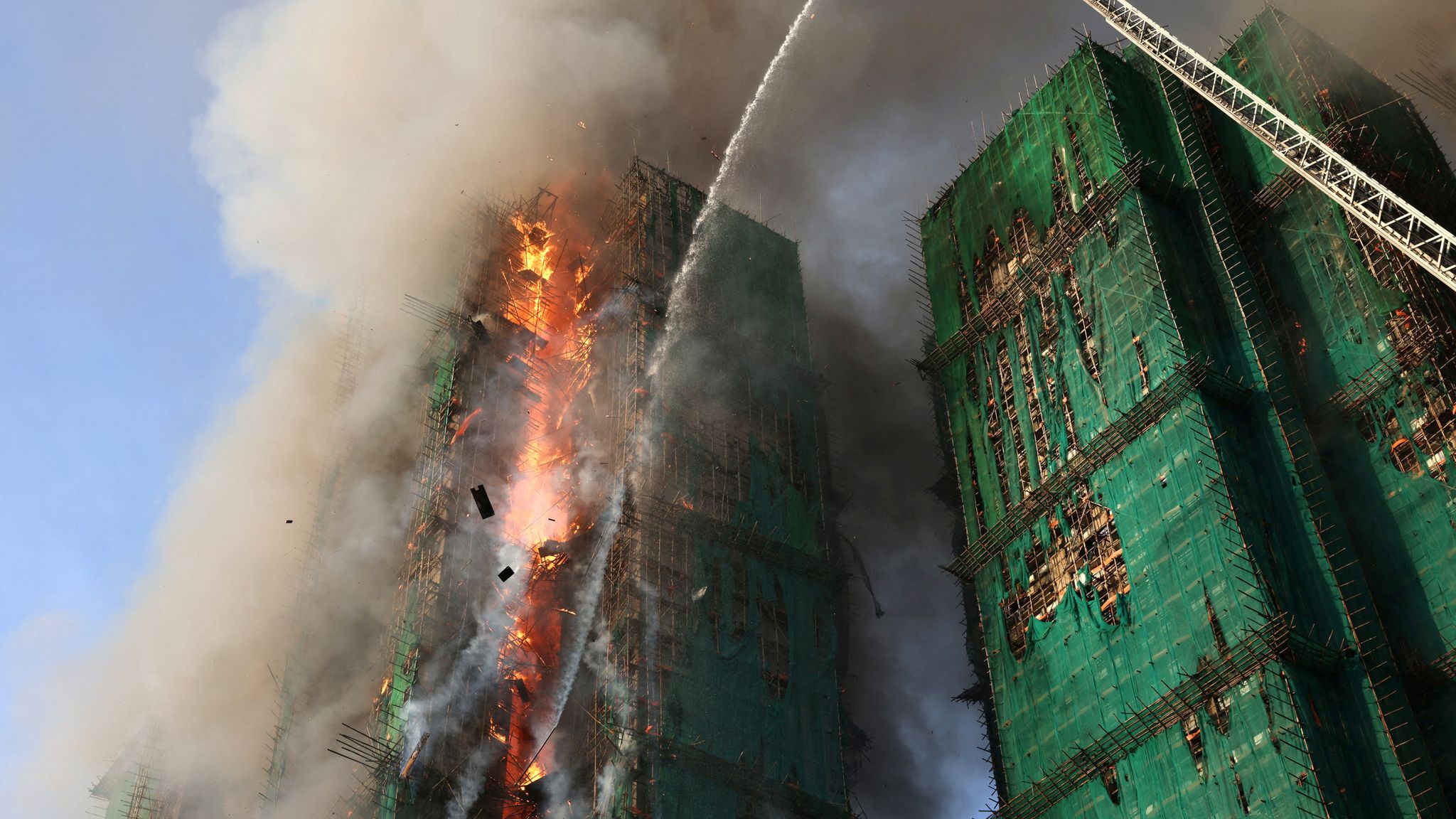
Early reports indicate:
- The fire spread through the bamboo scaffolding
- Falling debris ignited additional hotspots
- Wind corridors accelerated the flames
- Smoke entered the building’s internal systems
- Evacuation routes clogged quickly
- Flames spread vertically faster than expected
Officials are still analyzing exactly what triggered the fire.
But they’ve already made one conclusion:
The scaffolding played a major role in the speed and intensity of the fire.
That finding alone may change future regulations.
THE GLOBAL WAKE-UP CALL: ARE OUR CITIES READY FOR THE NEXT URBAN FIRE?
This incident is part of a worrying trend:
- London’s Grenfell Tower
- Dubai’s Torch Tower
- Manila’s Ozone fire
- Mumbai high-rise fires
- Seoul apartment blazes
Different cities.
Different materials.
Same story:
Modern buildings are vulnerable in ways we didn’t anticipate.
And as cities grow taller, denser, and hotter, the risks compound.
This raises a difficult question:
If your building caught fire tonight, would you know what to do?
Most people avoid thinking about this.
But the survivors of the Hong Kong fire don’t have that luxury anymore.
THE HUMAN STORIES BEHIND THE HEADLINES
Among the victims:
- A grandmother who had lived in the building for more than 20 years
- A young couple still unpacking from a recent move
- A construction worker who was on break during the fire
- A resident who tried to help others escape
Every tragedy is made of faces, not numbers.
And for the families left behind, the fire didn’t just destroy a building—it destroyed futures, memories, and security.
But the tragedy has also sparked resilience.
Neighbors are supporting each other.
Volunteers are providing food and shelter.
People across Hong Kong are rallying around the victims.
This is what makes urban life beautiful and heartbreaking at the same time.
THE FUTURE OF URBAN SAFETY: WHAT NEEDS TO CHANGE NOW

The fire exposed weaknesses that extend beyond Hong Kong.
Urban planners are now calling for:
- Fire-resistant renovation scaffolding
- Better airflow modeling for high-rises
- Stronger emergency ventilation systems
- Thermal-resistant coatings for exterior structures
- Automated fire detection around scaffolding
- More fire training for residents
These changes could protect millions of people.
And they’re not just safety upgrades—they’re financial safeguards, protecting:
- Home values
- Property insurance
- Investor trust
- Urban development
- Construction timelines
A safer building is a more valuable building.
FINAL THOUGHTS: ONE FIRE, MANY LESSONS
This wasn’t just a tragic fire on a Hong Kong high-rise.
It was a warning.
About climate.
About construction.
About safety.
About urban vulnerability.
About how fast the world is changing.
And how slowly safety practices sometimes evolve.
A material that once worked for a different era—bamboo—is now facing modern heat, wind, density, and risk.
Whether Hong Kong adapts or holds onto tradition may determine how safe millions of residents will be in the future.
But one thing is clear:
When scaffolding burns, a city must rethink what holds it together—not just physically, but socially and structurally.
And this fire is forcing that conversation.