

Table of Contents
Creation of Woman from Man’s Rib
The story of Eve’s creation from Adam’s rib is one of the most well-known accounts in the Bible, specifically in the Book of Genesis. According to the Bible, God created Adam from the dust of the earth, and then, realizing that he needed a companion, took one of Adam’s ribs to form Eve. This narrative has been interpreted in various ways over time, often symbolizing the relationship between men and women, as well as the idea of woman being an integral part of man.
This biblical account has been influential in shaping cultural beliefs about human anatomy. The story specifically mentions that Eve was created from one of Adam’s ribs, leading many to believe that humans must have one fewer rib than other animals—because Adam had to “lose” a rib for Eve to be created. Over the years, this myth has embedded itself into common knowledge, with many people not questioning its accuracy. But, as we’ll see, this belief does not align with biological reality.
The Misconception

One of the most pervasive misconceptions derived from the Bible story is the idea that men have one fewer rib than women. This myth likely arises from a literal interpretation of the creation narrative, with people inferring that because Eve was formed from one of Adam’s ribs, men must have lost a rib in the process. This idea, while enduring in various cultures and communities, simply does not hold up under scrutiny when we examine human anatomy.
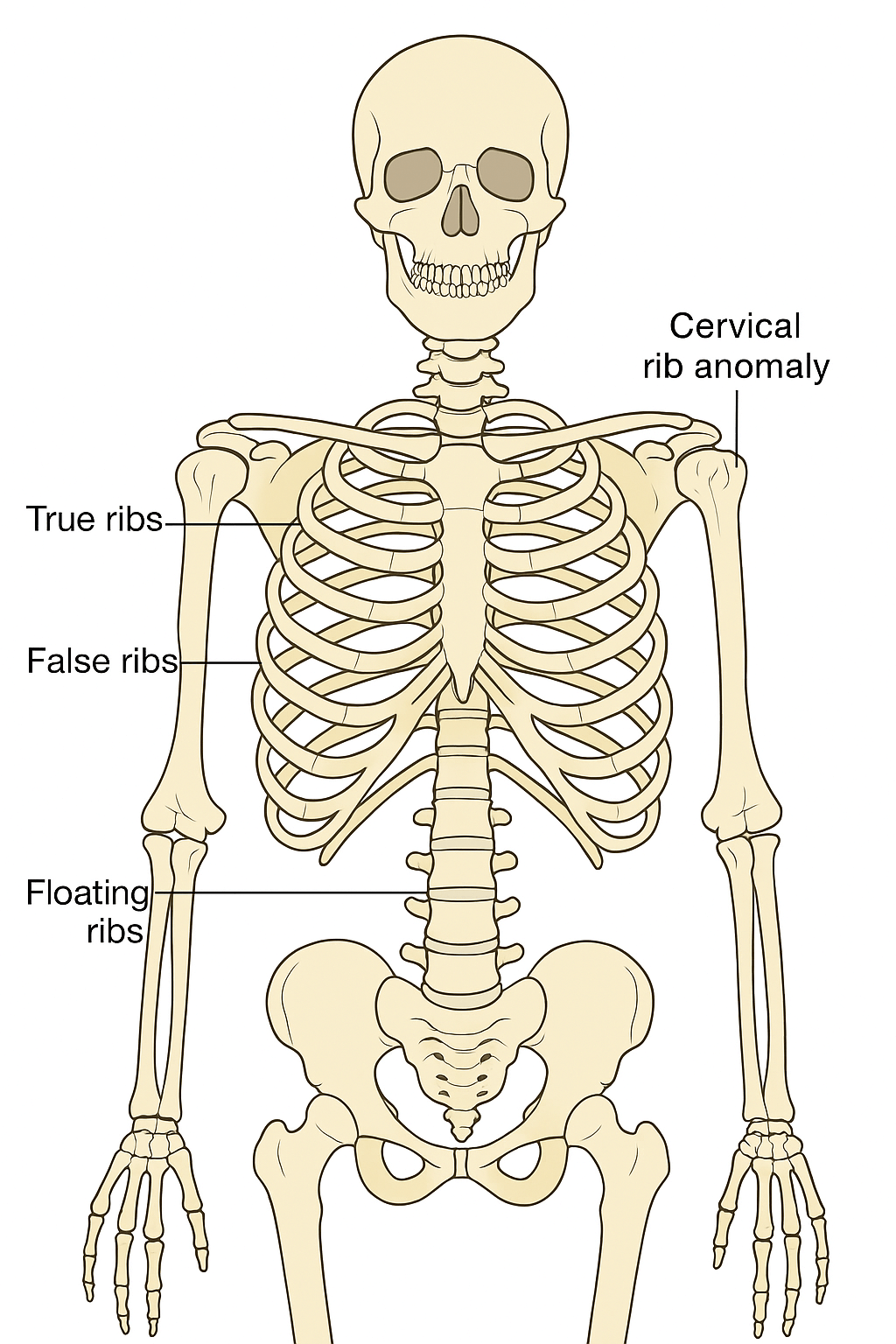
The truth is that humans, regardless of sex, typically have the same number of ribs—12 pairs, or 24 ribs in total. This has been confirmed by extensive anatomical studies and medical observations. The idea that men have fewer ribs than women is purely a myth, perpetuated by cultural beliefs and misunderstandings of the biblical text.
Human Anatomy
In reality, both men and women have the same number of ribs. Human ribs are part of the ribcage, which serves several important functions: protecting vital organs such as the heart and lungs, supporting the upper body, and aiding in respiration. Ribs are essential for maintaining the structure and stability of the torso, and humans have a symmetrical arrangement of these bones.
The ribcage consists of 12 pairs of ribs, and while there may be slight variations in the shape and length of these ribs depending on the individual, there is no anatomical evidence to suggest that men or women have one fewer rib. This myth likely arises from a misunderstanding of human development and anatomy, combined with the influence of religious teachings.
How the Myth Has Persisted Through History

The belief that humans have one fewer rib due to the biblical account of Adam and Eve has persisted throughout history, even in the face of clear anatomical evidence. This is partly due to the lasting influence of religious teachings on cultural beliefs and scientific understanding. For centuries, the Bible has been considered the authoritative source on human origins, and many people continue to interpret its stories literally.
Moreover, the idea that men have one fewer rib is a convenient and easy explanation for some, particularly for those who are not familiar with basic biology. It’s a simple, understandable story that fits into the narrative of human creation and provides a clear, if inaccurate, answer to a complex question about human anatomy. As with many myths, this one persists because it is tied to deeply held beliefs about human nature and identity.
The Role of Religion and Science in Shaping Beliefs
The intersection of religion and science often creates tension when it comes to understanding human origins and anatomy. For centuries, religious explanations were the dominant source of knowledge, and scientific inquiry into human biology was limited or restricted. As a result, many ancient cultures, including early Christian communities, relied on religious texts like the Bible to explain natural phenomena, including human anatomy.
However, with the advancement of scientific knowledge, particularly in the fields of biology and anatomy, we now understand the true structure of the human body. The development of modern science has shown that the number of ribs in humans is consistent, regardless of sex. This has led to the gradual debunking of myths like the one surrounding the missing rib.
At the same time, many people continue to hold onto religious explanations for human origins, even as scientific discoveries provide more accurate accounts of our biology. This tension between religious beliefs and scientific facts often shapes how myths like the rib story continue to be passed down through generations.
The Influence of Myths on Modern Perceptions of Gender
The myth about the missing rib is also tied to broader cultural beliefs about gender roles and relationships between men and women. The biblical story of Adam and Eve has often been interpreted to reinforce traditional views of gender, with Eve being created from Adam’s rib symbolizing her role as a companion and helper to man.
In modern times, this myth may still influence how some people view the relationship between men and women, as well as perceptions of gender differences. The idea that women were created from men’s ribs can perpetuate the notion of women as secondary or derivative to men, a view that continues to shape cultural norms and societal expectations.
While the myth of the missing rib is scientifically inaccurate, it serves as an example of how myths and stories can shape our understanding of gender and human anatomy. It is important to challenge these misconceptions and recognize the biological reality of human equality and sameness, regardless of gender.
Addressing the Myth
The persistence of the myth about human ribs highlights the importance of education in dispelling misconceptions. Teaching people about human anatomy and biology, particularly in terms of the reproductive system and gender differences, is crucial for fostering a better understanding of the human body. By understanding that both men and women have the same number of ribs, we can move away from outdated and incorrect beliefs about our biology.
Educational programs and resources that focus on anatomy, evolutionary biology, and the history of human understanding are essential for promoting a more accurate and inclusive view of human nature. Science education, especially in schools, plays a key role in breaking down myths and fostering a culture of critical thinking.
The Myth in Popular Culture
Even though the myth about human ribs has been debunked by modern science, it continues to appear in popular culture, literature, and discussions. References to the idea of the missing rib appear in everything from religious teachings to jokes, memes, and even movies. This cultural reinforcement makes it harder for people to let go of the myth, despite the availability of factual information.
While it’s important to recognize the influence of popular culture on perpetuating myths, it’s equally crucial to challenge these ideas with accurate scientific information. By actively questioning and correcting misconceptions, we can help ensure that people have a more accurate understanding of human biology, free from outdated and misleading myths.
Conclusion
The myth about humans having one fewer rib due to the biblical story of Adam and Eve is a powerful example of how myths can influence cultural beliefs and shape perceptions of human anatomy. While this idea has persisted for centuries, scientific understanding has proven that both men and women have the same number of ribs. By educating people about the true structure of the human body, we can help break down these myths and promote a more accurate understanding of biology.
As society continues to evolve, it is important to challenge outdated beliefs and embrace scientific knowledge. In doing so, we can foster a culture of critical thinking and a deeper understanding of human nature, free from the constraints of folklore and mythology. The debunking of the rib myth serves as a small but important step in the ongoing process of dispelling misconceptions and moving toward a more informed and enlightened society.