
Table of Contents
- Hurricane Harvey Changed Millions of Lives
- The Cat’s Expression Made the Internet Instantly Obsessed
- The Photo Became Bigger Than a Meme
- Animals Became Central to Hurricane Harvey Stories
- Scott Olson Captured a Perfect Moment
- Why People Needed the Cat So Much
- The Internet Turns Animals Into Symbols
- Resilience Does Not Always Look Inspirational
- People Still Wonder What Happened to the Cat
- The Photo Still Represents Something Larger Today
Hurricane Harvey Changed Millions of Lives
To understand why the cat photo became so powerful, it helps to remember how devastating Hurricane Harvey truly was.
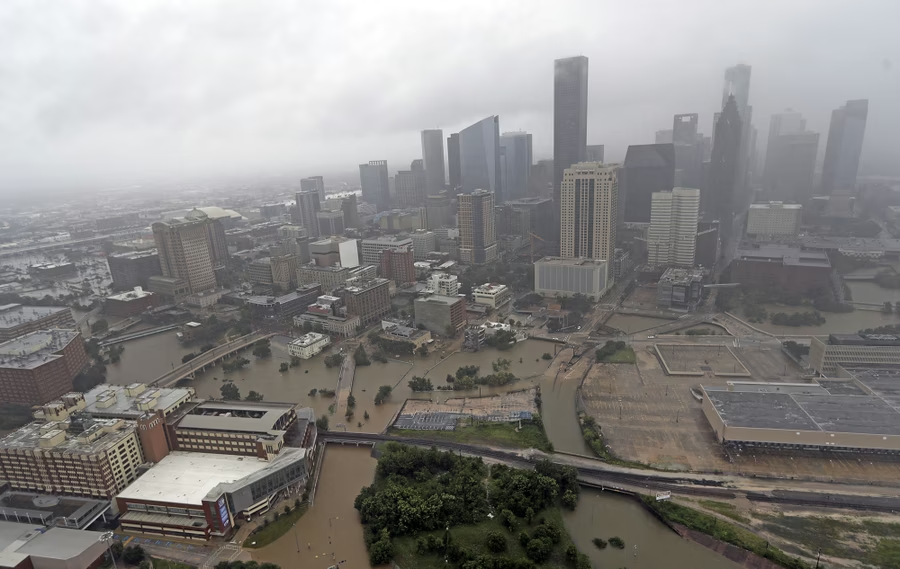
When the storm hit Texas in August 2017, it unleashed catastrophic flooding across Houston and surrounding areas. Entire streets turned into rivers. Thousands of homes were submerged. Emergency crews and volunteers worked nonstop rescuing stranded families and animals from rising waters.
Harvey became one of the costliest and most destructive hurricanes in American history.
The storm dropped record-breaking rainfall in some areas, overwhelming drainage systems and trapping residents inside homes, cars, and apartment buildings. Shelters filled rapidly as displaced families searched for safety.
During disasters like these, emotional exhaustion spreads quickly. People spend days consuming images of destruction, loss, fear, and uncertainty. Eventually, even small moments of humor or hope become emotionally important.
That is partly why the swimming cat photo exploded online.
It arrived during an intensely emotional moment when people desperately needed something human, relatable, and strangely uplifting amid the chaos.
The Cat’s Expression Made the Internet Instantly Obsessed
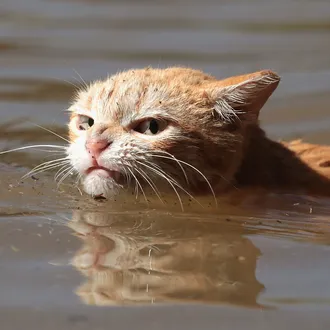
The image itself was unforgettable.
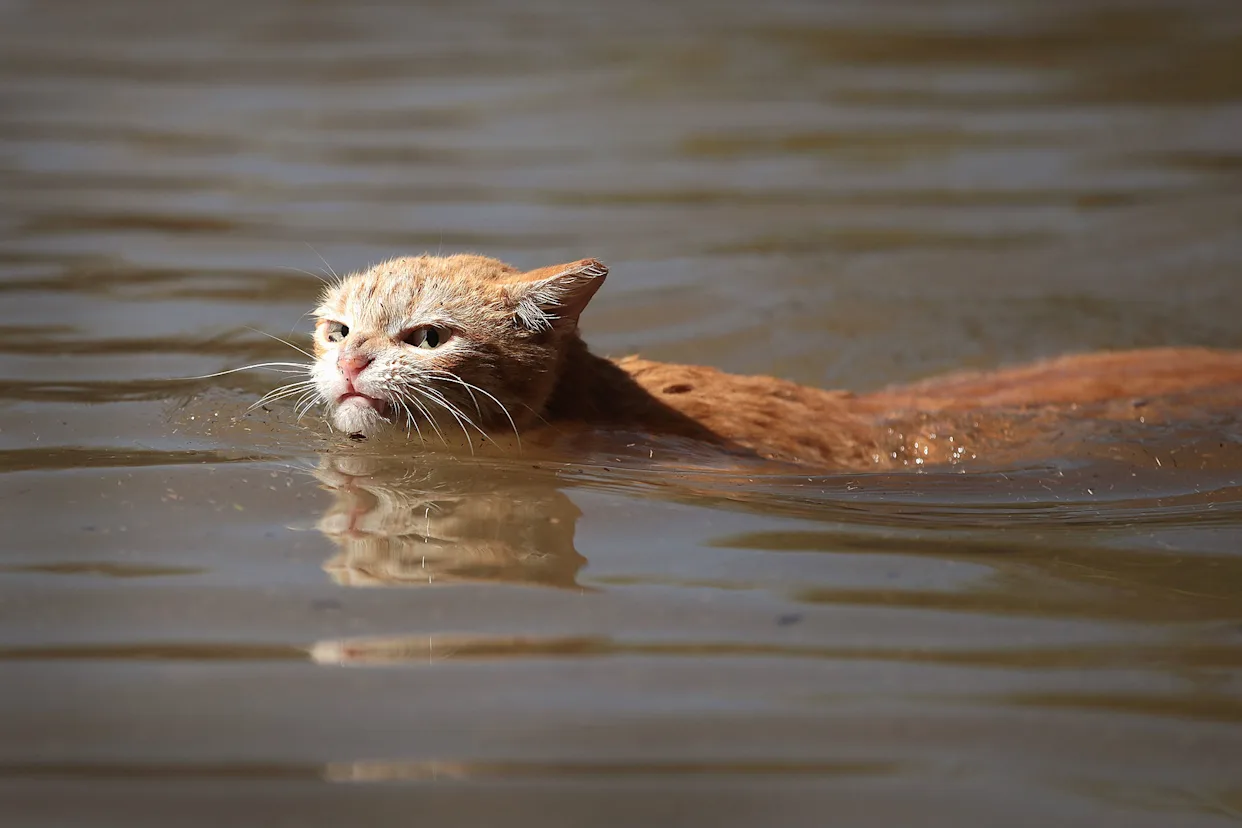
The cat was paddling through floodwater with its ears back, eyes narrowed, and mouth twisted into what looked like pure fury. It did not appear graceful or calm. It looked personally offended by the entire situation.
That expression immediately connected with people online.
Social media users joked that the cat looked like it was furious at nature itself. Others said the animal perfectly represented how exhausted and irritated everyone felt in modern life.
Unlike inspirational disaster photos that focus on heroism or emotional tears, this image felt raw and relatable in a different way. The cat was not posing as brave. It simply looked determined to survive while remaining deeply angry about the inconvenience.
That honesty became part of the humor.
People transformed the image into memes, captions, and reaction posts because the cat’s expression captured something universal: the feeling of continuing forward even when everything feels terrible.
The Photo Became Bigger Than a Meme
At first glance, the image seemed like simple internet comedy.
But the longer the photo circulated, the more people began attaching deeper meaning to it. The cat evolved from a funny viral image into a strange symbol of resilience during disaster.
Many viewers interpreted the cat’s furious determination as a reflection of how survivors themselves were enduring the storm.
Disasters often produce emotional contradictions. People can feel scared, angry, exhausted, stubborn, and hopeful at the same time. The cat somehow embodied all those emotions in one photograph.
That emotional complexity helped the image endure long after many other Hurricane Harvey stories faded from social media timelines.
The photo became a reminder that resilience does not always look noble or inspirational. Sometimes it looks annoyed, messy, frightened, and exhausted.
But survival still counts.
Animals Became Central to Hurricane Harvey Stories
The cat photo also resonated because animals became a major emotional focus during Hurricane Harvey.
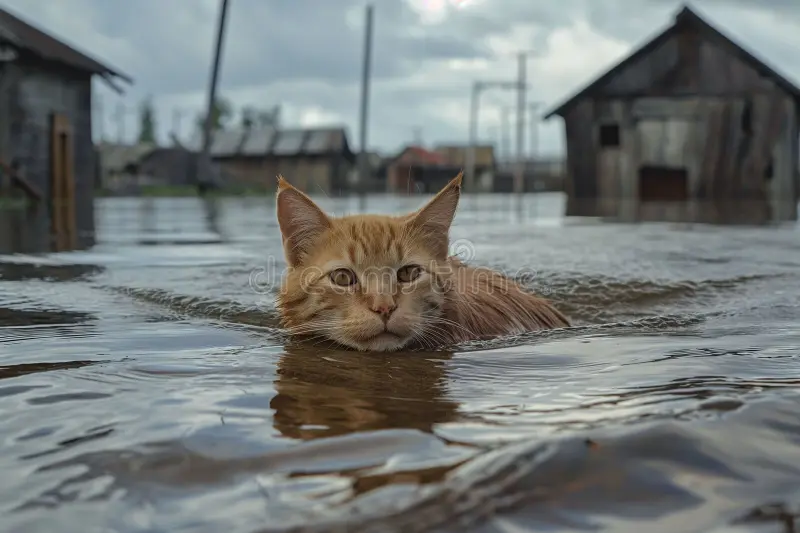
Across Texas, rescue workers and volunteers saved countless pets stranded by floodwaters. Viral videos showed dogs being carried to safety in boats, cats pulled from submerged homes, and families desperately searching for missing animals.
For many people, seeing pets in danger made the disaster feel even more emotional.
Animals often symbolize innocence during crises. They do not understand what is happening, yet they experience the fear and danger alongside humans. Images involving pets therefore tend to spread quickly because they trigger empathy and protective instincts.
The swimming cat stood out because it was not being rescued in the photo. It appeared to be handling the situation independently, even if very unhappily.
That detail added to the image’s emotional power. The cat looked like a survivor fighting through impossible circumstances on pure stubbornness alone.
Scott Olson Captured a Perfect Moment
Photojournalism often depends on timing.
Thousands of images were taken during Hurricane Harvey, but only a few became permanently attached to public memory. Scott Olson’s cat photograph succeeded because it captured a moment that instantly communicated emotion without explanation.
Great disaster photography does more than document events. It creates emotional connection.
The swimming cat photo worked because viewers immediately understood the feeling without needing context. The animal’s expression told the story by itself.
It also balanced humor with seriousness in a way that made the image memorable rather than exploitative. People laughed, but they also understood the reality behind the photograph: an animal trying to survive catastrophic flooding.
That combination made the image unusually powerful.
Why People Needed the Cat So Much
Part of what made the cat image so successful was timing.
Disasters create emotional overload. Constant exposure to tragedy, death, destruction, and fear can leave people psychologically exhausted. During those moments, the human brain often clings to small moments of humor or absurdity as emotional relief.
The cat provided that relief.
For a brief moment, people could stop doom-scrolling through catastrophic headlines and focus on something strangely funny but still connected to the reality of the disaster.
Importantly, the humor did not erase the seriousness of Hurricane Harvey. Instead, it gave people a way to emotionally process it.
Humor during crises often functions as survival itself.
The angry cat became a kind of emotional pressure valve for millions of viewers trying to absorb overwhelming news.
The Internet Turns Animals Into Symbols
The swimming cat also reflected the internet’s unique relationship with animals.
Online culture frequently transforms pets and wildlife into emotional symbols, reaction images, and shared cultural references. Animals become stand-ins for human emotions because they communicate feelings in simple, visual ways that transcend language.
Cats in particular dominate internet culture because their expressions often appear oddly human.
The Hurricane Harvey cat looked sarcastic, irritated, and emotionally done with the world. That made it perfect meme material.
But unlike many internet animal moments that disappear quickly, this one stayed emotionally connected to a real historical event. The humor never fully detached from the storm itself.
People remembered the cat not only because it looked funny, but because it represented endurance during a devastating moment.
Resilience Does Not Always Look Inspirational
One reason the image still resonates years later is because it challenged traditional ideas about resilience.
Popular culture often portrays resilience as graceful, optimistic, and heroic. But real survival frequently feels ugly, exhausting, and emotionally chaotic.
The cat was not smiling.
It was not calmly floating through adversity with perfect dignity. It looked furious that life had forced it into floodwater at all.
And yet, it kept swimming.
That honesty made the image emotionally authentic.
Many people related more to an angry survivor than to polished inspirational messaging. The cat represented the reality that resilience sometimes means simply continuing forward while deeply unhappy about the situation.
That interpretation gave the image surprising emotional depth beneath the humor.
People Still Wonder What Happened to the Cat
As the image spread online, many viewers began asking the same question: did the cat survive?
The uncertainty surrounding the animal’s fate became part of the emotional story. People projected hopes onto the cat because it had become symbolic of survival itself.
Photographer Scott Olson reportedly later reassured audiences that the cat appeared to make it safely through the floodwaters.
That update mattered emotionally because people had become attached to the animal. In the middle of a disaster filled with tragic news, they wanted the stubborn swimming cat to survive.
The emotional investment revealed something important about how humans respond to crisis stories. Sometimes a single image can create connection more effectively than statistics or headlines.
The cat became personal.
The Photo Still Represents Something Larger Today
Years later, the swimming Hurricane Harvey cat remains one of the most memorable animal images connected to a natural disaster.
Part of its staying power comes from how perfectly it captured modern emotional reality. The image reflected stress, anger, resilience, exhaustion, humor, and survival all at once.
In many ways, the cat became more than a hurricane symbol.
It became a symbol of continuing through impossible situations even when overwhelmed, frustrated, or emotionally drained. That feeling resonates far beyond one storm.
People still share the image during difficult moments because it represents persistence without pretending everything is fine.
The cat was not inspirational in a polished way. It was inspirational in a painfully honest way.
And perhaps that is why the internet never forgot it.
During one of America’s darkest disasters, millions of people saw a furious little animal swimming through floodwater and somehow recognized something deeply human in its expression.
Not optimism.
Not fear.
Just determination to keep moving forward no matter how angry life makes you.